Kirjojen hintavertailu – 12 859 819 kirjaa ja 27 kauppaa

Kirjailija

Julia A. Simms

Kirjat ja teokset yhdessä paikassa: 4 kirjaa, julkaisuja vuosilta 2018–2026, suosituimpiin kuuluu Assessment Literacy for Educators: Rethinking the What, Why, and How of Assessment and Grading (Create Equitable, Accurate Classroom Assessment.). Vertaile teosten hintoja ja tarkista saatavuus suomalaisista kirjakaupoista.

4 kirjaa

Kirjojen julkaisuvuodet: 2018–2026.

Assessment Literacy for Educators: Rethinking the What, Why, and How of Assessment and Grading (Create Equitable, Accurate Classroom Assessment.)
Assessment practices in schools often stem from outdated traditions that don't serve today's learners. Assessment Literacy for Educators is the culmination of Robert J. Marzano's decades of work, coauthored with Michael D. Evans and Julia A. Simms. Presenting 43 tenets for assessment literacy, the book equips teachers and leaders to replace outdated grading practices with equitable, accurate approaches that truly advance student learning. K-12 educators and preservice teachers can use this book to: Understand the history of assessment in the United States, including failures and biases Learn the technical characteristics and limitations of influential large-scale exams Employ a variety of effective classroom assessments to measure student knowledge on specific learning progressions Aggregate formative assessment scores over time and compute summative scores to accurately report student status and growth Individualize the assessment and learning process with competency-based practices Contents: Introduction: Revisiting Assessment Practices Part I: Large-Scale Assessments Chapter 1: The Influence of Large-Scale Assessments Chapter 2: Technical Characteristics of Large-Scale Assessments Part II: Classroom Assessments Chapter 3: Rethinking Classroom Assessments Chapter 4: Scoring Classroom Assessments Chapter 5: Aggregating Classroom Assessment Scores Part III: Grading Practice Chapter 6: Grading Systems Chapter 7: Competency-Based Systems Epilogue: Applying the Tenets of Assessment Literacy References and Resources Index

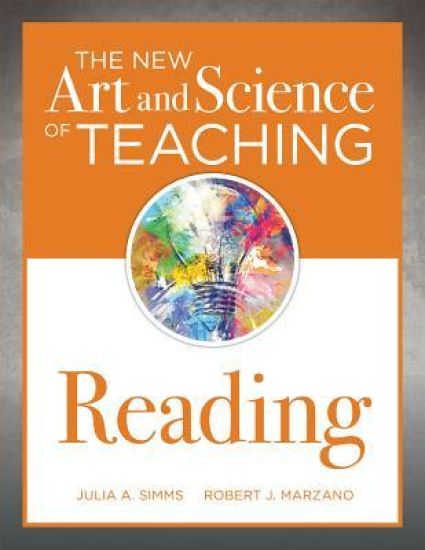
New Art and Science of Teaching Reading: (How to Teach Reading Comprehension Using a Literacy Development Model)
Part of The New Art and Science of Teaching series Only when teachers have in-depth knowledge of reading skill and literacy development can they deliver best-practice reading assessment and instruction to students. The New Art and Science of Teaching Reading presents a compelling model for the stages of reading development, structured around five key topics: (1) foundational skills, (2) word recognition, (3) reading fluency, (4) vocabulary, and (5) reading comprehension. More than 100 reading-focused instructional strategies are laid out in detail to help teachers ensure every student becomes a proficient reader. Guide students at all stages of literacy development, from learning the basic concepts of print to demonstrating advanced reading comprehension. Discover a research-based reading model to guide your instruction: Understand how to best utilize The New Art and Science of Teaching framework for teaching reading comprehension and other reading skills. Explore a reading model that addresses how to articulate content, implement specific instructional strategies, and navigate reading-related issues that might arise in the classroom. Understand which elements of instruction are best suited for teaching reading. Explore how general strategies for teaching can be employed alongside specific strategies to enhance teaching, enrich learning and literacy development, and improve the classroom environment. Access free reproducibles, including exercises, games, and readings for the classroom. A joint publication of ASCD and Solution Tree Contents: Introduction Chapter 1: Reading Research and a Reading-Specific Model of Instruction Chapter 2: Providing and Communicating Clear Learning Goals Chapter 3: Using Assessments Chapter 4: Conducting Direct Instruction Lessons Chapter 5: Conducting Practicing and Deepening Lessons Chapter 6: Conducting Knowledge Application Lessons Chapter 7: Using Strategies That Appear in All Types of Lessons Chapter 8: Using Engagement Strategies Chapter 9: Implementing Rules and Procedures Chapter 10: Building Relationships Chapter 11: Communicating High Expectations Chapter 12: Developing Expertise Appendix A: The New Art and Science of Teaching Framework Appendix B: Orthography Exercises Appendix C: Reading in the Disciplines Appendix D: Phoneme Charts Appendix E: Vocabulary Games Appendix F: Culturally Diverse Texts References and Resources Books in The New Art and Science of Teaching series: The New Art and Science of Teaching The Handbook for the New Art and Science of Teaching The New Art and Science of Teaching Reading The New Art and Science of Teaching Writing The New Art and Science of Classroom Assessment