Kirjailija
Julia Brannen
Kirjat ja teokset yhdessä paikassa: 19 kirjaa, julkaisuja vuosilta 1994–2026, suosituimpiin kuuluu Living Hand to Mouth. Vertaile teosten hintoja ja tarkista saatavuus suomalaisista kirjakaupoista.
19 kirjaa
Kirjojen julkaisuvuodet: 1994–2026.
First published in 1991, Managing Mothers (now with a new preface by the authors) provides a detailed, authoritative inside story of the lives of parents, and particularly mothers, who return to work after the birth of a first child. It is based on a study of couples who have combined the transition to parenthood with two full-time jobs in the labour market. The authors provide extensive personal accounts from interviews and statistical data that shed light on the experience and significance of this growing social group. They reveal that mothers are the main managers of the dual-earner lifestyle; hence, they are the principal characters in this story as the authors explore women’s occupational mobility, their social networks, social and emotional support, and psychological health. The book exposes a variety of constraints upon women: the continuing power of unsupportive ideologies concerning breadwinning, marriage and family life; the failure of government to organize good quality childcare; the failure of employers to make provisions that would enable parents to fulfil their employment and domestic responsibilities; and the failure of husbands to take an equal share in household work. An understanding of these constraints is essential if the increased need for women in the labour market is to lead to better and more equal employment for women and the removal of the ‘double burden’ that weighs so heavily on many working mothers. This volume will be a beneficial read for students and researchers of sociology and psychology.

In the early 1980s it was fashionable to suggest that marriage as an institution was in trouble, but there were widely differing views as to whether or not this was really so. Originally published in 1982, this title started as a small-scale exploratory study of clients with marital problems and how they came to seek help. Using a sociological approach to marriage, the authors compare the medical and non-medical settings the clients attended and looks at their social networks as a way to see how people view and conduct their marital relationships. It also looks at the broader concept of marriage and how it came to be seen as problematic in our society and became part of wider public discourse at the time. Today, reissued with a new preface, it can be read in its historical context.
First published in 1991, Managing Mothers (now with a new preface by the authors) provides a detailed, authoritative inside story of the lives of parents, and particularly mothers, who return to work after the birth of a first child. It is based on a study of couples who have combined the transition to parenthood with two full-time jobs in the labour market. The authors provide extensive personal accounts from interviews and statistical data that shed light on the experience and significance of this growing social group. They reveal that mothers are the main managers of the dual-earner lifestyle; hence, they are the principal characters in this story as the authors explore women’s occupational mobility, their social networks, social and emotional support, and psychological health. The book exposes a variety of constraints upon women: the continuing power of unsupportive ideologies concerning breadwinning, marriage and family life; the failure of government to organize good quality childcare; the failure of employers to make provisions that would enable parents to fulfil their employment and domestic responsibilities; and the failure of husbands to take an equal share in household work. An understanding of these constraints is essential if the increased need for women in the labour market is to lead to better and more equal employment for women and the removal of the ‘double burden’ that weighs so heavily on many working mothers. This volume will be a beneficial read for students and researchers of sociology and psychology.

In the early 1980s it was fashionable to suggest that marriage as an institution was in trouble, but there were widely differing views as to whether or not this was really so. Originally published in 1982, this title started as a small-scale exploratory study of clients with marital problems and how they came to seek help. Using a sociological approach to marriage, the authors compare the medical and non-medical settings the clients attended and looks at their social networks as a way to see how people view and conduct their marital relationships. It also looks at the broader concept of marriage and how it came to be seen as problematic in our society and became part of wider public discourse at the time. Today, reissued with a new preface, it can be read in its historical context.
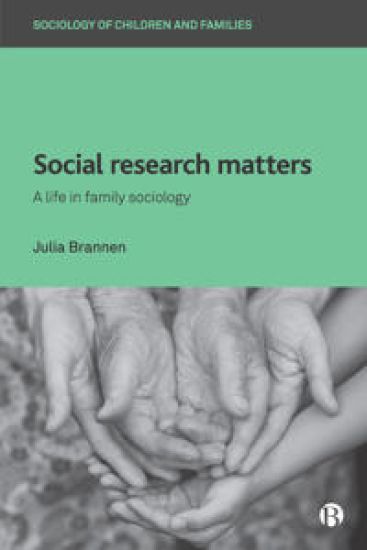
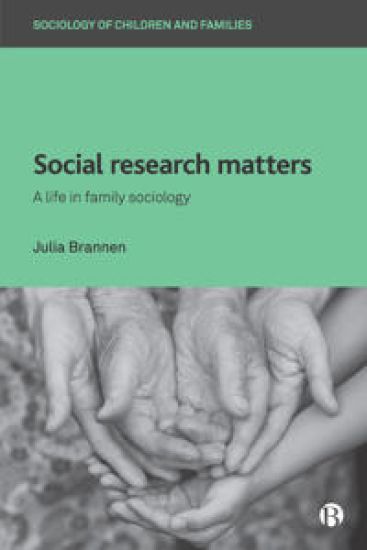
From the vantage point of forty years in social research and the study of families, Julia Brannen offers an invaluable account of how research is conducted and ‘matters’ at particular times. This fascinating work covers key developments in the field that remain of vital concern to society and demonstrates how social research is an art as well as a science – a process that involves craft and creativity.
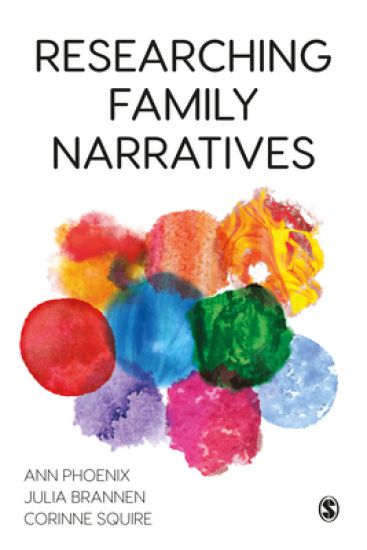
Researching Family Narratives
Ann Phoenix; Julia Brannen; Corinne Squire
SAGE Publications Ltd
2020
sidottu
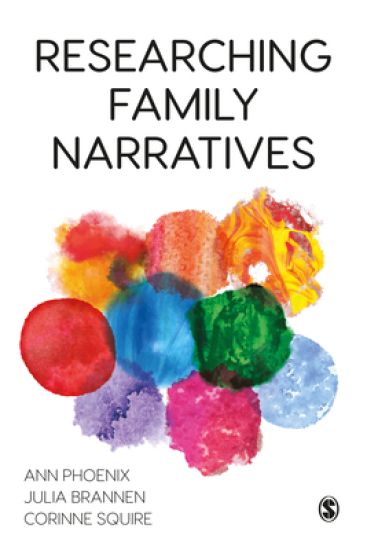
This edited book guides students and researchers through the processes of researching everyday stories about families. Showcasing the wide range methods and data sources currently used in narrative research, it features: Examples of real research into historical and contemporary family practices from around the world. Coverage of both traditional and cutting-edge topics, like multi-method approaches, online research, and paradata. Practical advice from leading figures in the field on how to incorporate these methods and data sources into family narrative research. With accessible language and features that help readers reflect on and internalize key concepts, this book helps readers navigate researching family lives with confidence and ease.
Researching Family Narratives
Ann Phoenix; Julia Brannen; Corinne Squire
SAGE Publications Ltd
2020
nidottu
This edited book guides students and researchers through the processes of researching everyday stories about families. Showcasing the wide range methods and data sources currently used in narrative research, it features: Examples of real research into historical and contemporary family practices from around the world. Coverage of both traditional and cutting-edge topics, like multi-method approaches, online research, and paradata. Practical advice from leading figures in the field on how to incorporate these methods and data sources into family narrative research. With accessible language and features that help readers reflect on and internalize key concepts, this book helps readers navigate researching family lives with confidence and ease.
From the vantage point of forty years in social research and the study of families, Julia Brannen offers an invaluable account of how research is conducted and ‘matters’ at particular times. This fascinating work covers key developments in the field that remain of vital concern to society and demonstrates how social research is an art as well as a science – a process that involves craft and creativity.
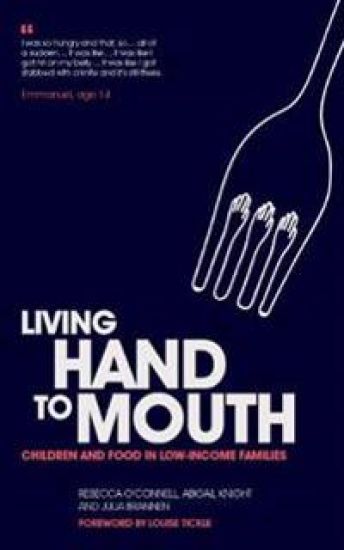
Living Hand to Mouth
Rebecca O'Connell; Abigail Knight; Julia Brannen
Child Poverty Action Group
2019
nidottu
This book by Rebecca O'Connell, Abigail Knight and Julia Brannen brings the latest research on food poverty together with the voices of children and young people experiencing food poverty first hand. What are the social and family circumstances that leave children hungry and prevent them eating in socially acceptable ways? What part does school food play in the diets of children whose families are on low incomes? Illustrated with photographs by young people and researchers, the book sheds light on the various dimensions of food poverty, including hunger, poor diets and social participation as well as families who are eating well despite having a low income. It asks who is responsible for making sure young people eat well and have access to adequate food for health and social participation, and includes recommendations from CPAG.
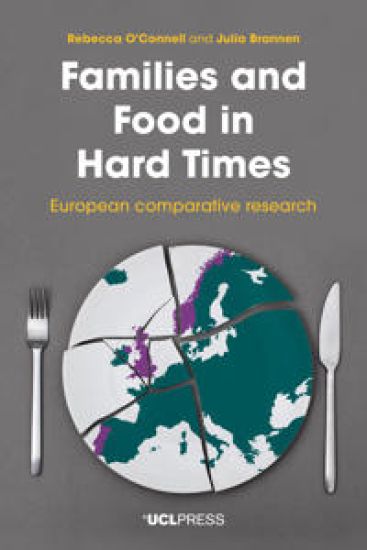
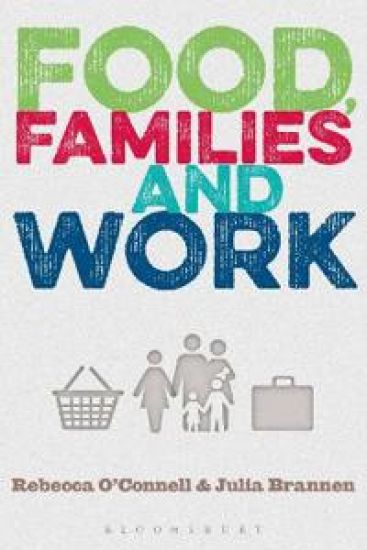
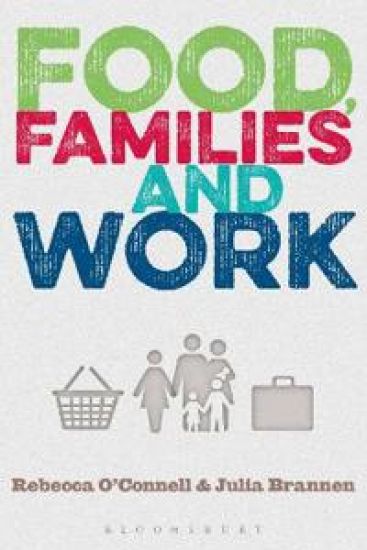
With dual-working households now the norm, Food, Families and Work is the first comprehensive study to explore how families negotiate everyday food practices in the context of paid employment. As the working hours of British parents are among the highest in Europe, the United Kingdom provides a key case study for investigating the relationship between parental employment and family food practices. Focusing on issues such as the gender division of foodwork, the impact of family income on diet, family meals, and the power children wield over the food they eat, the book offers a longitudinal view of family routines. It explores how the everyday meanings of food change as children grow older and negotiate changes in their own lives and those of their family members. Drawing on extensive quantitative data from large-scale surveys of food and diet – as well as qualitative evidence – to emphasise the larger global context of social and economic change and shifting patterns of family life, Rebecca O‘Connell and Julia Brannen present a holistic overview of food practices within busy contemporary family lives. Featuring perspectives from both parents and children, this innovative approach to some of the most hotly-debated topics in food studies is a must-read for students and scholars in food studies, sociology, anthropology, nutrition and public health.
Coming to care
Julia Brannen; June Statham; Ann Mooney; Michaela Brockmann
Policy Press
2007
sidottu
Coming to Care offers an original contribution to the understanding of care and care work in children's services in Britain in the early twenty first century. It provides fascinating insights into the factors that influence why people enter and leave care work, their motivations and the intersection of their work with their family lives. Focusing on four diverse groups of workers - residential social workers, foster carers, family support workers and community childminders - who take on the care of vulnerable children and young people in the context of relatively low levels of qualifications, the book examines their life course as care workers. It explores: the range of factors that attract people into care work, including the biographical circumstances and the serendipitous factors that propel them into the work; their understandings of and commitment to the work; and how their identities as care workers are created and sustained. The book is highly relevant to current policy debates about the development of children's services and reforming the childcare workforce and offers a range of practical recommendations. It should provide interesting reading to policy makers and service providers, as well as academics and students in the childcare and social care fields.
Connecting Children focuses on children's understandings of care and their views of different family lives. It portrays the lives of children aged 11-12 and shows how families connect children in different ways both in the household but also in their wider kinship networks. The children studied reflect upon family life and especially upon situations where their own family lives change dramatically, such as when parents divorce or are unable to care for them. This book will be of interest to those working in education, social work, child care, counselling, social policy and childhood studies.
Much academic work on families and households has focused in the past on the adult members. However, a surge of interest in children's issues has occurred recently in the social sciences. A key theoretical assumption in this area of research is that children's relationships and cultures are worthy of study in their own right and that children play an active part in the construction of these cultures and relationships.; This work provides perspectives on children in their family contexts. It shows that children's needs and wishes have often been neglected in the social sciences, especially in the areas of law, social policy and sociology. The authors present empirical research on children and young people in contemporary family settings and offer theoretical insights which challenge existing thinking on modern childhood. They draw on international comparisons between the condition of childhood and children's welfare, putting forward an argument for future research and policy initiatives needing to concentrate on, and even privilege, children.
Young People, Health and Family Life
Julia Brannen; Kathryn Dodd; Ann Oakley; Pamela Storey
Open University Press
1994
nidottu
* What is it like to be a teenager today?* How do parents and teenagers experience their roles and responsiblities?* And how does the problem of health - a major cultural goal of the twentieth century - figure in the perspective and priorties of young people and their parentsThis book seeks to answer these questions in a unique study of over 800 16-year-olds. Taking family life as the focus, the book explores a critical moment in teenagers and parents lives with respect to the transition to adulthood, a point a which young people and parents take important decisions about the future, especially concerning education, training and the labour market.