Kirjojen hintavertailu – 12 859 828 kirjaa ja 27 kauppaa

Kirjailija

Julia Budka

Kirjat ja teokset yhdessä paikassa: 7 kirjaa, julkaisuja vuosilta 2010–2026, suosituimpiin kuuluu Bestattungsbrauchtum Und Friedhofsstruktur Im Asasif: Eine Untersuchung Der Spatzeitlichen Befunde Anhand Der Ergebnisse Der Osterreichischen Ausgrabu. Vertaile teosten hintoja ja tarkista saatavuus suomalaisista kirjakaupoista.

7 kirjaa

Kirjojen julkaisuvuodet: 2010–2026.

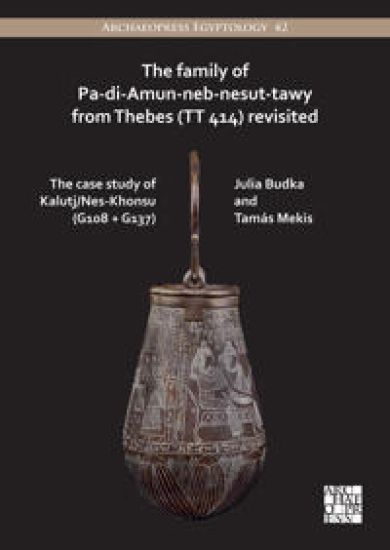
The Family of Pa-di-Amun-neb-nesut-tawy from Thebes (TT 414) Revisited
The Family of Pa-di-Amun-neb-nesut-tawy from Thebes (TT 414) revisited provides fresh material about the identity of one of the key figures of the family that reused the Saite tomb of Ankh-Hor (TT 414) in the Asasif from the 4th century BCE onwards. It is the woman Kalutj/Nes-Khonsu, who was previously listed in the genealogical register of TT 414 as Pa-di-Amun-neb-nesut-tawy’s daughter and wife of one of his sons, Hor. By examining objects found by the agents of the consuls in the 19th century CE and those found by the Austrian mission in the 1970s in TT 414 and in wider Theban contexts, the authors are able to identify Kalutj/Nes-Khonsu, wife of Hor, as another, until now overlooked individual, separate from his sister with the same name. The examination of the funerary assemblage of Kalutj/Nes-Khonsu and of objects belonging to her husband, daughter and sons reveals not only details of Late Dynastic and Ptolemaic burial customs in Thebes but also additional information on the priesthood of Khonsu and of the sacred baboons in this era. This new identification of a previously overlooked person, the mistress of the house and daughter of the first prophet of Amun, Kalutj/Nes-Khonsu (G108 + G137), demonstrates that the finds from TT 414 are still far from being processed in their totality. This material has the potential to provide answers to some of the open questions regarding Late Dynastic/Ptolemaic Thebes and to contextualise funerary assemblages.
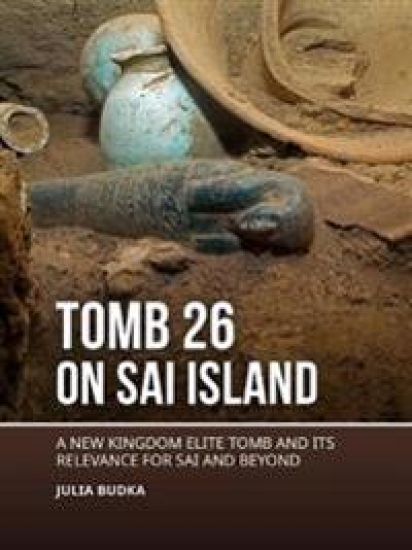
Tomb 26 on Sai Island

Tomb 26 on Sai Island

Julia Budka

Sidestone Press
2021
nidottu
New Kingdom burial customs in Nubia (northern Sudan) are well traceable by means of large cemeteries, in particular Egyptian style rock-cut shaft tombs with pyramidal superstructures. These tombs and their contents have lately been discussed as important data sets offering insights into the diverse population, material culture, funerary, and social practices in New Kingdom Nubia. A new rock-cut shaft tomb, potentially with pyramidal superstructure (Tomb 26), was discovered by the AcrossBorders project on Sai Island in 2015. This tomb yielded intact interments of officials connected with the Egyptian administration of colonial Nubia, buried together with family members and rich burial assemblages. Tomb 26 allows a close comparison with contemporaneous evidence from the nearby New Kingdom town of Sai, therefore providing a more complete picture of life and death in New Kingdom colonial Nubia. This book is the final publication of Tomb 26, its architecture and material culture, including chapters on geology, human remains, scientific analyses, and a compilation of the material discovered. New information provided by AcrossBorders excavations of Tomb 26 contribute to recently discussed questions regarding cultural encounters and social practices in New Kingdom Nubia. Comparable material from other tombs on Sai and elsewhere in Nubia is discussed in order to stress the relevance of the new discovery. The archaeological contextualization of Tomb 26, in combination with scientific analyses like strontium isotope analysis, offers fresh information on the complex coexistence of various cultural groups on Sai with slightly different approaches to their cultural and social affinities during the New Kingdom. Overall, Tomb 26 and its associated finds are of prime significance for understanding lived experience on New Kingdom Sai and more broadly in New Kingdom Nubia. With contributions by: Johannes Auenm ller, Cajetan Geiger, Rennan Lemos, Andrea Stadlmayr and Marlies Wohlschlager

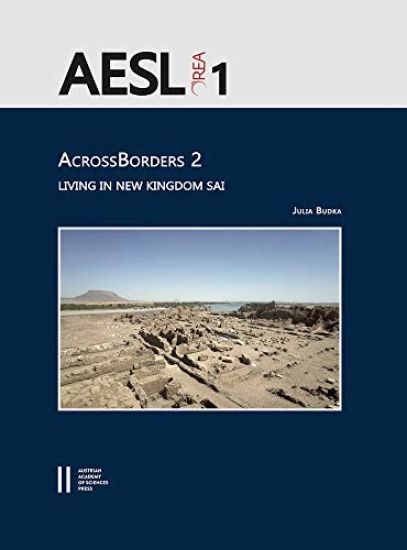
Acrossborders 2: Living in New Kingdom Sai: With Contributions by Johannes Auenmuller, Annette M. Hansen, Frits Heinrich, Veronica Hinterhuber, Ptolem
This volume is the second in a series of monographs presenting the results of the ERC project "AcrossBorders" on the island of Sai in Sudan. Findings from excavations and surveys in various areas of the Egyptian town are used to reconstruct life in the New Kingdom (c. 1530-1070 BC). The architecture, the material culture, but also the geology, botanical remains and animal bones are analysed. Overall, the findings presented here for the first time not only emphasize the important role of Sai in the New Kingdom, but also give new insights into the lives of its inhabitants.
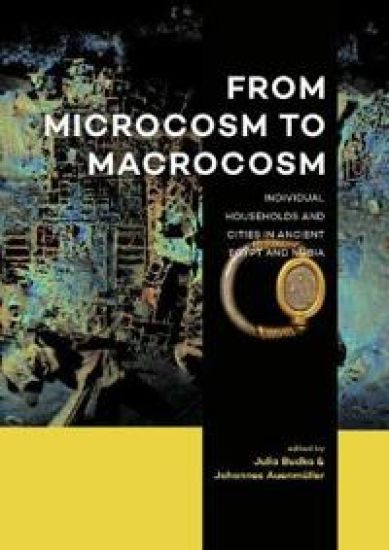
From Microcosm to Macrocosm

From Microcosm to Macrocosm

Julia Budka; Johannes Auenmüller

Sidestone Press
2018
sidottu
As reflected in the title From Microcosm to Macrocosm: Individual households and cities in Ancient Egypt and Nubia, both a micro-approach introducing microhistories of individual sites according to recent archaeological fieldwork incorporating interdisciplinary methods as well as general patterns and regional developments in Northeast Africa are discussed. This combination of research questions on the micro-level with the macro-level provides new information about cities and households in Ancient Egypt and Nubia and makes the book unique. Architectural studies as well as analyses of material culture and the new application of microarchaeology, here especially of micromorphology and archaeometric applications, are presented as case studies from sites primarily dating to the New Kingdom (Second Millennium BC). The rich potential of well-preserved but still not completely explored sites in modern Sudan, especially as direct comparison for already excavated sites located in Egypt, is in particular emphasised in the book. Settlement archaeology in Egypt and Nubia has recently moved away from a strong textual approach and generalised studies to a more site-specific approach and household studies. This new bottom-up approach applied by current fieldwork projects is demonstrated in the book. The volume is intended for all specialists at settlements sites in Northeast Africa, for students of Egyptology and Nubian Studies, but it will be of interest to anyone working in the field of settlement archaeology. It is the result of a conference on the same subject held in 2017 as the closing event of the European Research Council funded project AcrossBorders at Munich.
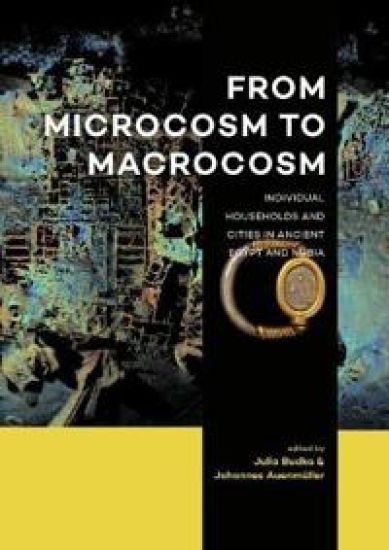
From Microcosm to Macrocosm

From Microcosm to Macrocosm

Julia Budka; Johannes Auenmüller

Sidestone Press
2018
nidottu
As reflected in the title From Microcosm to Macrocosm: Individual households and cities in Ancient Egypt and Nubia, both a micro-approach introducing microhistories of individual sites according to recent archaeological fieldwork incorporating interdisciplinary methods as well as general patterns and regional developments in Northeast Africa are discussed. This combination of research questions on the micro-level with the macro-level provides new information about cities and households in Ancient Egypt and Nubia and makes the book unique. Architectural studies as well as analyses of material culture and the new application of microarchaeology, here especially of micromorphology and archaeometric applications, are presented as case studies from sites primarily dating to the New Kingdom (Second Millennium BC). The rich potential of well-preserved but still not completely explored sites in modern Sudan, especially as direct comparison for already excavated sites located in Egypt, is in particular emphasised in the book. Settlement archaeology in Egypt and Nubia has recently moved away from a strong textual approach and generalised studies to a more site-specific approach and household studies. This new bottom-up approach applied by current fieldwork projects is demonstrated in the book. The volume is intended for all specialists at settlements sites in Northeast Africa, for students of Egyptology and Nubian Studies, but it will be of interest to anyone working in the field of settlement archaeology. It is the result of a conference on the same subject held in 2017 as the closing event of the European Research Council funded project AcrossBorders at Munich.
Bestattungsbrauchtum Und Friedhofsstruktur Im Asasif: Eine Untersuchung Der Spatzeitlichen Befunde Anhand Der Ergebnisse Der Osterreichischen Ausgrabu
Die Untersuchung basiert auf Ergebnissen der Feldarbeiten des Osterreichischen Archaologischen Institutes in Zusammenarbeit mit dem Institut fur Agyptologie der Universitat Wien in Theben-West(Luxor. Diese Grabungen setzten im Herbst 1969 im ostlichen Teil des Asasifs ein und wurden aufgrund viel versprechender Ergebnisse bis ins Jahr 1977 mit Feldkampagnen fortgefuhrt. Bis auf das 1971 entdeckte, monumentale Grab des Anch-Hor (TT 414) und die dortigen in situ gemachten Funde blieben das Fundmaterial, die damit zusammenhangende Architektur und der Grabungsbefund grosstenteils unveroffentlicht. Insofern war bis zu Beginn der vorliegenden Studie eines der damals formulierten Forschungsziele noch nicht eingelost: die detaillierte Rekonstruktion der strukturellen und historischen Entwicklung der Nekropole und der diachronen Entwicklung des Bestattungsbrauchtums. Die Studie prasentiert die vielfaltigen archaologischen Befunde (Stratigraphie, Architektur, Inventar der Graber und Streugut) zum einen im Detail und im jeweiligen, spezifischen Kontext, zum anderen werden die Bezuge der Hinterlassenschaften untereinander zu einer interpretativen Gesamtschau genutzt. Auf diese Weise konnte ein Bild der vielschichtigen Benutzung des Asasifs zur Zeit der Spatzeit (8.-3. Jahrhundert v. Chr.) gewonnen werden, das uber den Aussagewert einer Baubeschreibung oder Einzelarbeit zu Objektgruppen hinausgeht. Durch die kontextuelle Analyse des Fundmaterials ergaben sich wesentliche Neuerkenntnisse zur materiellen und funeraren Kultur der Spatzeit (z. B. zur Praxis von Beigabenkeramik). Die Arbeit leistet insgesamt einen Beitrag zur Veranschaulichung der historischen Entwicklung und sozialen Struktur eines Friedhofes, seiner vielschichtigen und mehr-funktionalen Nutzung sowie seiner Integration in das altagyptische Alltagsleben.