Kirjojen hintavertailu – 12 859 819 kirjaa ja 27 kauppaa

Kirjailija

Julia Kristeva

Kirjat ja teokset yhdessä paikassa: 98 kirjaa, julkaisuja vuosilta 1979–2026, suosituimpiin kuuluu Colette. Vertaile teosten hintoja ja tarkista saatavuus suomalaisista kirjakaupoista.

98 kirjaa

Kirjojen julkaisuvuodet: 1979–2026.

New Maladies of the Soul

New Maladies of the Soul

Julia Kristeva

Columbia University Press
1997
pokkari
These days, who still has a soul? asks Julia Kristeva in her psychoanalytic exploration, New Maladies of the Soul. Hailed by Peter Brooks in the New York Times as "a critic of great psychoanalytic insight," Kristeva reveals to readers a new kind of patient, symptomatic of an age of political upheaval, mass-mediated culture, and the dramatic overhaul of familial and sexual mores. The book poses a troubling question about the human subject in the West today: Is the psychic space that we have traditionally known disappearing?
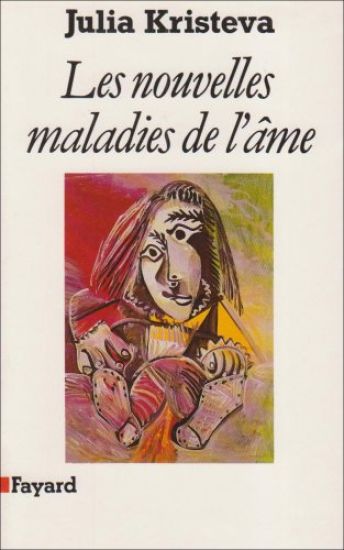
New Maladies of the Soul

New Maladies of the Soul

Julia Kristeva

Columbia University Press
1995
sidottu
These days, who still has a soul? asks Julia Kristeva in her psychoanalytic exploration, New Maladies of the Soul. Hailed by Peter Brooks in the New York Times as "a critic of great psychoanalytic insight," Kristeva reveals to readers a new kind of patient, symptomatic of an age of political upheaval, mass-mediated culture, and the dramatic overhaul of familial and sexual mores. The book poses a troubling question about the human subject in the West today: Is the psychic space that we have traditionally known disappearing?
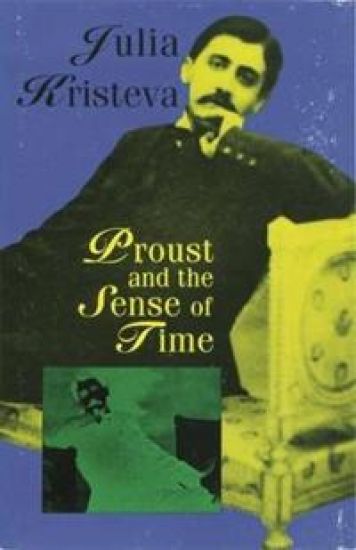
Proust and the Sense of Time

Proust and the Sense of Time

Julia Kristeva

Columbia University Press
1993
sidottu
Noted literary critic, psychoanalyst, and theorist Julia Kristeva presents a thoroughly original and compelling reading of Proust's Remembrance of Things Past, just delivered at the 1992 T. S. Eliot Memorial Lectures at Canterbury. Kristeva's first essay, "Proust and Time Embodied," takes a broadly psychoanalytical, linguistically sensitive approach to Proust's exploration of time and the operation of memory. Next in "In Search of Madeline," she delves into Proust's concept of the little cake that flooded him with the taste of childhood regained, providing an explanation for Proust's search for the deeper levels of childhood grounded in her psychoanalytic experience. Throughout Proust and the Sense of Time, Kristeva draws on Proust's notebooks and manuscripts, pointing out significant variations in the different versions of his work. She examines his early philosophical training and the philosophical trends in Paris at the turn of the century, seeking to explain how he his concept of the primacy of memory and sensation.
The Samurai

The Samurai

Julia Kristeva

Columbia University Press
1992
sidottu
A portrait of Parisian intellectuals of the 1960s as seen through the eyes of Olga, a young Eastern European who comes to Paris to write a literary thesis, and finds herself immediately swept into the world of a group of young leftist thinkers and writers known as the "Samurai".
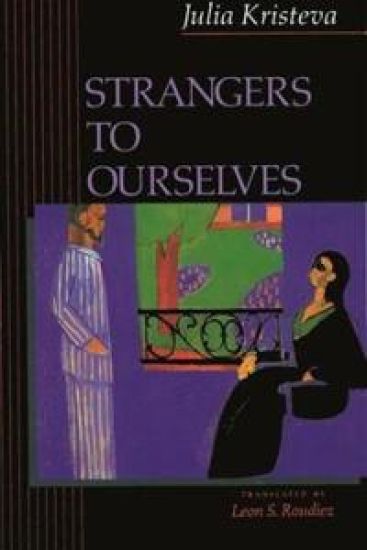
Strangers to Ourselves

Strangers to Ourselves

Julia Kristeva

Columbia University Press
1991
pokkari
This book is concerned with the notion of the "stranger" -the foreigner, outsider, or alien in a country and society not their own- as well as the notion of strangeness within the self -a person's deep sense of being, as distinct from outside appearance and their conscious idea of self. Kristeva begins with the personal and moves outward by examining world literature and philosophy. She discusses the foreigner in Greek tragedy, in the Bible, and in the literature of the Middle Ages, Renaissance, Enlightenment, and the twentieth century. She discusses the legal status of foreigners throughout history, gaining perspective on our own civilization. Her insights into the problems of nationality, particularly in France are more timely and relevant in an increasingly integrated and fractious world.
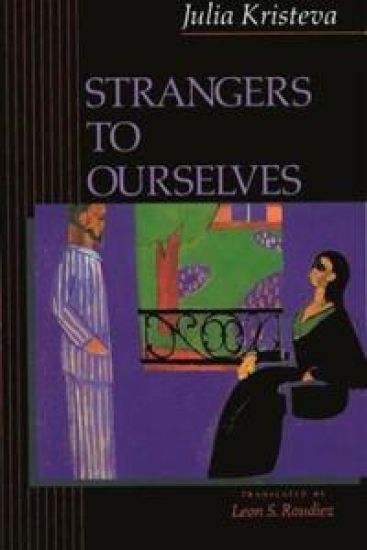
Strangers to Ourselves

Strangers to Ourselves

Julia Kristeva

Columbia University Press
1991
sidottu
This book is concerned with the notion of the "stranger" -the foreigner, outsider, or alien in a country and society not their own- as well as the notion of strangeness within the self -a person's deep sense of being, as distinct from outside appearance and their conscious idea of self. Kristeva begins with the personal and moves outward by examining world literature and philosophy. She discusses the foreigner in Greek tragedy, in the Bible, and in the literature of the Middle Ages, Renaissance, Enlightenment, and the twentieth century. She discusses the legal status of foreigners throughout history, gaining perspective on our own civilization. Her insights into the problems of nationality, particularly in France are more timely and relevant in an increasingly integrated and fractious world.
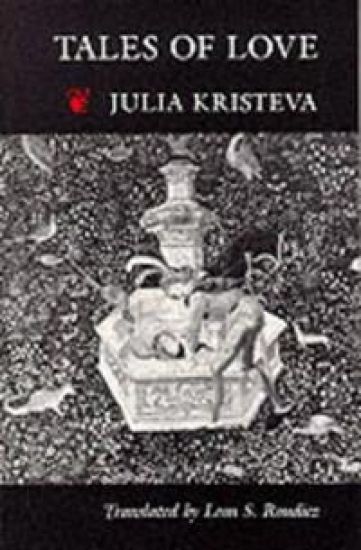
Tales of Love

Tales of Love

Julia Kristeva

Columbia University Press
1989
pokkari
Her analysis deals with the role of narcissism and idealization in the formation of a love object. She accounts for the role of the death drive by coining the term "love/hate."
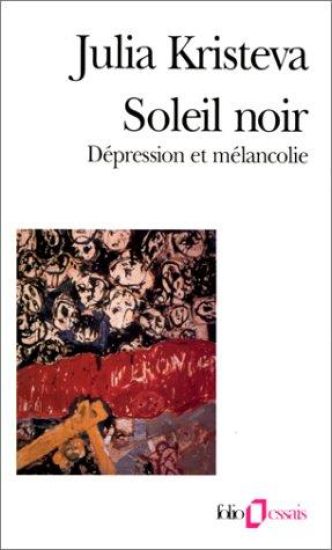
SOLEIL NOIR

SOLEIL NOIR

JULIA KRISTEVA

Francais / ranskankieliset
1987
Pehmeäkantinen
Due tesi ardite sostengono questo libro di Julia Kristeva – semiologa, scrittrice, grande intellettuale e interprete del disagio dei nostri tempi: la prima è che la «melanconia» degli antichi, la atra bilis studiata da Aristotele, da Ippocrate e da Galeno, indagata nel Rinascimento da Marsilio Ficino e immortalata da Dürer, pur restando sostanzialmente la stessa, abbia assunto ai giorni nostri il volto di una malattia riconoscibile: la depressione. La seconda è che quest’ultima, proprio perché sperimenta l’inconsistenza del senso delle cose, sia capace di una trasformazione rivoluzionaria: di cambiare il pensiero e le forme artistiche. Un viaggio affascinante, quello di Julia Kristeva, attraverso la psicoanalisi, la filosofia, l’estetica letteraria, la storia, l’arte. Dopo avere affrontato tre figure della depressione femminile – casi clinici narrati come tre cronache – Kristeva si confronta con le storie di quattro grandi artisti, nei quali la malinconia ha prodotto opere di alto valore simbolico, in epoche e contesti differenti: Hans Holbein, Gérard de Nerval, Fëdor Dostoevskij e Marguerite Duras. Spaziando dall’idea del sublime a quella di morte, dalla nostalgia al dolore della mente, Sole nero costituisce un’indagine sulla sofferenza contemporanea e sui suoi effetti sulla società. Una riflessione sul dolore, certo, ma anche sul senso di una nuova forma del sacro, perché, come afferma Kristeva, «oggi non è tanto il sesso che incomoda o che fa paura, quanto il dolore permanente, il cadavere potenziale che noi siamo. Chi osa guardarli negli occhi? La depressione è il segreto, forse il sacro della nostra epoca».

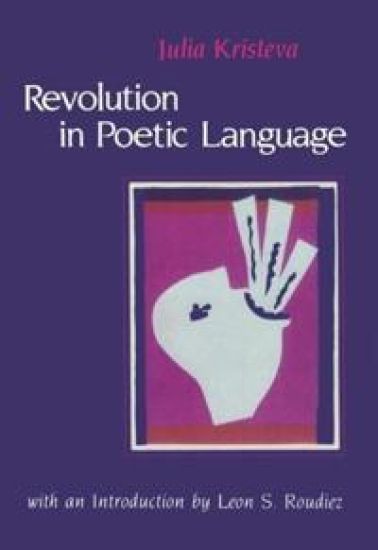
Revolution in Poetic Language

Revolution in Poetic Language

Julia Kristeva; Leon Roudiez

Columbia University Press
1985
pokkari

Halvin toimitettuna 42,10 €

The linking of psychosomatic to literary and literary to a larger political horizon raises the question of conservative premises to linguistic, pyschoanalystic, philisophical, and literary theories and criticisms of such.
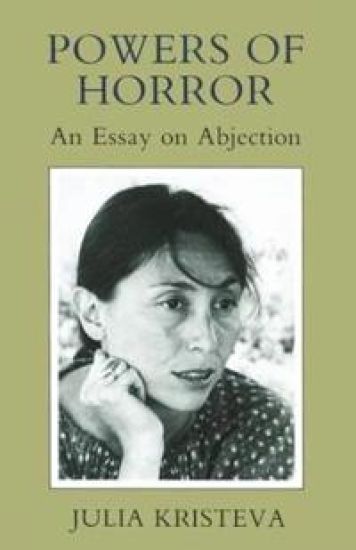
Powers of Horror

Powers of Horror

Julia Kristeva

Columbia University Press
1984
pokkari

Halvin toimitettuna 49,20 €

Powers of Horror is an excellent introduction to an aspect of contemporary French literature which has been allowed to become somewhat neglected in the current emphasis on para-philosophical modes of discourse."
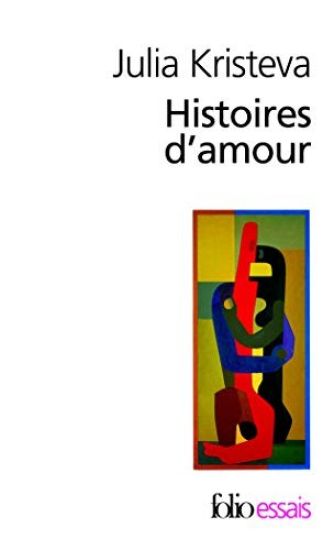
HISTOIRES D’AMOUR

HISTOIRES D’AMOUR

JULIA KRISTEVA

Francais / ranskankieliset
1983
Pehmeäkantinen
«Être psychanalyste, c’est savoir que toutes les histoires reviennent à parler d’amour. La plainte que me confient ceux qui balbutient à côté de moi a toujours pour cause un manque d’amour présent ou passé, réel ou imaginaire. Je ne peux l’entendre que si je me place moi-même en ce point d’infini, douleur ou ravissement. C’est avec ma défaillance que l’autre compose le sens de son aventure. Philosophie, religion, poésie, roman ? Histoires d’amour. De Platon à saint Thomas, de Roméo et Juliette à Don Juan, des troubadours à Stendhal, de la Madone à Baudelaire ou Bataille. Les grandes élaborations symboliques ne disent pourtant rien d’autre que ce qui s’écoute dans l’ombre, chaque jour. Être psychiquement en vie signifie que vous êtes amoureux, en analyse, ou bien en proie à la littérature. Comme si toute l’histoire humaine n’était qu’un immense et permanent transfert.» Julia Kristeva.