
Kirjailija
Julian Baggini
Kirjat ja teokset yhdessä paikassa: 47 kirjaa, julkaisuja vuosilta 2005–2026, suosituimpiin kuuluu Filosofisen ajattelun opas. Vertaile teosten hintoja ja tarkista saatavuus suomalaisista kirjakaupoista.
47 kirjaa
Kirjojen julkaisuvuodet: 2005–2026.
Invaluable wisdom on living a good life from one of the Enlightenment's greatest philosophersDavid Hume (1711–1776) is perhaps best known for his ideas about cause and effect and his criticisms of religion, but he is rarely thought of as a philosopher with practical wisdom to offer. Yet Hume's philosophy is grounded in an honest assessment of nature—human nature in particular. The Great Guide is an engaging and eye-opening account of how Hume's thought should serve as the basis for a complete approach to life. In this enthralling book, Julian Baggini masterfully interweaves biography with intellectual history and philosophy to give us a complete vision of Hume's guide to life. He follows Hume on his life's journey, literally walking in the great philosopher's footsteps as Baggini takes readers to the places that inspired Hume the most, from his family estate near the Scottish border to Paris, where, as an older man, he was warmly embraced by French society. Baggini shows how Hume put his philosophy into practice in a life that blended reason and passion, study and leisure, and relaxation and enjoyment. The Great Guide includes 145 Humean maxims for living well, on topics ranging from the meaning of success and the value of travel to friendship, facing death, identity, and the importance of leisure. This book shows how life is far richer with Hume as your guide.
Even if we don't believe that Jesus was the son of God, we tend to think he was a great moral teacher. But was he? And how closely do idealised values such as our love of the family, helping the needy, and the importance of kindness, match Jesus's original tenets? Julian Baggini challenges our assumptions about Christian values - and about Jesus - by focusing on Jesus's teachings in the Gospels, stripping away the religious elements such as the accounts of miracles or the resurrection of Christ. Reading closely this new 'godless' Gospel, included as an appendix, Baggini asks how we should understand Jesus's attitude to the renunciation of the self, to politics, or to sexuality, as expressed in Jesus's often elusive words. An atheist from a Catholic background, Baggini introduces us to a more radical Jesus than popular culture depicts. And as he journeys deeper into Jesus's worldview, and grapples with Jesus's sometimes contradictory messages, against his scepticism he finds that Jesus's words amount to a purposeful and powerful philosophy, which has much to teach us today.
On the face of it, Gabriel Axel's Babette's Feast (1989) is a film in which the eyes – and mouths – of religious zealots are opened to the glories of the sensual world. It is a critique of what Nietzsche called life-denying religion in favour of life-affirming sensuality. But to view the film in that way is to get it profoundly wrong. In his study of the film, Julian Baggini argues that Babette's Feast is not about the battle between religiosity and secularity but a deep examination of how the two can come together. Baggini's analysis focuses on themes of love, pleasure, artisty and grace, to provide a rich philosophical reading of this most sensual of films.
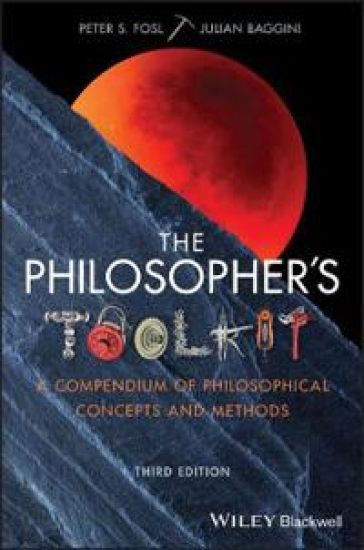
The Philosopher's Toolkit
Peter S. Fosl; Julian Baggini
Wiley-Blackwell
2020
nidottu
Halvin toimitettuna 28,10 €
A new edition of the bestselling guide to the study of philosophy: the ideal intellectual ‘toolkit’ for sharpening analytical skills and building philosophical acuity Whether used as a guide to basic principles or a resource for key concepts and methods, The Philosopher's Toolkit equips readers with all the intellectual ‘tools’ necessary for engaging closely with philosophical argument and developing fluency in the methods and language of philosophical inquiry. Featuring accessible explanations, practical examples, and expert guidance, this text empowers readers to understand traditional philosophical thinking and to engage with new ideas. Focuses on the practical methods and concepts necessary for philosophical inquiryPresents a versatile resource for both novice and advanced students in areas of philosophy, critical theory, and rhetoricAdopts a pluralistic approach to teaching philosophy, making this a suitable resource for many coursesDelivers extensive cross-referenced entries, recommended readings, and updated online resourcesCovers an array of topics, from basic tools of argumentation to sophisticated philosophical principlesFully revised and updated to include new topics and entries as well as expanded recommended reading lists to encourage further study
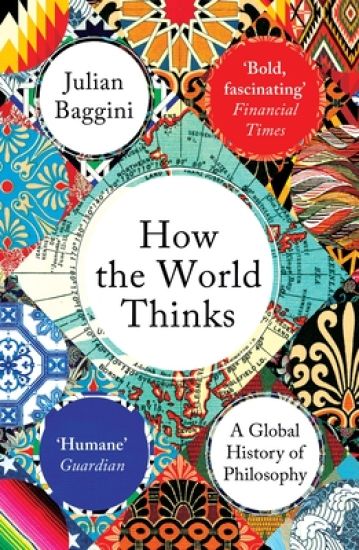
'There to fill the Sapiens-size hole in your life' Observer A groundbreaking global overview of philosophy, travelling the world to provide a wide-ranging map of human thought One of the great unexplained wonders of history is that philosophy flowered entirely separately in China, India and Ancient Greece at more or less the same time. These writings would have a profound impact on the development of distinctive cultures in different parts of the world. In How the World Thinks Julian Baggini sets out to expand our horizons, exploring the philosophies of Japan, India, China and the Muslim world, as well as the lesser-known oral traditions of Africa and Australia's first peoples. Interviewing thinkers from around the globe, Baggini asks questions such as: why is the West is more individualistic than the East? What makes secularism a less powerful force in the Islamic world than in Europe? And how has China resisted pressures for greater political freedom? Baggini shows that by gaining greater knowledge of how others think we take the first step to a greater understanding of ourselves. 'Terrific. The intellectual and spiritual generosity of this book makes it an essential text for our fractious and dangerously divided era' Richard Holloway, author of Stories We Tell Ourselves 'This bold fascinating book seeks to inhabit other philosophical traditions, with humility but without patronisingly exempting them from the critique he applies to ours... Deft [and] rigorous' Jane O'Grady, Financial Times
How did we find ourselves in a "post-truth" world of "alternative facts"? And can we get out of it? A Short History of Truth sets out to answer these questions by looking at the complex history of truth and falsehood. It identifies ten types of supposed truth and explains how easily each can become the midwife of falsehood. There is no species of truth that we can rely on unquestioningly, but that does not mean the truth can never be established. Attaining truth is an achievement we need to work for, and each chapter will end up with a truth we can have some confidence in. This history builds into a comprehensive and clear explanation of why truth is now so disputed by exploring 10 kinds of truth:1. Eternal truths.2. Authoritative truths.3. Esoteric truths.4. Reasoned truths.5. Evidence-based truths.6. Creative truths.7. Relative truths. 8. Powerful truths9. Moral truths.10. Holistic truths. Baggini provides us with all we need to restore faith in the value and possibility of truth as a social enterprise. Truth-seekers need to be sceptical not cynical, autonomous not atomistic, provisional not dogmatic, open not empty, demanding not unreasonable.
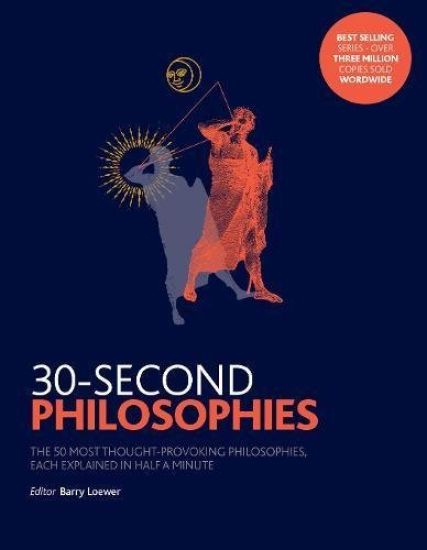
I Think Therefore I Am, Existentialism, Dialectical Materialism? The Socratic Method and Deconstruction? Sure, you know what they all mean. That is, you've certainly heard of them. But do you know enough about them to join a dinner party debate or dazzle the bar with your knowledge?30-Second Philsophies takes a revolutionary approach to getting a grip on the 50 most significant schools of philosophy. The book challenges leading thinkers to quit fretting about the meaning of meaning for a while and explain the most complex philosophical ideas - using nothing more than two pages, 300 words, and a metaphorical image. Here, in one unique volume, you have the chance to pick the potted brains of our leading philosophers and understand complex concepts such as Kant's Categorical Imperative without ending up in a darkened room with an ice pack on your head.
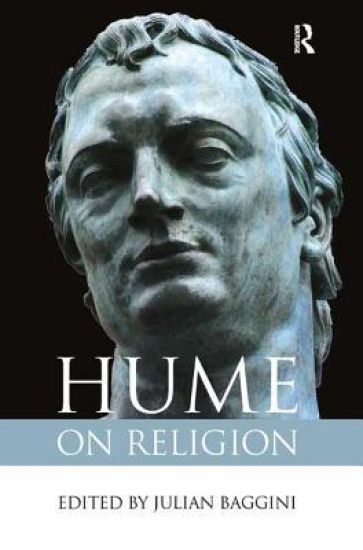
First Published in 2016. David Hume is widely believed to be Britain’s greatest ever philosopher, and his writings on religion are as relevant today as they were in the eighteenth century. This volume gathers together these disparate writings into one handy volume. It includes both his books, ‘Dialogues concerning Natural Religion’ and ‘The Natural History of Religion’, the chapters on miracles and the argument from design from ‘An Enquiry concerning Human Understanding’, and two lesser- known but brilliant essays, ‘On the Immortality of the Soul’ and ‘Of Superstition and Enthusiasm’.
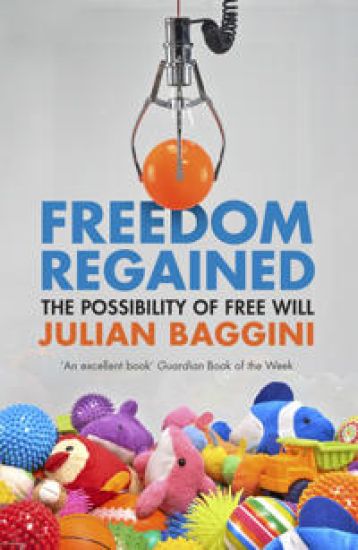
Do we have free will? It's a question that has puzzled philosophers and theologians for centuries and feeds into numerous political, social, and personal concerns. Are we products of our culture, or free agents within it? How much responsibility should we take for our actions? Are our neural pathways fixed early on by a mixture of nature and nurture, or is the possibility of comprehensive, intentional psychological change always open to us? What role does our brain play in the construction of free will, and how much scientific evidence is there for the existence of it? What exactly are we talking about when we talk about 'freedom' anyway? In this cogent and compelling book, Julian Baggini explores the concept of free will from every angle, blending philosophy, neuroscience, sociology and cognitive science. Freedom Regained brings the issues raised by the possibilities - and denials - of free will to vivid life, drawing on scientific research and fascinating encounters with expert witnesses, from artists to addicts, prisoners to dissidents. Contemporary thinking tells us that free will is an illusion, and Baggini challenges this position, providing instead a new, more positive understanding of our sense of personal freedom: a freedom worth having.
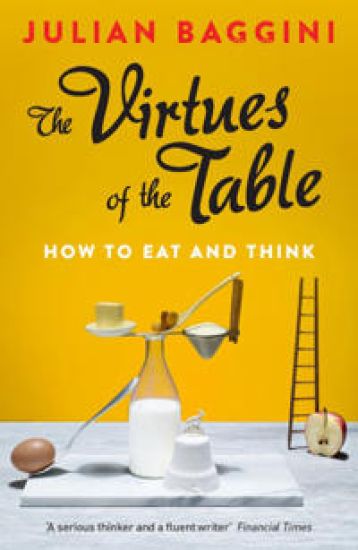
How we eat, farm and shop for food is not only a matter of taste. Our choices regarding what we eat involve every essential aspect of our human nature: the animal, the sensuous, the social, the cultural, the creative, the emotional and the intellectual. Thinking seriously about food requires us to consider our relationship to nature, to our fellow animals, to each other and to ourselves. So can thinking about food teach us about being virtuous, and can what we eat help us to decide how to live? From the author of The Ego Trick and The Pig that Wants to be Eaten comes a thought-provoking exploration of our values and vices. What can fasting teach us about autonomy? Should we, like Kant, 'dare to know' cheese? Should we take media advice on salt with a pinch of salt? And can food be more virtuous, more inherently good, than art?
Can it ever be right to kill? Is terrorism ever justified? Should euthanasia be legal? Are some people superior to others? Do animals have rights? Some ethical judgements are easy: one side is wrong and the other is right. But how do we handle the really tough 'right vs right' dilemmas, where each side has strong moral arguments? In Without God, is Everything Permitted? bestselling author and philosopher Julian Baggini clear-sightedly and compassionately examines 20 of the most complex contemporary ethical dilemmas. Whether it's asking if torture is always wrong, or if discrimination can ever be good, this book will help you sort out what you really believe about the issues that matter most.
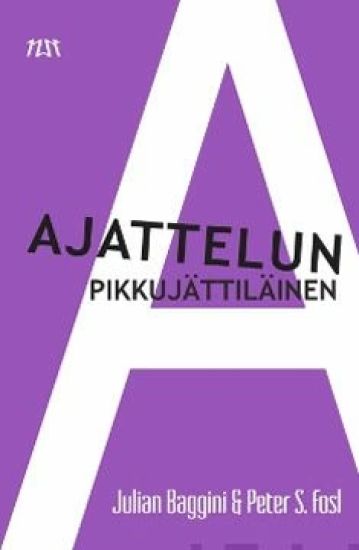
Ajattelun pikkujättiläinen
Julian Baggini; Peter S. Fosl
Eurooppalaisen filosofian seura
2013
nidottu
Halvin toimitettuna 31,30 €
On suotavaa osoittaa olevansa kriittinen kansalainen, mutta vähemmän suotavaa kompastua kommenteissaan, haksahtaa harkinnassaan ja pyllähtää päättelyssään. Ajattelun pikkujättiläinen antaa jokaiselle tehoisan tuumailun välineet. Nykyisen informaatiotulvan keskellä ihminen on suojaton ilman asianmukaisia apuvälineitä. Mutta kriittisen ajattelijan tueksi tarjoutuu Julian Bagginin ja Peter S. Foslin Ajattelun pikkujättiläinen. Tämä kansainvälinen myynti- ja arvostelumenestys yhdistää yleistajuisen ilmaisun ainutlaatuisella tavalla tinkimättömän tiukkaan ajattelutaitojen esittelyyn. Sen neuvojen avulla epäjohdonmukaisuuden ja perustelemattomuuden kaltaiset peikot pakenevat aprikoijaa täyttä karkua. Ajattelun pikkujättiläinen on korvaamaton käsikirja jokaiselle rikkeettömästä ajattelusta kiinnostuneelle. Se tekee selkoa järkiperäisyyden perusteista ja esittelee julkisen järjenkäytön kestävimmät perinteet. Ajattelun pikkujättiläinen on 2012 suomeksi julkaistun Etiikan pikkujättiläisen sisarteos.
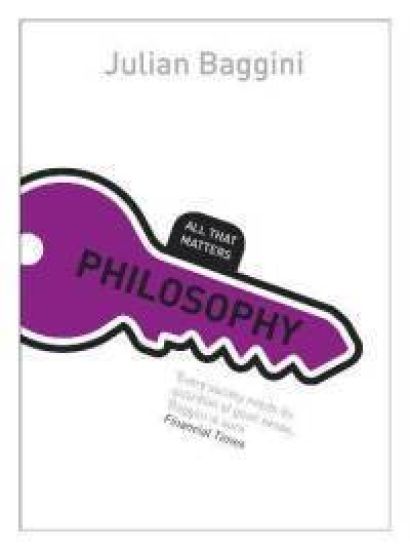
"Philosophy is like fish: best presented without too much adornment; hard to get just right and easy to ruin." What's the point of it all? In Philosophy: All That Matters, bestselling philosopher Julian Baggini shows how abstract ideas feed into the most important existential questions of all. He tells the story of Philosophy, bringing together and interlinking all its different areas, to create what is perhaps the first non-historical narrative of the subject - one that takes you right to its heart. It places philosophy firmly at the centre of what makes us human. From ethics and metaphysics, to the philosophy of science and religion, Baggini explains what makes us different to other species, why philosophy lies at the heart of that difference, and why that matters.
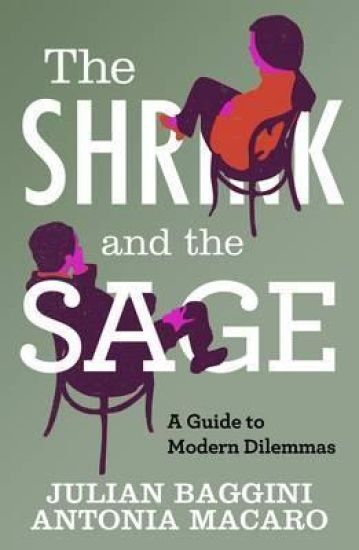
Based on their Financial Times Weekend column, philosopher Julian Baggini and his psychotherapist partner Antonia Macaro offer intriguing answers to life's questions. Can infidelity be good for you? What does it mean to stay true to yourself? Must we fulfil our potential? Self-help with a distinctly cerebral edge, the shrink and the sage - aka Julian Baggini and Antonia Macaro - have been dispensing advice through their FT column since October 2010. Combining practical advice on personal dilemmas with meditations on the meaning of concepts like free will, spirituality and independence, this book - their first together - expands on these columns and adds much more. Through questions of existential unease, metaphysical trauma and - for instance - how much we should care about our appearance, intellectual agony uncle and aunt team Baggini and Macaro begin to piece together the answer that we'd all like to hear: what is the good life, and how we can live it?
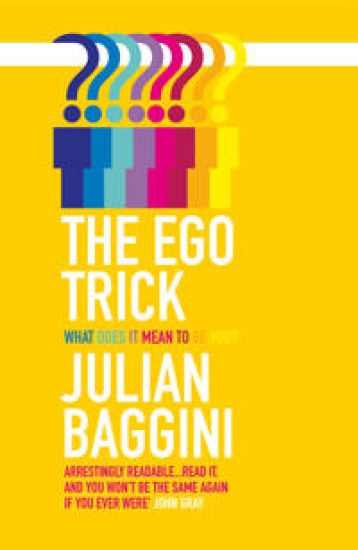
Are you still the person who lived fifteen, ten or five years ago? Fifteen, ten or five minutes ago? Can you plan for your retirement if the you of thirty years hence is in some sense a different person? What and who is the real you? Does it remain constant over time and place, or is it something much more fragmented and fluid? Is it known to you, or are you as much a mystery to yourself as others are to you? With his usual wit, infectious curiosity and bracing scepticism, Julian Baggini sets out to answer these fundamental and unsettling questions. His fascinating quest draws on the history of philosophy, but also anthropology, sociology, psychology and neurology; he talks to theologians, priests, allegedly reincarnated Lamas, and delves into real-life cases of lost memory, personality disorders and personal transformation; and, candidly and engagingly, he describes his own experiences. After reading The Ego Trick, you will never see yourself in the same way again.

Etiikan pikkujättiläinen
Julian Baggini; Peter S. Fosl
Eurooppalaisen filosofian seura
2012
nidottu
Halvin toimitettuna 31,30 €
Eettiset ongelmat ovat vaikeita. Eettinen ajattelu ei. Siihen tarvitaan vain kunnon välineet. Etiikan pikkujättiläinen tuo moraalipulmien pohdiskelun kaikkien kiinnokkaiden ulottuville ja tarjoaa lukijalleen työkalut visaisimpienkin päänvaivojen valottamiseen. Sotkuisten kysymysten selkeyttämisen mestarien Julian Bagginin ja Peter S. Foslin Etiikan pikkujättiläinen on klassikko jo nyt. Puhutaan sitten abortista, omastatunnosta tai oikeutetusta sodasta, se selvittää käsitteitä, avittaa täsmentämään ja luo keskustelulle edellytykset.
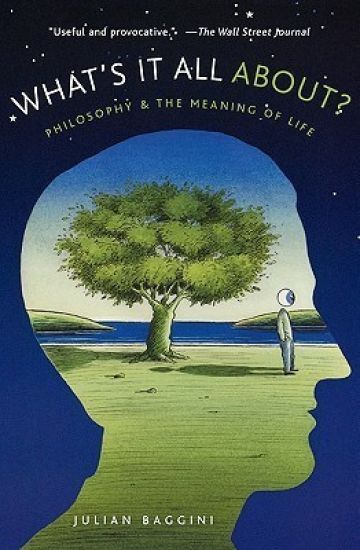
What is the meaning of life? It is a question that has intrigued the great philosophers--and has been hilariously lampooned by Monty Python. Indeed, the whole idea strikes many of us as vaguely pompous and perhaps more than a little absurd. Is there one profound answer, an ultimate purpose behind human existence? Julian Baggini thinks not. Rather, as Baggini argues in What's It All About, meaning can be found in a variety of ways. He succinctly breaks down six answers people commonly suggest when considering what life is all about--helping others, serving humanity, being happy, becoming successful, enjoying each day as if it were your last, and "freeing your mind." By reducing the vague, mysterious question of "meaning" to a series of more specific (if unmysterious) questions about what gives life purpose and value, he shows that the quest for meaning can be personal, empowering, and uplifting. Illustrating his argument with the thoughts of many of the great philosophers and examples drawn from everyday life, Baggini convincingly shows that the search for meaning is personal and within the power of each of us to find.
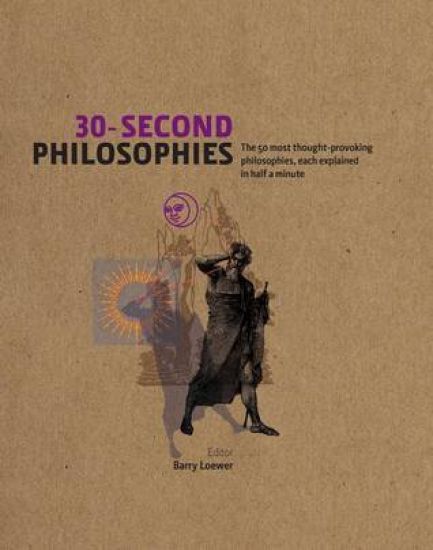
I Think Therefore I Am, Existentialism, Dialectical Materialism? The Socratic Method and Deconstruction? Sure, you know what they all mean. That is, you've certainly heard of them. But do you know enough about them to join a dinner party debate or dazzle the bar with your knowledge?30-Second Philsophies takes a revolutionary approach to getting a grip on the 50 most significant schools of philosophy. The book challenges leading thinkers to quit fretting about the meaning of meaning for a while and explain the most complex philosophical ideas - using nothing more than two pages, 300 words, and a metaphorical image. Here, in one unique volume, you have the chance to pick the potted brains of our leading philosophers and understand complex concepts such as Kant's Categorical Imperative without ending up in a darkened room with an ice pack on your head.
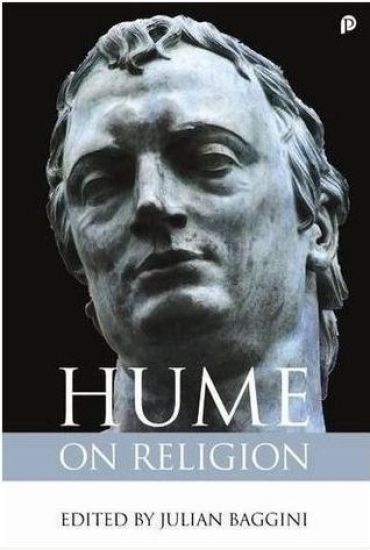
This book presents David Hume's writings on religion, providing an account of a state of the world and of human nature entirely different from the present. It retains Archaic spellings, except on certain occasions when these were an obstacle to comprehension.