Kirjojen hintavertailu – 12 859 818 kirjaa ja 27 kauppaa

Kirjailija

Julian Peters

Kirjat ja teokset yhdessä paikassa: 11 kirjaa, julkaisuja vuosilta 2017–2026, suosituimpiin kuuluu Plough Quarterly No. 22 - Vocation. Vertaile teosten hintoja ja tarkista saatavuus suomalaisista kirjakaupoista.

11 kirjaa

Kirjojen julkaisuvuodet: 2017–2026.

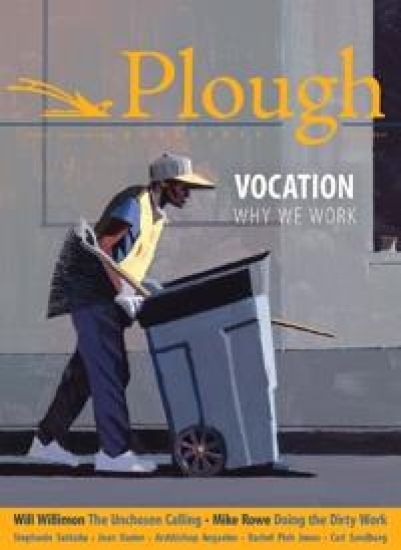
Plough Quarterly No. 22 - Vocation

Plough Quarterly No. 22 - Vocation

Will Willimon; Rachel Pieh Jones; Anne-Sophie Constant; Mike Rowe; Stephanie Saldaña; Scott Beauchamp; Nathan Schneider; Phil Christman; Michael Brendan Dougherty; Julian Peters

Plough Publishing House
2019
pokkari
Your job is not your vocation. Everyone hungers for work that has meaning and purpose. But what gives work meaning? Vocation, or “calling,” is the answer Protestant Christianity offers: each person is called by God to serve the common good in a particular line of work. Your vocation, evidently, might be almost anything: as a nurse, a wilderness guide, a calligrapher, a missionary, an activist, a venture capitalist, a politician, an executioner… Yet, as Will Willimon writes in this issue, the New Testament knows only one form of vocation: discipleship. And discipleship is far more likely to mean leaving father and mother, houses and land, than it is to mean embracing one’s identity as a fisherman or tax collector. This issue of Plough focuses on people who lived their lives with that sense of vocation. Such a life demands self-sacrifice and a willingness to recognize one’s own supposed strengths as weaknesses, as it did for the Canadian philosopher Jean Vanier. It involves a lifelong commitment to a flesh-and-blood church, as Coptic Archbishop Angaelos describes. It may even require a readiness to give up one’s life, as it did for Annalena Tonelli, an Italian humanitarian who pioneered the treatment of tuberculosis in the Horn of Africa. But as these stories also testify, it brings a gladness deeper than any self-chosen path. Also in this issue: - Scott Beauchamp on mercenaries - Nathan Schneider on cryptocurrencies - Stephanie Saldaña on Syrian refugee art - Peter Biles on loneliness at college - Phil Christman on Bible translation - Michael Brendan Dougherty on fatherhood - Insights on vocation from C. S. Lewis, Thérèse of Lisieux, Mother Teresa, Eberhard Arnold, Dorothy Sayers, Jean Vanier, and Gerard Manley Hopkins - poetry by Devon Balwit and Carl Sandburg - reviews of books by Robert Alter, Edwidge Danticat, Matthew D. Hockenos, Amy Waldman, and Jeremy Courtney - art and photography by Pola Rader, Dean Mitchell, Mark Freear, Timothy Jones, Pawel Filipczak, Mary Pal, Harley Manifold, Sami Lalu Jahola, Marc Chagall, and Russell Bain. Plough Quarterly features stories, ideas, and culture for people eager to put their faith into action. Each issue brings you in-depth articles, interviews, poetry, book reviews, and art to help you put Jesus’ message into practice and find common cause with others.
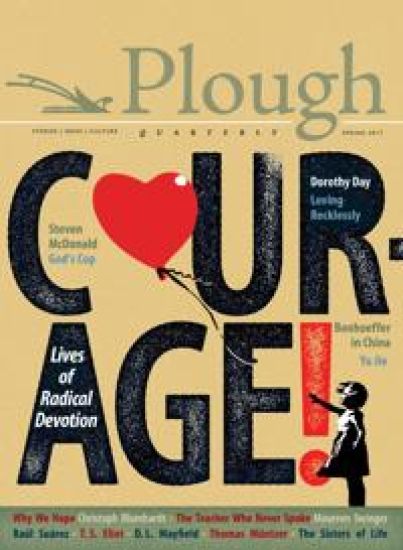
Plough Quarterly No. 12 - Courage

Plough Quarterly No. 12 - Courage

Yu Jie; Ral Surez; Julian Peters; Dorothy Day; Sam Hine; Maureen Swinger; George Bernard Shaw; Meister Eckhart

Plough Publishing House
2017
pokkari
To give hope in uncertain times, this issue of Plough profiles people who have lived courageously. In unsettling times such as these, being told to “take courage” can sound like a grim joke. Yet courage is precisely what we’re in need of today: courage to stand by the truth, and courage to stand by the gospel’s claim that everyone belongs to God, because Jesus has overcome the world. To inspire such courage – and to guard against a failure of nerve or of imagination – this issue of Plough highlights people who have lived courageously. In this issue: • Chinese dissident Yu Jie looks at the challenges facing the church in China. • Cuban pastor Raúl Suárez reveals how encounters with Christians thawed Fidel Castro’s atheism. • Plough pays tribute to NYPD Det. Steven McDonald, who forgave the young shooter who paralyzed him. • Maureen Swinger tells how a young man with severe disabilities became an exceptional teacher. • Evangelical activist D. L. Mayfield finds an unsettling role model in Dorothy Day. • Comic artist Julian Peters illustrates T. S. Eliot’s poem “Little Gidding.” Plus: • Insights on courage from Teresa of Avila, George Bernard Shaw, Meister Eckhart, and Mother Teresa • Original poetry by Christopher Zimmerman • Reviews of Martin Scorsese’s Silence, Mark Sundeen’s The Unsettlers, and Craig Greenfield’s Subversive Jesus • Profiles of Thomas Müntzer, Traudl Wallbrecher, and the Sisters of Life • Art and photography by Nikolay Ge, Boris Ivanovich Kopylov, Taisia Afonina, Wayne Forte, Dave Beckerman, Luca Sartoni, Wu Guanzhong, and Sadao Watanabe Plough Quarterly features stories, ideas, and culture for people eager to put their faith into action. Each issue brings you in-depth articles, interviews, poetry, book reviews, and art to help you put Jesus’ message into practice and find common cause with others.
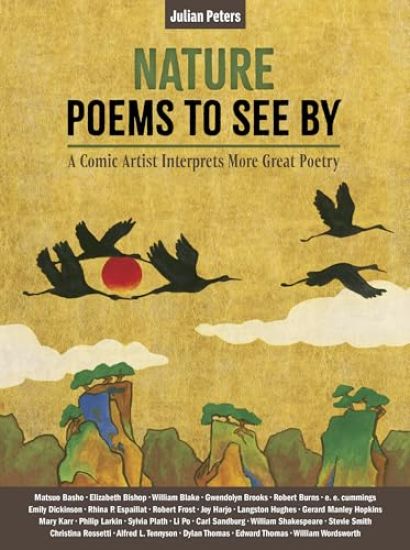
Nature Poems to See By

Nature Poems to See By

Julian Peters

PLOUGH PUBLISHING HOUSE
2026
sidottu
This stunning anthology of favorite poems about our relationship with the natural world, visually interpreted by acclaimed comic artist Julian Peters, breathes new life into some of the greatest poems of all time. These are poems that can change the way we see the environment, and encountering them in graphic form promises to change the way we read the poems. In an age of increasingly visual communication, this format helps unlock the world of poetry and literature for a new generation of reluctant readers and visual learners. Following the seasons of the year and of life, Nature Poems to See By will also help young readers see themselves differently. A valuable teaching aid appropriate for middle school, high school, and college use, the collection includes favorites from the canon already taught in countless English classes. This sequel to the artist’s award-winning anthology Poems to See By includes adaptations of poems by Langston Hughes, William Shakespeare, Sylvia Plath, Emily Dickinson, Gerard Manley Hopkins, William Wordsworth, Mary Karr, Robert Frost, Edward Thomas, William Blake, Dylan Thomas, Robert Burns, Rhina P. Espaillat, Joy Harjo, Alfred L. Tennyson, Matsuo Basho, Gwendolyn Brooks, Stevie Smith, Li Po, Carl Sandburg, e. e. cummings, Elizabeth Bishop, Anne Carson, and Philip Larkin.
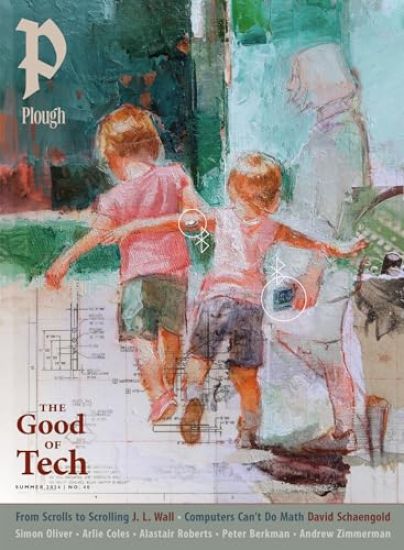
Plough Quarterly No. 40 – The Good of Tech

Plough Quarterly No. 40 – The Good of Tech

Simon Oliver; Sara Novic; Matthew Loftus; Arlie Coles; David Schaengold; Hannah Arendt; J. L. Wall; Alastair Roberts; Julian Peters; Robert Lee Williams

PLOUGH PUBLISHING HOUSE
2024
nidottu
How can we live well with tech, without it becoming our master? These days, the heady promises of Silicon Valley seem suspect: the internet didn’t bring all of humanity together; neither did smartphones or social media. We have long since stopped associating tech with utopian visions of global harmony, instead blaming it for distraction, polarization, addictions to porn and gambling, the trivialization of culture, loss of privacy and work-life balance, and fears that automation may push millions out of a job. Advances in artificial intelligence seem poised to bring us to the next technological watershed. It’s a good time to ask how we can learn to live well with tech, and how we might push back against technologies that shape humans in anti-human ways. On this theme: Find out why computers can’t do math and humans can. When parenting from prison, a little tech can make a big difference. Glucose monitoring systems transform life for children with diabetes. Should ChatGPT write sermons and prayers? From scrolls to scrolling, tech has changed the way Jewish people read scriptureWill AI bring the end of the world, or is it already here? An intentional community tries to be intentional about personal technology. Our struggle with technology goes back to the Tower of Babel in Genesis. A farmer praises a simple piece of technology – the rock bar. Also in this issue: A photo essay about children on the frontlines in UkraineA philosopher’s proposal for a gift economyThe winners of the 2024 Rhina Espaillat Poetry AwardInsights from Gerard Manley Hopkins, E. F. Schumacher, Antoine de Saint-Exupéry, Jean-Pierre Dupuy, and Hannah ArendtReviews of Birding to Change the World, The Heaven & Earth Grocery Store, and All Things Are Too Small Plough Quarterly features stories, ideas, and culture for people eager to apply their faith to the challenges we face. Each issue includes in-depth articles, interviews, poetry, book reviews, and art.
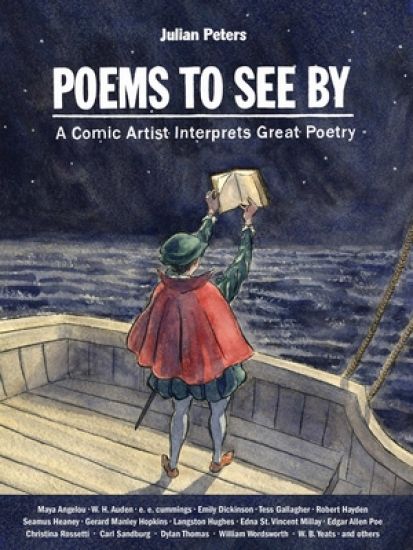
Poems to See By

Poems to See By

Julian Peters

Plough Publishing House
2020
sidottu

Halvin toimitettuna 32,50 €

A fresh twist on 24 classic poems, these visual interpretations by comic artist Julian Peters will change the way you see the world. This stunning anthology of favorite poems visually interpreted by comic artist Julian Peters breathes new life into some of the greatest English-language poets of the nineteenth and twentieth centuries. These are poems that can change the way we see the world, and encountering them in graphic form promises to change the way we read the poems. In an age of increasingly visual communication, this format helps unlock the world of poetry and literature for a new generation of reluctant readers and visual learners. Grouping unexpected pairings of poems around themes such as family, identity, creativity, time, mortality, and nature, Poems to See By will also help young readers see themselves differently. A valuable teaching aid appropriate for middle school, high school, and college use, the collection includes favorites from the Western canon already taught in countless English classes. Includes poems by Emily Dickinson, Langston Hughes, Carl Sandburg, Maya Angelou, Seamus Heaney, e. e. cummings, Robert Frost, Dylan Thomas, Christina Rossetti, William Wordsworth, William Ernest Henley, Robert Hayden, Edgar Allan Poe, W. H. Auden, Thomas Hardy, Percy Bysshe Shelley, John Philip Johnson, W. B. Yeats, Gerard Manley Hopkins, Edna St. Vincent Millay, Tess Gallagher, Ezra Pound, and Siegfried Sassoon.
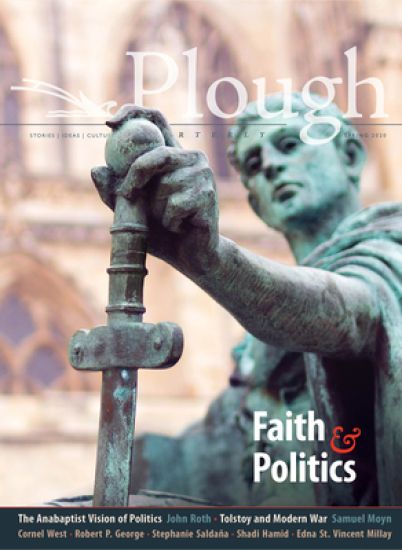
Plough Quarterly No. 24 – Faith and Politics

Plough Quarterly No. 24 – Faith and Politics

Cornel West; Robert P. Geroge; Stephanie Saldaña; Samuel Moyn; Shadi Hamid; Sally Thomas; John D. Roth; John Huleatt; D. L. Mayfield; Julian Peters; Abraham Joshua Heschel; Mesissa Ohden

Plough Publishing House
2020
pokkari
No matter who wins the next election, Caesar will remain Caesar, doing some good and some bad. But Christians report to a different king. This issue starts with a provocation. In his opening letter, editor Peter Mommsen suggests Christians are too excited about the wrong politics: “Questions of public justice should matter deeply to Christians. We dare not be indifferent about securing healthcare for all and ending interventionist wars; we must seek to reduce abortions and strengthen families. When an election comes, we should pray and then, perhaps, lend our support to a candidate we judge may, on balance, advance social righteousness. But if the early Christians and the Anabaptists are right, this isn’t the politics that matters most. And so, as a matter of faithfulness, we should question how much it deserves of our passion and time. Our allegiance belongs elsewhere.” In contrast to an election campaign, this politics may feel grittier and less glamorous. This issue of Plough Quarterly explores what this alternate vision of faithful Christian witness in the political sphere might look like. You’ll find articles on: What two leading political theorists of left and right agree on What persecution taught Anabaptists about politics The Bruderhof’s interactions with the state Tolstoy’s case against making war more humane How some Christians read Romans 13 under fascism
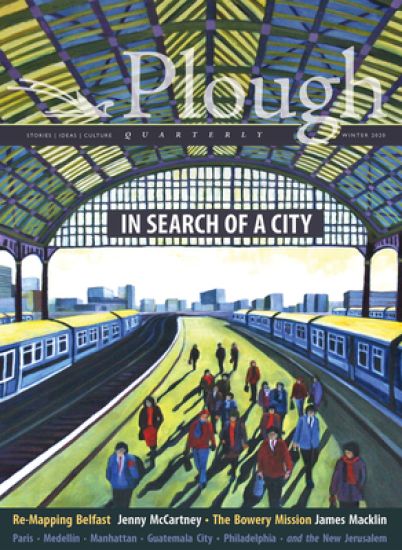
Plough Quarterly No. 23 - In Search of a City

Plough Quarterly No. 23 - In Search of a City

Jenny McCartney; Adriano Cirino; Clare Coffey; Joseph Bottum; Brandon McGinley; N.T. Wright; José Corpas; John Thornton; Jane Jacobs; Julian Peters; Eberhard Arnold

Plough Publishing House
2019
pokkari
The future of humanity is urban. It might seem a bad move for a magazine named after a farm tool to bring out an issue on cities. Especially if that magazine is published by an Anabaptist community that originated in a back-to-the-land movement and still has the whiff of hayfield and woodlot to it. Why not stick to what you’re good at? Why jump lanes? Because the future of humanity, pretty clearly, is urban. Urbanization is arguably the biggest change of habitat our species has ever undergone. For anyone who cares about the common good of humanity, then, cities need to matter. The modern city is an electrifying concentration of creativity, energy, and cultural dynamism. It’s also still the “cauldron of unholy loves” that Saint Augustine discovered in Carthage one and a half millennia ago. It’s the place where the cruelties of mammon, the hubris of power, and the perversions of lust manifest themselves most crassly. But cities have also given birth to culture and community and to remarkable movements of revival and renewal. In this issue, visit: - Belfast with Jenny McCartney - New York City with James Macklin - Medellín with Adriano Cirino - Pittsburgh with Brandon McGinley - Guatemala City with José Corpas - Philadelphia with Clare Coffey - Chicago with John Thornton Jr. - Paris with Jason Landsel You’ll also find: - Insights on cities from Jane Jacobs, Eberhard Arnold, Augustine, and Philip Britts - reviews of books by Jonathan Foiles, Bethany McKinney Fox, J. Malcolm Garcia, Tatiana Schlossberg, Tim Gautreaux, Philip Bess, and Frederic Morton - art by Gail Brodholt, Michelangelo Buonarroti, Ben Ibebe, Brian Peterson, Chota, Raphael, Gertrude Hermes, Valentino Belloni, Tony Taj, and Aristarkh Lentulov Plough Quarterly features stories, ideas, and culture for people eager to put their faith into action. Each issue brings you in-depth articles, interviews, poetry, book reviews, and art to help you put Jesus’ message into practice and find common cause with others.

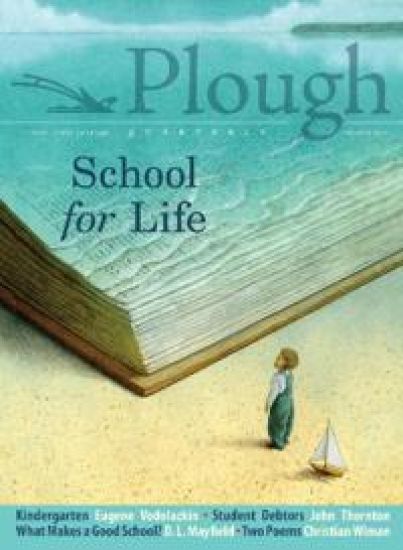
Plough Quarterly No. 19 - School for Life

Plough Quarterly No. 19 - School for Life

Eugene Vodolazkin; Karen Swallow Prior; Christian Wiman; John Thornton; D. L. Mayfield; Andrew Balio; Julian Peters; Denise Uwimana; Alfred Delp; Martin Luther; Michael St. Thomas; Sally Thomas

Plough Publishing House
2019
pokkari
What we want for schools reveals what we value as a society. “What’s the point of school?” Parents have a stock set of responses, but the question remains unsettled, even two centuries after the Prussians invented compulsory education. The Prussian idea of what a school is for – to mold the populace to serve the state – seems unacceptable today. In vogue, instead, are slogans like “acquiring marketable skills” and “realizing your full potential.” These ideas powerfully shape our culture. Ultimately, they boil down to pursuing one supreme value: individual success in a competitive world. Schools are a mirror of our society as a whole; what we want for schools makes plain what and whom we value in our common life. In the Christian tradition, the life of discipleship is also a school. In this educational community, under the instruction of our one Teacher, we learn not to seek empowerment, but to find strength in weakness; not to out-achieve others, but to serve them; not to pursue our passion, but to obey a call. Also in this issue: poetry by Christian Wiman; reviews of new books by Robert Macfarlane, Jackie Morris, Francisco Cantú, Leif Enger, Carol Anderson, Stephanie Land, and Susan Wise Bauer; and art by Margaret McWethy, Albrecht Dürer, Raphael, Gérard David, Jackie Morris, Gustaf Tenggren, Sergey Dushkin, Anja Percival, Dmitry Samofalov, Christoph Wetzel, Sherrie York, Cathleen Rehfield, Pawel Kuczynski, and Jason Landsel. Plough Quarterly features stories, ideas, and culture for people eager to put their faith into action. Each issue brings you in-depth articles, interviews, poetry, book reviews, and art to help you put Jesus’ message into practice and find common cause with others.