

Kirjailija
Julian Petley
Kirjat ja teokset yhdessä paikassa: 9 kirjaa, julkaisuja vuosilta 2005–2023, suosituimpiin kuuluu The Repressive Press. Vertaile teosten hintoja ja tarkista saatavuus suomalaisista kirjakaupoista.
9 kirjaa
Kirjojen julkaisuvuodet: 2005–2023.

Culture Wars investigates the relationship between the media and politics in Britain today. It focusses on how significant sections of the national press have represented and distorted the policies of the Labour Party, and particularly its left, from the Thatcher era up to and including Ed Miliband’s and Jeremy Corbyn’s leaderships. Revised and updated, including five brand new chapters, this second edition shows how press hostility to the left, particularly newspaper coverage of its policies on race, gender and sexuality, has morphed into a more generalised campaign against ‘political correctness’, the ‘liberal elite’ and the so-called ‘enemies of the people’. Combining fine-grained case studies with authoritative overviews of recent British political and media history, Culture Wars demonstrates how much of the press have routinely attacked Labour and, in so doing, have abused their political power, distorted public debate, and negatively impacted the news agendas of public service broadcasters. The book also raises the intriguing question of whether the rise of social media, and the success of its initial exploitation by Corbyn supporters, followed by Labour as a whole in the 2017 General Election, represent a major shift in the balance of power between Labour and the media, and in particular the right-wing press. Culture Wars will be of considerable interest to students and researchers in the fields of media, politics and contemporary British history, and will also attract those with a more general interest in current affairs in the UK.
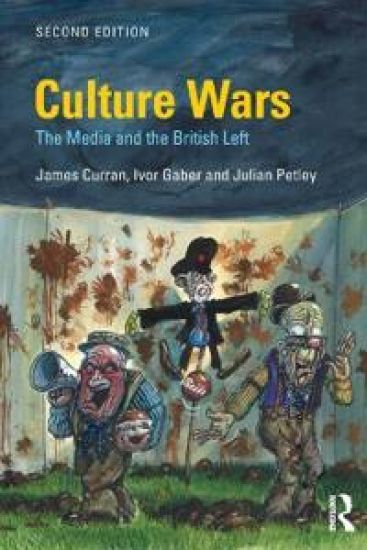
Culture Wars investigates the relationship between the media and politics in Britain today. It focusses on how significant sections of the national press have represented and distorted the policies of the Labour Party, and particularly its left, from the Thatcher era up to and including Ed Miliband’s and Jeremy Corbyn’s leaderships. Revised and updated, including five brand new chapters, this second edition shows how press hostility to the left, particularly newspaper coverage of its policies on race, gender and sexuality, has morphed into a more generalised campaign against ‘political correctness’, the ‘liberal elite’ and the so-called ‘enemies of the people’. Combining fine-grained case studies with authoritative overviews of recent British political and media history, Culture Wars demonstrates how much of the press have routinely attacked Labour and, in so doing, have abused their political power, distorted public debate, and negatively impacted the news agendas of public service broadcasters. The book also raises the intriguing question of whether the rise of social media, and the success of its initial exploitation by Corbyn supporters, followed by Labour as a whole in the 2017 General Election, represent a major shift in the balance of power between Labour and the media, and in particular the right-wing press. Culture Wars will be of considerable interest to students and researchers in the fields of media, politics and contemporary British history, and will also attract those with a more general interest in current affairs in the UK.
How does film and video censorship operate in Britain? Why does it exist? And is too strict? Starting in 1979, the birth of the domestic video industry - and the first year of the Thatcher government - this critical study explains how the censorship of films both in cinemas and on video and DVD has developed in Britain. As well as presenting a detailed analysis of the workings of the British Board of Film Classification, Petley casts his gaze well beyond the BBFC to analyse the forces which the Board has to take into account when classifying and censoring. These range from laws such as the Video Recordings Act and Obscene Publications Act, and how these are enforced by the police and Crown Prosecution Service and interpreted by the courts, to government policy on matters such as pornography. In discussing a climate heavily coloured by 30 years of lurid 'video nasty' stories propagated by a press which is at once censorious and sensationalist and which has played a key role in bringing about and legitimating one of the strictest systems of film and video/DVD censorship in Europe, this book is notable for the breadth of its contextual analysis, its critical stance and its suggestions for reform of the present system. Key features include: * Detailed case studies of individual instances of censorship, including Last House on the Left, sex videos in the R18 category, and press-inspired campaigns against films such as Child's Play 3 and Crash. * Interviews with central figures * The author's own contemporaneous reports on key moments in the censorship process.
How does film and video censorship operate in Britain? Why does it exist? And is too strict? Starting in 1979, the birth of the domestic video industry - and the first year of the Thatcher government - this critical study explains how the censorship of films both in cinemas and on video and DVD has developed in Britain. As well as presenting a detailed analysis of the workings of the British Board of Film Classification, Petley casts his gaze well beyond the BBFC to analyse the forces which the Board has to take into account when classifying and censoring. These range from laws such as the Video Recordings Act and Obscene Publications Act, and how these are enforced by the police and Crown Prosecution Service and interpreted by the courts, to government policy on matters such as pornography. In discussing a climate heavily coloured by 30 years of lurid 'video nasty' stories propagated by a press which is at once censorious and sensationalist and which has played a key role in bringing about and legitimating one of the strictest systems of film and video/DVD censorship in Europe, this book is notable for the breadth of its contextual analysis, its critical stance and its suggestions for reform of the present system. Key features include: * Detailed case studies of individual instances of censorship, including Last House on the Left, sex videos in the R18 category, and press-inspired campaigns against films such as Child's Play 3 and Crash. * Interviews with central figures * The author's own contemporaneous reports on key moments in the censorship process.
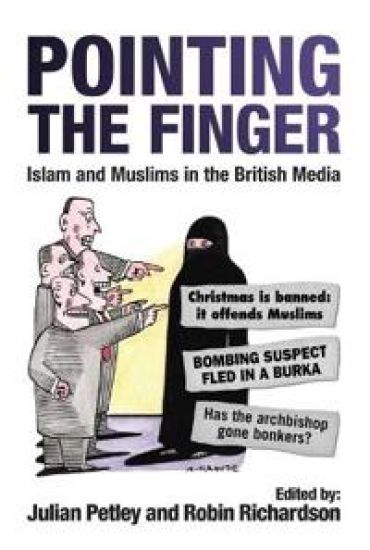
Ever since 9/11, Muslims and Islam have dominated the headlines in the UK. In this important book, several leading media commentators examine the phenomenon of ‘Islamophobia’ and ask how we can tackle it. Charting recent media controversies, from the Archbishop of Canterbury’s comments on Sharia law to the veil ‘debate’, the book argues that media hostility to Islam alienates Muslims and undermines efforts to combat extremism. With interviews from Muslim journalists and examples of press-fuelled myths about Islam in Britain, this is a captivating insight into how Muslims are depicted in the West.
When we think of the word "censorship", we imagine blacked out words and authoritarian political regimes of the past. However, censorship is alive and well today, and just as pervasive in capitalist democracies as repressive regimes. Offering a potted history of the phenomenon from the execution of Socrates in 399BC to the latest in internet filtering, Petley provides an impassioned manifesto for freedom of speech. Also explaining how media monopolies and moguls censor by limiting what news/entertainment they impart, this is an invaluable resource for anyone interested in global media in the information age.
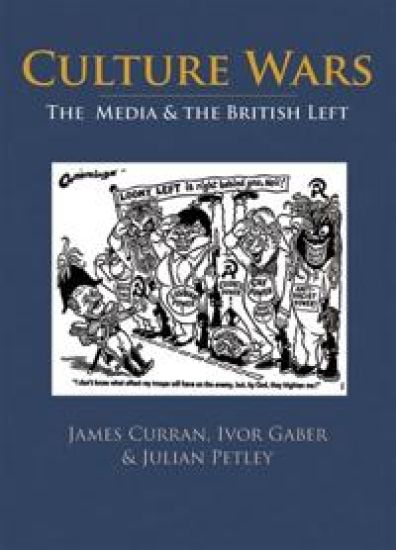
Culture Wars charts the battle between two generations, one shaped by the immediate post-war period and the other by the cultural revolt of the 1960s. It was a clash that first exploded into life in the 1980s, when the Conservative press and government ridiculed radical young councillors as the 'loony left', and turned them into the pariahs of contemporary politics. This cultural victory proved shortlived. The values and political agenda of the urban left made significant advances in the 1990s and 2000s when the sixties generation moved into positions of power. The book offers key insights for different disciplines: *For media studies, it offers a compelling account of how the media represent, and influence, social change. *For cultural studies, it illuminates the way in which the culture of society is a battleground between generations and opposed value groups. *For the social sciences, it documents how the rise of women, immigration, gay liberation and concern about the environment were mediated, and became the subjects of debate, political conflict, and regulation. *For the general reader, it offers a very readable account of the entry of 1960s values into mainstream politics, and the culture wars that have been fought ever since.