Kirjojen hintavertailu – 12 859 829 kirjaa ja 27 kauppaa

Kirjailija

Julian Savulescu

Kirjat ja teokset yhdessä paikassa: 7 kirjaa, julkaisuja vuosilta 2012–2025, suosituimpiin kuuluu Unfit for the Future. Vertaile teosten hintoja ja tarkista saatavuus suomalaisista kirjakaupoista.

7 kirjaa

Kirjojen julkaisuvuodet: 2012–2025.

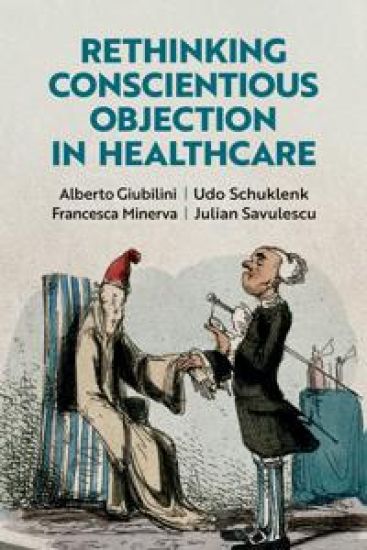
Rethinking Conscientious Objection in Health Care

Rethinking Conscientious Objection in Health Care

Alberto Giubilini; Udo Schuklenk; Francesca Minerva; Julian Savulescu

OXFORD UNIVERSITY PRESS INC
2025
sidottu
Societies around the world are becoming increasingly multicultural, while the range of new or controversial medical procedures that are available to patients also grows. This has led to an increase in claims from healthcare professionals regarding their right to abide by their own moral or religious views and refuse a long list medical interventions or drugs. This list includes abortions, euthanasia, access to contraceptives, sterilizations, cosmetic surgery, and many others. Depending on circumstances, these interventions might or might not be consistent with professional standards; however, when deciding whether to provide them, many doctors would rely on their own conscientious views about the morality of each case instead of professional standards. As societies become more pluralistic and the range of medical options continues to grow, it is inevitable that the problem of conscientious objection in healthcare will as well. Rethinking Conscientious Objection in Health Care presents the case against the right of healthcare professionals to refuse delivery of certain healthcare services based on their moral views. It provides philosophical analyses of conscience and freedom of conscience, as well as the arguments and principles typically utilized when arguing in favor of allowing healthcare professionals conscientious objection. The authors criticize those arguments and offer a philosophical and historical analysis of the concept of professionalism, as well as an appeal to the nature of professional obligations, to build their case against the right to conscientious objection in healthcare. They explain why arguments for pluralism, tolerance, and diversity which support a right to freedom of conscience in society at large do not necessarily support the same right within the healthcare profession, or indeed any profession that is governed by internal norms of professionalism which an individual freely decides to enter.
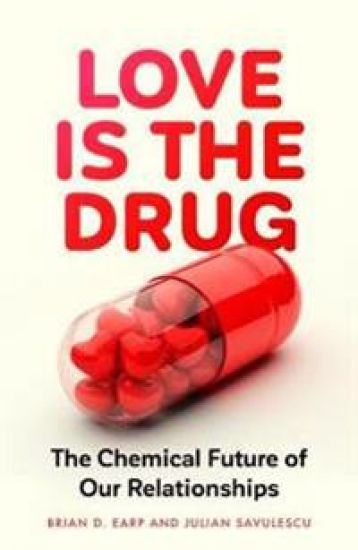
Love is the Drug

Love is the Drug

Brian D. Earp; Julian Savulescu

Manchester University Press
2020
sidottu
What if there were a pill for love? Or an anti-love drug, designed to help us break up? This controversial and timely new book argues that recent medical advances have brought chemical control of our romantic lives well within our grasp. Substances affecting love and relationships, whether prescribed by doctors or even illicitly administered, are not some far-off speculation – indeed our most intimate connections are already being influenced by pills we take for other purposes, such as antidepressants. Treatments involving certain psychoactive substances, including MDMA—the active ingredient in Ecstasy—might soon exist to encourage feelings of love and help ordinary couples work through relationship difficulties. Others may ease a breakup or soothe feelings of rejection. Such substances could have transformative implications for how we think about and experience love. This brilliant intervention into the debate builds a case for conducting further research into "love drugs" and "anti-love drugs" and explores their ethical implications for individuals and society. Rich in anecdotal evidence and case-studies, the book offers a highly readable insight into a cutting-edge field of medical research that could have profound effects on us all. Will relationships be the same in the future? Will we still marry? It may be up to you to decide whether you want a chemical romance.
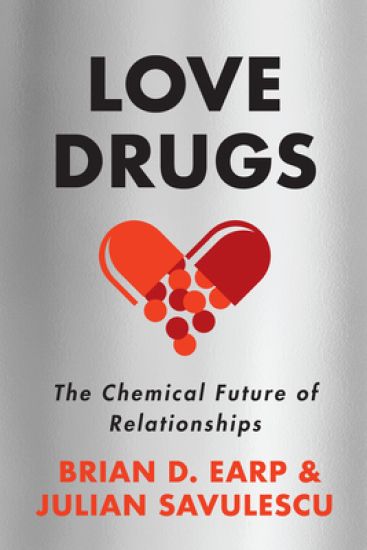
Love Drugs

Love Drugs

Brian D. Earp; Julian Savulescu

Stanford University Press
2020
sidottu
Is there a pill for love? What about an "anti-love drug", to help us get over an ex? This book argues that certain psychoactive substances, including MDMA—the active ingredient in Ecstasy—may help ordinary couples work through relationship difficulties and strengthen their connection. Others may help sever an emotional connection during a breakup. These substances already exist, and they have transformative implications for how we think about love. This book builds a case for conducting research into "love drugs" and "anti-love drugs" and explores their ethical implications for individuals and society. Scandalously, Western medicine tends to ignore the interpersonal effects of drug-based interventions. Why are we still in the dark about the effects of these drugs on romantic partnerships? And how can we overhaul scientific research norms to take relationships more fully into account? Ethicists Brian D. Earp and Julian Savulescu say that the time to think through such questions is now. Biochemical interventions into love and relationships are not some far-off speculation. Our most intimate connections are already being influenced by drugs we ingest for other purposes. Controlled studies are underway to see whether artificial brain chemicals can enhance couples therapy. And conservative religious groups are experimenting with certain medications to quash romantic desires—and even the urge to masturbate—among children and vulnerable sexual minorities. Simply put, the horse has bolted. Where it runs is up to us. Love Drugs arms us with the latest scientific knowledge and a set of ethical tools that we can use to decide if these sorts of medications should be a part of our society. Or whether a chemical romance will be right for us.
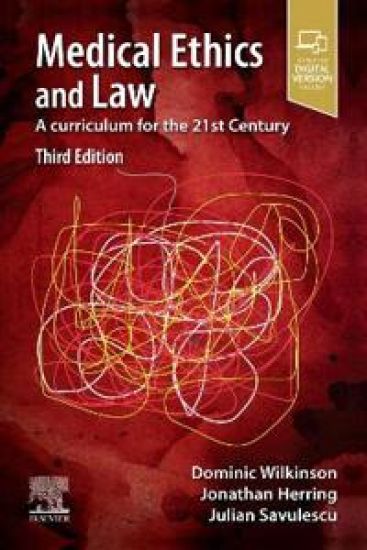
Medical Ethics and Law

Medical Ethics and Law

Dominic Wilkinson; Jonathan Herring; Julian Savulescu

Elsevier Health Sciences
2019
nidottu
This short textbook of ethics and law is aimed at doctors in training and in practice. Medical ethics and law are now firmly embedded in the curricula of medical schools. The ability to make clinical decisions on the basis of critical reasoning is a skill that is rightly presumed as necessary in today's doctors. Medical decisions involve not only scientific understanding but also ethical values and legal analysis. The belief that it is ethically right to act in one way rather than another should be based on good reasons: it is not enough to follow what doctors have always done, nor what experienced doctors now do. The third edition has been revised and updated to reflect changes in the core curriculum for students, developments in the law as well as advances in medicine and technology. It includes a new 'extensions' section, providing an outline of important developing areas in medical ethics. The first part of the book covers the foundations of ethics and law in the context of medicine. The second part covers specific core topics that are essential for health professionals to understand. The third section of the book includes new chapters on cutting edge topics that will be crucial for the doctors and health professionals of tomorrow. This new edition includes a new third section that provides an extension to the core curriculum focused on four key emerging topics in medical ethics - neuroethics, genethics, information ethics and public health ethics. The chapters on Consent, Capacity and Mental Health Law have been extensively revised to reflect changes in legislation. Chapters on confidentiality and information ethics contain new sections relating to information technology, sharing information and breaching confidentiality. Each chapter contains case examples drawn from personal experience or from the media. This edition also includes cartoons to highlight cutting edge and topical issues. Most chapters include revision questions and an extension case to encourage readers who are interested in a topic to explore further.
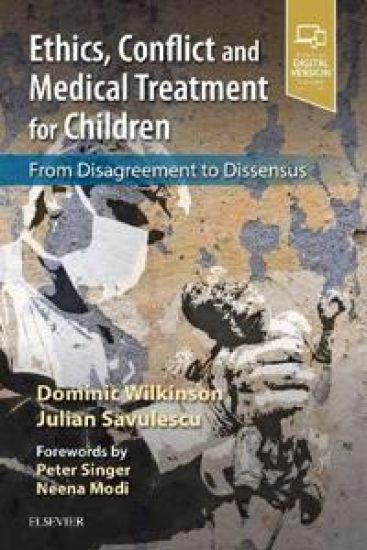
Ethics, Conflict and Medical Treatment for Children

Ethics, Conflict and Medical Treatment for Children

Dominic Wilkinson; Julian Savulescu

Elsevier Health Sciences
2018
nidottu
What should happen when doctors and parents disagree about what would be best for a child? When should courts become involved? Should life support be stopped against parents' wishes? The case of Charlie Gard, reached global attention in 2017. It led to widespread debate about the ethics of disagreements between doctors and parents, about the place of the law in such disputes, and about the variation in approach between different parts of the world. In this book, medical ethicists Dominic Wilkinson and Julian Savulescu critically examine the ethical questions at the heart of disputes about medical treatment for children. They use the Gard case as a springboard to a wider discussion about the rights of parents, the harms of treatment, and the vital issue of limited resources. They discuss other prominent UK and international cases of disagreement and conflict. From opposite sides of the debate Wilkinson and Savulescu provocatively outline the strongest arguments in favour of and against treatment. They analyse some of the distinctive and challenging features of treatment disputes in the 21st century and argue that disagreement about controversial ethical questions is both inevitable and desirable. They outline a series of lessons from the Gard case and propose a radical new 'dissensus' framework for future cases of disagreement. . This new book critically examines the core ethical questions at the heart of disputes about medical treatment for children. The contents review prominent cases of disagreement from the UK and internationally and analyse some of the distinctive and challenging features around treatment disputes in the 21st century. The book proposes a radical new framework for future cases of disagreement around the care of gravely ill people.
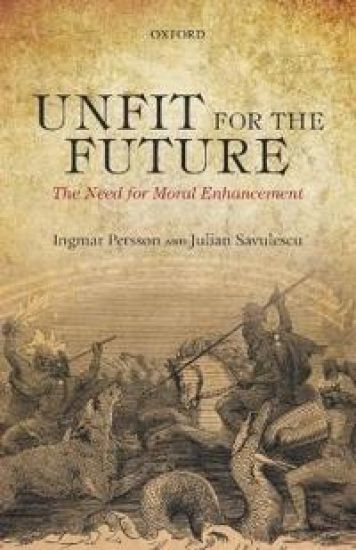
Unfit for the Future

Unfit for the Future

Ingmar Persson; Julian Savulescu

Oxford University Press
2014
nidottu
Unfit for the Future argues that the future of our species depends on our urgently finding ways to bring about radical enhancement of the moral aspects of our own human nature. We have rewritten our own moral agenda by the drastic changes we have made to the conditions of life on earth. Advances in technology enable us to exercise an influence that extends all over the world and far into the future. But our moral psychology lags behind and leaves us ill equipped to deal with the challenges we now face. We need to change human moral motivation so that we pay more heed not merely to the global community, but to the interests of future generations. It is unlikely that traditional methods such as moral education or social reform alone can bring this about swiftly enough to avert looming disaster, which would undermine the conditions for worthwhile life on earth forever. Persson and Savulescu maintain that it is likely that we need to explore the use of new technologies of biomedicine to change the bases of human moral motivation. They argue that there are in principle no philosophical or moral objections to such moral bioenhancement. Unfit for the Future challenges us to rethink our attitudes to our own human nature, before it is too late.
Unfit for the Future

Unfit for the Future

Ingmar Persson; Julian Savulescu

Oxford University Press
2012
sidottu
Unfit for the Future argues that the future of our species depends on our urgently finding ways to bring about radical enhancement of the moral aspects of our own human nature. We have rewritten our own moral agenda by the drastic changes we have made to the conditions of life on earth. Advances in technology enable us to exercise an influence that extends all over the world and far into the future. But our moral psychology lags behind and leaves us ill equipped to deal with the challenges we now face. We need to change human moral motivation so that we pay more heed not merely to the global community, but to the interests of future generations. It is unlikely that traditional methods such as moral education or social reform alone can bring this about swiftly enough to avert looming disaster, which would undermine the conditions for worthwhile life on earth forever. Persson and Savulescu maintain that it is likely that we need to explore the use of new technologies of biomedicine to change the bases of human moral motivation. They argue that there are in principle no philosophical or moral objections to such moral bioenhancement. Unfit for the Future? challenges us to rethink our attitudes to our own human nature, before it is too late.