Kirjojen hintavertailu – 12 873 346 kirjaa ja 26 kauppaa
Kirjailija
Julian Togelius
Kirjat ja teokset yhdessä paikassa: 11 kirjaa, julkaisuja vuosilta 2016–2025, suosituimpiin kuuluu Yleinen tekoäly. Vertaile teosten hintoja ja tarkista saatavuus suomalaisista kirjakaupoista.
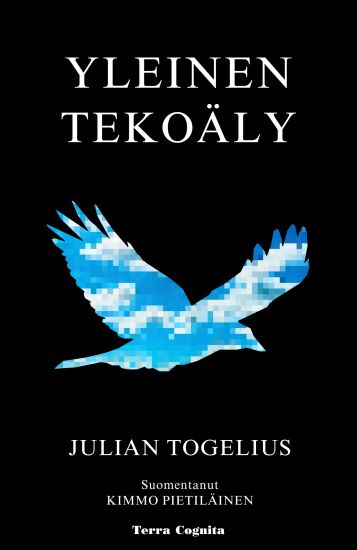
Mitä tekoäly on? Tekoälyä käytetään jatkuvasti enemmän eri tuotteissa ja palveluissa. Sen ihmeitä tarjotaan kaikkeen erinomaisuuden merkkinä, osin perustellusti. Jotkin taskulaskimen ja šakkikoneen kaltaiset laitteet ovat jo nyt ylivoimaisia ihmiseen verrattuna. Ne toimivat kuitenkin vain siinä sovelluksessa, johon ne on suunniteltu. Puhelimen kielentarkistaja ei pelaa šakkia eikä šakkikone tarkista kieltä. Tekoäly on toistaiseksi kapea-alaista. Tavoitteena on yleinen tekoäly, joka on kaikissa asioissa yhtä ylivoimainen ihmiseen verrattuna kuin sen nykyiset kapeat sovellukset. Millaista yleinen tekoäly olisi? Miten siihen päästäisiin? Milloin se tulisi? Mitä siitä seuraisi? Onko yleinen tekoäly ylipäätään edes mahdollinen? Julian Togelius on tekoälytutkija ja tietojenkäsittelytieteen professori New York Universityssa.
Research on general video game playing aims at designing agents or content generators that can perform well in multiple video games, possibly without knowing the game in advance and with little to no specific domain knowledge. The general video game AI framework and competition propose a challenge in which researchers can test their favorite AI methods with a potentially infinite number of games created using the Video Game Description Language. The open-source framework has been used since 2014 for running a challenge. Competitors around the globe submit their best approaches that aim to generalize well across games. Additionally, the framework has been used in AI modules by many higher-education institutions as assignments, or as proposed projects for final year (undergraduate and Master's) students and Ph. D. candidates. The present book, written by the developers and organizers of the framework, presents the most interesting highlights of the research performed by the authors duringthese years in this domain. It showcases work on methods to play the games, generators of content, and video game optimization. It also outlines potential further work in an area that offers multiple research directions for the future.
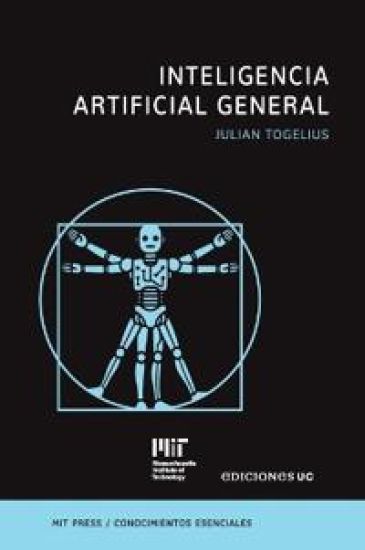
La inteligencia artificial es omnipresente. Cada vez m s sistemas y servicios con los que interact as a diario se basan en tecnolog a de IA. Aunque algunos de los ltimos sistemas de IA son hasta cierto punto generalistas, la mayor a de la IA es limitadamente espec fica; es decir, solo puede hacer una sola cosa en un solo contexto. Por ejemplo, tu corrector ortogr fico no puede hacer ecuaciones, ni el mejor programa de ajedrez del mundo puede jugar Tetris. La inteligencia humana es distinta. Nosotros podemos realizar una gama de tareas, que incluyen aquellas que no hemos visto antes. En Inteligencia Artificial General, Julian Togelius explora los enfoques t cnicos para desarrollar una inteligencia artificial m s general, y se pregunta qu implicar a una IA general para la civilizaci n humana. Togelius comienza dando ejemplos de una IA estrecha que tiene un desempe o sobrehumano en alguna habilidad. Es interesante que por m s de medio siglo ha habido sistemas de IA que son superhumanos en alg n sentido. Posteriormente, analiza lo que una inteligencia artificial implicar a a partir de definiciones de la psicolog a, la etolog a y la ciencia de la computaci n. A continuaci n, explora las dos familias principales de perspectivas t cnicas para desarrollar una inteligencia artificial m s general: los modelos fundacionales a trav s de la ense anza autosupervisada, y el aprendizaje abierto en entornos virtuales. En los cap tulos finales del libro, se investiga la inteligencia artificial potencial, m s all de los aspectos estrictamente t cnicos. Las preguntas que aqu se desarrollan investigan si tal IA ser a consciente, si presentar a un riesgo para la humanidad, y c mo podr a alterar a la sociedad.
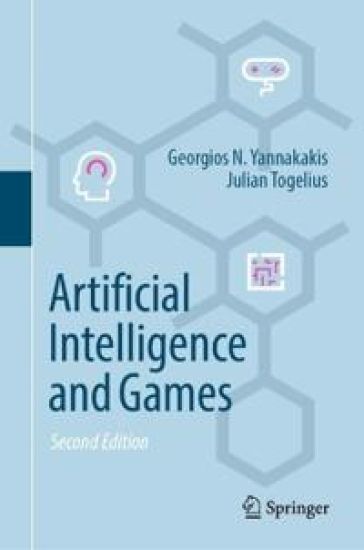
This book covers artificial intelligence methods applied to games, both in research and game development. It is aimed at graduate students, researchers, game developers, and readers with a technical background interested in the intersection of AI and games. The book covers a range of AI methods, from traditional search, planning, and optimization, to modern machine learning methods, including diffusion models and large language models. It discusses applications to playing games, generating content, and modeling players, including use cases such as level generation, game testing, intelligent non-player characters, player retention, player experience analysis, and game adaptation. It also covers the use of games, including video games, to test and benchmark AI algorithms. The book is informed by decades of research and practice in the field and combines insights into game design with deep technical knowledge from the authors, who have pioneered many of the methods and approaches used in the field. This second edition of the 2018 textbook captures significant developments in AI and gaming over the past 7 years, incorporating advancements in computer vision, reinforcement learning, deep learning, and the emergence of transformer-based large language models and generative AI. The book has been reorganized to provide an updated overview of AI in games, with separate sections dedicated to AI’s core uses in playing and generating games, and modeling their players, along with a new chapter on ethical considerations. Aimed at readers with foundational AI knowledge, the book primarily targets three audiences: graduate or advanced undergraduate students pursuing careers in game AI, AI researchers and educators seeking teaching resources, and game programmers interested in creative AI applications. The text is complemented by a website featuring exercises, lecture slides, and additional educational materials suitable for undergraduate and graduate courses.
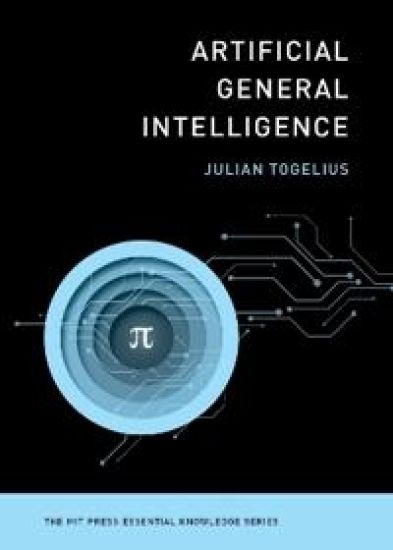
How to make AI capable of general intelligence, and what such technology would mean for society. Artificial intelligence surrounds us. More and more of the systems and services you interact with every day are based on AI technology. Although some very recent AI systems are generalists to a degree, most AI is narrowly specific; that is, it can only do a single thing, in a single context. For example, your spellchecker can’t do mathematics, and the world's best chess-playing program can’t play Tetris. Human intelligence is different. We can solve a variety of tasks, including those we have not seen before. In Artificial General Intelligence, Julian Togelius explores technical approaches to developing more general artificial intelligence and asks what general AI would mean for human civilization. Togelius starts by giving examples of narrow AI that have superhuman performance in some way. Interestingly, there have been AI systems that are superhuman in some sense for more than half a century. He then discusses what it would mean to have general intelligence, by looking at definitions from psychology, ethology, and computer science. Next, he explores the two main families of technical approaches to developing more general artificial intelligence: foundation models through self-supervised learning, and open-ended learning in virtual environments. The final chapters of the book investigate potential artificial general intelligence beyond the strictly technical aspects. The questions discussed here investigate whether such general AI would be conscious, whether it would pose a risk to humanity, and how it might alter society.
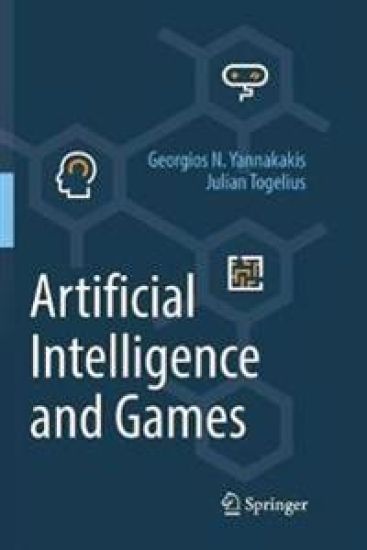
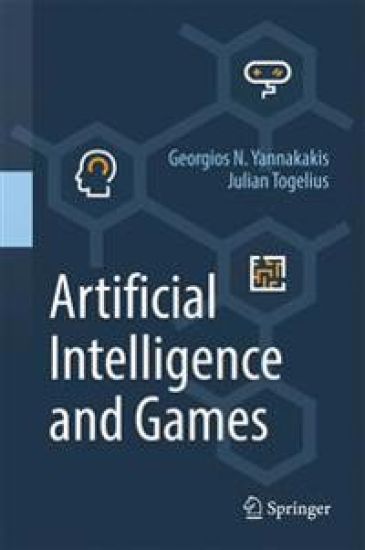
This is the first textbook dedicated to explaining how artificial intelligence (AI) techniques can be used in and for games. After introductory chapters that explain the background and key techniques in AI and games, the authors explain how to use AI to play games, to generate content for games and to model players. The book will be suitable for undergraduate and graduate courses in games, artificial intelligence, design, human-computer interaction, and computational intelligence, and also for self-study by industrial game developers and practitioners. The authors have developed a website (http://www.gameaibook.org) that complements the material covered in the book with up-to-date exercises, lecture slides and reading.
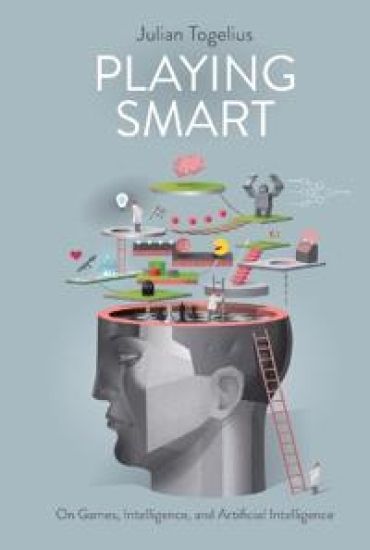
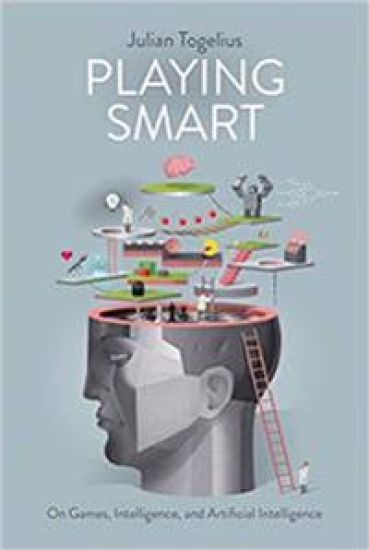
A new vision of the future of games and game design, enabled by AI. Can games measure intelligence? How will artificial intelligence inform games of the future? In Playing Smart, Julian Togelius explores the connections between games and intelligence to offer a new vision of future games and game design. Video games already depend on AI. We use games to test AI algorithms, challenge our thinking, and better understand both natural and artificial intelligence. In the future, Togelius argues, game designers will be able to create smarter games that make us smarter in turn, applying advanced AI to help design games. In this book, he tells us how. Games are the past, present, and future of artificial intelligence. In 1948, Alan Turing, one of the founding fathers of computer science and artificial intelligence, handwrote a program for chess. Today we have IBM's Deep Blue and DeepMind's AlphaGo, and huge efforts go into developing AI that can play such arcade games as Pac-Man. Programmers continue to use games to test and develop AI, creating new benchmarks for AI while also challenging human assumptions and cognitive abilities. Game design is at heart a cognitive science, Togelius reminds us-when we play or design a game, we plan, think spatially, make predictions, move, and assess ourselves and our performance. By studying how we play and design games, Togelius writes, we can better understand how humans and machines think. AI can do more for game design than providing a skillful opponent. We can harness it to build game-playing and game-designing AI agents, enabling a new generation of AI-augmented games. With AI, we can explore new frontiers in learning and play.
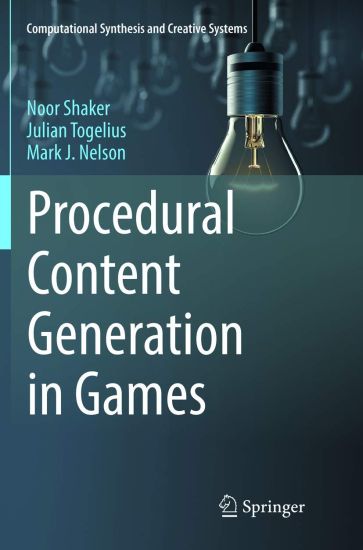
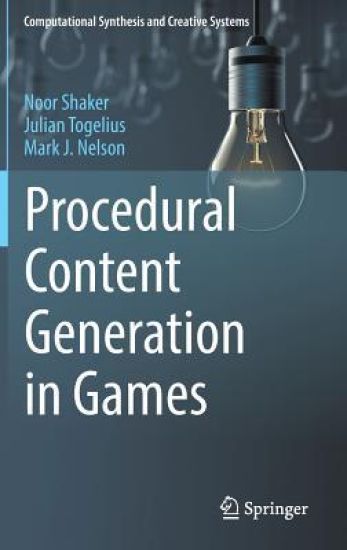
This book presents the most up-to-date coverage of procedural content generation (PCG) for games, specifically the procedural generation of levels, landscapes, items, rules, quests, or other types of content. Each chapter explains an algorithm type or domain, including fractal methods, grammar-based methods, search-based and evolutionary methods, constraint-based methods, and narrative, terrain, and dungeon generation. The authors are active academic researchers and game developers, and the book is appropriate for undergraduate and graduate students of courses on games and creativity; game developers who want to learn new methods for content generation; and researchers in related areas of artificial intelligence and computational intelligence.
This is the first textbook dedicated to explaining how artificial intelligence (AI) techniques can be used in and for games. After introductory chapters that explain the background and key techniques in AI and games, the authors explain how to use AI to play games, to generate content for games and to model players. The book will be suitable for undergraduate and graduate courses in games, artificial intelligence, design, human-computer interaction, and computational intelligence, and also for self-study by industrial game developers and practitioners. The authors have developed a website (http://www.gameaibook.org) that complements the material covered in the book with up-to-date exercises, lecture slides and reading.
This book presents the most up-to-date coverage of procedural content generation (PCG) for games, specifically the procedural generation of levels, landscapes, items, rules, quests, or other types of content. Each chapter explains an algorithm type or domain, including fractal methods, grammar-based methods, search-based and evolutionary methods, constraint-based methods, and narrative, terrain, and dungeon generation. The authors are active academic researchers and game developers, and the book is appropriate for undergraduate and graduate students of courses on games and creativity; game developers who want to learn new methods for content generation; and researchers in related areas of artificial intelligence and computational intelligence.