Kirjojen hintavertailu – 12 859 828 kirjaa ja 27 kauppaa
Kirjailija
Julian V. Roberts
Kirjat ja teokset yhdessä paikassa: 11 kirjaa, julkaisuja vuosilta 2002–2026, suosituimpiin kuuluu Sentencing Guidelines and Commissions. Vertaile teosten hintoja ja tarkista saatavuus suomalaisista kirjakaupoista.
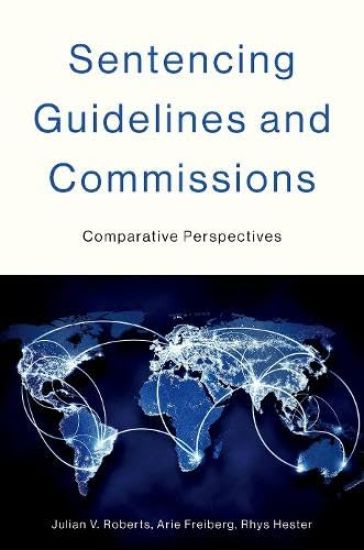
Since the 1970s, sentencing in many countries has evolved from a system in which courts enjoyed wide discretion to one where courts must follow or at least consider guideline recommendations. This movement towards greater structure has also led to the creation of independent bodies-sentencing commissions or councils-which now sit alongside courts of appeal and play a pivotal role in guiding courts, advising legislators, and communicating with the public. Sentencing commissions and councils perform a wide range of other functions including increasing transparency and promoting fairness, consistency, and public confidence in the courts. In Sentencing Guidelines and Commissions, Julian V. Roberts, Arie Freiberg, and Rhys Hester synthesize existing literature on commissions and guidelines, identify key issues and problems, and clarify the future of commissions and guidelines since the creation of the first commissions in 1980. Drawing upon almost fifty years of additional developments and accumulated research on guidelines, commissions, and councils, the authors explore the benefits of sentencing councils and commissions and sentencing guidelines. Further, the authors look back to the cumulative experience around the world since the first guidelines were created and propose a model regime for legislatures to consider. The first book on sentencing guidelines and commissions to take an international perspective, Sentencing Guidelines and Commissions aims to determine whether and how guidelines may solve, or at least mitigate, some of the problems of current sentencing practice.
Although criminal justice systems vary greatly around the world, one theme has emerged in all western jurisdictions in recent years: a rise in both the rhetoric and practice of severe punishment at a time when public opinion has played a pivotal role in sentencing policy and reforms. Despite the differences among jurisdictions, startling commonalities exist among the five countries-the U. K., USA, Canada, Australia, and New Zealand-surveyed here. Drawing on the results of representative opinion surveys and other research tools the authors map public attitudes towards crime and punishment across countries and explore the congruence between public views and actual policies. Co-authored by four distinguished sentencing policy experts, Penal Populism and Public Opinion is a clarion call for limiting the influence of penal populism and instituting more informed, research-based sentencing policies across the western world.
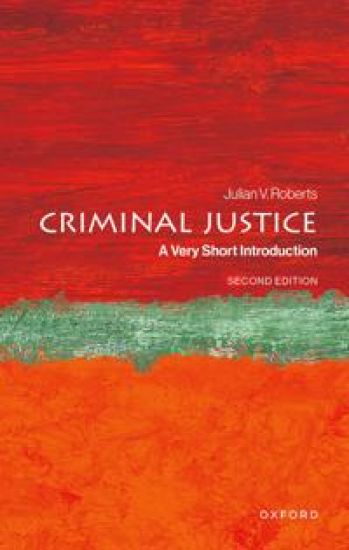
Very Short Introductions: Brilliant, Sharp, Inspiring The criminal justice system is diverse and complex and raises questions about the use of imprisonment, the effects of capital punishment, the purposes of sentencing, and the role of the victim. In this Very Short Introduction, Julian V. Roberts discusses all stages of the criminal justice system, from crime to courthouse and from prison to parole. He focuses on the adversarial model of justice and provides a critical examination of our modern justice system and its status and function in society. The book also includes important developments such as the evolution of AI, the widespread recognition of the differential impact of criminal justice on visible and ethnic minorities, and international legal disputes. ABOUT THE SERIES: The Very Short Introductions series from Oxford University Press contains hundreds of titles in almost every subject area. These pocket-sized books are the perfect way to get ahead in a new subject quickly. Our expert authors combine facts, analysis, perspective, new ideas, and enthusiasm to make interesting and challenging topics highly readable.
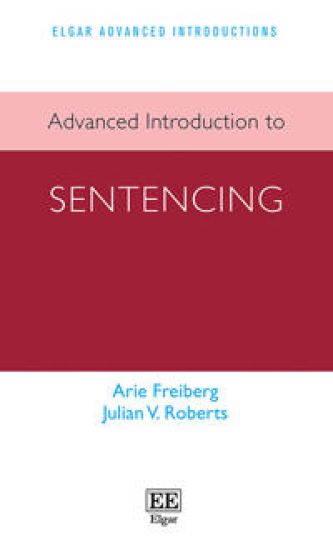
Elgar Advanced Introductions are stimulating and thoughtful introductions to major fields in the social sciences, business and law, expertly written by the world’s leading scholars. Designed to be accessible yet rigorous, they offer concise and lucid surveys of the substantive and policy issues associated with discrete subject areas. This essential Advanced Introduction provides an overview of the principles and practices of sentencing adult offenders in common law countries such as the UK, the USA, Australia, New Zealand, Singapore and South Africa. It explores how sentencing authority is distributed and the rationale and methods behind sentencing. Adopting a multijurisdictional approach, Arie Freiberg and Julian Roberts examine the factors that common law courts consider when sentencing. They outline a variety of aggravating and mitigating circumstances, investigate how judges make their decisions and how guidance is provided to judges by various bodies including legislatures, appellate courts and sentencing commissions. The book further identifies the extensive range of sanctions that are available to courts, analysing their effectiveness and efficiency. Key Features:Detailed coverage of all aspects of sentencingnternational research across a range of common law jurisdictions. Presents valuable insights drawn from the authors’ experiences of working on sentencing commissions and councils in common law jurisdictions over the past five decades. Scholars and students of law, criminology, penology and public policy will greatly benefit from this highly informative Advanced Introduction. It is also a vital resource for practitioners and policymakers in criminal law and justice.
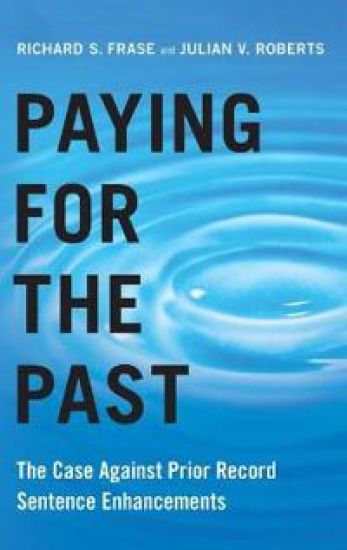
All modern sentencing systems, in the US and beyond, consider the offender's prior record to be an important determinant of the form and severity of punishment for subsequent offences. Repeat offenders receive harsher punishments than first offenders, and offenders with longer criminal records are punished more severely than those with shorter records. Yet the vast literature on sentencing policy, law, and practice has generally overlooked the issue of prior convictions, even though this is the most important sentencing factor after the seriousness of the crime. In Paying for the Past, Richard S. Frase and Julian V. Roberts provide a critical and systematic examination of current prior record enhancements under sentencing guidelines across the US. Drawing on empirical data and analyses of guidelines from a number of jurisdictions, they illustrate different approaches to prior record enhancements and the differing outcomes of those approaches. Roberts and Frase demonstrate that most prior record enhancements generate a range of adverse outcomes at sentencing. Further, the pervasive justifications for prior record enhancement, such as the repeat offender's assumed higher risk of reoffending or greater culpability, are uncertain and have rarely been subjected to critical appraisal. The punitive sentencing premiums for repeat offenders prescribed by US guidelines cannot be justified on grounds of prevention or retribution. Shining a light on a neglected but critically important topic, Paying for the Past examines the costs of prior record enhancements for repeat offenders and offers model guidelines to help reduce racial disparities and reallocate criminal justice resources for jurisdictions who use sentence enhancements.
The criminal justice system is wide ranging; from the crimes themselves and policing to the sentencing of offenders and prisons. In this Very Short Introduction Julian V. Roberts draws upon the latest research and current practices from a number of different countries around the world. Focusing on the adversarial model of justice found in common law countries such as the United States, United Kingdom, Canada, and Australia, he discusses topics such as the uses of imprisonment, the effects of capital punishment, and the purposes of sentencing. Considering the role of the victim throughout the criminal justice system, as well as public knowledge and attitudes towards criminal justice, Roberts critically assesses the way in which the system functions and its importance around the world. ABOUT THE SERIES: The Very Short Introductions series from Oxford University Press contains hundreds of titles in almost every subject area. These pocket-sized books are the perfect way to get ahead in a new subject quickly. Our expert authors combine facts, analysis, perspective, new ideas, and enthusiasm to make interesting and challenging topics highly readable.
Murder is often regarded as both the 'ultimate' and a unique crime, and whereas courts are normally given discretion in sentencing offenders, for murder the sentence is mandatory – indeterminate imprisonment. Since the crime and the punishment come as a 'package deal' this book looks at both the legal nature of the offence and at the current operation of the mandatory life sentence. Not only does the book adopt a critical approach, by assessing the strengths and weaknesses of the status quo, it also draws upon comparative material from both common and civil law jurisdictions in an attempt to provide a comprehensive exploration of these issues. The need for public confidence in the criminal justice system is particularly acute in the way it deals with the most serious homicides. In this book the authors report findings from the first systematic exploration of public attitudes to sentencing murder in this or any other common law jurisdiction. The picture of public opinion emerging from this recent large-scale nationwide qualitative and quantitative survey, funded by the Nuffield Foundation, is likely to surprise many, and will be of interest to all jurisdictions where the mandatory life sentence for murder has been questioned.
Despite very diverse approaches towards punishing crime, all Western jurisdictions punish repeat offenders more harshly (a practice known as the recidivist sentencing premium) . For many repeat offenders, their previous convictions have more impact on the penalty they receive than the seriousness of their current crime. Why do we punish recidivists more harshly? Some sentencing theorists argue that offenders should be punished only for the crimes they commit - not for the crimes committed and paid for in the past. From this perspective, punishing repeat offenders more severely amounts to double punishment. Having been punished once for an offence, the recidivist will pay for the crime again every time he re-offends. Is this fair? This volume explores the nature and consequences of the recidivist sentencing premium on both the theoretical and empirical levels. It begins by exploring the justifications for treating repeat offenders more harshly, and then provides examples of the practice from a number of jurisdictions including England and Wales, Canada, and the United States. Particular attention is paid to the views of two important groups: convicted offenders and the general public. If offenders believe that the recidivist sentencing premium is unjustified, they are less likely to accept the legitimacy of the justice system. As for members of the public, it is important to know whether this key element of the sentencing process is consistent with community views.
The last twenty-five years have seen dramatic rises in the prison populations of most industrialised nations. Unable to keep up with increased numbers of convicted offenders, governments and criminal justice systems have been seeking new ways to control and punish offenders. One sanction adopted in Canada and some parts of Europe and the US is community custody which attempts to recreate the punitive nature of prison but without incarceration. This book analyses the effectiveness of this approach and explores its implications for offenders and society as a whole. It demonstrates that if properly conceived and administered, community custody can reduce the number of prison admissions and at the same time promote multiple goals of sentencing. So that offenders given community custody orders are punished yet also given the opportunity to change their lives in ways that would be impossible if they were in prison.
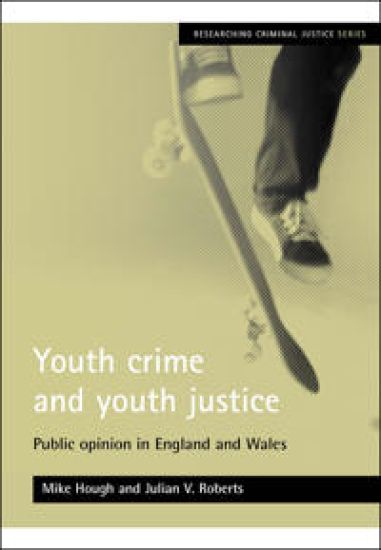
This report presents the findings from the first national, representative survey of public attitudes to youth crime and youth justice in England and Wales. Significantly, it highlights that most people are demonstrably ill-informed about youth crime and youth justice issues. It also carries clear policy implications in relation to both public education and reform of the youth justice system. Youth crime and youth justice is essential reading for academics, researchers, policy makers and practitioners in the fields of criminal justice, criminology, social policy, social work and probation. Researching Criminal Justice series Crime and justice are issues of central political and public concern in contemporary Britain. This exciting new series presents top quality research findings in the field. It will contribute significantly to policy and practice debates and aims to improve the knowledge base considerably. The series will be essential reading for politicians and policy makers, academics, researchers and practitioners. For other titles in this series, please follow the series link from the main catalogue page.