Kirjojen hintavertailu – 12 903 735 kirjaa ja 27 kauppaa
Kirjailija
Julian Williams
Kirjat ja teokset yhdessä paikassa: 5 kirjaa, julkaisuja vuosilta 2007–2021, suosituimpiin kuuluu MaLT Stage Three (Tests 12-14) Manual (Mathematics Assessment for Learning and Teaching). Vertaile teosten hintoja ja tarkista saatavuus suomalaisista kirjakaupoista.
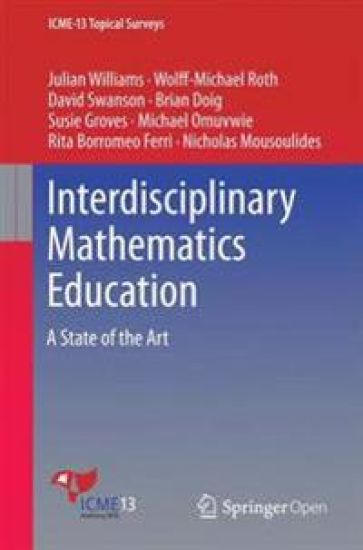
This book provides an essential introduction to the state-of the-art in interdisciplinary Mathematics Education. First, it begins with an outline of the field’s relevant historical, conceptual and theoretical backgrounds, what “discipline” means and how inter-, trans-, and meta-disciplinary activities can be understood. Relevant theoretical perspectives from Marx, Foucault and Vygotsky are explained, along with key ideas in theory, e.g. boundaries, discourses, identity, and the division of labour in practice. Second, the book reviews research findings of mainly empirical studies on interdisciplinary work involving mathematics in education, in all stages of education that have become disciplined. For example, it reports that a common theme in studies in middle and high schools is assessing the motivational benefits for the learner of subsuming disciplinary motives and even practices to extra-academic problem-solving activities; this is counter-balanced by the effort needed to overcome the disciplinary boundaries in academic institutions, and in professional identities. These disciplinary boundaries are less obviously limitations in middle and primary schools, and in some vocational courses. Third and finally, it explores selected case studies that illustrate these concepts and findings, both in terms of the motivational benefits for learners and the institutional and other boundaries involved.
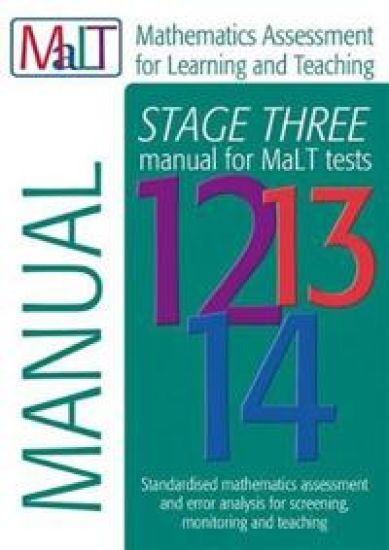
A tried and tested approach to mathematics assessment for ages 5-14. Nationally standardised on over 12,500 pupils, MaLT can be used at any time during the school year - for screening, monitoring and tracking progress, as well as for individual diagnostic profiling. Available in both pencil-and-paper and interactive computer-adaptive (CAT) formats, these nationally standardised tests - for groups or individuals - also yield diagnostic information which will directly support individual and whole-class teaching. - Purpose-written to highlight particular errors and misunderstandings which are diagnostic of key learning needs - counting errors, misconceptions with decimals, etc - Simple structure makes it easy for you to assess your pupils and get the information you need - Key Stage 3 Teacher Manual contains all the key information in one place for MaLT tests 12-14 - One Scorer/Profiler CD-ROM for use with all the tests. This makes it easier to record and monitor year-on-year progress across ages 5-14. It also enables you to mark all of the pencil-and-paper tests on-screen - All questions are mapped to the current strands and objectives, to make it easy to see how well your pupils are performing and to provide the information you need - Provides the summative measures of performance needed for screening, monitoring and progress assessment. MaLT tests have been standardised nationally, ensuring secure, reliable results MaLT Year-on-Year Tests - Take only 45 minutes to test a whole class - Samples the full range of mathematical skills appropriate to each year group - MaLT tests 12-14 include calculator and non-calculator sections
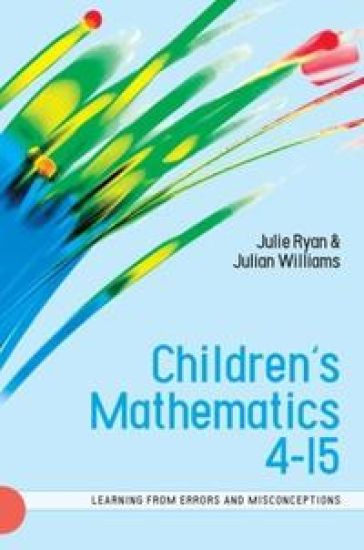
The mistakes children make in mathematics are usually not just ‘mistakes’ - they are often intelligent generalizations from previous learning. Following several decades of academic study of such mistakes, the phrase ‘errors and misconceptions’ has recently entered the vocabulary of mathematics teacher education and has become prominent in the curriculum for initial teacher education. The popular view of children’s errors and misconceptions is that they should be corrected as soon as possible. The authors contest this, perceiving them as potential windows into children’s mathematics. Errors may diagnose significant ways of thinking and stages in learning that highlight important opportunities for new learning. This book uses extensive, original data from the authors’ own research on children’s performance, errors and misconceptions across the mathematics curriculum. It progressively develops concepts for teachers to use in organizing their understanding and knowledge of children’s mathematics, offers practical guidance for classroom teaching and concludes with theoretical accounts of learning and teaching. Children’s Mathematics 4-15 is a groundbreaking book, which transforms research on diagnostic errors into knowledge for teaching, teacher education and research on teaching. It is essential reading for teachers, students on undergraduate teacher training courses and graduate and PGCE mathematics teacher trainees, as well as teacher educators and researchers.