Kirjojen hintavertailu – 12 903 724 kirjaa ja 27 kauppaa

Kirjailija

Julie Allan

Kirjat ja teokset yhdessä paikassa: 11 kirjaa, julkaisuja vuosilta 1999–2023, suosituimpiin kuuluu On the Self: Discourses of Mental Health and Education. Vertaile teosten hintoja ja tarkista saatavuus suomalaisista kirjakaupoista.

11 kirjaa

Kirjojen julkaisuvuodet: 1999–2023.

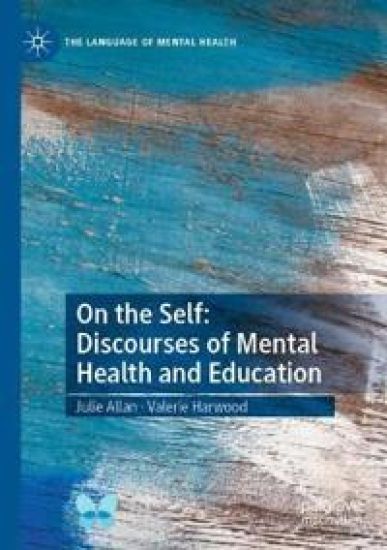
On the Self: Discourses of Mental Health and Education

On the Self: Discourses of Mental Health and Education

Julie Allan; Valerie Harwood

Springer International Publishing AG
2023
nidottu
This book examines the emergence of psychologised discourses of the self in education and considers their effects on children and young people, on relationships both in and out of school and on educational practices. It undertakes a Foucauldian genealogy of the discourses of the self in education in order to scrutinise the ‘focal points of experience’ for children and young people. Part One of the book offers a critical analysis of the discourses of the self that operate within interventions of self esteem, self concept, self efficacy and self regulation and their incursions into education. Part Two provides counter-narratives of the self, drawn principally from the arts and politics and providing alternative, and potentially radical, ways of when and how the self might speak. It also articulates how teachers may support children and young people in giving voice to these counter-narratives as they move through school.
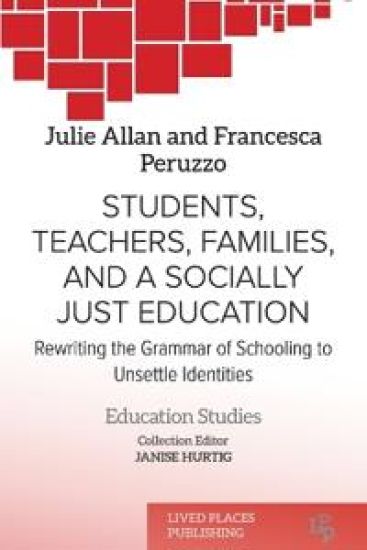
Students, Teachers, Families, and a Socially Just Education

Students, Teachers, Families, and a Socially Just Education

Julie Allan; Francesca Peruzzo

Lived Places Publishing
2023
pokkari

Halvin toimitettuna 33,30 €

One size does not fit all when it comes to education. In modern society, education has been and continues to be shaped, informed, and driven by a so-called "grammar of schooling" an approach which completely ignores the many and diverse identities that learners own, are given, and encounter. Categorising students into neat, labelled boxes, splintering knowledge into strictly defined subjects, and fracturing learning - this grammar of schooling desperately needs rewriting. Through narratives from teachers, students, and their families, this book explores the lived experiences of those who are forced to live with the current approach, and the consequences for their lives, relationship, and education. It also asks the question of what creative and holistic alternative approaches might look like - when the rules aren't working, the rulebook can be rewritten.
On the Self: Discourses of Mental Health and Education

On the Self: Discourses of Mental Health and Education

Julie Allan; Valerie Harwood

Springer International Publishing AG
2022
sidottu
This book examines the emergence of psychologised discourses of the self in education and considers their effects on children and young people, on relationships both in and out of school and on educational practices. It undertakes a Foucauldian genealogy of the discourses of the self in education in order to scrutinise the ‘focal points of experience’ for children and young people. Part One of the book offers a critical analysis of the discourses of the self that operate within interventions of self esteem, self concept, self efficacy and self regulation and their incursions into education. Part Two provides counter-narratives of the self, drawn principally from the arts and politics and providing alternative, and potentially radical, ways of when and how the self might speak. It also articulates how teachers may support children and young people in giving voice to these counter-narratives as they move through school.
Etiska perspektiv på specialpedagogers yrkesroll och värdepedagogiska praktik

Etiska perspektiv på specialpedagogers yrkesroll och värdepedagogiska praktik

Julie Allan; Ingemar Emanuelsson; Joanna Giota; Sofie Hammarqvist; Susanne Hansson; Kristina Hellberg; Gudrun Holmdahl; Martin Hugo; Anders Jönsson; Lotta Leden; Anne Lindblom; Solveig M. Reindal; Gunnlaugur Magnússon; Johan Malmqvist; Gunvie Möllås; Kennert Orlenius; Ruhi Tyson

Studentlitteratur AB
2022
nidottu
Yrkesetik handlar om att hantera motstridiga värden på ett professionellt sätt. Olika dilemman är ständigt närvarande i skolans vardag och kan handla om att minimera risken för att elever ska exkluderas eller om att säkerställa att elever får möjlighet att visa sina kunskaper på rätt sätt. I sin yrkesroll ställs specialpedagogen inför mångfacetterade arbetsuppgifter som omfattar att stödja barn och elever i svårigheter, vara en kvalificerad samtalspartner i pedagogiska frågor och samverka med andra yrkesgrupper för att utveckla skolans verksamhet. Arbetet innebär val mellan olika handlingsalternativ som kräver både kunskap och förmåga att urskilja och värdera etiska aspekter i komplexa sammanhang. I boken diskuteras både dilemman och möjligheter där etiska perspektiv spelar en viktig roll. Kapitlen tar upp frågor med praktiknära innehåll som lämpar sig för såväl individuell reflektion som kollegiala samtal med syftet att skapa ett gemensamt yrkesetiskt språk. Boken vänder sig till blivande och praktiserande specialpedagoger samt andra yrkeskategorier med arbetsuppgifter inom det specialpedagogiska området.
Psychopathology at School

Psychopathology at School

Valerie Harwood; Julie Allan

Routledge
2016
nidottu
Psychopathology at School provides a timely response to concerns about the rising numbers of children whose behaviour is recognised and understood as a medicalised condition, rather than simply as poor behaviour caused by other factors. It is the first scholarly analysis of psychopathology which draws on the philosophers Foucault, Deleuze, Guattari and Arendt to examine the processes whereby children’s behaviour is pathologised. The heightened attention to mental disorders is contrasted with education practices in the early and mid-to-late twentieth century, and the emergence of a new conceptualization of childhood is explored. Taking education as a central component to the contemporary experience of growing up, the book charts the ways in which mental disorders have become commonplace in childhood and youth, from birth through to college and university, but also offers examples of where professionals have refused to pathologise children’s behaviour. The book examines the extent of the influence of psychopathology on the lives of children and young people, as well as the practices that infiltrate education and the possibilities for alternative educational responses that negate the diagnosis of mental disorder. Psychopathology at School is a must read for anyone concerned about the growing influence of psychopathology in education and will be of particular interest to educated readers and to scholars, students and professionals in education, psychiatry, psychology, child studies, youth studies, nursing, social work and sociology.
Psychopathology at School

Psychopathology at School

Valerie Harwood; Julie Allan

Routledge
2014
sidottu
Psychopathology at School provides a timely response to concerns about the rising numbers of children whose behaviour is recognised and understood as a medicalised condition, rather than simply as poor behaviour caused by other factors. It is the first scholarly analysis of psychopathology which draws on the philosophers Foucault, Deleuze, Guattari and Arendt to examine the processes whereby children’s behaviour is pathologised. The heightened attention to mental disorders is contrasted with education practices in the early and mid-to-late twentieth century, and the emergence of a new conceptualization of childhood is explored. Taking education as a central component to the contemporary experience of growing up, the book charts the ways in which mental disorders have become commonplace in childhood and youth, from birth through to college and university, but also offers examples of where professionals have refused to pathologise children’s behaviour. The book examines the extent of the influence of psychopathology on the lives of children and young people, as well as the practices that infiltrate education and the possibilities for alternative educational responses that negate the diagnosis of mental disorder. Psychopathology at School is a must read for anyone concerned about the growing influence of psychopathology in education and will be of particular interest to educated readers and to scholars, students and professionals in education, psychiatry, psychology, child studies, youth studies, nursing, social work and sociology.
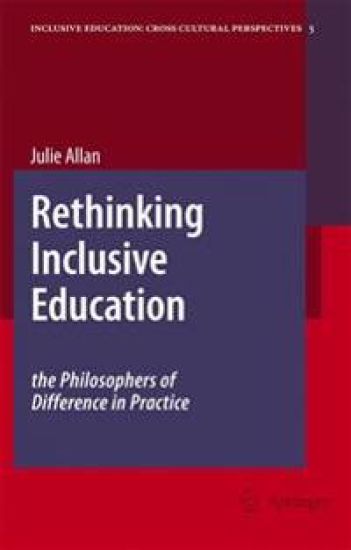
Rethinking Inclusive Education: The Philosophers of Difference in Practice
One of the important responsibilities that advocates of inclusion need to continually practise is that of self-criticism. This includes examining and re-examining the assumptions informing our perspectives, the concepts that we use including ‘inclusive education’ and our intentions, especially in relation to the question of change. We need to beware of the danger of unexamined orthodoxies, the possibilities of ado- ing inclusive language with little, if any, changes in our thinking and practice and a sterile and insensitive position with regard to the pursuit of new or alternative ideas. In this very important book, Allan powerfully reminds us of the necessity and centrality of these concerns and provides a direct, perceptive and thoughtful, exami- tion and critique of the varied barriers to the task of how to make inclusion happen. Allan challenges the reader to step back and re-examine the rationale for inclusion through an alternative mindset. She challenges the varied attacks upon inclusion including those in the education business to stop using economic (it costs too much) and pedagogical (it is bad for the other children in the class and traumatic for the disabled children) and social (just too much for the teacher’s workload) reasons for closing the door and doing the right thing, and those who argue that inclusion was an experiment that did not work.
Rethinking Inclusive Education: The Philosophers of Difference in Practice
One of the important responsibilities that advocates of inclusion need to continually practise is that of self-criticism. This includes examining and re-examining the assumptions informing our perspectives, the concepts that we use including ‘inclusive education’ and our intentions, especially in relation to the question of change. We need to beware of the danger of unexamined orthodoxies, the possibilities of ado- ing inclusive language with little, if any, changes in our thinking and practice and a sterile and insensitive position with regard to the pursuit of new or alternative ideas. In this very important book, Allan powerfully reminds us of the necessity and centrality of these concerns and provides a direct, perceptive and thoughtful, exami- tion and critique of the varied barriers to the task of how to make inclusion happen. Allan challenges the reader to step back and re-examine the rationale for inclusion through an alternative mindset. She challenges the varied attacks upon inclusion including those in the education business to stop using economic (it costs too much) and pedagogical (it is bad for the other children in the class and traumatic for the disabled children) and social (just too much for the teacher’s workload) reasons for closing the door and doing the right thing, and those who argue that inclusion was an experiment that did not work.
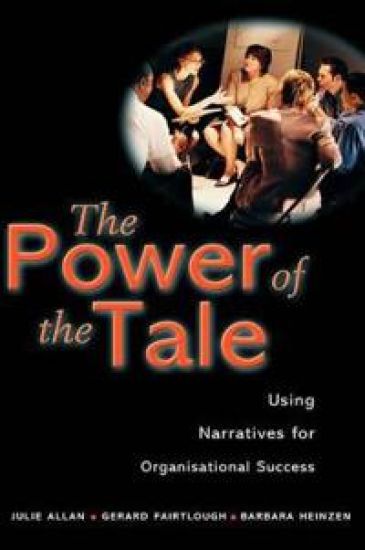
The Power of the Tale

The Power of the Tale

Julie Allan; Gerard Fairtlough; Barbara Heinzen

John Wiley Sons Inc
2002
sidottu
" . . . I thoroughly endorse the book. . . Fairtlough is an excellent thinker." Napier Collyns "Takes Arie de Geus's thinking forward . . I have no hesitation in recommending it for publication." Gill Ringland "The most important aspect is the potential to legitimise the use of storytelling in a business environment . . and help management think outside the box." Arie de Geus Story-telling is one of the best ways for individuals, groups, organizations and societies to learn. Skill in story-telling and in other narrative activities allows us to understand complexity, live with uncertainty, communicate well and increase personal and organizational effectiveness. As organizations move away from old-fashioned command and control, they will increasingly need the bonds of shared stories, which create shared language, shared visions and shared values.