Kirjojen hintavertailu – 12 859 829 kirjaa ja 27 kauppaa

Kirjailija

Julie Browne

Kirjat ja teokset yhdessä paikassa: 8 kirjaa, julkaisuja vuosilta 2011–2025, suosituimpiin kuuluu Clothing, Mindset & Value: Achieving freedom to dress with confidence and joy. Vertaile teosten hintoja ja tarkista saatavuus suomalaisista kirjakaupoista.

8 kirjaa

Kirjojen julkaisuvuodet: 2011–2025.

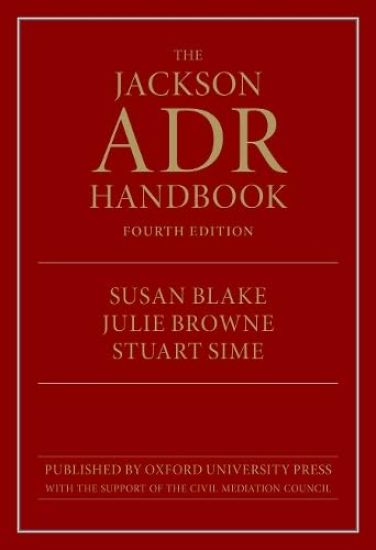
The Jackson ADR Handbook

The Jackson ADR Handbook

Stuart Sime; Susan Blake; Julie Browne

Oxford University Press
2025
nidottu
The Jackson ADR Handbook^r was written to fulfil a recommendation by Lord Justice Jackson that there should be an authoritative handbook on alternative dispute resolution (ADR). The first edition, published in 2013, laid a strong foundation as an authoritative guide to ADR, receiving judicial endorsement from the Court of Appeal. Subsequent editions built upon that success, becoming a syllabus text prescribed by the Bar Standards Board. The use of ADR continues to be embedded in dispute resolution in England and Wales, with the Master of the Rolls and the Ministry of Justice implementing reforms that place the use of ADR alongside litigation. This revised fourth edition integrates important new case law, including the landmark case of Churchill v Merthyr Tydfil Borough Council [2023], in which the Court of Appeal decided a court can order parties to engage in a non-court based dispute resolution process, provided the right to a trial remains. Key changes in court rules and pre-action protocols are also covered. Designed with a concise, user-friendly format, the text provides an in-depth overview of the options and principles for ADR, placing them firmly within the context of litigation, and looking in detail at the relevant court rules and legal principles, such as privacy and legal professional privilege, as well as practical topics such as how to prepare for and what happens during mediation and recording and enforcing settlements.

A Practical Approach to Alternative Dispute Resolution

A Practical Approach to Alternative Dispute Resolution

Susan Blake; Julie Browne; Stuart Sime

Oxford University Press
2024
nidottu
A Practical Approach to Alternative Dispute Resolution provides a comprehensive and easily digestible commentary on all of the major areas of out-of-court dispute resolution. Designed to support teaching and learning on the Bar Professional Training Course, it will also be of interest to practitioners who are looking for a clear exposition of the range of ADR processes. Written by an authoritative and highly respected author team, this book contains a range of features designed to enhance the reader's understanding of the key points, including sample documentation, flow diagrams, tables, further resources, and examples drawn from a range of different types of practice. Now in its sixth edition, this book has established itself as a go-to reference on ADR. Online resources - Updates to cases and procedures - Useful links for each chapter - Diagrams and figures from the book
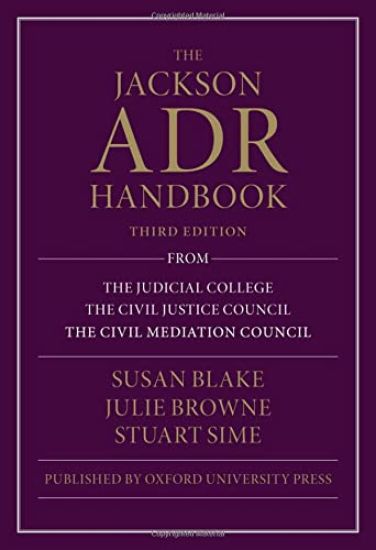
The Jackson ADR Handbook

The Jackson ADR Handbook

Susan Blake; Julie Browne; Stuart Sime

Oxford University Press
2021
nidottu
The Jackson ADR Handbook was created following recommendations by Lord Justice Jackson for an authoritative handbook for Alternative Dispute Resolution (ADR). The first edition, written in collaboration with a specialist editorial advisory board, laid a strong foundation as an essential guide to ADR, and received judicial endorsement in the Court of Appeal and the Technology and Construction Court. The second edition built upon that success, becoming a set text with the Bar Standards Board. This fully revised third edition integrates a range of important new case law, locates ADR within an increasingly digital landscape, and addresses calls from within the judiciary for ADR to be incorporated at all stages of the dispute resolution process. Designed in a concise, user-friendly format, the text provides an in-depth overview of the options and principles of ADR, before looking at five focused areas: the interplay between ADR, CPR, and litigation; negotiation; mediation; recording and enforcing settlement; and other ADR options including the international perspective. Additional materials such as mediation providers, specimen documents, precedents, and practice tips are available on a companion website at www.oup.com/ADR3e
Educators of healthcare professionals

Educators of healthcare professionals

Julie Browne; Alison Bullock; Samuel Parker; Chiara Poletti; John Jenkins; Derek Gallen; Malcolm Smith

Cardiff University Press
2021
nidottu
Healthcare education is a discipline in its own right, and while each profession has its own distinctive body of clinical knowledge, in educational terms there is much that all professions share. Yet recognition for the healthcare educator role is often lacking. A more collaborative approach to the professional development of healthcare educators is needed in response to this and also to the rise of interprofessional and multiprofessional teamworking. Not all healthcare professions have guidelines for training their educators, and those that do have slightly different standards, which can lead to misunderstanding and miscommunication. It is in the interest of all healthcare professions that their professional bodies work more closely together to consider how healthcare educators can be supported as a distinct body with unique expertise and skills. This monograph reports on an 18-month long research project - the Healthcare Educators' Values and Activities Study (HEVAS) - which aimed to establish the views of health professions educators, regulators, learned societies and professional bodies on the shared values and key activities undertaken by all healthcare professions educators. The project was funded by Health Education England and the Wales Deanery at Health Education and Improvement Wales. Nine central values and 24 activities were identified after a five-stage research process involving hundreds of participants drawn from over 20 healthcare professions. A variety of methods was used to establish a broad and clear consensus, demonstrating conclusively that healthcare professions educators share a strong set of values around the importance of professional healthcare education to safeguarding excellence in clinical practice and patient care, both now and for the future. While each profession develops its students, trainees and practitioners in its own way, the fundamental work of the healthcare educator is broadly similar, regardless of clinical specialty or profession. This new insight provides solid academic underpinning for multi-professional and interprofessional practice in healthcare education, and offers a new shared perspective on the future for healthcare education and healthcare educators.
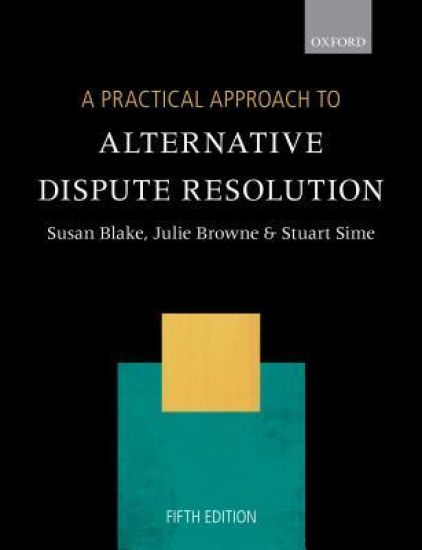
A Practical Approach to Alternative Dispute Resolution

A Practical Approach to Alternative Dispute Resolution

Susan Blake; Julie Browne; Stuart Sime

Oxford University Press
2018
nidottu
A Practical Approach to Alternative Dispute Resolution provides a comprehensive and easily digestible commentary on all of the major areas of out-of-court dispute resolution. Designed to support teaching and learning on the Bar Professional Training Course, it will also be of interest to practitioners who are looking for a clear exposition of the range of ADR processes. Written by an authoritative and highly respected author team, this book contains a range of features designed to enhance the reader's understanding of the key points, including sample documentation, flow diagrams, tables, further resources, and examples drawn from a range of different types of practice. Now in its fifth edition, this book has established itself as a go-to reference on ADR. Online resources - Updates to cases and procedures - Useful links for each chapter - Diagrams and figures from the book
Clothing, Mindset & Value: Achieving freedom to dress with confidence and joy

Clothing, Mindset & Value: Achieving freedom to dress with confidence and joy

Julie Browne

Createspace Independent Publishing Platform
2016
nidottu
This book promotes an underutilized way to leverage the power of personal image by encouraging you to connect with couture-level home-sewers to make signature wardrobes, or alter or redesign existing garments to fit and flatter. Enroll on a journey through an honest look at what you're currently settling for - most likely a mediocre wardrobe - and question how that's supporting your success. Consider lost opportunity costs of not looking your best, of feeling insecure about your image and of chasing style versus your own signature look. This book urges you to tend to first impressions with precision and urgency. It proposes that if you value your wardrobe differently, and dare to create one you're truely in love with, then you will leverage a massive force. To this end, it directs you to seek out highly skilled home-sewers to fill your wardrobe with intimate treasures of comfort, beauty and joy. Included is a system for clutter clearing your wardrobe and a DIY system for designing a signature wardrobe. Worksheets and instructions are included And it gives step-by-step guidance on how to find a couture-level home-sewer. Lastly, it serves as an excellent marketing tool for those professionals who desire to make a living with their all-but-forgotten trade, and argues the case for elevating couture-level home-sewing to the exciting luxury product that it is.
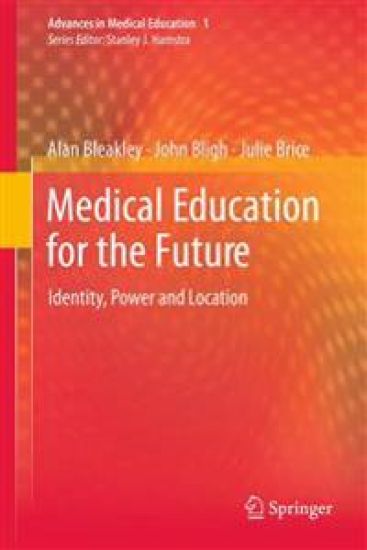
Medical Education for the Future

Medical Education for the Future

Alan Bleakley; John Bligh; Julie Browne

Springer
2013
nidottu
The purpose of medical education is to benefit patients by improving the work of doctors. Patient centeredness is a centuries old concept in medicine, but there is still a long way to go before medical education can truly be said to be patient centered. Ensuring the centrality of the patient is a particular challenge during medical education, when students are still forming an identity as trainee doctors, and conservative attitudes towards medicine and education are common amongst medical teachers, making it hard to bring about improvements. How can teachers, policy makers, researchers and doctors bring about lasting change that will restore the patient to the heart of medical education? The authors, experienced medical educators, explore the role of the patient in medical education in terms of identity, power and location. Using innovative political, philosophical, cultural and literary critical frameworks that have previously never been applied so consistently to the field, the authors provide a fundamental reconceptualisation of medical teaching and learning, with an emphasis upon learning at the bedside and in the clinic. They offer a wealth of practical and conceptual insights into the three-way relationship between patients, students and teachers, setting out a radical and exciting approach to a medical education for the future.“The authors provide us with a masterful reconceptualization of medical education that challenges traditional notions about teaching and learning. The book critiques current practices and offers new approaches to medical education based upon sociocultural research and theory. This thought provoking narrative advances the case for reform and is a must read for anyone involved in medical education.” - David M. Irby, PhD, Vice Dean for Education,University of California, San Francisco School of Medicine; and co-author of Educating Physicians: A Call for Reform of Medical School and Residency"This book is a truly visionary contribution to the Flexner centenary. It is compulsory reading for the medical educationalist with a serious concern for the future - and for the welfare of patients and learners in the here and now." Professor Tim Dornan, University of Manchester Medical School and Maastricht University Graduate School of Health Professions Education.
Medical Education for the Future

Medical Education for the Future

Alan Bleakley; John Bligh; Julie Browne

Springer
2011
sidottu
The purpose of medical education is to benefit patients by improving the work of doctors. Patient centeredness is a centuries old concept in medicine, but there is still a long way to go before medical education can truly be said to be patient centered. Ensuring the centrality of the patient is a particular challenge during medical education, when students are still forming an identity as trainee doctors, and conservative attitudes towards medicine and education are common amongst medical teachers, making it hard to bring about improvements. How can teachers, policy makers, researchers and doctors bring about lasting change that will restore the patient to the heart of medical education? The authors, experienced medical educators, explore the role of the patient in medical education in terms of identity, power and location. Using innovative political, philosophical, cultural and literary critical frameworks that have previously never been applied so consistently to the field, the authors provide a fundamental reconceptualisation of medical teaching and learning, with an emphasis upon learning at the bedside and in the clinic. They offer a wealth of practical and conceptual insights into the three-way relationship between patients, students and teachers, setting out a radical and exciting approach to a medical education for the future.“The authors provide us with a masterful reconceptualization of medical education that challenges traditional notions about teaching and learning. The book critiques current practices and offers new approaches to medical education based upon sociocultural research and theory. This thought provoking narrative advances the case for reform and is a must read for anyone involved in medical education.” - David M. Irby, PhD, Vice Dean for Education,University of California, San Francisco School of Medicine; and co-author of Educating Physicians: A Call for Reform of Medical School and Residency"This book is a truly visionary contribution to the Flexner centenary. It is compulsory reading for the medical educationalist with a serious concern for the future - and for the welfare of patients and learners in the here and now." Professor Tim Dornan, University of Manchester Medical School and Maastricht University Graduate School of Health Professions Education.