Kirjojen hintavertailu – 12 871 117 kirjaa ja 27 kauppaa
Kirjailija
Julie Grossman
Kirjat ja teokset yhdessä paikassa: 12 kirjaa, julkaisuja vuosilta 2015–2027, suosituimpiin kuuluu Ida Lupino, Director, 2nd Edition. Vertaile teosten hintoja ja tarkista saatavuus suomalaisista kirjakaupoista.
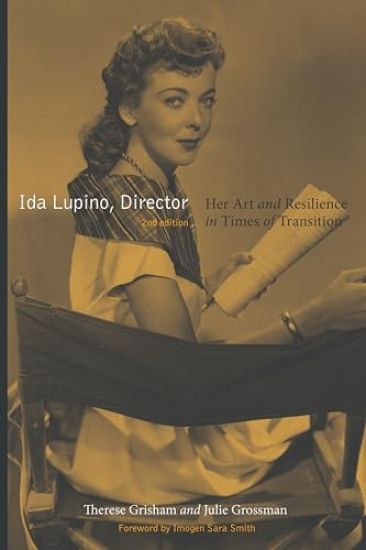
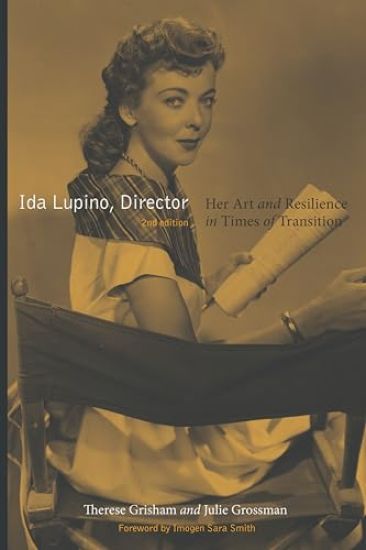
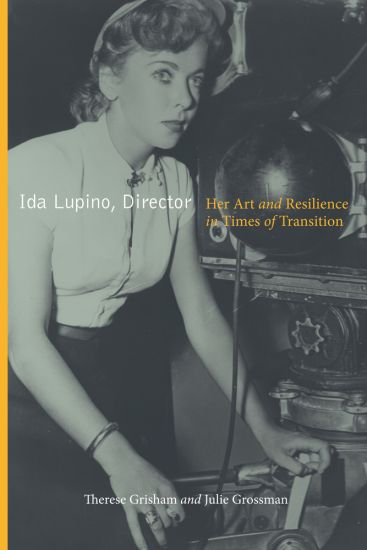
The updated edition of Ida Lupino, Director: Her Art and Resilience in Times of Transition, an in-depth exploration of Lupino’s film and television directing work, provides close readings of the films and TV episodes Lupino directed and accounts for the history of Lupino’s reception, continuing into the mid 2020s, in media and film scholarship. The book gives readers a fuller understanding of Lupino’s major contribution to the history of American cinema and media. The revisions update this book, the first on Lupino’s directing, to address recent scholarship on Lupino’s work and reinforce her abiding relevance for cinephiles and film scholars. It incorporates scholarly and popular culture references to Lupino in the last seven years. Updates include a foreword by writer and film critic Imogen Sara Smith, whose work in film scholarship and the public arena has drawn attention to Lupino and the importance of gender to film noir. Authors Therese Grisham and Julie Grossman have added a complete list of the TV episodes Lupino directed in the 1950s and 60s, as well as an updated epilogue. This new addition addresses how our views of Lupino’s innovative cinema and her prodigious contributions to classic television have been taken up by others, proving that Lupino, whose reputation has waxed and waned since the middle of the 20th century, is here to stay as a major figure in the history of American media.
The updated edition of Ida Lupino, Director: Her Art and Resilience in Times of Transition, an in-depth exploration of Lupino’s film and television directing work, provides close readings of the films and TV episodes Lupino directed and accounts for the history of Lupino’s reception, continuing into the mid 2020s, in media and film scholarship. The book gives readers a fuller understanding of Lupino’s major contribution to the history of American cinema and media. The revisions update this book, the first on Lupino’s directing, to address recent scholarship on Lupino’s work and reinforce her abiding relevance for cinephiles and film scholars. It incorporates scholarly and popular culture references to Lupino in the last seven years. Updates include a foreword by writer and film critic Imogen Sara Smith, whose work in film scholarship and the public arena has drawn attention to Lupino and the importance of gender to film noir. Authors Therese Grisham and Julie Grossman have added a complete list of the TV episodes Lupino directed in the 1950s and 60s, as well as an updated epilogue. This new addition addresses how our views of Lupino’s innovative cinema and her prodigious contributions to classic television have been taken up by others, proving that Lupino, whose reputation has waxed and waned since the middle of the 20th century, is here to stay as a major figure in the history of American media.
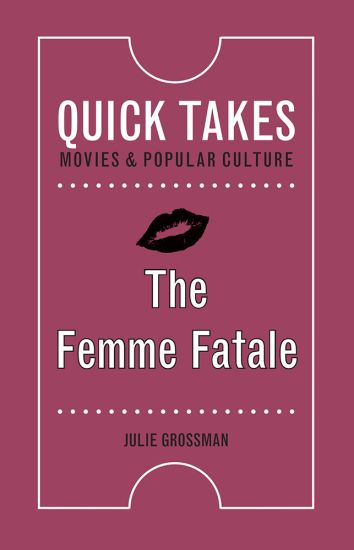
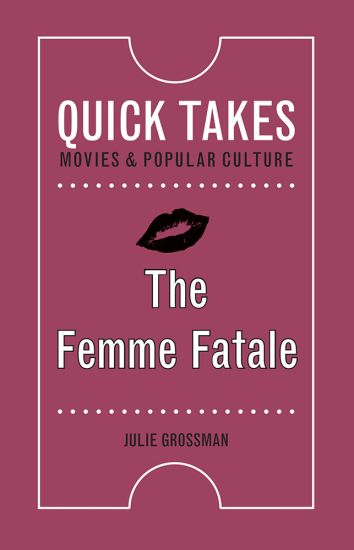
Ostensibly the villain, but also a model of female power, poise, and intelligence, the femme fatale embodies Hollywood’s contradictory attitudes toward ambitious women. But how has the figure of the femme fatale evolved over time, and to what extent have these changes reflected shifting cultural attitudes toward female independence and sexuality? This book offers readers a concise look at over a century of femmes fatales on both the silver screen and the TV screen. Starting with ethnically exoticized silent film vamps like Theda Bara and Pola Negri, it examines classic film noir femmes fatales like Barbara Stanwyck in Double Indemnity, as well as postmodern revisions of the archetype in films like Basic Instinct and Memento. Finally, it explores how contemporary film and television creators like Fleabag and Killing Eve’s Phoebe Waller-Bridge have appropriated the femme fatale in sympathetic and surprising ways. Analyzing not only the films themselves, but also studio press kits and reviews, The Femme Fatale considers how discourses about the pleasures and dangers of female performance are projected onto the figure of the femme fatale. Ultimately, it is a celebration of how “bad girl” roles have provided some of Hollywood’s most talented actresses opportunities to fully express their on-screen charisma.
Ostensibly the villain, but also a model of female power, poise, and intelligence, the femme fatale embodies Hollywood’s contradictory attitudes toward ambitious women. But how has the figure of the femme fatale evolved over time, and to what extent have these changes reflected shifting cultural attitudes toward female independence and sexuality? This book offers readers a concise look at over a century of femmes fatales on both the silver screen and the TV screen. Starting with ethnically exoticized silent film vamps like Theda Bara and Pola Negri, it examines classic film noir femmes fatales like Barbara Stanwyck in Double Indemnity, as well as postmodern revisions of the archetype in films like Basic Instinct and Memento. Finally, it explores how contemporary film and television creators like Fleabag and Killing Eve’s Phoebe Waller-Bridge have appropriated the femme fatale in sympathetic and surprising ways. Analyzing not only the films themselves, but also studio press kits and reviews, The Femme Fatale considers how discourses about the pleasures and dangers of female performance are projected onto the figure of the femme fatale. Ultimately, it is a celebration of how “bad girl” roles have provided some of Hollywood’s most talented actresses opportunities to fully express their on-screen charisma.
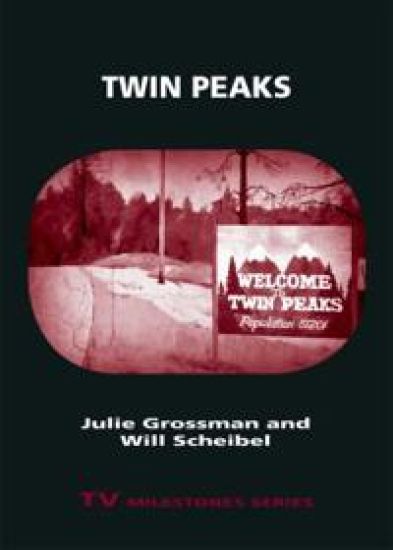
Julie Grossman and Will Scheibel's enthusiastic book on the television series Twin Peaks takes fans through the world that Mark Frost and David Lynch created and examines its impact on society, genre, and the television industry. Grossman and Scheibel explore the influences of melodrama and film noir, the significance around the idea of "home," as well as female trauma and agency. In addition to this close investigation of the series itself, the authors examine the rich storytelling surrounding Twin Peaks that includes the film prequel, Mark Frost's novels, and Showtime's 2017 revival. In Twin Peaks, Grossman and Scheibel argue that the show has transcended conventional binaries not only in film and television but also in culture and gender. The book begins with a look into the publicity and critical discourses on authorship that framed Twin Peaks as an auteurist project rather than a prime-time soap opera. Despite critics' attempts to distance the series from the soap opera genre, Grossman and Scheibel explore how melodrama and noir are used in Twin Peaks. Grossman and Scheibel masterfully examine star performances in the series including Kyle MacLachlan's epic portrayal as the idiosyncratic Special Agent Dale Cooper and Sheryl Lee's haunting embodiment of Laura Palmer. The monograph finishes with an examination of the adaptation and remediation of Twin Peaks in a variety of different platforms, which have further expanded the boundaries of the series. Twin Peaks explores the ways in which the series critiques multiple forms of objectification in culture and textuality. Readers interested in film, television, pop culture, and gender studies as well as fans and new audiences discovering Twin Peaks will embrace this book.
Dominated by men and bound by the restrictive Hays Code, postwar Hollywood offered little support for a female director who sought to make unique films on controversial subjects. But Ida Lupino bucked the system, writing and directing a string of movies that exposed the dark underside of American society, on topics such as rape, polio, unwed motherhood, bigamy, exploitative sports, and serial murder. The first in-depth study devoted to Lupino’s directorial work, this book makes a strong case for her as a trailblazing feminist auteur, a filmmaker with a clear signature style and an abiding interest in depicting the plights of postwar American women. Ida Lupino, Director not only examines her work as a cinematic auteur, but also offers a serious consideration of her diverse and long-ranging career, getting her start in Hollywood as an actress in her teens and twenties, directing her first films in her early thirties, and later working as an acclaimed director of television westerns, sitcoms, and suspense dramas. It also demonstrates how Lupino fused generic elements of film noir and the social problem film to create a distinctive directorial style that was both highly expressionistic and grittily realistic. Ida Lupino, Director thus shines a long-awaited spotlight on one of our greatest filmmakers.
Dominated by men and bound by the restrictive Hays Code, postwar Hollywood offered little support for a female director who sought to make unique films on controversial subjects. But Ida Lupino bucked the system, writing and directing a string of movies that exposed the dark underside of American society, on topics such as rape, polio, unwed motherhood, bigamy, exploitative sports, and serial murder. The first in-depth study devoted to Lupino’s directorial work, this book makes a strong case for her as a trailblazing feminist auteur, a filmmaker with a clear signature style and an abiding interest in depicting the plights of postwar American women. Ida Lupino, Director not only examines her work as a cinematic auteur, but also offers a serious consideration of her diverse and long-ranging career, getting her start in Hollywood as an actress in her teens and twenties, directing her first films in her early thirties, and later working as an acclaimed director of television westerns, sitcoms, and suspense dramas. It also demonstrates how Lupino fused generic elements of film noir and the social problem film to create a distinctive directorial style that was both highly expressionistic and grittily realistic. Ida Lupino, Director thus shines a long-awaited spotlight on one of our greatest filmmakers.
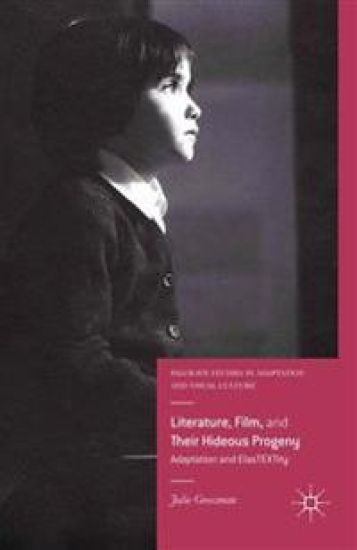
This book posits adaptations as 'hideous progeny,' Mary Shelley's term for her novel, Frankenstein . Like Shelley's novel and her fictional Creature, adaptations that may first be seen as monstrous in fact compel us to shift our perspective on known literary or film works and the cultures that gave rise to them.
This book posits adaptations as 'hideous progeny,' Mary Shelley's term for her novel, Frankenstein . Like Shelley's novel and her fictional Creature, adaptations that may first be seen as monstrous in fact compel us to shift our perspective on known literary or film works and the cultures that gave rise to them.