Kirjojen hintavertailu – 12 859 819 kirjaa ja 27 kauppaa

Kirjailija

Julie Reid

Kirjat ja teokset yhdessä paikassa: 4 kirjaa, julkaisuja vuosilta 2017–2025, suosituimpiin kuuluu Tell Our Story. Vertaile teosten hintoja ja tarkista saatavuus suomalaisista kirjakaupoista.

4 kirjaa

Kirjojen julkaisuvuodet: 2017–2025.

Tell Our Story

Tell Our Story

Julie Reid; Dale T. McKinley

WITS UNIVERSITY PRESS
2020
sidottu
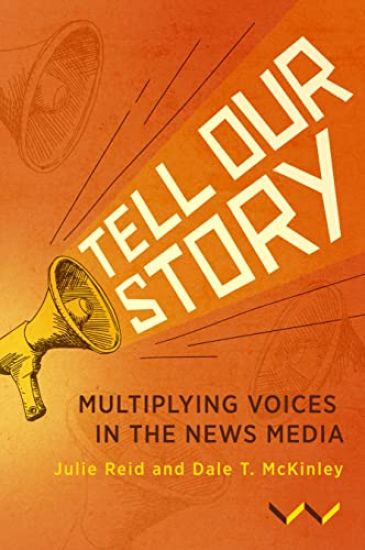
Focusing on three South African communities the authors dismiss the idea that some groups are voiceless, arguing that they are being deliberately ignored by dominant news media The dominant news media are often accused of reflecting an 'elite bias', privileging and foregrounding the interests of a small segment of society while ignoring the narratives of the majority. The authors of Tell Our Story investigate this problem and offer a hands-on demonstration of listening journalism and research in practice. In the process they dismiss the idea that some groups are voiceless, arguing that what is often described in such terms is mostly a matter of those groups being deliberately ignored. Focusing their attention on three very different South African communities they delve into the life and struggle narratives of each, exposing the divide between the stories told by the people who actually live in the communities and the way in which those stories have been understood and shaped by the media. The three communities are those living in the Glebelands hostel complex in Durban where over 100 residents have been killed in politically motivated violence in the past few years; the Xolobeni community on the Wild Coast, which has been resisting the building of a new toll road and a dune mining venture; and Thembelihle, a settlement south-west of Johannesburg that has been resisting removal for many years. The book concludes with a set of practical guidelines for journalists on the practice of listening journalism.
Tell Our Story

Tell Our Story

Julie Reid; Dale T. McKinley

Wits University Press
2020
pokkari
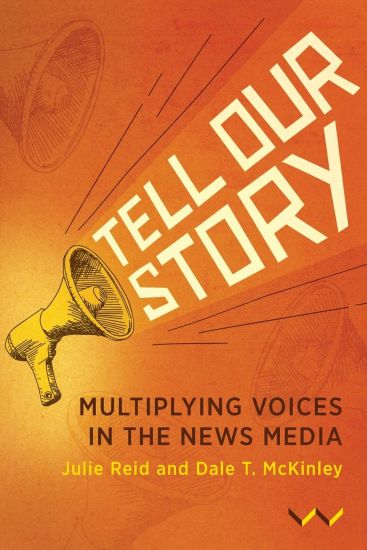
Focusing on three South African communities the authors dismiss the idea that some groups are voiceless, arguing that they are being deliberately ignored by dominant news media The dominant news media are often accused of reflecting an 'elite bias', privileging and foregrounding the interests of a small segment of society while ignoring the narratives of the majority. The authors of Tell Our Story investigate this problem and offer a hands-on demonstration of listening journalism and research in practice. In the process they dismiss the idea that some groups are voiceless, arguing that what is often described in such terms is mostly a matter of those groups being deliberately ignored. Focusing their attention on three very different South African communities they delve into the life and struggle narratives of each, exposing the divide between the stories told by the people who actually live in the communities and the way in which those stories have been understood and shaped by the media. The three communities are those living in the Glebelands hostel complex in Durban where over 100 residents have been killed in politically motivated violence in the past few years; the Xolobeni community on the Wild Coast, which has been resisting the building of a new toll road and a dune mining venture; and Thembelihle, a settlement south-west of Johannesburg that has been resisting removal for many years. The book concludes with a set of practical guidelines for journalists on the practice of listening journalism.

Delusive Speech in the Sharing Economy

Delusive Speech in the Sharing Economy

Julie Reid

TAYLOR FRANCIS LTD
2025
sidottu
In this examination of how the rise of online sharing economy platforms has facilitated online crime, this book shows how, while marketed as trustworthy peer-to-peer services, these platforms are highly vulnerable to misuse by scammers and are used for the dissemination of delusive speech. The analysis centres around the concept of delusive speech, a sub-set of disinformation, designed to deceive and motivate by criminal intent. Looking beyond the economic and disruptive impacts of sharing economy platforms like Uber, Airbnb, and others, this book situates these Big Tech giants as mass communication channels that are frequently misused by bad actors to distribute dangerous content globally. Drawing from over 600 cases of victims lured into scams or physical danger via misleading Airbnb listings, the book provides a detailed case study exposing Airbnb's failure to establish legitimate safety measures despite branding its platform as a 'community of trust'. Incorporating netnography and thematic analysis, the author theorises the deceptive semiotic structure of delusive speech and evaluates practical mechanisms Airbnb could employ to prevent scams and crime on its platform. With a global audience including researchers in communication and media studies, digital media, and media industries, as well as tech journalists, Silicon Valley critics, policymakers, and digital rights advocates, this book unmasks how sharing economy giants like Airbnb contribute to an epidemic of online deception causing real-world harm.
The Jesus and Mary Chain

The Jesus and Mary Chain

Jim Reid; Julie Reid

Andrew Catlin
2017
sidottu
This is a unique view into the chaos that was the Jesus and Mary Chain over the first years of the band. It captures their style, their attitude, and their complete commitment to the music and lifestyle." The first time I saw The Jesus and Mary Chain at the Ambulance Station in Old Kent Road, I could tell before they even started playing that they were going to be great. Things were chaotic from the start. I climbed on top of the speakers and spent the gig there. A little unstable, but good bass, good view - close up, and in the big scheme of things, everything else in the room was pretty unstable anyway. I saw gigs that ended in riots; gigs that were stopped by the police, gigs where they had the whole audience in the palm of their hands and didn't even know it. It always seemed like they just played for themselves and for the music - perhaps the music played them. The audience were just there as witnesses. No pretence of showmanship or crowd-pleasing. More often than not they would find a way to piss someone off, and that would turn into a confrontation, but it was always an amazing spectacle. An overwhelming sound that cut through anything - stage invasions, fights, collapsed drum kits, shit P. A.s or venues. It didn't matter. Apart from really enjoying the music, as a photographer, there was always an infinity of things to see. (Usually very little light, but I've always been fond of long exposures ) It was very real - something visceral rather than just a "performance."