
Kirjojen hintavertailu – 12 903 725 kirjaa ja 27 kauppaa

Kirjailija

Julio C. Urenda

Kirjat ja teokset yhdessä paikassa: 2 kirjaa, julkaisuja vuosilta 2022–2023, suosituimpiin kuuluu Algebraic Approach to Data Processing. Vertaile teosten hintoja ja tarkista saatavuus suomalaisista kirjakaupoista.

2 kirjaa

Kirjojen julkaisuvuodet: 2022–2023.

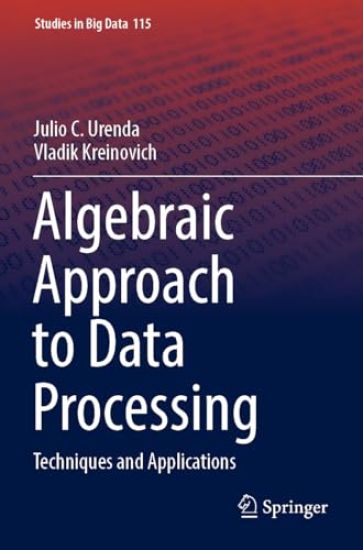
Algebraic Approach to Data Processing

Algebraic Approach to Data Processing

Julio C. Urenda; Vladik Kreinovich

Springer International Publishing AG
2023
nidottu
The book explores a new general approach to selecting—and designing—data processing techniques. Symmetry and invariance ideas behind this algebraic approach have been successful in physics, where many new theories are formulated in symmetry terms. The book explains this approach and expands it to new application areas ranging from engineering, medicine, education to social sciences. In many cases, this approach leads to optimal techniques and optimal solutions. That the same data processing techniques help us better analyze wooden structures, lung dysfunctions, and deep learning algorithms is a good indication that these techniques can be used in many other applications as well. The book is recommended to researchers and practitioners who need to select a data processing technique—or who want to design a new technique when the existing techniques do not work. It is also recommended to students who want to learn the state-of-the-art data processing.
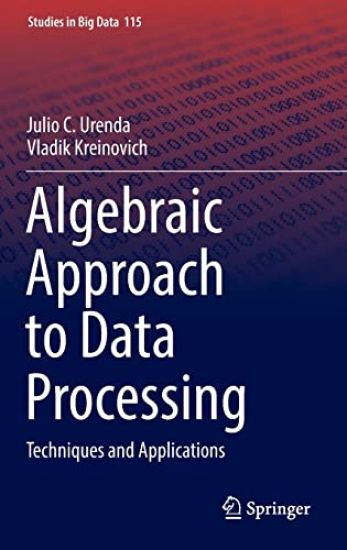
Algebraic Approach to Data Processing

Algebraic Approach to Data Processing

Julio C. Urenda; Vladik Kreinovich

Springer International Publishing AG
2022
sidottu
The book explores a new general approach to selecting—and designing—data processing techniques. Symmetry and invariance ideas behind this algebraic approach have been successful in physics, where many new theories are formulated in symmetry terms. The book explains this approach and expands it to new application areas ranging from engineering, medicine, education to social sciences. In many cases, this approach leads to optimal techniques and optimal solutions. That the same data processing techniques help us better analyze wooden structures, lung dysfunctions, and deep learning algorithms is a good indication that these techniques can be used in many other applications as well. The book is recommended to researchers and practitioners who need to select a data processing technique—or who want to design a new technique when the existing techniques do not work. It is also recommended to students who want to learn the state-of-the-art data processing.