Kirjojen hintavertailu – 12 859 828 kirjaa ja 27 kauppaa

Kirjailija

Julius Evola

Kirjat ja teokset yhdessä paikassa: 18 kirjaa, julkaisuja vuosilta 1991–2026, suosituimpiin kuuluu The Metaphysics of Hierarchy. Vertaile teosten hintoja ja tarkista saatavuus suomalaisista kirjakaupoista.

18 kirjaa

Kirjojen julkaisuvuodet: 1991–2026.

The Metaphysics of Hierarchy

The Metaphysics of Hierarchy

Julius Evola; René Guénon

Tradition
2026
nidottu
The intellectual relationship between two leaders of the Traditionalist School is documented in this volume featuring their anonymously published collaboration Hierarchy and Democracy together with supplementary correspondence regarding the problem of initiatory metaphysics, in which their distinct perspectives on the nature and purpose of Tradition are outlined with brilliant clarity.
The Complete Introduction to Magic

The Complete Introduction to Magic

Julius Evola; The UR Group

INNER TRADITIONS BEAR AND COMPANY
2023
sidottu

Halvin toimitettuna 101,70 €

All three volumes of the occult classic available together as a deluxe boxed set for the first time. In 1927 Julius Evola and other leading Italian esotericists formed the mysterious UR group. The purpose of this group was to study and practice ancient rituals from the mystery traditions of the world, both East and West, in order to attain a state of superhuman consciousness and power to allow them to act magically on the world. They produced a monthly journal containing techniques for spiritual realization, accounts of personal experiences, translations of ancient texts, and original essays on the occult. Many years later, in 1971, Evola gathered these essays into three volumes. Volume I collects rites, practices, and magical knowledge, including instructions for creating an etheric double, speaking words of power, using fragrances, interacting with entities, and creating a “magical chain.” It also includes translations of rare texts such as the Tibetan teachings of the Thunderbolt Diamond Path, the Mithraic mystery cult’s “Grand Papyrus of Paris,” and the Greco-Egyptian magical text De Mysteriis. Volume II shares authentic initiatic wisdom and a rigorous selection of initiatory exercises, including instructions for creating the diaphanous body of the Opus magicum, and establishing initiatic consciousness after death. It also offers studies of mystery traditions throughout history. Volume III, more than the others, bears the personal stamp of Julius Evola. It explores esoteric practices for individual development, handed down from a primordial tradition and discernable in alchemy, Hermetism, religious doctrines, Tantra, Taoism, Buddhism, Vedanta, and the pagan mysteries of the West. Available together as a deluxe boxed set for the first time in English, these volumes present the steps necessary to purify the soul with the light of knowledge and the fire of dedication, as well as allowing the reader to be liberated from conventional dogmas—religious, political, scientific, and psychological—and see with the clearer eye of realisation.
Imperialismo pagano

Imperialismo pagano

Julius Evola

Hiperbola Janus
2023
sidottu
Imperialismo pagano es una obra temprana de Julius Evola, en plena juventud, cuando apenas contaba con 30 a os, en 1928. Su contenido est ntimamente relacionado con los avatares hist ricos de la Italia del momento, y con el rumbo que el r gimen mussoliniano estaba tomando en relaci n a la Iglesia, algo que cristaliz en el concordato de 1929, que tambi n dar a nacimiento al Estado Vaticano y marcar a una orientaci n cat lica en la Italia del Ventennio. Al mismo tiempo, esta obra es una expresi n del tradicionalismo romano y las aspiraciones romano-paganas e imperiales que ciertos autores tradicionales quer an dar al r gimen italiano, entre los cuales se encontraba Julius Evola y el Grupo de Ur, quien a trav s de un estilo directo y contundente nos habla de la Tradici n mediterr nea y la defensa de la Romanidad pagana frente al Cristianismo, al que califica de antitradicional y lo concibe como parte de la subversi n moderna, cuando no la matriz de las grandes ideolog as modernas que han engendrado el liberalismo, el comunismo, el occidentalismo o la misma idea de la Europa moderna.
Introduction to Magic, Volume III

Introduction to Magic, Volume III

Julius Evola; The UR Group

Inner Traditions Bear and Company
2021
pokkari
Authentic initiatic practices, rituals, and wisdom collected by the UR Group• Explores esoteric practices for individual development, handed down from a primordial tradition and discernable in alchemy, Hermetism, religious doctrines, Tantra, Taoism, Buddhism, Vedanta, and the pagan mysteries of the West • Reveals the ultimate magical goal of the “Absolute Individual,” the immortal and divine potential that requires rare gifts and extraordinary efforts for its realization This volume, the third in the series, complements the first two, yet they are not strictly sequential, and their contents can be read in any order. Volume III, more than the others, bears the personal stamp of Julius Evola. In its pages you’ll discover that the “magic” of the UR Group has nothing to do with sorcery or superstition. It was their term for an active and affirmative attitude toward individual development handed down from a “primordial tradition” and discernible in alchemy, Hermetism, esoteric religious doctrines, indigenous practices, Tantra, Taoism, Buddhism, Vedanta, and the pagan mysteries of the West. Its goal was the “Absolute Individual,” the immortal and divine potential that requires rare gifts and extraordinary efforts for its realization. However, there is incalculable value in this volume even for the less heroic. By studying the practices and realizations within, the reader will be liberated from conventional dogmas--religious, political, scientific, and psychological--and see with the clearer eye of realization.
The Fall of Spirituality

The Fall of Spirituality

Julius Evola

Inner Traditions Bear and Company
2021
sidottu
A bold critique of the spiritual schools, philosophies, and mystical teachers of the 20th century• Examines newer spiritual “systems” of the modern era, from spiritism and theosophy, to parapsychic research and anthroposophism, to psychoanalysis and the Church of Satan • Compares these newer spiritual “systems” to the traditional spiritual path of the ancients and exposes the misunderstandings, misinterpretations, and occult dangers lurking in their practices • Also examines important modern figures such as Nietzsche, Aleister Crowley, Rudolf Steiner, Dostoevsky, Freud, Jung, Gurdjieff, Krishnamurti, and Anton LaVey Written two years before his most prominent book Revolt Against the Modern World, Julius Evola’s The Fall of Spirituality was originally published in Italian as Maschera e volto dello spiritualismo contemporaneo (The Mask and Face of Contemporary Spiritualism). In it, the Baron critiques the spiritual schools, cults, philosophies, and mystical teachers of the 20th century--from spiritism and theosophy, to parapsychic research and anthroposophism, to psychoanalysis and the Church of Satan--comparing these newer spiritual “systems” to the traditional spiritual path of the ancients and exposing the misunderstandings, misinterpretations, and occult dangers lurking in their practices. Examining important modern figures such as Nietzsche, Aleister Crowley, Rudolf Steiner, Dostoevsky, Freud, Jung, Gurdjieff, Krishnamurti, and Anton LaVey, the author contends that their aspirations to power are limited to a focus on concerns of the mundane world. They are thereby blind to the existence of a supernatural reality that offers individuals transmutation from the fallen human personality into a semigod-like status--a status attainable only by those who can master the rigors demanded of initiates on the traditionalist path. Offering an essential guidebook for serious spiritual seekers looking for a more profound metaphysical discipline than those of the spiritual schools of the modern era, Evola also provides contrasting insights from the age-old path of initiation and high magic.

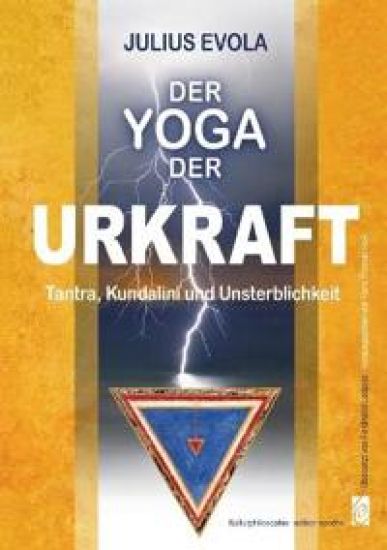
Der Yoga der Urkraft

Der Yoga der Urkraft

Julius Evola

H. Frietsch Verlag
2020
pokkari
Mit "Der Yoga der Urkraft" liegt Evolas "Tantra-Buch" erstmals in deutscher bersetzung vor. Es offenbart eine eher unbekannte Str mung indischer Geistigkeit: eine der bemerkenswertesten Formen des Yoga, den Kundaliniyoga, in seiner urspr nglichen Gestalt. Das vermag dauerhafte Impulse zu geben, auch au erhalb orientalischer Studien und au erhalb der Bereiche, die schon aus blo er Neugier anziehend wirken. Tantrismus z hlt zu den problematischsten und kontroversesten Kategorien der Religionswissenschaft. Beinahe jede Behauptung dar ber ist umstritten. Doch die Faszination, die seit der Entstehung (um etwa 500 n. Chr.) davon ausging, beeinflusste Philosophie, Mystik, Moral und Literatur. Vom Tantrika werden extreme Geduld und Ausdauer als Grundvoraussetzungen erwartet, um ein "Vollendeter" zu werden, im Sinne einer vollkommenen Askese. Evolas Urkraft-Begriff hat nichts mit Macht als Gewalt zu tun, denn Macht verliert ihr innerstes Wesen, wenn sie zu materiellen Mitteln wie Gewalt greift. Gem dem initiatischen Grundsatz, dass "nicht Du die Macht suchen darfst, sondern die Macht Dich suchen muss". Hier st t man auf Unerwartetes. Es ist kein dem Westen angepasster, vereinfachter und auf praktische Zwecke beschr nkter Yoga. Vielmehr ein Tantrismus als allgemeine Lebensauffassung und Weltanschauung, mit besonderer Ber cksichtigung des Sivaismus und des Weges der Linken Hand. Einiges mag fremdartig erscheinen, mit einer Sperrigkeit, die auch einfach den westlichen Denkgewohnheiten geschuldet sein k nnte, denn wie der Tantra-Forscher John Woodroffe bemerkt, sehen "westliche Menschen oft dort Obsz nit t, wo es eigentlich nur Symbolik gibt". Evolas "Yoga der Urkraft" wird Einw nde und Perspektiven gleicherma en n hren, die Zeitlosigkeit seines Wissens aber wird davon unber hrt bleiben.
Hitler and the Secret Societies: A collection of writings

Hitler and the Secret Societies: A collection of writings

Julius Evola

Independently Published
2019
nidottu

Halvin toimitettuna 17,40 €

This Volume contains a selection of articles, excerpts and writings written by Julius Evola during all his long and extreme life. Julius Evola, also known as Baron Giulio Cesare Andrea Evola (19 May 1898 - 11 June 1974) was an Italian philosopher and esoteric scholar. Since his death, his writings have influenced right-wing, reactionary and conservative political thought not only in his native Italy, but throughout continental Europe and, increasingly, the English-speaking world. Nevertheless, Evola should not be considered primarily as a political thinker, but rather as an exponent of the wider Traditionalist School that encompasses the work of such individuals as Ren Gu non, Titus Burckhardt and Frithjof Schuon. In this volume: - Hitler and the Secret Societies.- On the Secret of Degeneration.- American "Civilization".- Against the Neo-Pagans.- The Meaning and Context of Zen.- Yoga, Immortality and Freedom.- Fascism: Myth and Reality.- The Nature of Initiatic Knowledge.- Synthesis of a Doctrine of Race.- The Occult War.
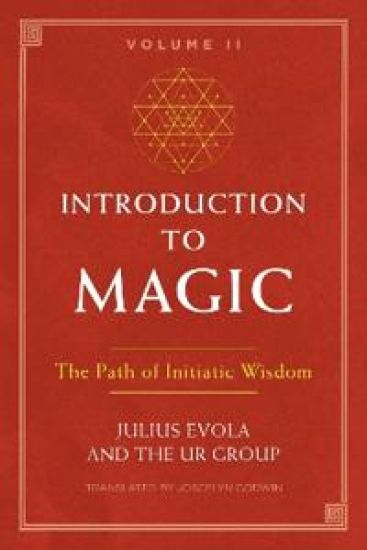
Introduction to Magic, Volume II

Introduction to Magic, Volume II

Julius Evola; The UR Group; Hans Thomas Hakl

Inner Traditions Bear and Company
2019
pokkari
Authentic initiatic practices, rituals, and wisdom collected by the UR Group The “Gruppo di UR” was a group of Italian esotericists who collaborated from 1927 to 1929. The purpose of this group was to study and practice ancient rituals gleaned from the mystery traditions of the world, both East and West, in order to attain a state of superhuman consciousness and power to allow them to act magically on the world. They produced a monthly journal containing techniques for spiritual realization, accounts of personal experiences, translations of ancient texts, and original essays on esoteric topics. The group included a distinguished line-up of occultists, neo-pagans, freemasons, Anthroposophists, orientalists, poets, and members of high society. This volume, the second in the series, complements the first one, yet they are not strictly sequential, and their contents can be read in any order. Volume II shares authentic initiatic wisdom and a rigorous selection of initiatory exercises, including instructions for creating the diaphanous body of the Opus magicum, establishing initiatic consciousness after death, and the construction of magical chains (the enchained awareness of initiates). It offers studies of mystery traditions throughout history, presenting not only the principles themselves but also witnesses to them and their continual validity today. This series shows that the “Magic” of the UR Group meant an active and affirmative attitude toward individual development, handed down from a “primordial tradition” and discernable in alchemy, Hermetism, esoteric religious doctrines, indigenous practices, Tantra, Taoism, Buddhism, Vedanta, and the pagan mysteries of the West.
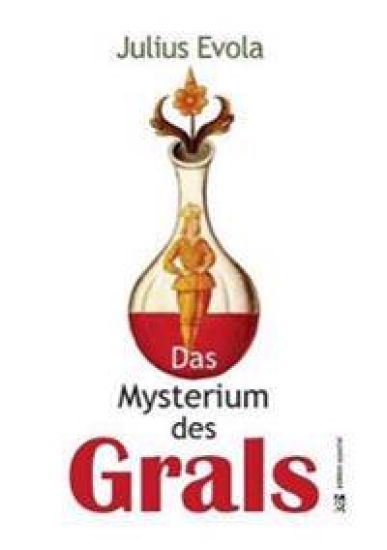
Das Mysterium des Grals

Das Mysterium des Grals

Julius Evola

H. Frietsch Verlag
2019
pokkari
Im Gralsmythos liegt nach Evola ein "initiatisches Mysterium" verborgen. Das Mysterium des Grals in seiner G nze begreifbar zu machen und die darin verborgenen Inhalte als das offenzulegen, was sie wirklich sind, daf r schrieb Julius Evola sein Gralsbuch. Dabei hat er durchaus Praktisches im Sinn, denn "um blo e Phantasien in einem rein stheisch-dichterischen Sinne d rfte es sich beim Gralsmythos nicht handeln." Das Vorwort stammt vom wohl am meisten gesch tzten Evola-Kenner im deutschen Sprachraum Dr. Hans Thomas Hakl und geht auf die aktuelle Situation der Gralslegende und deren Auswirkungen ebenso ein wie auf Evola selbst.
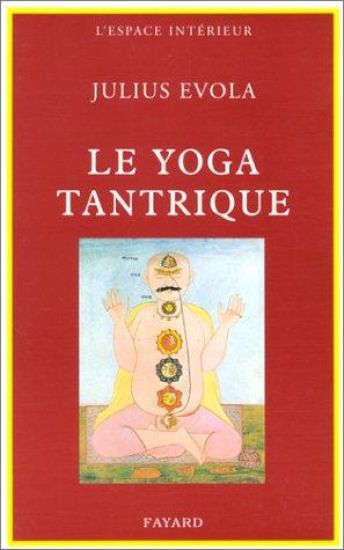
Le Yoga tantrique: Sa métaphysique, ses pratiques
Issu des principaux courants spirituels et religieux de l'Inde, le tantrisme, apparu au Ier mill naire de notre re, est une synth se d'enseignements traditionnels contenus l'origine dans les V das, mais plus adapt s ces si cles o se d veloppe la grande civilisation indo-aryenne. Sans rejeter l'ancienne sagesse, les Tantras r agissent contre les sp culations et le ritualisme vides. A la voie de la contemplation, ils opposent celle de l'action, de la r alisation pratique, de l'exp rience directe. Ce qui importe, c'est d'accomplir des actes surhumains et divins par la force de ses paroles de puissance (mantra) ", dit un texte tantrique. Et un autre: " La particularit du tantra r side dans le caract re de son s dhava (pratique) qui s'accomplit par le r veil des forces dans le corps. "Dans cet expos d sormais classique, le grand orientaliste italien Julius Evola explique la vision du monde sous-jacent au yoga tantrique et ses fondements m taphysiques mais aussi les diff rentes pratiques et techniques qui lui sont propres, en particulier l'importance de la Kundalini en tant que source d' nergie."
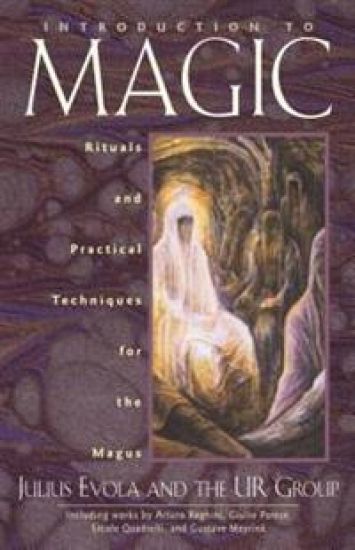
Introduction to Magic

Introduction to Magic

Julius Evola; The UR Group

Inner Traditions Bear and Company
2001
pokkari
. Rare Hermetic texts published in English for the first time. . Includes instructions for developing psychic and magical powers. In 1927 Julius Evola and other leading Italian intellectuals formed the mysterious UR group. Their goal: to bring their individual egos into a state of superhuman power and awareness in which they could act "magically" on the world. Their methods: the practice of ancient Tantric and Buddhist rituals and the study of rare Hermetic texts. So successful were they that rumors spread throughout Italy of the group's power, and Mussolini himself became quite fearful of them. Now for the first time in English Introduction to Magic collects the rites, practices, and knowledge of the UR group for the use of aspiring mages. Included in Introduction to Magic are instructions for creating an etheric double, speaking words of power, using fragrances, interacting with entities, and creating a "magical chain." Among the arcane texts translated are the Tibetan teachings of the Thunderbolt Diamond Path, the Mithraic mystery cult's "Grand Papyrus of Paris," and the Greco-Egyptian magical text De Mysteriis. Anyone who has exhausted the possibilities of the mundane world and is ready to take the steps necessary to purify the soul in the light of knowledge and the fire of dedication will find a number of expert mentors here.
Meditations on the Peaks

Meditations on the Peaks

Julius Evola

Inner Traditions Bear and Company
1998
pokkari
Evola articulates the close relationship between the physical rigors of mountain climbing and the ascent of the initiate toward self-transcendence. Julius Evola, a leading exponent of esoteric thought, was also an ardent mountain climber who personally scaled the peaks of the Tyrols, Alps, and Dolomites. For Evola the physical conquest of a mountain, with all the courage, self-transcendence and mental lucidity that it entails, becomes an inseparable and complementary part of spiritual awakening. It is no coincidence that many ancient cultures chose mountains as the abodes of their gods and considered the rigorous ascent of peaks as the task of heroes and initiates. In modern times, which tend to suffocate the heroic with naked self interest, the mountain still forms part of the profound dimension of spirit where the soul finds within itself more than what it thought itself to be. In Meditations on the Peaks, Evola combines recollections of his own experiences with reflections on other inspirational men and women who shared his view of the transcendent greatness of mountains.
The Mystery of the Grail

The Mystery of the Grail

Julius Evola

Inner Traditions Bear and Company
1996
pokkari

Halvin toimitettuna 19,80 €

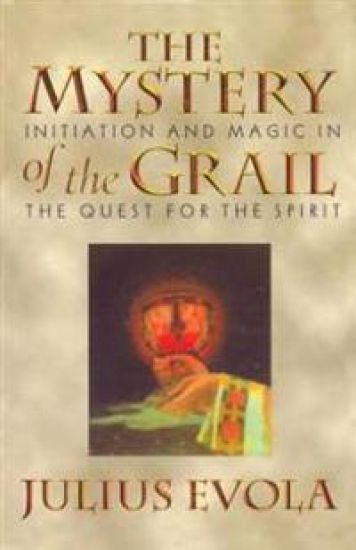
In this important study of the meaning of the Grail, one of Europe's greatest esoteric philosophers discloses the pre-Christian and initiatic sources of this symbolic motif that is so central to Western mythology and culture. He demonstrates how the main features of the legend are from an older tradition analogous to the great heroic sagas and cycles of the North, and that the Grail itself is a symbol of initiation. Evola uncovers the hidden meaning in the often surreal adventures of the knights who searched for the Grail, interpreting them as inner experiences and tests for the seeker. He also explores the history of the myth in the Middle Ages, its use by the Knights Templar and the Cathars, its legacy during the decline of the Holy Roman Empire, and its links with Rosicrucianism, alchemy, and Masonry. This excursion into the realm of the Grail throws new light on an endlessly fascinating subject.
The Hermetic Tradition

The Hermetic Tradition

Julius Evola

Inner Traditions Bear and Company
1995
pokkari

Halvin toimitettuna 20,90 €

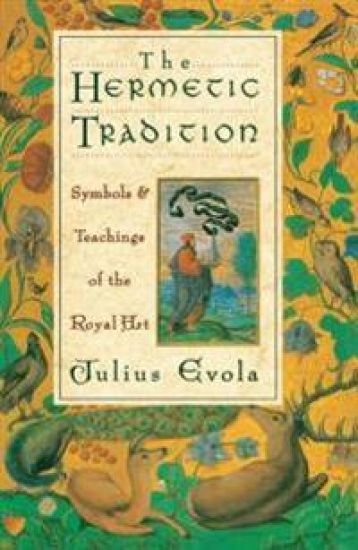
This important survey of alchemical symbols and doctrines sets forth the mysterious worldview and teachings of the practitioners of the "royal art." One of the leading exponents of the Hermetic tradition, Julius Evola demonstrates the singularity of subject matter that lies behind the words of all adepts in all ages, showing how alchemy--often misunderstood as primitive chemistry or a mere template for the Jungian process of "individuation"--is nothing less than a universal secret science of human and natural transformation. First published in 1931 in Italian. This is the first English translation. Draws from a host of sources in the Western esoteric tradition--works on theurgy, magic, and gnosticism from neoplatonic, Arab, and medieval sources.
The Yoga of Power

The Yoga of Power

Julius Evola

Inner Traditions Bear and Company
1993
pokkari
Drawing from original texts on self-mastery, Evola discusses two Hindu movements--Tantrism and Shaktism--which emphasize a path of action to gain power over energies latent within the body.
Eros and the Mysteries of Love

Eros and the Mysteries of Love

Julius Evola

Inner Traditions Bear and Company
1991
pokkari

Halvin toimitettuna 21,50 €

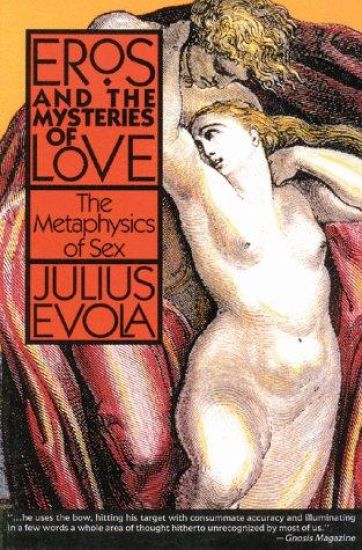
A comprehensive work on the metaphysical aspects of sexuality. Julius Evola sheds new light on the mystical and spiritual expression of sexual love. This in-depth study explores the sexual rites of sacred traditions, and shows how religion, mysticism, folklore, and mythology all contain erotic forms in which the deep potentialities of human beings are recognized.