Kirjojen hintavertailu – 12 903 724 kirjaa ja 27 kauppaa
Kirjailija
Jun Cai
Kirjat ja teokset yhdessä paikassa: 5 kirjaa, julkaisuja vuosilta 2016–2026, suosituimpiin kuuluu Self-Evolving Digital Twin Over Wireless Networks. Vertaile teosten hintoja ja tarkista saatavuus suomalaisista kirjakaupoista.
This book initially delves into its fundamentals to initiate the exploration of online incentive mechanisms in wireless communications. Three case studies are provided to elaborate details on designing online mechanism design in practical system. For crowdsensing with random task arrivals, this book introduces a linear online incentive mechanism model with insurance of the quality of information for each incoming task. In the context of edge computing systems, the authors model a nonlinear online incentive mechanism with the consideration of mobile users’ energy budget constraints. It also explores online incentive mechanism for collaborative task offloading in mobile edge computing to achieve on-arrival instant responses. This book not only disseminates current knowledge but also sheds light on future research directions. The design of incentive mechanisms in wireless communication systems is of paramount importance as it encourages dormant terminals within networks to contribute their valuable resources. The consideration of randomness of network processes enhances the mechanism design under online settings and decision making on the fly. This book endeavours to bridge existing knowledge gaps by comprehensively presenting and developing fundamental insights into online incentive mechanisms and their design methods in the realm of wireless communications. It’s one of the first books to provide a comprehensive understanding of the fundamental principles of online incentive mechanisms and their intricately designed methods in the dynamic world of wireless communications. Future research directions include an investigation in the evolving domain of online incentive mechanism designs within wireless communications. This book strikes a balance between theoretical knowledge and practical application, making it a valuable resource for both researchers and practitioners in the field of wireless communications and network economics. Advanced-level students majoring in computer science and/or electrical engineering will want to purchase this book as a study guide.
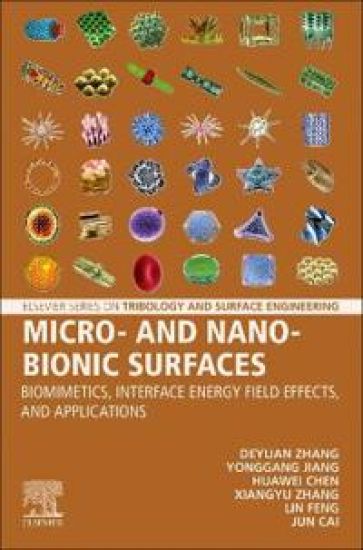
Micro- and Nano-Bionic Surfaces: Biomimetics, Interface Energy Field Effects, and Applications synthesizes the latest research in bio-inspired surfaces and devices for tactile and flow field perception. The book provides solutions to common problems related to flow field/tactile perception, intelligent MEMS sensors, smart materials, material removal methods, cell/particle control methods, and micro-nano robot technology. With a heavy emphasis on applications throughout, the book starts by providing insights into biomimetic device design, outlining strategies readers can adopt for various engineering applications. From there, it introduces the controlling methods of smart materials, controlling methods from external energy input, and more. Sections demonstrate how to solve problems of high efficiency, high quality, and low damage material removal for metals, composites, soft tissues, and other materials by applying bionic wave-motion surface characteristics. The latest theoretical and technical developments in field control methods applied to biological interfaces are also discussed, and the book concludes with a chapter on fabrication strategies to synthesize micro/nano functional particles based on bio-templates.
Human digital twin (HDT) is a transformative technology poised to transform various human-centric systems. With its potential applications in personalized healthcare, HDT promises swift, precise, and efficient healthcare services through the integration of cutting-edge technologies such as artificial intelligence, data analytics, internet of things, cybersecurity as well as virtual and augmented reality. This book addresses the critical gap in the existing literature by offering a comprehensive exploration of connectivity solutions for HDT while prioritizing reliability, security, and privacy. Key topics covered include the foundational concept of HDT, its design requirements and associated challenges, edge-assisted human-to-virtual solutions, blockchain-enabled data-sharing mechanisms, and differentially private federated multi-task learning (DPFML) methodologies tailored for HDT. The discussion on the concept of HDT encompasses an overview of its applications and its specific characteristics when compared to the conventional digital twin models. In addressing the design requirements and challenges of HDT, the text delves into the complexities of securing high-quality data, ensuring ultra-reliable and low-latency communication, data privacy and integrity, while managing storage, computation and analytics. Exploring edge-assisted human-to-virtual solutions, the book also introduces a connectivity framework and details the modeling process for human-to-virtual twin connectivity. The book later presents an in-depth examination of the practical Byzantine fault tolerance framework, followed by a discussion on shard-based Byzantine fault-tolerant schemes tailored for HDT, along with analyses of latency and throughput. Furthermore, the book outlines the framework for DPFML-assisted human-to-virtual twin connectivity, accompanied by a novel consensus algorithm known as the proof of model quality. Finally, it presents future research directions aimed at addressing communication challenges hindering the seamless design and development of HDT. By offering this comprehensive exploration, the book serves as a valuable resource for researchers, practitioners, and policymakers seeking to navigate the evolving landscape of HDT and its transformative potential in various domains.
This brief focuses on the current research on mechanism design for dynamic spectrum sharing in cognitive radio (CR) networks. Along with a review of CR architectures and characteristics, this brief presents the motivations, significances and unique challenges of implementing algorithmic mechanism design for encouraging both primary spectrum owners and secondary spectrum users to participate in dynamic spectrum sharing. The brief then focuses on recent advances in mechanism design in CR networks. With an emphasis on dealing with the uncertain spectrum availabilities, mechanisms based on spectrum recall, two-stage spectrum sharing and online spectrum allocation are introduced with the support of theoretic analyses and numerical illustrations. The brief concludes with a discussion of potential research directions and interests, which will motivate further studies on mechanism design for wireless communications. This brief is concise and approachable for researchers, professionals and advanced-level students in wireless communications and networks.