Kirjojen hintavertailu – 12 859 829 kirjaa ja 27 kauppaa
Kirjailija
Jun Wu
Kirjat ja teokset yhdessä paikassa: 9 kirjaa, julkaisuja vuosilta 2014–2025, suosituimpiin kuuluu qi ye IT shang ye jia zhi yan jiu li lun fang fa yu an li. Vertaile teosten hintoja ja tarkista saatavuus suomalaisista kirjakaupoista.
This book proposes the concept of a multi-layer pavement system to fulfill the blast resistance requirement for pavement design. It also presents a damage pattern chart for multi-layer pavement design and rapid repair after blast load. Such a multi-layer system consists of three layers including asphalt concrete (AC) reinforced with Geogrid (GST) at the top, a high-strength concrete (HSC) layer in the middle, and engineered cementitious composites (ECC) at the bottom. A series of large-scale laboratory impact tests were carried out to prove the usefulness of this concept and show its advantages over other conventional pavement system. Furthermore, field blast tests were conducted to show the actual behavior of this multi-layer pavement system subjected to blast load under real-world conditions.
The Beauty of Mathematics in Computer Science explains the mathematical fundamentals of information technology products and services we use every day, from Google Web Search to GPS Navigation, and from speech recognition to CDMA mobile services. The book was published in Chinese in 2011 and has sold more than 600,000 copies. Readers were surprised to find that many daily-used IT technologies were so tightly tied to mathematical principles. For example, the automatic classification of news articles uses the cosine law taught in high school. The book covers many topics related to computer applications and applied mathematics including: Natural language processingSpeech recognition and machine translationStatistical language modelingQuantitive measurement of informationGraph theory and web crawlerPagerank for web searchMatrix operation and document classificationMathematical background of big data Neural networks and Google’s deep learningJun Wu was a staff research scientist in Google who invented Google’s Chinese, Japanese, and Korean Web Search Algorithms and was responsible for many Google machine learning projects. He wrote official blogs introducing Google technologies behind its products in very simple languages for Chinese Internet users from 2006-2010. The blogs had more than 2 million followers. Wu received PhD in computer science from Johns Hopkins University and has been working on speech recognition and natural language processing for more than 20 years. He was one of the earliest engineers of Google, managed many products of the company, and was awarded 19 US patents during his 10-year tenure there. Wu became a full-time VC investor and co-founded Amino Capital in Palo Alto in 2014 and is the author of eight books.
The Beauty of Mathematics in Computer Science explains the mathematical fundamentals of information technology products and services we use every day, from Google Web Search to GPS Navigation, and from speech recognition to CDMA mobile services. The book was published in Chinese in 2011 and has sold more than 600,000 copies. Readers were surprised to find that many daily-used IT technologies were so tightly tied to mathematical principles. For example, the automatic classification of news articles uses the cosine law taught in high school. The book covers many topics related to computer applications and applied mathematics including: Natural language processingSpeech recognition and machine translationStatistical language modelingQuantitive measurement of informationGraph theory and web crawlerPagerank for web searchMatrix operation and document classificationMathematical background of big data Neural networks and Google’s deep learningJun Wu was a staff research scientist in Google who invented Google’s Chinese, Japanese, and Korean Web Search Algorithms and was responsible for many Google machine learning projects. He wrote official blogs introducing Google technologies behind its products in very simple languages for Chinese Internet users from 2006-2010. The blogs had more than 2 million followers. Wu received PhD in computer science from Johns Hopkins University and has been working on speech recognition and natural language processing for more than 20 years. He was one of the earliest engineers of Google, managed many products of the company, and was awarded 19 US patents during his 10-year tenure there. Wu became a full-time VC investor and co-founded Amino Capital in Palo Alto in 2014 and is the author of eight books.
This book proposes the concept of a multi-layer pavement system to fulfill the blast resistance requirement for pavement design. It also presents a damage pattern chart for multi-layer pavement design and rapid repair after blast load. Such a multi-layer system consists of three layers including asphalt concrete (AC) reinforced with Geogrid (GST) at the top, a high-strength concrete (HSC) layer in the middle, and engineered cementitious composites (ECC) at the bottom. A series of large-scale laboratory impact tests were carried out to prove the usefulness of this concept and show its advantages over other conventional pavement system. Furthermore, field blast tests were conducted to show the actual behavior of this multi-layer pavement system subjected to blast load under real-world conditions.
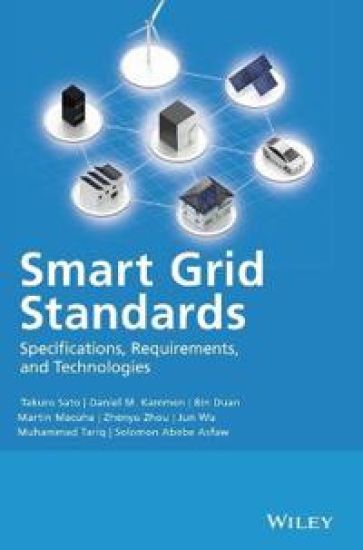
A fully comprehensive introduction to smart grid standards and their applications for developers, consumers and service providers The critical role of standards for smart grid has already been realized by world-wide governments and industrial organizations. There are hundreds of standards for Smart Grid which have been developed in parallel by different organizations. It is therefore necessary to arrange those standards in such a way that it is easier for readers to easily understand and select a particular standard according to their requirements without going into the depth of each standard, which often spans from hundreds to thousands of pages. The book will allow people in the smart grid areas and in the related industries to easily understand the fundamental standards of smart grid, and quickly find the building-block standards they need from hundreds of standards for implementing a smart grid system. The authors highlight the most advanced works and efforts now under way to realize an integrated and interoperable smart grid, such as the “NIST Framework and Roadmap for Smart Grid Interoperability Standards Release 2.0”, the” IEC Smart Grid Standardization Roadmap”, the ISO/IEC’s “Smart Grid Standards for Residential Customers”, the ZigBee/HomePlug’s “Smart Energy Profile Specification 2.0”, IEEE’s P2030 “Draft Guide for Smart Grid Interoperability of Energy Technology and Information Technology Operation with the Electric Power System (EPS), and End-Use Applications and Loads”, and the latest joint research project results between the world’s two largest economies, US and China. The book enables readers to fully understand the latest achievements and ongoing technical works of smart grid standards, and assist industry utilities, vendors, academia, regulators, and other smart grid stakeholders in future decision making. The book begins with an overview of the smart grid, and introduces the opportunities in both developed and developing countries. It then examines the standards for power grid domain of the smart grid, including standards for blackout prevention and energy management, smart transmission, advanced distribution management and automation, smart substation automation, and condition monitoring. Communication and security standards as a whole are the backbone of smart grid and their standards, including those for wired and wireless communications, are then assessed. Finally the authors consider the standards and on-going work and efforts for interoperability and integration between different standards and networks, including the latest joint research effort between the world’s two largest economies, US and China. A fully comprehensive introduction to smart grid standards and their applications for developers, consumers and service providersCovers all up-to-date standards of smart grid, including the key standards from NIST, IEC, ISO ZigBee, IEEE, HomePlug, SAE, and other international and regional standardization organizations. The Appendix summarizes all of the standards mentioned in the bookPresents standards for renewable energy and smart generation, covering wind energy, solar voltaic, fuel cells, pumped storage, distributed generation, and nuclear generation standards. Standards for other alternative sources of energy such as geothermal energy, and bioenergy are briefly introducedIntroduces the standards for smart storage and plug-in electric vehicles, including standards for distributed energy resources (DER), electric storage, and E-mobility/plug-in vehicles The book is written in an accessible style, ideal as an introduction to the topic, yet contains sufficient detail and research to appeal to the more advanced and specialist reader.
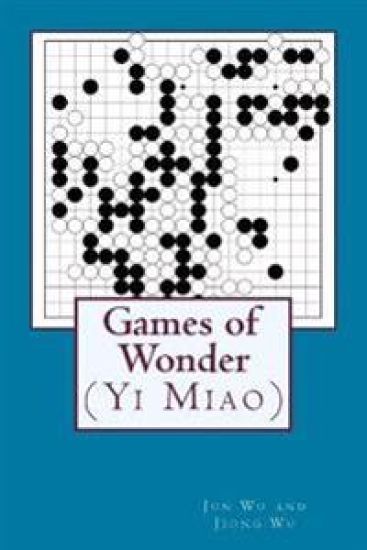
A collection of 40 famous games by some of the best players in the Qing Dynasty, including go saints Huang Longshi, Shi Xiangxia, and Fan Xiping as well as masters Cheng Lanru and Liang Weijin. Contains 4 games from Huang Longshi and Xu Xingyou's Games of Blood and Tears and 8 games from Shi Xiangxia and Fan Xiping's Ten-Game Match at Danghu, the pinnacle of go in ancient China. Table of Contents: ForewordPreface (Part I)Preface (Part II)List of PlayersPart I (20 games)Part II (20 games)Sensei's Library: http: //senseis.xmp.net/? GamesOfWonderAmazon author page: http: //amazon.com/author/ruoshiAbout the translator: http: //senseis.xmp.net/? RuoshiSun
This book provides an analytic description of the converging trend entailed by the technological development related to cinema industries. Furthermore, this book tries to define the relationship between the production, distribution and exhibition stages of the cinema industry.