
Kirjojen hintavertailu – 12 903 725 kirjaa ja 27 kauppaa

Kirjailija

June Edmunds

Kirjat ja teokset yhdessä paikassa: 2 kirjaa, julkaisuja vuosilta 2018–2019, suosituimpiin kuuluu Human Rights, Islam and the Failure of Cosmopolitanism. Vertaile teosten hintoja ja tarkista saatavuus suomalaisista kirjakaupoista.

2 kirjaa

Kirjojen julkaisuvuodet: 2018–2019.

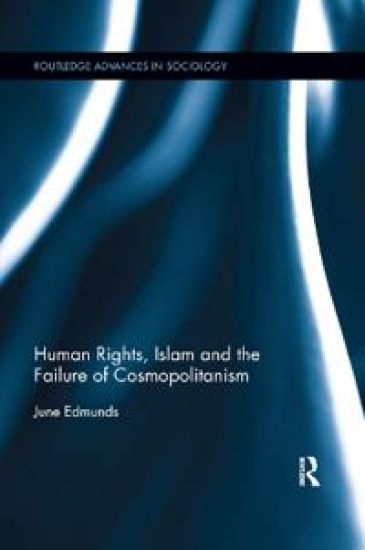
Human Rights, Islam and the Failure of Cosmopolitanism
Cosmopolitanism, as an intellectual and political project, has failed. The portrayal of human rights, especially European, as evidence of cosmopolitanism in practice is misguided. Cosmopolitan theorists point to the rise of claims-making to the European Court of Human Rights (ECtHR) among Europe’s Muslims to protect their right to religious freedom, mainly concerning the hijab, as evidence of cosmopolitan justice. However, the outcomes of such claims-making show that far from signifying a cosmopolitan moment, European human rights law has failed Europe’s Muslims. Human Rights, Islam and the Failure of Cosmopolitanism provides an empirical examination of claims-making and government policy in Western Europe focusing mainly on developments in the UK, Germany, France, Italy and the Netherlands. A consideration of public debates and European law of conduct in the public sphere shows that cosmopolitan optimism has misjudged the magnitude of the impact claims-making among Europe’s Muslims. To overcome this cul-de-sac, European Muslims should turn to a new ‘politics of rights’ to pursue their right to religious expression. This book is a theoretically challenging re-evaluation of cosmopolitan arguments through a rigorous discussion of rights-making claims by Europe's Muslims to the European Court of Human Rights. It combines sociological and legal case analysis which advances understanding of one of the most pressing topical issues of the day.

The New Power Elite

The New Power Elite

Alan Shipman; June Edmunds; Bryan Turner

Anthem Press
2018
sidottu
Elites have always ruled – wielding inordinate power and wealth, taking decisions that shape life for the rest. In good times the ‘1%’ can hide their privilege, or use growing social mobility and economic prosperity as a justification. When times get tougher there’s a backlash. So the first years of the twenty-first century – a time of financial crashes, oligarchy and corruption in the West; persistent poverty in the south; and rising inequality everywhere – have brought elites and ‘establishments’ under unprecedented fire. Yet those swept to power by this discontent are themselves a part of the elite, attacking from within and extending rather than ending its agenda. The New Power Elite shows how major political and social change is typically driven by renegade elite fractions, who co-opt or sideline elites’ traditional enemies. It is the first book to combine the politics, economics, sociology and history of elite rule to present a compact, comprehensive account of who’s at the top, and why we let them get there.