Kirjojen hintavertailu – 12 859 818 kirjaa ja 27 kauppaa

Kirjailija

Jürgen Habermas

Kirjat ja teokset yhdessä paikassa: 101 kirjaa, julkaisuja vuosilta 1971–2026, suosituimpiin kuuluu The Lure of Technocracy. Vertaile teosten hintoja ja tarkista saatavuus suomalaisista kirjakaupoista.

Nimi esiintyy myös muodoissa: Jurgen Habermas

101 kirjaa

Kirjojen julkaisuvuodet: 1971–2026.

The Lure of Technocracy

The Lure of Technocracy

Jürgen Habermas

Polity Press
2015
sidottu
Over the past 25 years, Jürgen Habermas has presented what is arguably the most coherent and wide-ranging defence of the project of European unification and of parallel developments towards a politically integrated world society. In developing his key concepts of the transnationalisation of democracy and the constitutionalisation of international law, Habermas offers the main players in the struggles over the fate of the European Union (the politicians, the political parties and the publics of the member states) a way out of the current economic and political crisis, should they choose to follow it. In the title essay Habermas addresses the challenges and threats posed by the current banking and public debt crisis in the Eurozone for European unification. He is harshly critical of the incrementalist, technocratic policies advocated by the German government in particular, which are being imposed at the expense of the populations of the economically weaker, crisis-stricken countries and are undermining solidarity between the member states. He argues that only if the technocratic approach is replaced by a deeper democratization of the European institutions can the European Union fulfil its promise as a model for how rampant market capitalism can once again be brought under political control at the supranational level. This volume reflects the impressive scope of Habermas?s recent writings on European themes, including theoretical treatments of the complex legal and political issues at stake, interventions on current affairs, and reflections on the lives and works of major European philosophers and intellectuals. Together the essays provide eloquent testimony to the enduring relevance of the work of one of the most influential and far-sighted public intellectuals in the world today, and are essential reading for all philosophers, legal scholars and social scientists interested in European and global issues.
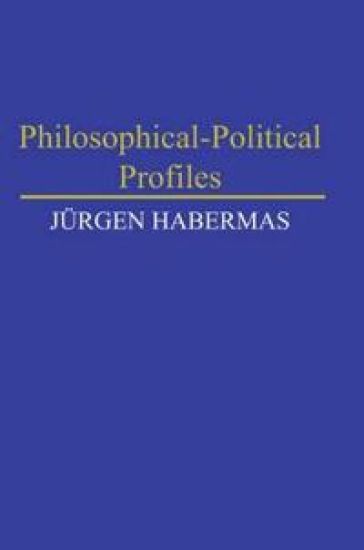
Philosophical-Political Profiles

Philosophical-Political Profiles

Jürgen Habermas

Polity Press
2012
nidottu
"At the hands of a minor talent, profiles are often flat, two-dimensional outlines of a thinker’s intellectual physiognomy. At the hands of a master like Jürgen Habermas, they can become something far more substantial and profound. With astonishing economy, Habermas sketches his impressions of the giants of recent German thought, several of whom were his personal mentors. For those of his readers accustomed to the demandingly abstract level of his theoretical work, the results will prove a welcome surprise. Without sacrificing any of the rigor and brilliance of those longer studies, he displays a remarkable ability to combine depth with brevity. Philosophical-Political Profiles not only adds a new dimension to our understanding of the intellectual odyssey of Germany’s leading contemporary thinker but also provides a series of stunning insights into the thought of the generation that preceded him." Martin Jay, University of California, Berkley "With enormous sensitivity, judiciousness, and critical insight, Habermas engages in dialogue with many of the leading German-trained intellectuals of our time-including Heidegger, Jaspers, Löwith, Bloch, Adorno, Benjamin, Marcuse, Arendt, Gadamer, Scholem, and others. These essays range over the most central and vital issues of contemporary life. Whether dealing with Jewish mysticism or critiques of modernity, Habermas is always illuminating and incisive. These essays can serve as an excellent introduction to his thinking. They also help to situate his theoretical work by revealing his deepest concerns." Richard Bernstein, The New School for Social Research
Julkisuuden rakennemuutos

Julkisuuden rakennemuutos

Jürgen Habermas

VASTAPAINO
2026
sidottu

Halvin toimitettuna 39,90 €

Mitä julkisuus on? Onko se tila, jossa poliitikot, julkkikset ja tavalliset kansalaiset voivat tavoitella omaa etuaan,vai onko se jotain muuta? Mitä se on ollut, ja miten se on kehittynyt? Nämä kysymykset ovat monipuolisen historiallis-sosiologisen tutkimuksen kohteena Jürgen Habermasin varhaistuotannon pääteoksessa, alun perin vuonna 1962 ilmestyneessä “Julkisuuden rakennemuutoksessa”. Kirjan pääväite on, että 1600- ja 1700-luvuilla kansalaiskeskustelun foorumiksi syntynyt moderni julkisuus oli jo 1900-luvun puoliväliin tultaessa rappeutunut showlavaksi, jolle poliitikot ja muut julkkikset astuivat kalastelemaan suuren yleisön suosiota. Teesi ja sen kehittely ovat nyt jopa ajankohtaisempia kuin teoksen syntyaikana. Laajassa esipuheessaan Habermas kehittelee teoksen ideoita erityisesti suhteessa demokratiasta käytyyn nykykeskusteluun. Samalla hän kommentoi saamaansa kritiikkiä. Frankfurtin koulukunnan perillinen ja uudistaja Jürgen Habermas (1929-2026) oli aikamme tunnetuimpia ja vaikutusvaltaisimpia ajattelijoita. Hänet tunnetaan yhtäältä positivismiin ja sen rationaalisuuskäsitykseen kohdistuneesta kritiikistä. Toisaalta Habermasin suhtautuminen valistuksen rationalismiin ja ylipäänsä moderniin yhteiskuntaan on valoisampi kuin hänen opettajiensa Theodor W. Adornon ja Max Horkheimerin. Edeltäjiensä tapaan Habermas tarkastelee maailmaa useiden tieteenalojen näkökulmasta: hänen tutkimuksissaan yhdistyvät sosiologiset, filosofiset, historialliset, valtio-opilliset ja taloustieteelliset näkökulmat.
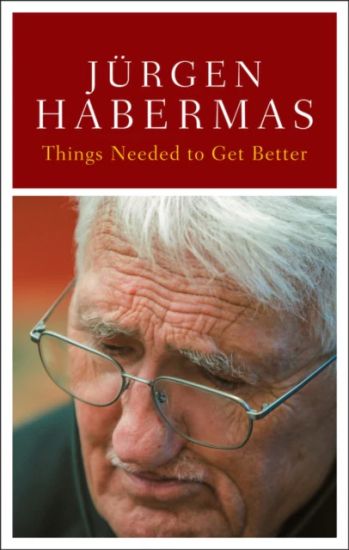
Things Need to Get Better

Things Need to Get Better

Jürgen Habermas

JOHN WILEY AND SONS LTD
2025
sidottu

Halvin toimitettuna 31,00 €

In this book Jürgen Habermas offers a wide-ranging reflection on his life and work and on the factors that shaped the development of his thought. He discusses the motives behind his work, the circumstances under which it emerged and the changes it has undergone over the course of his long and productive career. He speaks about the events and the texts that played a decisive role in his thinking and he recounts key encounters with colleagues. The image that emerges is that of a richly intertwined network of relationships which covers large swathes of the intellectual map of the twentieth century and reaches through to the present day. Looking back at the development of his thought, Habermas discusses the specific historical circumstances that shaped his generation, identifies key experiences with his intellectual mentors, explores recent historical tendencies and political beliefs and talks about his own scholarly works and their reception. Time and again we see the normative impulse that lies behind so much of Habermas’s work: ‘I view the attempt to make the world even the tiniest bit better, or even just to be part of the effort to stave off the constant threats of regression that we face, as an utterly admirable motive.’
Also a History of Philosophy, Volume 3

Also a History of Philosophy, Volume 3

Jürgen Habermas

JOHN WILEY AND SONS LTD
2025
sidottu

Halvin toimitettuna 41,30 €

In the final volume of his history of philosophy, Jürgen Habermas offers a series of brilliant interpretations of the thinkers who set the agenda for contemporary philosophy. Beginning with masterful readings of Hume and Kant, he traces the genealogy of their postmetaphysical thinking through the main currents of historicism and German Idealism, and the multifarious reactions to Hegel’s influential system, culminating in nuanced readings of Marx, Kierkegaard and Peirce. Through his analysis of their work, Habermas demonstrates the interpretive fecundity of the central themes of his philosophical enterprise – his pragmatist theory of meaning, his communicative theories of subjectivity and sociality, and his discursive theory of normativity in its moral, juridical and political manifestations. In contrast to the bland compendia of thinkers and positions generally presented in surveys of the history of philosophy, Habermas’s thematically focused interpretations are destined to provoke controversy and stimulate dialogue. With this work one of the indisputably great thinkers of our time presents a powerful vindication of his conception of philosophy as an inherently discursive – and not merely analytical or speculative – enterprise.
Also a History of Philosophy, Volume 2

Also a History of Philosophy, Volume 2

Jürgen Habermas

JOHN WILEY AND SONS LTD
2024
sidottu

Halvin toimitettuna 41,30 €

In this second volume of his groundbreaking new work on the history of philosophy, Jürgen Habermas traces the development of Western thought from the reception of Platonism by early Christian thought, through the revolution in medieval philosophy and theology triggered by the rediscovery of Aristotle’s works, up to the decoupling of philosophical and theological thought in nominalism and the Reformation that ushered in the postmetaphysical thinking of the modern age. In contrast to conventional histories that focus on movements and schools, Habermas takes the dialectic of faith and knowledge as a guiding thread for analysing key developments in the thought of major figures such as Augustine, Aquinas, Scotus, Ockham and Luther that constitute milestones in the genealogy of postmetaphysical thinking. A distinctive feature of Habermas’ approach is the prominence he accords practical philosophy, and in particular legal and political ideas, and the corresponding attention he pays to social, institutional and political history, especially as these bear on the relationship between church and state. As a result, the central preoccupations of Christian thought are shown to be original responses to questions raised by the Christian worldview that exploded the framework of Greek metaphysical thinking and remain crucial for the self-understanding of contemporary philosophy. Far from raising claims to exclusivity, completeness or closure, Habermas’s history of philosophy, published in English in three volumes, opens up new lines of research and reflection that will influence the humanities and social sciences for decades to come.
Den nye borgerlige offentlighed

Den nye borgerlige offentlighed

Jürgen Habermas

SAMFUNDSLITTERATUR
2023
nidottu
I 1962 udkom Jürgen Habermas’ første bog, Borgerlig offentlighed, der på baggrund af social- og begrebshistoriske undersøgelser diskuterede offentlighedens betydning for meningsdannelsen i liberale demokratier. Bogen blev hurtigt en af de store klassikere i det 20. århundredes sociologi og viste nye veje for historie- og socialvidenskaberne. Nu har internettet, de digitale medier og populismens trussel fået den 94-årige tyske stjernefilosof til at vende tilbage til sit gamle tema. I sin nye bog beskæftiger han sig med de nye medier og deres platformsstruktur, der i stigende grad trænger de traditionelle massemedier – som udgjorde kernen i den gamle ‘borgerlige offentlighed’ – i baggrunden. Habermas mener, at det har graverende konsekvenser for den politiske debat og meningsdannelse, der i stigende grad foregår i lukkede, selvbekræftende kredsløb, hvor der ikke stilles høje krav til informationernes kvalitet og lødighed. Alligevel insisterer tysk filosofis nestor på, at det ikke er en mulighed at give køb på oplysningstidens liberale idealer i en tid, hvor både den private integritet og det politiske demokrati er udfordret.
A New Structural Transformation of the Public Sphere and Deliberative Politics
Jürgen Habermas’s book The Structural Transformation of the Public Sphere, first published in 1962, has long been recognized as one of the most important works of twentieth-century social thought. Blending philosophy and social history, it offered an account of the public sphere as a domain that mediates between civil society and the state in which citizens could discuss matters of common concern and participate in democratic decision-making through the formation of public opinion. Now, in view of the digital revolution and the resulting crisis of democracy, he returns to this important topic. In this new book Habermas focuses on digital media, in particular social media, which are increasingly relegating traditional mass media to the background. While the new media initially promised to empower users, this promise is being undermined by their algorithm-steered platform structure that promotes self-enclosed informational ‘bubbles’ and discursive ‘echo chambers’ in which users split into a plurality of pseudo-publics that are largely closed off from one other. Habermas argues that, without appropriate regulation of digital media, this new structural transformation is in danger of hollowing out the institutions through which democracies can shape social and economic processes and address urgent collective problems, ranging from growing social inequality to the climate crisis.
A New Structural Transformation of the Public Sphere and Deliberative Politics

A New Structural Transformation of the Public Sphere and Deliberative Politics

Jürgen Habermas

JOHN WILEY AND SONS LTD
2023
nidottu

Halvin toimitettuna 18,60 €

Jürgen Habermas’s book The Structural Transformation of the Public Sphere, first published in 1962, has long been recognized as one of the most important works of twentieth-century social thought. Blending philosophy and social history, it offered an account of the public sphere as a domain that mediates between civil society and the state in which citizens could discuss matters of common concern and participate in democratic decision-making through the formation of public opinion. Now, in view of the digital revolution and the resulting crisis of democracy, he returns to this important topic. In this new book Habermas focuses on digital media, in particular social media, which are increasingly relegating traditional mass media to the background. While the new media initially promised to empower users, this promise is being undermined by their algorithm-steered platform structure that promotes self-enclosed informational ‘bubbles’ and discursive ‘echo chambers’ in which users split into a plurality of pseudo-publics that are largely closed off from one other. Habermas argues that, without appropriate regulation of digital media, this new structural transformation is in danger of hollowing out the institutions through which democracies can shape social and economic processes and address urgent collective problems, ranging from growing social inequality to the climate crisis.
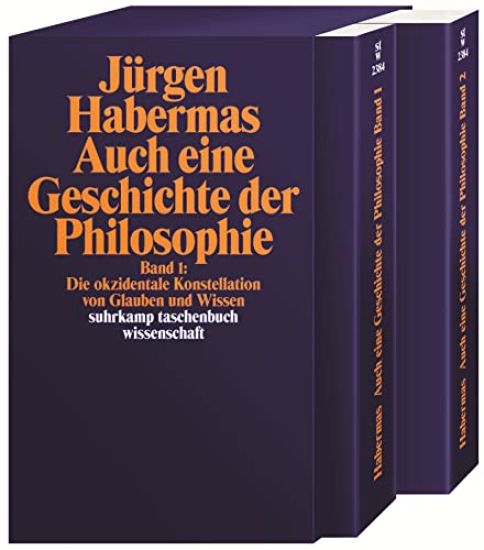
Also a History of Philosophy, Volume 1

Also a History of Philosophy, Volume 1

Jürgen Habermas

JOHN WILEY AND SONS LTD
2023
sidottu

Halvin toimitettuna 41,30 €

This is the first volume of a ground-breaking new work by Jürgen Habermas on the history of philosophy. In this major new work, Habermas sets out the ideas that inform his systematic account of the history of Western philosophy as a genealogy of postmetaphysical thinking. His account goes far beyond a vindication of the enduring relevance of philosophical reflection founded on communicative reason as a source of orientation in the modern world. He contrasts this conception with prominent diagnoses of the supposed crisis of Enlightenment reason and culture that seeks redemption in the affirmation of traditional religious authority (Schmitt), the timeless validity of Greek metaphysics (Strauss), a numinous conception of nature (Löwith), and an occurrence of being that speaks to us from beyond the mists of pre-Socratic thought (Heidegger). Habermas situates Western philosophy in relation to traditions of thought founded in the major worldviews (Judaism, Buddhism, Confucianism and Taoism) that continue to shape contemporary culture and civilization. At the same time, he lays the groundwork for his analysis in the later volumes of the constitutive role played by the discourse on faith and knowledge in the development of Western philosophy, which is the result of the unique symbiosis that Christianity entered into with Greek thought with the Christianization of the Roman Empire. Far from raising claims to exclusivity, completeness or closure, Habermas’s history of philosophy, published in English in three volumes, opens up new lines of research and reflection that will influence the humanities and social sciences for decades to come.
Den nye offentligheten

Den nye offentligheten

Jürgen Habermas

Cappelen Damm akademisk
2023
nidottu
Jürgen Habermas (f. 1929) ble internasjonalt kjent med sin første bok Borgerlig offentlighet i 1962, og 60 år senere tar han opp igjen de samme diskusjonene i Den nye offentligheten. I to ulike tekster og et intervju, drøfter Habermas hvordan de tradisjonelle mediene kommer i skyggen av nye sosiale medier og digitale plattformer som nå dominerer det offentlige ordskiftet. I dette ordskiftet får populister og elitister kjempe om plassen, og den frie uavhengige pressen og den politiske debatten blir mindre synlig. Nye kommunikasjonsformer skaper endringer i den politiske offentligheten. Dette innebærer en strukturell endring av den offentlige sfæren, som igjen har konsekvenser for den demokratiske meningsdannelsen. Den nye offentligheten. Strukturendring og deliberativ politikk er oversatt av Anders Dunker. Etterordet er skrevet av Pål Veiden.
Offentlighetens nya strukturomvandling och idén om deliberativ demokrati
År 1962 utkom Jürgen Habermas första bok, "Strukturwandel der Öffentlichkeit" (på svenska "Borgerlig offentlighet"), som blivit en modern klassiker och utövat ett stort inflytande inom olika discipliner. Mot bakgrund av sin långt senare utvecklade teori om demokrati och rättsstat återvänder Habermas nu till sitt gamla tema, offentligheten som ett delat rum för meningsutbyte. 1962 handlade det om utvecklingen från den borgerliga offentlighet som föddes på 1700-talet till massdemokratiernas medieoffentlighet. Nu är det den digitaliserade offentligheten och dess plattformar som han tar sig an. Hans bekymmer är att denna nya strukturomvandling, där de traditionella redigerade mass­medierna trängs undan, hotar att underminera själva offentligheten och därmed villkoren för demokratisk deliberation. Vid sidan av denna huvudtext diskuterar Habermas i en intervju och en kommentar invändningar mot den deliberativa demokratiteorin. Jürgen Habermas, född 1929, var filosofiprofessor i Frankfurt am Main. 2019 utkom hans tvåbandsverk "Auch eine Geschichte der Philosophie", som rekonstruerar filosofihistorien i ljuset av förhållandet mellan tro och vetande. Av Jürgen Habermas har Daidalos tidigare utgivit: "Kommunikativt handlande" (1990), "Diskurs, rätt och demokrati" (1997), "Den postnationella konstellationen" (2001), "Den mänskliga naturens framtid" (2003) och "Den moraliska synpunkten" (2008).
Den menneskelige naturs fremtid

Den menneskelige naturs fremtid

Jürgen Habermas

Gyldendal
2022
nidottu
Den tyske sociolog og filosof Jürgen Habermas diskuterer i denne bog de etiske spørgsmål, der opstår i kølvandet på udviklingen af genteknologi og kendskabet til menneskets arveanlæg, hvor det er blevet muligt ikke blot at fravælge uønskede gener, fx i forbindelse med arvelige sygdomme, men også at fremme særligt ønskværdige træk. Habermas giver ikke noget kategorisk svar på de spørgsmål, denne nye udvikling rejser. Hans konklusion på, om man bør tillade at forbedre arvemassens sammensætning, er imidlertid altovervejende negativ, baseret på principper om menneskelig værdighed, menneskerettigheder og det menneskeliges uantastelighed. Den menneskelige naturs fremtid udkom første gang på dansk i 2002 og genudgives nu i Hans Reitzels Forlags serie Klassikere.
Demokrati og retsstat

Demokrati og retsstat

Jürgen Habermas

Gyldendal
2022
nidottu
Den tyske samfundsteoretiker, filosof og politisk intellektuelle Jürgen Habermas (f. 1929) er kendt for sit stærke engagement i spørgsmål om demokrati, menneskerettigheder og social retfærdighed. Siden begyndelsen af 1990’erne, hvor han udsendte hovedværket Faktizität und Geltung, er det i stigende grad hans idéer om demokrati og ret, der har været i fokus og skabt debat. Han udfoldede her en teori om demokrati, ret og politik ud fra principper om gensidig anerkendelse i samtale. Denne tekstsamling indeholder 11 tekster fra de senere år af Habermas’ forfatterskab. De omfatter teoretiske og filosofiske tekster såvel som tekster der analyserer udviklingstendenser og konflikttemaer på et konkret plan. Tekstudvalget er sammensat og forsynet med en indledning af professor Heine Andersen. Demokrati og retsstat udkom første gang på dansk i 2005 og genudgives nu i Hans Reitzels Forlags serie Klassikere.
Teknik og videnskab som "ideologi"

Teknik og videnskab som "ideologi"

Jürgen Habermas

Gyldendal
2022
nidottu
I 1964 efterfulgte Jürgen Habermas (f. 1929) Max Horkheimer som professor i filosofi og sociologi ved Goethe-universitetet i Frankfurt og som leder af den kritiske teoris berømte Institut for Socialforskning. Hans tiltrædelsesforelæsning – ”Erkendelse og interesse” – tog tråden op fra Frankfurterskolens første generation og satte en ny standard for videnskabsteori, der også gav plads til forskning med en frigørende erkendelsesinteresse. Dét og hans stadige virke for en rationel, herredømmefri dialog gjorde ham snart til en central skikkelse i studenteroprørets ideologikritik og i den nye demokratiske kultur. Teknik og videnskab som ”ideologi” (1968) viser allerede i titlen, i hvilken retning Habermas’ tænkning bevæger sig. Denne tidlige samling filosofiske tekster indledes med en vigtig Hegel-læsning – ”Arbejde og interaktion” – hvorfra Habermas’ senere tale om den kommunikative handlen henter megen inspiration, og den afsluttes med forelæsningen om erkendelse og interesse. Teknik og videnskab som ”ideologi” udkom første gang på dansk i 2005 og genudgives nu i Hans Reitzels Forlags serie Klassikere.