Kirjojen hintavertailu – 12 903 725 kirjaa ja 27 kauppaa

Kirjailija

Jurgita Malinauskaite

Kirjat ja teokset yhdessä paikassa: 6 kirjaa, julkaisuja vuosilta 2010–2026, suosituimpiin kuuluu Waste Management in the Circular Economy Context. Vertaile teosten hintoja ja tarkista saatavuus suomalaisista kirjakaupoista.

6 kirjaa

Kirjojen julkaisuvuodet: 2010–2026.

Waste Management in the Circular Economy Context

Waste Management in the Circular Economy Context

Jurgita Malinauskaite; Hussam Jouhara

Elsevier - Health Sciences Division
2026
nidottu
Waste Management in the Circular Economy Context explores sustainable waste management within the context of a circular economy through a comprehensive exploration of policies, innovative technologies, and case studies aimed at fostering a greener future. This practical reference book dissects the critical interplay between energy waste management and economic considerations, offering invaluable insights into circular economy frameworks, waste management challenges, regulatory policies, circular business models, consumer behavior transformations, and the design and development of waste heat recovery technologies. Starting with an in-depth examination of energy waste management in the circular economy context, the book takes readers through key chapters discussing waste management challenges, policy frameworks, circular business models, consumer behavior shifts, and the development of waste heat recovery technologies. Further, it digs into practical applications contexts such as municipal waste management, e-waste management, wastewater management, and integrated waste management, culminating in a forward-looking conclusion and future outlook on sustainable waste practices. Waste Management in the Circular Economy Context offers interdisciplinary perspectives on circular solutions, equips and educates diverse readers with knowledge and tools needed to integrate the complexities of waste management in a sustainable manner. With a focus on promoting responsible consumption and harnessing innovative technologies like heat pipe heat exchangers, this book serves as a valuable resource for consultants, policymakers, and organizations striving to advance circular economy principles in waste management practices.

Sustainable Energy Technology, Business Models, and Policies

Sustainable Energy Technology, Business Models, and Policies

Jurgita Malinauskaite; Hussam Jouhara

Elsevier - Health Sciences Division
2023
nidottu
Sustainable Energy Technology, Business Models, and Policies: Theoretical Peripheries and Practical Implications offers a new outlook on incorporating sustainable energy technologies into business models. This book begins by conceptualizing a theoretical sustainability framework from an interdisciplinary perspective. In the second part, the findings from several case studies examine criteria for business energy policies including legal implications and technical, market, or business model viability. Finally, the book addresses the technical and economic difficulties for recovering and re-using energy losses within energy-intensive industries, while also proposing practical solutions to overcome challenges and exploit opportunities. Weaving together the latest information on innovative technology, policies, and business models, Sustainable Energy Technology, Business Models, and Policies: Theoretical Peripheries and Practical Implications presents an interdisciplinary guide to the energy transition.
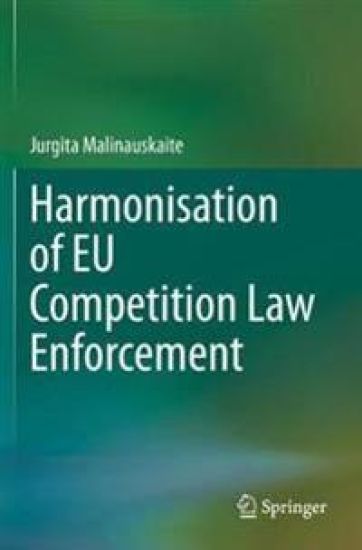
Harmonisation of EU Competition Law Enforcement

Harmonisation of EU Competition Law Enforcement

Jurgita Malinauskaite

Springer Nature Switzerland AG
2020
nidottu
This book explores how the EU’s enforcement of competition law has moved from centralisation to decentralisation over the years, with the National Competition Authorities embracing more enforcement powers. At the same time, harmonisation has been employed as a solution to ensure that the enforcement of EU competition rules is not weakened and the internal market remains a level playing field. While employing a comparative law argument, the book, accordingly, analyses the need for harmonisation throughout the different stages of development of the EU’s competition law enforcement (save Merger control and State Aid), the underlying rationale, and the extent to which comparative studies have been undertaken to facilitate the harmonisation process from an historical perspective. It also covers the Directives, such as the Antitrust Damages Directive and the ECN+ Directive. Investigating both public and private enforcement, it also examines the travaux préparatoires for the enforcement legislation in order to discover the drafters’ intent. The book addresses the European and the Member States’ perspectives, namely, the Central and Eastern European (CEE) countries, as harmonisation proceeds through dialogue and cooperation between the two levels. Lastly, it explores the extent to which harmonisation of the competition law enforcement framework has been accepted and implemented in the Member States’ legal systems, or has led to the fragmentation of the national systems of the CEE countries.
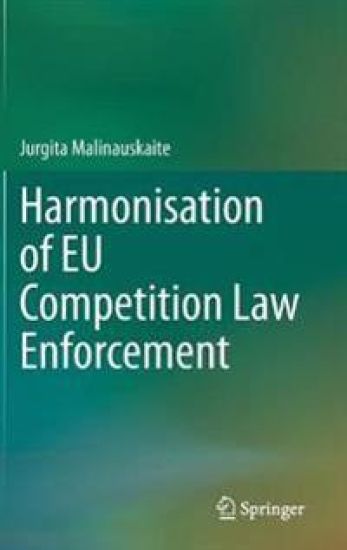
Harmonisation of EU Competition Law Enforcement

Harmonisation of EU Competition Law Enforcement

Jurgita Malinauskaite

Springer Nature Switzerland AG
2019
sidottu
This book explores how the EU’s enforcement of competition law has moved from centralisation to decentralisation over the years, with the National Competition Authorities embracing more enforcement powers. At the same time, harmonisation has been employed as a solution to ensure that the enforcement of EU competition rules is not weakened and the internal market remains a level playing field. While employing a comparative law argument, the book, accordingly, analyses the need for harmonisation throughout the different stages of development of the EU’s competition law enforcement (save Merger control and State Aid), the underlying rationale, and the extent to which comparative studies have been undertaken to facilitate the harmonisation process from an historical perspective. It also covers the Directives, such as the Antitrust Damages Directive and the ECN+ Directive. Investigating both public and private enforcement, it also examines the travaux préparatoires for the enforcement legislation in order to discover the drafters’ intent. The book addresses the European and the Member States’ perspectives, namely, the Central and Eastern European (CEE) countries, as harmonisation proceeds through dialogue and cooperation between the two levels. Lastly, it explores the extent to which harmonisation of the competition law enforcement framework has been accepted and implemented in the Member States’ legal systems, or has led to the fragmentation of the national systems of the CEE countries.
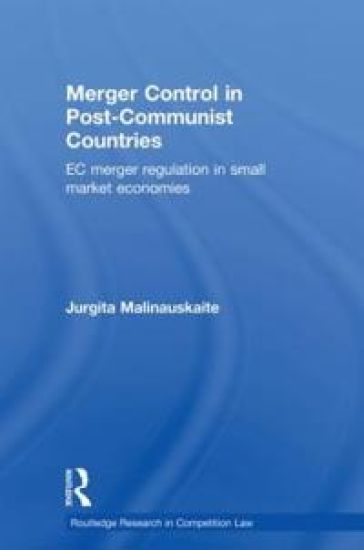
Merger Control in Post-Communist Countries

Merger Control in Post-Communist Countries

Jurgita Malinauskaite

Routledge
2012
nidottu
This book provides a critical analysis of merger control regimes in the former socialist countries with small market economies, looking at the unique challenges facing these economies. Questions will be asked as to what extent these countries have had to follow dictation from the EU and whether this implementation of EU merger control rules has been justified from the point of view of these countries' economic situations. The book will analyse the merger control regimes in Estonia, Latvia and Lithuania, Slovenia and Slovakia. However, reference will be made to other small market economies of the EU including Cyprus, Ireland, Luxembourg and Malta in order to evaluate the particular difficulties the former socialist countries with small market economies have had in the implementation and further development of merger control rules.
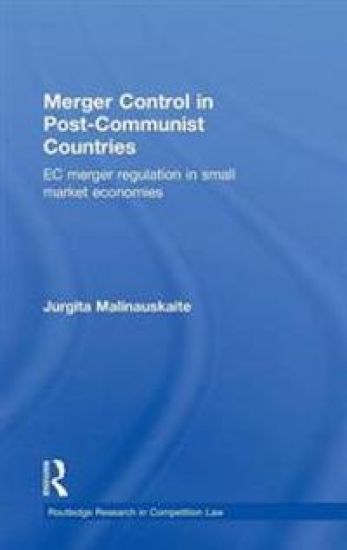
Merger Control in Post-Communist Countries

Merger Control in Post-Communist Countries

Jurgita Malinauskaite

Routledge
2010
sidottu
This book provides a critical analysis of merger control regimes in the former socialist countries with small market economies, looking at the unique challenges facing these economies. Questions will be asked as to what extent these countries have had to follow dictation from the EU and whether this implementation of EU merger control rules has been justified from the point of view of these countries' economic situations. The book will analyse the merger control regimes in Estonia, Latvia and Lithuania, Slovenia and Slovakia. However, reference will be made to other small market economies of the EU including Cyprus, Ireland, Luxembourg and Malta in order to evaluate the particular difficulties the former socialist countries with small market economies have had in the implementation and further development of merger control rules.