Kirjojen hintavertailu – 12 903 725 kirjaa ja 27 kauppaa

Kirjailija

Justin B. Hollander

Kirjat ja teokset yhdessä paikassa: 12 kirjaa, julkaisuja vuosilta 2016–2027, suosituimpiin kuuluu Urban Social Listening. Vertaile teosten hintoja ja tarkista saatavuus suomalaisista kirjakaupoista.

12 kirjaa

Kirjojen julkaisuvuodet: 2016–2027.

Urban Social Listening

Urban Social Listening

Justin B. Hollander; Erin Graves; Henry Renski; Cara Foster-Karim; Andrew Wiley; Dibyendu Das

Palgrave Macmillan
2018
nidottu
This book analyses new software tools and social media data that can be used to explore the attitudes of people in urban places. It reports on the findings of several research projects that have have experimented with using microblogging data in conjunction with diverse quantitative and qualitative methods, including content analysis and advanced multivariate statistics. Applied researchers, planners and policy makers have only recently begun to explore the potential of Big Data to help understand social attitudes and to potentially inform local policy and development decisions. This book provides an original analysis into how Twitter can be used to describe the urban experience and people's perception of place, as well as offering significant implications for public policy. It will be of great interest to researchers in human geography, social media, cultural studies and public policy.
Urban Social Listening

Urban Social Listening

Justin B. Hollander; Erin Graves; Henry Renski; Cara Foster-Karim; Andrew Wiley; Dibyendu Das

Palgrave Macmillan
2016
sidottu
This book analyses new software tools and social media data that can be used to explore the attitudes of people in urban places. It reports on the findings of several research projects that have have experimented with using microblogging data in conjunction with diverse quantitative and qualitative methods, including content analysis and advanced multivariate statistics. Applied researchers, planners and policy makers have only recently begun to explore the potential of Big Data to help understand social attitudes and to potentially inform local policy and development decisions. This book provides an original analysis into how Twitter can be used to describe the urban experience and people's perception of place, as well as offering significant implications for public policy. It will be of great interest to researchers in human geography, social media, cultural studies and public policy.
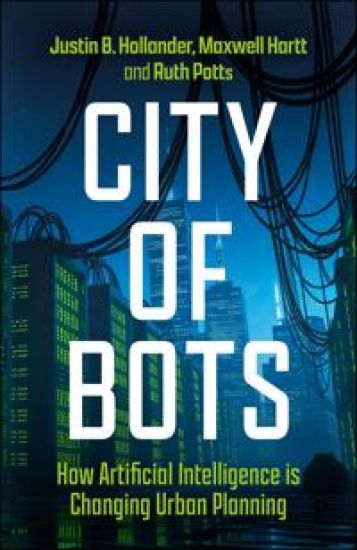
City of Bots

City of Bots

Justin B. Hollander; Maxwell Hartt; Ruth Potts

Bristol University Press
2027
nidottu
Urban planning has moved online, transforming community engagement into a digital process—but this shift has opened the door to disruption. Automated social media accounts, or bots, now infiltrate forums, surveys and virtual meetings, skewing debates and disrupting development projects. This book investigates the scale and impact of bot interference in US planning, tracing its roots in digital participation and the early use of AI. Through case studies, theoretical insights and the introduction of an Online Conversion Framework, it offers practical strategies for cities to safeguard democratic planning. It is essential reading for urban planners, policy makers and anyone concerned with technology’s influence on civic life.
City of Bots

City of Bots

Justin B. Hollander; Maxwell Hartt; Ruth Potts

Bristol University Press
2027
sidottu
Urban planning has moved online, transforming community engagement into a digital process—but this shift has opened the door to disruption. Automated social media accounts, or bots, now infiltrate forums, surveys and virtual meetings, skewing debates and disrupting development projects. This book investigates the scale and impact of bot interference in US planning, tracing its roots in digital participation and the early use of AI. Through case studies, theoretical insights and the introduction of an Online Conversion Framework, it offers practical strategies for cities to safeguard democratic planning. It is essential reading for urban planners, policy makers and anyone concerned with technology’s influence on civic life.
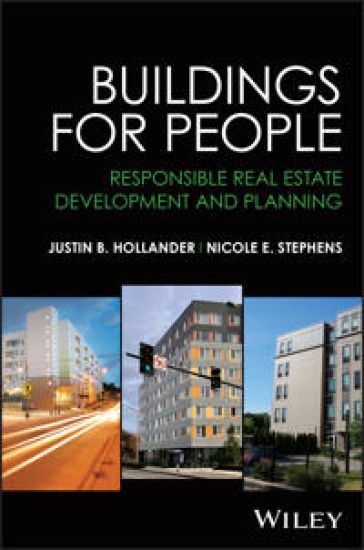
Buildings for People

Buildings for People

Justin B. Hollander; Nicole E. Stephens

JOHN WILEY SONS INC
2023
nidottu
BUILDINGS FOR PEOPLE Buildings for People: Responsible Real Estate Development and Planning explores how to balance social concerns with financial and investment considerations without sacrificing profit. This timely volume provides key technical and practical knowledge while exploring real estate development and planning through a multi-level lens—revealing the systemic factors that both govern and are governed by the real estate process. Beginning with site selection, the authors discuss financing, site improvement, architecture, landscape architecture, site planning, construction, and evaluation within a broader political, economic, and social context. Throughout the text, the authors explain key theories and methods of professional practice, and highlight how important social issues are interconnected to the business of real estate development and planning. Demonstrating how the desire for profit can be balanced with the needs of society Buildings for People: Responsible Real Estate Development and Planning is an excellent textbook for advanced undergraduate and graduate students in real estate, urban planning, urban design, and urban studies courses, as well as a valuable resource for researchers and professionals who want a multidisciplinary understanding of the built environment.
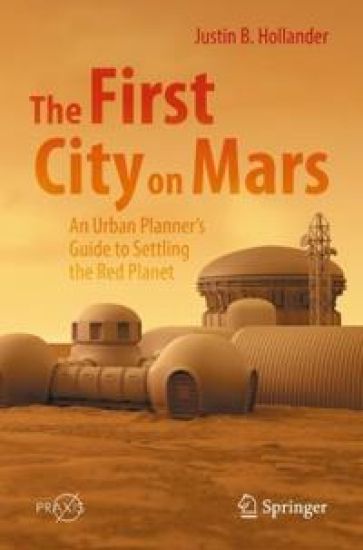
The First City on Mars: An Urban Planner’s Guide to Settling the Red Planet

The First City on Mars: An Urban Planner’s Guide to Settling the Red Planet

Justin B. Hollander

Springer International Publishing AG
2023
nidottu
Hundreds of novels, films, and TV shows have speculated about what it would be like for us Earthlings to build cities on Mars. To make it a reality, however, these dreamers are in sore need of additional conceptual tools in their belt—particularly, a rich knowledge of city planning and design. Enter award-winning author and Tufts University professor, Justin Hollander. In this book, he draws on his experience as an urban planner and researcher of human settlements to provide a thoughtful exploration of what a city on Mars might actually look like. Exploring the residential, commercial, industrial, and infrastructure elements of such an outpost, the book is able to paint a vivid picture of how a Martian community would function – the layout of its public spaces, the arrangement of its buildings, its transportation network, and many more crucial aspects of daily life on another planet. Dr. Hollander then brings all these lessons to life through his own rendered plan for “Aleph,” one of many possible designs for the first city on Mars. Featuring a plethora of detailed, cutting-edge illustrations and blueprints for Martian settlements, this book at once inspires and grounds the adventurous spirit. It is a novel addition to the current planning underway to colonize the Red Planet, providing a rich review of how we have historically overcome challenging environments and what the broader lessons of urban planning can offer to the extraordinary challenge of building a permanent settlement on Mars.
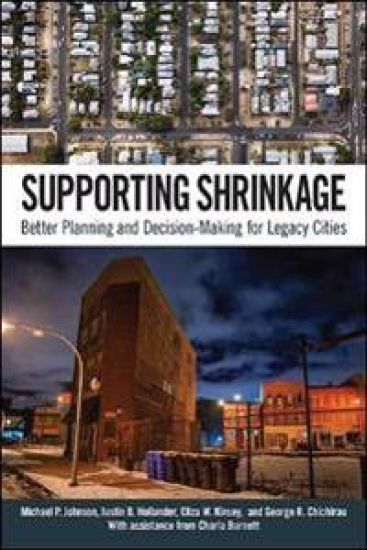
Supporting Shrinkage

Supporting Shrinkage

Michael P. Johnson; Justin B. Hollander; Eliza W. Kinsey; George R. Chichirau

STATE UNIVERSITY OF NEW YORK PRESS
2022
pokkari
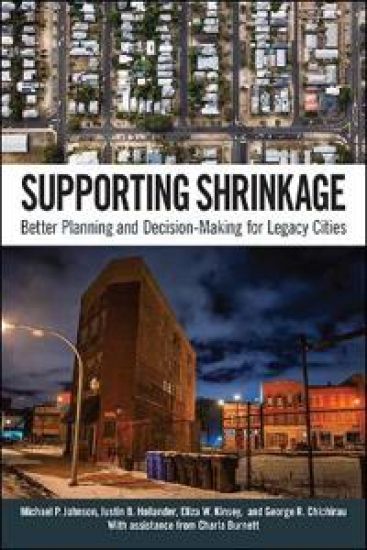
Demonstrates how residents can play a leading role in the positive transformation of their communities in the face of economic and population decline. Supporting Shrinkage describes a new approach to citizen-engaged, community-focused planning methods and technologies for cities and regions facing decline, disinvestment, shrinkage, and social and physical distress. The volume evaluates the benefits and costs of a wide range of analytic approaches for designing policy and planning interventions for shrinking cities and distressed communities. These include collaborative planning, social media, civic technology, game design, analytics, decision modeling and decision support, and spatial analysis. The authors present case studies of three US cities addressing shrinkage and decline, with a focus on issues of social justice, democratization of knowledge, and local empowerment. Proposed as a solution is an approach that puts community engagement and empowerment at the center, combined with data and technology innovations. The authors argue that decisions informed by qualitative and quantitative data and analytic methods, implemented through accessible and affordable technologies, and based on notions of social impact and social justice, can enable residents to play a leading role in the positive transformation of shrinking cities and distressed communities.
Supporting Shrinkage

Supporting Shrinkage

Michael P. Johnson; Justin B. Hollander; Eliza W. Kinsey; George R. Chichirau

State University of New York Press
2021
sidottu
Demonstrates how residents can play a leading role in the positive transformation of their communities in the face of economic and population decline. Supporting Shrinkage describes a new approach to citizen-engaged, community-focused planning methods and technologies for cities and regions facing decline, disinvestment, shrinkage, and social and physical distress. The volume evaluates the benefits and costs of a wide range of analytic approaches for designing policy and planning interventions for shrinking cities and distressed communities. These include collaborative planning, social media, civic technology, game design, analytics, decision modeling and decision support, and spatial analysis. The authors present case studies of three US cities addressing shrinkage and decline, with a focus on issues of social justice, democratization of knowledge, and local empowerment. Proposed as a solution is an approach that puts community engagement and empowerment at the center, combined with data and technology innovations. The authors argue that decisions informed by qualitative and quantitative data and analytic methods, implemented through accessible and affordable technologies, and based on notions of social impact and social justice, can enable residents to play a leading role in the positive transformation of shrinking cities and distressed communities.
A Research Agenda for Shrinking Cities

A Research Agenda for Shrinking Cities

Justin B. Hollander

Edward Elgar Publishing Ltd
2019
nidottu
Elgar Research Agendas outline the future of research in a given area. Leading scholars are given the space to explore their subject in provocative ways, and map out the potential directions of travel. They are relevant but also visionary. This prescient book presents the intellectual terrain of shrinking cities while exploring the key research questions in each of the field’s sub-domains and reviewing the range of methodologies within these topics. The book begins with an introduction outlining what shrinking cities are and how they are researched, highlighting both the opportunities and challenges that arise in this field, including the big ideas any researcher must grapple with. The next six chapters are each devoted to a different sub-domain within shrinking cities, offering a quick overview of the topics, relevant problems, paradoxes and key research questions. The book concludes with a review of the major themes and, most importantly, looks toward the future, predicting and anticipating the most significant future research trends related to shrinking cities. This accessible and compelling Research Agenda will be of interest to researchers looking to move into this area, urban studies and planning instructors who are teaching research methods courses, and students studying or independently researching shrinking cities.
An Ordinary City

An Ordinary City

Justin B. Hollander

Springer International Publishing AG
2018
nidottu
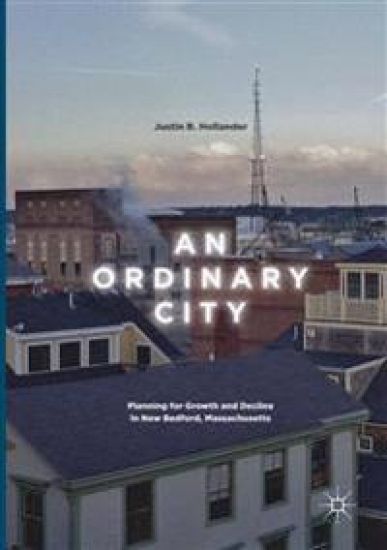
This book paints an intimate portrait of an overlooked kind of city that neither grows nor declines drastically. In fact, New Bedford, Massachusetts represents an entire category of cities that escape mainstream urban studies’ more customary attention to global cities (New York), booming cities (Atlanta), and shrinking cities (Flint). New Bedford-style ordinary cities are none of these, they neither grow nor decline drastically, but in their inconspicuousness, they account for a vast majority of all cities. Given the complexities of growth and decline, both temporarily and spatially, how does a city manage change and physically adapt to growth and decline? This book offers an answer through a detailed analysis of the politics, environment, planning strategies, and history of New Bedford.
A Research Agenda for Shrinking Cities

A Research Agenda for Shrinking Cities

Justin B. Hollander

Edward Elgar Publishing Ltd
2018
sidottu
Elgar Research Agendas outline the future of research in a given area. Leading scholars are given the space to explore their subject in provocative ways, and map out the potential directions of travel. They are relevant but also visionary. This prescient book presents the intellectual terrain of shrinking cities while exploring the key research questions in each of the field’s sub-domains and reviewing the range of methodologies within these topics. The book begins with an introduction outlining what shrinking cities are and how they are researched, highlighting both the opportunities and challenges that arise in this field, including the big ideas any researcher must grapple with. The next six chapters are each devoted to a different sub-domain within shrinking cities, offering a quick overview of the topics, relevant problems, paradoxes and key research questions. The book concludes with a review of the major themes and, most importantly, looks toward the future, predicting and anticipating the most significant future research trends related to shrinking cities. This accessible and compelling Research Agenda will be of interest to researchers looking to move into this area, urban studies and planning instructors who are teaching research methods courses, and students studying or independently researching shrinking cities.
An Ordinary City

An Ordinary City

Justin B. Hollander

Springer International Publishing AG
2017
sidottu
This book paints an intimate portrait of an overlooked kind of city that neither grows nor declines drastically. In fact, New Bedford, Massachusetts represents an entire category of cities that escape mainstream urban studies’ more customary attention to global cities (New York), booming cities (Atlanta), and shrinking cities (Flint). New Bedford-style ordinary cities are none of these, they neither grow nor decline drastically, but in their inconspicuousness, they account for a vast majority of all cities. Given the complexities of growth and decline, both temporarily and spatially, how does a city manage change and physically adapt to growth and decline? This book offers an answer through a detailed analysis of the politics, environment, planning strategies, and history of New Bedford.