Kirjojen hintavertailu – 12 903 739 kirjaa ja 27 kauppaa
Kirjailija
Justin Corfield
Kirjat ja teokset yhdessä paikassa: 40 kirjaa, julkaisuja vuosilta 2002–2027, suosituimpiin kuuluu Encyclopedia of Ghent (Gent / Gand). Vertaile teosten hintoja ja tarkista saatavuus suomalaisista kirjakaupoista.
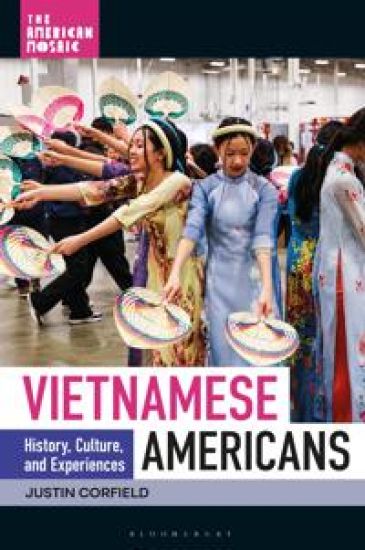
Discover the history, culture, traditions, and lived experiences of Vietnamese Americans in the United States. Vietnamese Americans play a significant role in weaving the culture and makeup of American society. On the other side of the world than the United States, Vietnam has its own unique culture, history, and customs, all of which immigrants bring with them when they come to the US. This volume explores what it means to be a Vietnamese American, covering topics such as language, food, religion, holidays, economics, education, gender roles, assimilation, media, and notable people, to name a few. Starting with an introduction to the history of Vietnam and then delving into the factors and aspects of daily life for Vietnamese Americans, the book offers an insight into this ethnic group and how they contribute to the American Mosaic.
Qatar is the 158th country in the world in terms of size, and is located on a small peninsula in the Arabian Gulf covering some 11,581 square kms. The population is around 2.8 million, of which 313,00 are citizens, the rest being expatriate workers and their families. With immense wealth from oil and gas, Qatar, through its airline and the media group Al Jazeera, as well as through diplomacy, it has achieved 'middle power' status, with the U. S. government according it the status of a 'Major Non-NATO Ally'. Holding elections in 2021, its capital, Doha, is the host of the 2022 FIFA World Cup. This book, the first encyclopedia dedicated to Qatar, provides details on a wide range of the people, events and institutions in the country.
On account of its location at the narrowest point in the English Channel, Calais has long been an important transit point for Britons heading to/from the European continent, or for others travelling to/from Britain. This has resulted in Calais being fought over. The English captured the town in 1347 after a long siege, with the surrender involving the Burghers of Calais pleading before King Edward III, the Burghers being commemorated in the famous sculpture by Auguste Rodin. Calais then remained English, sending two members of parliament to Westminster in the first half of the sixteenth century. It was retaken by the French in 1558; and captured by the Spanish in 1596 - Guy Fawkes using gunpowder in that attack. During the eighteenth century, Calais became the starting place for the Grand Tour with young wealthier Englishmen travelling around Europe. It was a strategic location during the Napoleonic Wars, after which it was a place of refuge for some Britons escaping creditors including Emma Hamilton and Beau Brummell. After the building of the railways in 1848, most travellers tended no longer to stay overnight in Calais, only making the short journey between the dock and the railway station. The economy stagnated for a period with the lace trade providing much of the employment in the town. In World War II, the British garrison was ordered not to surrender in order to provide more time for other troops to be evacuated at Dunkirk, and in the fighting, most of the old town was destroyed. It was rebuilt after the war; Mme De Gaulle's family owning the local biscuit factory. The beautiful beaches at Calais continue to attract many French from the area during the summer. The author has visited Calais many times from the age of four, and this book contains more than 700 illustrations and also family trees showing relationships of many people connected with Calais.
This city in Normandy is one of the most popular pilgrimage sites in Western Europe on account of St Th r se of Lisieux who lived in Lisieux from the age of four until her death in 1897, aged 24. She was canonized in 1925, and a large Basilica completed in 1954. The city was also the home of two important inventors. Marin Le Bourgeoys developed the flintlock mechanism in the 1600s and most firearms used it until the 1840s; and Paul Cornu managed to make the first successful helicopter flight in 1907. This book celebrates all the famous people connected with Lisieux, along with its institutions and heritage buildings, many of which were tragically destroyed in the Allied bombing of the city in June 1944. This book's publication in 2020 coincides with the relics of St Th r se and her parents, Louis and Z lie Martin, also canonized, visiting Australia, and this book contains around 640 illustrations.
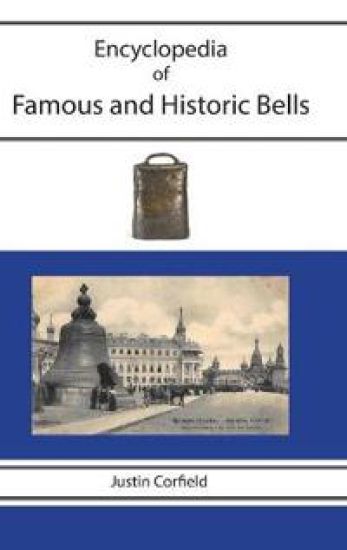
This book is the first Encyclopedia of Famous and Historic Bells and gives details of some 270 bells. These range from those such as the Tsar Bell in Moscow, 'Big Ben', the Lutine Bell of Lloyds of London and the Independence Bell of Pennsylvania, through to others with interesting but often less documented histories. Some of the bells are from cathedrals and churches, others perform a range of purposes in different institutions. This book includes bells from Europe, Asia, North America, South America and Australia, and it includes over 450 photographs and images of these famous and historic bells.
This book is a history of chess in Geelong, Australia, and it includes appendices listing officials of the Geelong chess Club, and the results of inter-school competitions in the 2000s and the 2010s
The city of Miri, in the Malaysian state of Sarawak, owes its existence to the presence of oil - both onshore which was exploited from 1910, and now off-shore. Before then it was a small village but the nearby Niah Caves have shown evidence of human life from 40,000 BC. Because of the importance of the oil industry it has always had a sizeable expatriate population. These included the Bettany and the Rhys-Jones families of Sophie, Countess of Wessex. Administered as a part of the Kingdom of Sarawak, it was easily captured by the Japanese in December 1941. Retaken by Australian soldiers in May 1945, the town quickly recovered from having been devastated, and it has been boomed with increased oil exploitation, and close ties with nearby Brunei. This book is not only the first encyclopedia of Miri, but is the first major work in English on all aspects of the history of the city with much new information on the Rhys-Jones family, and the pre-World War II British expatriate population. It includes around 400 photographs and pictures, some not previously published.
The island of Labuan off the north coast of Borneo has had an interesting history since it was ceded to Britain by the Sultan of Brunei in 1846. In spite of the small British population on the island, it has been the subject of much research, especially in regards to its postal history with a vast amount of scholarship devoted to this field. The British hoped to exploit coal found on the island. There was even a plan to build the British naval base there - later constructed at Singapore. Labuan was captured by the Japanese in January 1942, and retaken by the Australians in June 1945. One of the beaches on the island was the site of the formal surrender of the Japanese, and the island is the location of the massive Labuan War Cemetery where the bodies of British Commonwealth soldiers who died in Borneo, many in prisoner of war camps or on the Sandakan Death March, are buried. The Labuan War Memorial commemorates all those who have no known grave. After World War II, Labuan became a part of the State of North Borneo, and then in 1963 a part of the Malaysian state of Sabah. In 1984 it became a federal territory with the hope of attracting major investment but although Labuan has prospered, it was not nearly as much as had been expected. Tourists still go to Labuan, especially from Brunei. This book is not only the first encyclopedia of Labuan, but is the first major work in English on the history of all aspects of the island, and it includes more than 650 illustrations, including many photographs not previously published. It also contains a complete listing of those buried in the Labuan War Cemetery or commemorated on the Labuan War Memorial.
During the eighteenth century, the Cambodian settlement of Prey Nokor became the Vietnamese port of Saigon which in turn emerged as one of the largest settlements in the Vietnamese Empire. Captured by the French in 1861, it developed into the capital of the French colony of Cochinchina. An increasingly wealthy port, its population became increasingly politicised and in 1955, Saigon became the capital of the Republic of Vietnam. In 1976, Hanoi became the capital of the new Socialist Republic of Vietnam, with Saigon being renamed Ho Chi Minh City. Now a popular tourist destination, many of the sites dating from the French period and the Vietnam War survive with the city authorities taking an increasing interest in architectural heritage. This book is wholly updated and considerably expanded from the Historical Dictionary of Ho Chi Minh City, including more than 550 illustrations and photographs, many in colour, and city maps. With entries on the major places, institutions and people who had an important role in the history and the cultural life of the city, it remains an indispensable guide to scholars and researchers.
Cape Town is one of the capitals of South Africa and is the country's oldest city, having been founded in 1652 by Jan van Riebeeck. In 1795 the British took the Cape, returning it to the Dutch eight years later, and then retaking it in 1806. It was formally ceded to the British in 1814 and developed quickly, becoming a municipality in 1839. By the twentieth century the city included in its population British, Afrikaans, Africans, Cape Malays, the Cape Coloureds, and a wide variety of other peoples, with books and novels highlighting the diversity of cultures. In 1910 with the formation of the Union of South Africa, Cape Town became the legislative capital as the location of the South African Parliament. The city has rarely been out of the newspapers for long, and overshadowed by Table Mountain, it is a popular tourist resort. Many in the city took a stance against the introduction of Apartheid, with much suffering caused when large numbers of people were forced to move. Suburbs and communities were destroyed. It was the city where Christiaan Barnard performed the world's first heart transplant in 1967, and Robben Island was where Nelson Mandela and so many other prisoners were held. In tribute to the part in the Anti-Apartheid struggle played by the people of Cape Town, Mandela chose the city to be the location of his first speech after being released from prison. Cape Town has also a centre of sports and education. Since the end of Apartheid, the city has once again been able to celebrate the many cultures that have always been important in Cape Town. This book, the first encyclopedia on Cape Town, contains around 800 illustrations, many in colour, including a number of photographs never previously published.
This book is the first encyclopedia devoted to Nevis. One of the initial settlers was John Bourne, probably inspired to seek his fortune in the West Indies by William Strachey, his brother-in-law's father who provided Shakespeare with the inspiration for Prospero in The Tempest. Nevis became a major source of sugar produced on slave plantations. The British Royal Navy defended Nevis and this brought Horatio Nelson and the future King William IV to the island; the former marrying in Gingerland. The great American statesman, Alexander Hamilton was born on Nevis, and his birthplace is now a museum. The treatment of slaves on Nevis was horrific and it was an issue split many families: Rev James Tobin from Nevis, spoke out and wrote in favour of slavery. His son, James W. Tobin, opposed slavery, and the grandson, Walter Tobin, fought in the American Civil War to end slavery in the United States. From the late nineteenth century, there was a decline in the island's economy, causing some Nevisians to move to North America or to Britain. The father of Melanie B, 'Scary Spice', was one of these. The Bath House Hotel and nearby spa attracted visitors from the eighteenth century, and nowadays, tourism remains a mainstay of the local economy. This book describes the places, institutions and people who have made Nevis such an attractive place for residents and visitors alike. There are biographical articles on many settlers, plantation owners, historians, cricketers, politicians, government officials and visitors, appendices listing colonial officials, and politicians, and a complete compendium of all election results since 1952. The Encyclopedia of Nevis has a preface by Mark Brantley, Deputy Premier of Nevis and Minister of Foreign Affairs of St Kitts and Nevis; and a foreword by Professor Marco Meniketti, San Jose State University. It contains over 300 illustrations and maps.