Kirjojen hintavertailu – 12 859 828 kirjaa ja 27 kauppaa

Kirjailija

Justin Dillon

Kirjat ja teokset yhdessä paikassa: 7 kirjaa, julkaisuja vuosilta 1995–2019, suosituimpiin kuuluu Bad Education: Debunking Myths in Education. Vertaile teosten hintoja ja tarkista saatavuus suomalaisista kirjakaupoista.

7 kirjaa

Kirjojen julkaisuvuodet: 1995–2019.

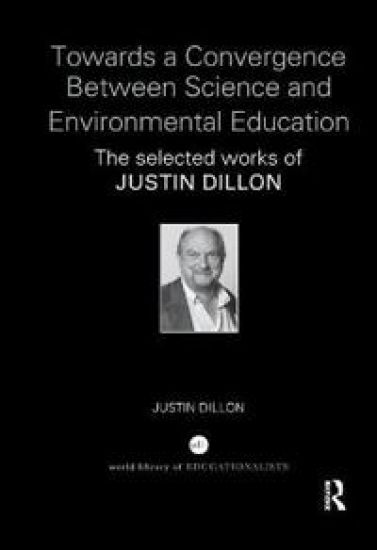
Towards a Convergence Between Science and Environmental Education
In the World Library of Educationalists, international scholars themselves compile career-long collections of what they judge to be their finest pieces—extracts from books, key articles, salient research findings, major theoretical and/practical contributions—so the world can read them in a single manageable volume. Readers thus are able to follow the themes and strands of their work and see their contribution to the development of a field, as well as the development of the field itself. Internationally recognized for his research on environmental education, science engagement, learning outside the classroom, and teacher identity and development, in this volume Justin Dillon brings together a thoughtfully crafted selection of his writing representing key aspects of his life and work leading to his current thinking on the need for a convergence of science and environmental education. The chapters are organized around 7 themes: On Habitus; On methodological issues; Developing theories of learning, identity and culture; Challenges and opportunities—science, the environment and the outdoors; Classroom issues—the emergence of Science|Environment|Health; Science engagement and communication; Science, environment and sustainability.
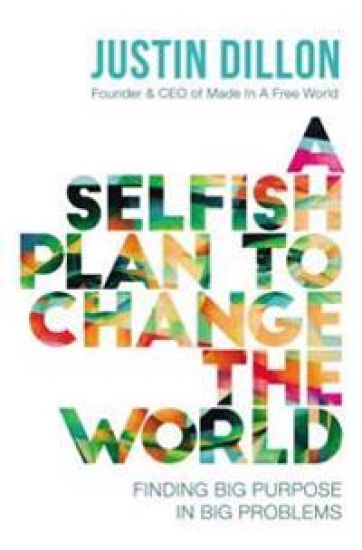
A Selfish Plan to Change the World: Finding Big Purpose in Big Problems
You are exactly what the world needsWhat if your search for meaning could solve the world's problems? What if everything you are passionate about could save a life or change history? Justin Dillon argues it can, and A Selfish Plan to Change the World shows how. In this paradigm-shifting new book, Dillon--the founder of Slavery Footprint and Made in a Free World--reveals the secret to a life of deep and lasting significance: the discovery that our need for meaning is inextricably linked to the needs of the world. A Selfish Plan to Change the World delivers a revolutionary method for meeting both needs. Drawing upon his own unlikely transformation from touring musician to founder of a global movement and telling the stories of other surprising world-changers, Dillon shows how to create a life of deep purpose by stepping into the problems of the world. Taking readers on a journey from sweatshops in India to punk rock concerts in Ireland, Dillon exposes the limitations of the "giving back" approach involving donations and volunteerism to reveal the unexpected power of "giving in" to pursue self-interest in a way that alters the very dynamics of the world's most challenging problems. A Selfish Plan to Change the World is your "self-help-others" guide to a life that matters, demonstrating how you can repurpose your existing talents, backstory, and networks to improve the lives of others. Changing the world no longer belongs only to martyrs and professional do-gooders. You can live an extraordinary life. You can change the world. All you ever needed was a plan.
Towards a Convergence Between Science and Environmental Education
In the World Library of Educationalists, international scholars themselves compile career-long collections of what they judge to be their finest pieces—extracts from books, key articles, salient research findings, major theoretical and/practical contributions—so the world can read them in a single manageable volume. Readers thus are able to follow the themes and strands of their work and see their contribution to the development of a field, as well as the development of the field itself. Internationally recognized for his research on environmental education, science engagement, learning outside the classroom, and teacher identity and development, in this volume Justin Dillon brings together a thoughtfully crafted selection of his writing representing key aspects of his life and work leading to his current thinking on the need for a convergence of science and environmental education. The chapters are organized around 7 themes: On Habitus; On methodological issues; Developing theories of learning, identity and culture; Challenges and opportunities—science, the environment and the outdoors; Classroom issues—the emergence of Science|Environment|Health; Science engagement and communication; Science, environment and sustainability.
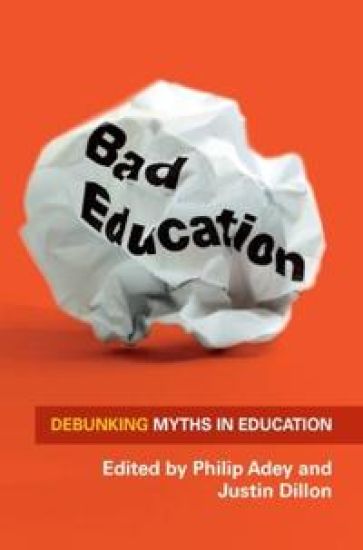
Bad Education: Debunking Myths in Education

Bad Education: Debunking Myths in Education

Philip Adey; Justin Dillon

Open University Press
2012
nidottu
"This is an important and welcome book. Readers can see the faults of simplistic judgments, neglect of evidence, dismissal of researchers, and injudicious implementation." From the foreword by Paul BlackWe all know that small classes are better than large classes; that children are best taught in groups according to their ability; that some schools are much better than others and that we should teach children according to their individual learning styles ... or do we? This book asks awkward questions about these and many other sacred cows of education. Each chapter tackles a persistent myth in education, confronting it with research evidence and teasing out any kernel of truth which may underlie the myth. Leading authors from the world of education each bring analysis and expertise to bear on their chosen subject, presenting their argument in an accessible manner based on sound scholarship. Some of the conclusions drawn in Bad Education are likely to be real eye-openers for many teachers and parents, who will find some of their basic assumptions about education called into question. It is also essential reading for anyone involved in educational policy making or management. Contributors: Philip Adey, Mike Anderson, Ed Baines, Paul Black, Peter Blatchford, Margaret Brown, Guy Claxton, Frank Coffield, Justin Dillon, Julian (Joe) Elliott, Simon Gibbs, Jeremy Hodgen, Neil Humphrey, Annette Karmiloff-Smith, Bill Lucas, Bethan Marshall, Brian Matthews, Corinne Reid, Rob Webster, Dylan Wiliam“As education policymakers it can be difficult to resist the comfort of our own experience and gut instincts or the lure of populism. Bad Education is an invaluable myth-buster that tears down common misconceptions and serves up hard facts in their place. This is a politically unpalatable guide to the evidence that will challenge policymakers, the press and parents alike.” Dale Bassett, Head of Public Policy, AQA“This book should become a manifesto for change for all of those in education who want to ensure our children do not receive a Bad Education. Every Headteacher should buy a copy for every teacher and hopefully somebody might even place a copy under the Secretary of State’s Xmas tree.” Gary Phillips, Head Teacher, Lilian Bayliss School“This is a welcome and important book. It takes apart the myths which support the dearly held convictions, simplistic assumptions, prejudices and irrational certainties of both politicians and teachers. Admitting that education is not itself a science, but demonstrating how both neuroscience and psychology have become available to inform educational policy and practice, it should provide food for more careful and well-informed thought to all who can influence what happens in our schools.” Baroness Perry of Southwark
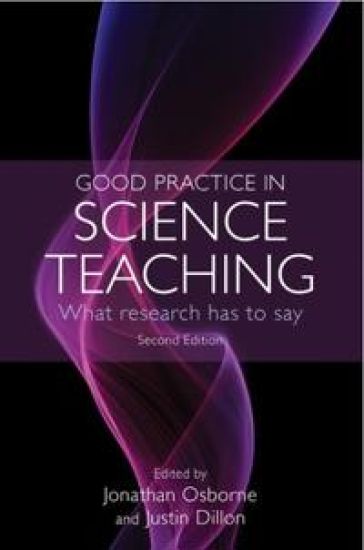
Good Practice in Science Teaching: What Research Has to Say

Good Practice in Science Teaching: What Research Has to Say

Jonathan Osborne; Justin Dillon

Open University Press
2010
nidottu
"The book has wide appeal in that the issues investigated - for example, the nature of science, practical work, the role of language, of technology and formative and summative assessment - are relevant and pertinent to science teachers' work in all school systems." Professor David F Treagust, Curtin University of Technology, AustraliaThis new edition of Good Practice in Science Teaching offers a comprehensive overview of the major areas of research and scholarship in science education. Each chapter summarizes the research work and evidence in the field, and discusses its significance, reliability and implications for the practice of science teaching. Thoroughly revised throughout, the new edition includes:Three new chapters covering: the learning of science in informal contexts; teacher professional development; and technology-mediated learningUpdates to every chapter, reflecting the changes and developments in science educationFurther reading sections at the end of each chapterEach chapter has been written by science education researchers with national or international reputations. Each topic is approached in a straight-forward manner and is written in a concise and readable style. This invaluable guide is ideal for science teachers of children of all ages, and others who work in teaching and related fields. It is an essential text for teachers in training and those studying for higher degrees. Contributors: Philip Adey, Paul Black, Maria Evagorou, John Gilbert, Melissa Glackin, Christine Harrison, Jill Hohenstein, Heather King, Alex Manning, Robin Millar, Natasha Serret, Shirley Simon, Julian Swain, Mary Webb.
Learning To Teach Science

Learning To Teach Science

Justin Dillon

Routledge Falmer
1995
nidottu
In response to requests by science teachers for guidance on the process of mentoring in schools, this text provides an interactive, activities-based resource. It takes into account the progressive development of skills and competencies, for all those involved in the training of science teachers; pre-service, in-service and quality control. Activities are directly related to classroom and laboratory planning, organisation and management and include general question and answer exercises.; The book covers nine areas of science teacher competence crossed with five levels of progression to give a flexible programme of training. Each activity has a commentary for mentors and notes for student teachers, and discusses the rationale behind each activity. Five activities are written specifically to help mentors review progress at each of the five levels.; Additionally, it can be used by: experienced teachers for refreshing their own practice; Heads of Science Departments for upgrading science teaching within the departments; and those concerned with quality control and certification to recommend activities, taken from the book, to aid further professional development.
Learning To Teach Science

Learning To Teach Science

Justin Dillon

Routledge Falmer
1995
sidottu
In response to requests by science teachers for guidance on the process of mentoring in schools, this text provides an interactive, activities-based resource. It takes into account the progressive development of skills and competencies, for all those involved in the training of science teachers; pre-service, in-service and quality control. Activities are directly related to classroom and laboratory planning, organisation and management and include general question and answer exercises.; The book covers nine areas of science teacher competence crossed with five levels of progression to give a flexible programme of training. Each activity has a commentary for mentors and notes for student teachers, and discusses the rationale behind each activity. Five activities are written specifically to help mentors review progress at each of the five levels.; Additionally, it can be used by: experienced teachers for refreshing their own practice; Heads of Science Departments for upgrading science teaching within the departments; and those concerned with quality control and certification to recommend activities, taken from the book, to aid further professional development.