
Kirjailija
Justin Heinzekehr
Kirjat ja teokset yhdessä paikassa: 4 kirjaa, julkaisuja vuosilta 2014–2019, suosituimpiin kuuluu Marxismo Orgánico: Una Alternativa al Capitalismo y a la Catástrofe Ecológica. Vertaile teosten hintoja ja tarkista saatavuus suomalaisista kirjakaupoista.
4 kirjaa
Kirjojen julkaisuvuodet: 2014–2019.
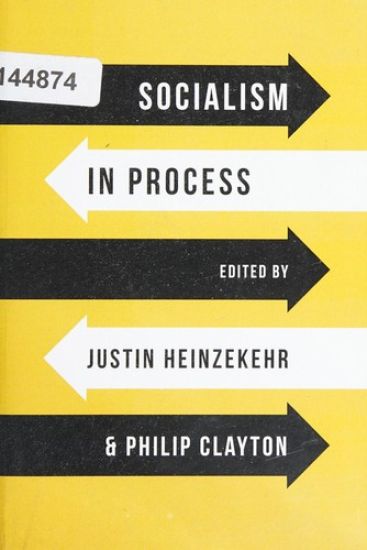
Is it finally time for a broad-based socialist movement in the United States? More and more Americans, especially young adults, recognize that capitalism is a major source of the most urgent social problems of our time. The new energy around social change has surfaced in such movements as Occupy Wall Street, the People's Climate March, and the presidential campaign of Bernie Sanders in 2015-16. The authors of this book believe the United States desperately needs an alternative economic system that preserves democratic, pluralistic values while avoiding consumerism and wealth disparity. ? Socialism in Process?is a collection of essays envisioning just such an alternative. Drawing on classic socialist texts such as Marx's? Capital, as well as the ecological philosophy of Alfred North Whitehead, the authors explore the emerging features of a distinctively American socialism. Both theoretical foundations and practical applications are considered. In particular, the authors demonstrate the strong and tragic connection between contemporary capitalism and the global climate crisis. Socialism in Process is indispensable reading for all who recognize the injustices of the present economic system, which adds to the wealth of the 1% at the expense of the remaining 99%. Building on the long and vital history of socialism in the United Sates, this volume plays a crucial role in the resurgence of socialism in North America today. As the authors suggest, community-based, locally grown socialist movements offer answers to many of America's most tenacious problems. Justin Heinzekehr is Director of Institutional Research and Assessment and Assistant Professor of Bible and Religion at Goshen College. His research interests include process philosophy, Anabaptist-Mennonite theology, and political theology. Most recently, he published Organic Marxism: An Alternative to Capitalism and Environmental Catastrophe with Philip Clayton. Philip Clayton is Ingraham Professor at Claremont School of Theology and an affiliated faculty member at Claremont Graduate University. Previous positions and guest professorships include Williams College, the California State University, Harvard University, Cambridge University, and the University of Munich. Having published extensively on science and religion, Clayton has more recently focused on science and values, environmental ethics, and ecological socialism ("Organic Marxism").

Marxismo Orgánico: Una Alternativa al Capitalismo y a la Catástrofe Ecológica
Justin Heinzekehr; Philip Clayton
Process Century Press
2016
nidottu
Este revolucionario libro fusiona el legado perdurable del socialismo―un gobierno para el bien com n―con lo mejor del movimiento ambientalistay los m s recientes avances en los estudios de sustentabilidad. Elresultado es un manifiesto que se pone a la vanguardia partiendo de lasideas centrales de Karl Marx, de los fil sofos procesuales de China(Tao smo) y de Occidente (Alfred North Whitehead), de la ecolog a y delas pr cticas org nicas de comunidades sustentables. Sin embargo, este"marxismo postmoderno", sostienen los autores, no es ni determinista niut pico. Deja espacio para las fuerzas de mercado limitando lacorrupci n y el lucro excesivo de los ricos. A fin de cuentas, lossistemas de producci n y comercio locales inmersos en las tradicionesculturales de un pueblo dado son mucho m s sustentables y promotores dela vida que una econom a global regida por unos cuantos megabancos ytransnacionales. Este libro es una llamado a la acci n. Ya no es una opci n quedarsec modamente sentado contemplando el consumo desenfrenado de los m sricos sabiendo que con ello no quedar nada para nuestros nietos. Sin lainminencia de una crisis planetaria, los ricos seguir an sin problema enel poder, pero como nos aproximamos a los l mites que el planeta puedesoportar, la nica opci n disponible es dirigirnos hacia unacivilizaci n org nica y ecol gica. Clayton y Heinzekehr nos hacen verc mo los cient ficos, economistas, agricultores, peque os comerciantes, artistas y l deres religiosos se est n agrupando alrededor del globopara construir comunidades orientadas al bien com n.
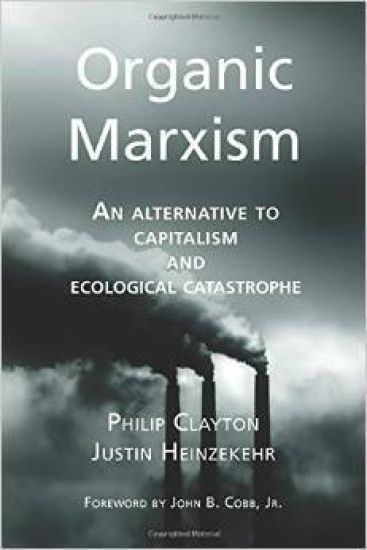
Organic Marxism: An Alternative to Capitalism and Ecological Catastrophe
Justin Heinzekehr; Philip Clayton
RiverHouse LLC
2014
nidottu
This revolutionary book fuses the enduring legacy of socialism-government for the common good-with the best of the environmental movement and the newest insights from sustainability studies. The result is a manifesto in the tradition of Bill McKibben's Eaarth-a roadmap forward in the face of the growing environmental catastrophe, which is the most complex crisis humanity has ever faced. Catherine Keller writes, "What an unexpected, discomforting and important work If Marxism seemed to be abandoned in the West to a few academic leftists and nostalgic activists, the authors bring it roaring back into relevance." American conservatives like to say that Marxism was destroyed by its opponents and by the mistakes of Marxist governments. Organic Marxism provides the definitive answer to this charge. New economic evidence reveals that Marx's predictions are coming true in ways once thought impossible. Today the wealthiest class, the richest 1%, possesses more wealth and power than ever before, whereas the 99% are slipping economically, and the majority of humans live in increasing poverty. Above all else, the global environmental crisis changes everything. Clayton and Heinzekehr show how, over the last decades, rich individuals and multinational corporations have acted selfishly to increase their own wealth-with devastating ecological consequences. The data make it clear that the planet has reached the limits of its capacity. The authors trace the unimaginable environmental and social consequences that (scientists tell us) global warming will bring: mass extinctions, food and water shortages, violent weather, rising oceans. Why then do our governments continue to favor the wealthy? Why do they take no action ... or actually worsen the situation? Organic Marxism shows why the situation is not hopeless, however. The vast majority of humans favor sustainable systems and lifestyles. With this growing support, it's possible to begin laying the foundations for a new, ecological civilization on this planet. In these pages Clayton and Heinzekehr lay out the steps toward a fair and sustainable society, one run not in the interests of the rich but for the common good. This "fresh, energetic, and revolutionary manifesto" (Santiago Slabodsky) takes its leads from the core insights of Karl Marx, from process philosophers in China (Taoism) and in the West (Alfred North Whitehead), from ecology, and from the organic practices of sustainable communities. This "postmodern Marxism," the authors argue, is not deterministic and utopian. It allows for market forces while limiting corruption and excessive profit-taking by the wealthy. In the end, localized systems of production and trade, steeped in the cultural traditions of a given people, are far more sustainable and life-affirming than a globalized economy run by the richest banks and multinational corporations. The book is a call to action. We can no longer sit by passively and allow unlimited consumption by the wealthy when it means that there will be nothing left for our grandchildren. Without a planetary crisis, the rich would remain in power. As we approach the planet's limits, however, there is no other option but to shift to an organic, ecological civilization. Clayton and Heinzekehr show how scientists and economists, farmers and small business people, artists and religious leaders are coming together around the globe, building communities for the common good.