Kirjojen hintavertailu – 12 859 818 kirjaa ja 27 kauppaa

Kirjailija

Justin Joque

Kirjat ja teokset yhdessä paikassa: 3 kirjaa, julkaisuja vuosilta 2018–2022, suosituimpiin kuuluu Revolutionary Mathematics. Vertaile teosten hintoja ja tarkista saatavuus suomalaisista kirjakaupoista.

3 kirjaa

Kirjojen julkaisuvuodet: 2018–2022.

Revolutionary Mathematics

Revolutionary Mathematics

Justin Joque

Verso Books
2022
nidottu
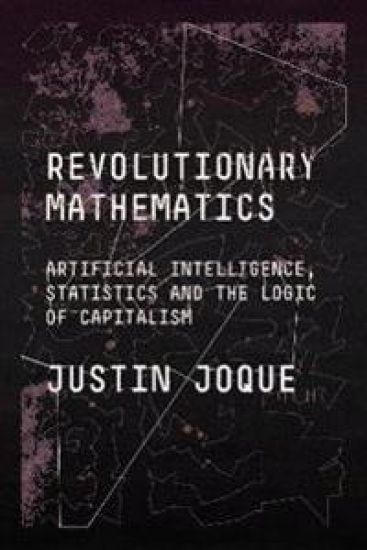
Our finances, politics, media, opportunities, information, shopping and knowledge production are mediated through algorithms and their statistical approaches to knowledge; increasingly, these methods form the organizational backbone of contemporary capitalism. Revolutionary Mathematics traces the revolution in statistics and probability that has quietly underwritten the explosion of machine learning, big data and predictive algorithms that now decide many aspects of our lives. Exploring shifts in the philosophical understanding of probability in the late twentieth century, Joque shows how this was not merely a technical change but a wholesale philosophical transformation in the production of knowledge and the extraction of value. This book provides a new and unique perspective on the dangers of allowing artificial intelligence and big data to manage society. It is essential reading for those who want to understand the underlying ideological and philosophical changes that have fueled the rise of algorithms and convinced so many to blindly trust their outputs, reshaping our current political and economic situation.
Deconstruction Machines

Deconstruction Machines

Justin Joque; Catherine Malabou

University of Minnesota Press
2018
nidottu
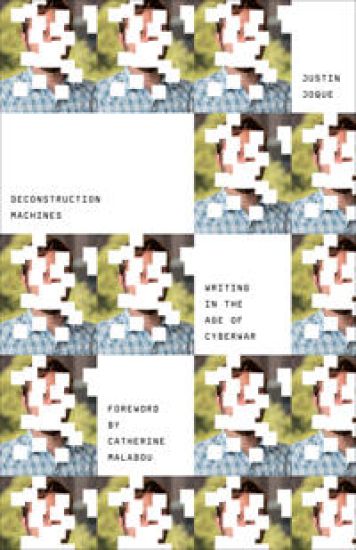
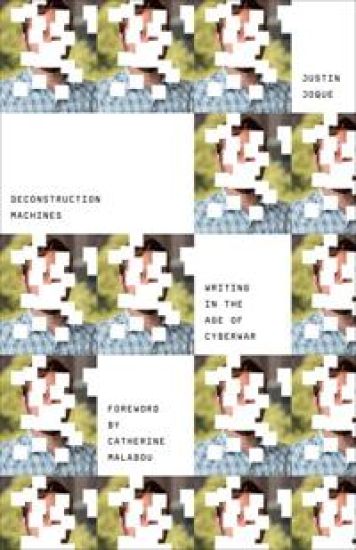
A bold new theory of cyberwar argues that militarized hacking is best understood as a form of deconstruction From shadowy attempts to steal state secrets to the explosive destruction of Iranian centrifuges, cyberwar has been a vital part of statecraft for nearly thirty years. But although computer-based warfare has been with us for decades, it has changed dramatically since its emergence in the 1990s, and the pace of change is accelerating. In Deconstruction Machines, Justin Joque inquires into the fundamental nature of cyberwar through a detailed investigation of what happens at the crisis points when cybersecurity systems break down and reveal their internal contradictions. He concludes that cyberwar is best envisioned as a series of networks whose constantly shifting connections shape its very possibilities. He ultimately envisions cyberwar as a form of writing, advancing the innovative thesis that cyber attacks should be seen as a militarized form of deconstruction in which computer programs are systems that operate within the broader world of texts. Throughout, Joque addresses hot-button subjects such as technological social control and cyber-resistance entities like Anonymous and Wikileaks while also providing a rich, detailed history of cyberwar. Deconstruction Machines provides a necessary new interpretation of deconstruction and timely analysis of media, war, and technology.
Deconstruction Machines

Deconstruction Machines

Justin Joque; Catherine Malabou

University of Minnesota Press
2018
sidottu
A bold new theory of cyberwar argues that militarized hacking is best understood as a form of deconstruction From shadowy attempts to steal state secrets to the explosive destruction of Iranian centrifuges, cyberwar has been a vital part of statecraft for nearly thirty years. But although computer-based warfare has been with us for decades, it has changed dramatically since its emergence in the 1990s, and the pace of change is accelerating. In Deconstruction Machines, Justin Joque inquires into the fundamental nature of cyberwar through a detailed investigation of what happens at the crisis points when cybersecurity systems break down and reveal their internal contradictions. He concludes that cyberwar is best envisioned as a series of networks whose constantly shifting connections shape its very possibilities. He ultimately envisions cyberwar as a form of writing, advancing the innovative thesis that cyber attacks should be seen as a militarized form of deconstruction in which computer programs are systems that operate within the broader world of texts. Throughout, Joque addresses hot-button subjects such as technological social control and cyber-resistance entities like Anonymous and Wikileaks while also providing a rich, detailed history of cyberwar. Deconstruction Machines provides a necessary new interpretation of deconstruction and timely analysis of media, war, and technology.