Kirjojen hintavertailu – 12 859 819 kirjaa ja 27 kauppaa

Kirjailija

Justin Lewis

Kirjat ja teokset yhdessä paikassa: 29 kirjaa, julkaisuja vuosilta 2001–2026, suosituimpiin kuuluu FPGA Design for Beginners. Vertaile teosten hintoja ja tarkista saatavuus suomalaisista kirjakaupoista.

29 kirjaa

Kirjojen julkaisuvuodet: 2001–2026.

Art, Culture and Enterprise (Routledge Revivals)
First published in 1990, this investigative overview of the politics of arts’ and cultural funding examines the question of public support for the arts. Looking at both popular commercial forms of culture, including radio, pop music and cinema, and the more traditional highbrow arts such as drama and opera, Art, Culture and Enterprise was the first book of its kind to deal systematically with the politics of contemporary culture. Drawing examples from specific British venues, Justin Lewis shows how innovative projects work in practice, and considers arts marketing and the promotion of culture as an economic strategy. A particularly relevant title in the context of the debate surrounding Arts Council funding, this reissue will prove valuable for artists, administrators and students of media and cultural studies, alongside those with a general interest in the future of public art and culture.

The Ideological Octopus

The Ideological Octopus

Justin Lewis

Routledge
2013
sidottu
Originally published in 1991, this introduction to studying the television audience discusses developments in semiology and cultural studies and their contribution to our understanding of the power of television. How, in the most precise and intricate sense, does television influence the way we think about the world? What ideological role does it play in contemporary culture? Does TV control us or do we control it? This insightful book assesses the progress in responding to these questions and offers some answers of its own. In the 1980s, with the emergence of semiology and cultural studies in particular, there were a number of significant theoretical developments in our understanding of television's power of which this book provides an overview while also incorporating traditional approaches. It suggests that television influences us ambiguously and unpredictably, depending upon who we are and how we think. Ambiguity does not blunt television's power, it simply diversifies it into a very modern kind of omnipotence. Employing two major qualitative audience studies, this impressive study illustrates its argument with findings that are both unexpected and disturbing.
Olly Murs - the Biography

Olly Murs - the Biography

Justin Lewis

John Blake Publishing Ltd
2012
nidottu
A regular in the charts and in the gossip columns, Olly is regarded by many as a possible successor to icons like Robbie Williams and Will Young. But not content with his triumphs as a singer, he has also become a TV fixture. After becoming the co-host of The Xtra Factor, he graduated to his own series, Olly: Life on Murs, in 2012. Olly Murs: The Biography follows his journey from suburbia to stardom and beyond. It explores how a seemingly ordinary and grounded Essex boy was determined to follow his dream - and strong and shrewd enough to survive the heady world of entertainment. Along the way, we see how his promising first career as a semi-pro footballer was halted and we discover how he deals with the pros and cons of a celebrity lifestyle.
Television Studies: The Key Concepts

Television Studies: The Key Concepts

Ben Calvert; Neil Casey; Bernadette Casey; Liam French; Justin Lewis

Routledge
2007
nidottu
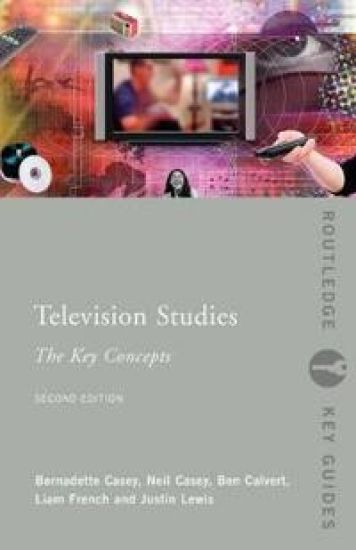
Television Studies: The Key Concepts is the definitive reference guide to an area of rapidly expanding academic interest. Among those aspects of television studies covered in this comprehensive and up-to-date guide are:theoretical perspectives which have shaped the study of television - Marxism; semiology; feminismconcepts which have shaped the study of television - narrative; representation; biastelevision genres - soap opera; news; science fictionmethods used for understanding television - content analysis; audience researchrelevant social, economic and political phenomena - ownership; social policy.
Television Studies: The Key Concepts

Television Studies: The Key Concepts

Ben Calvert; Neil Casey; Bernadette Casey; Liam French; Justin Lewis

Routledge
2007
sidottu
Television Studies: The Key Concepts is the definitive reference guide to an area of rapidly expanding academic interest. Among those aspects of television studies covered in this comprehensive and up-to-date guide are:theoretical perspectives which have shaped the study of television - Marxism; semiology; feminismconcepts which have shaped the study of television - narrative; representation; biastelevision genres - soap opera; news; science fictionmethods used for understanding television - content analysis; audience researchrelevant social, economic and political phenomena - ownership; social policy.
Shoot First and Ask Questions Later

Shoot First and Ask Questions Later

Justin Lewis; Rod Brookes; Nick Mosdell; Terry Threadgold

Peter Lang Publishing Inc
2006
nidottu
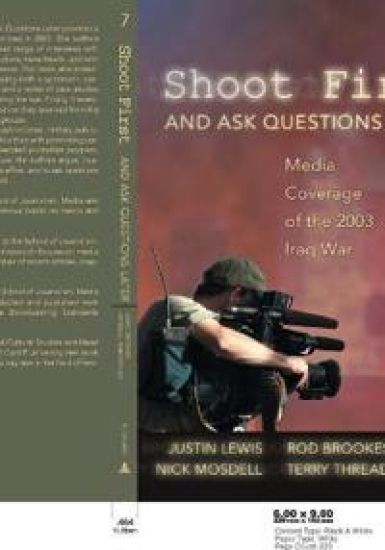
Based on extensive original research, Shoot First and Ask Questions Later provides a comprehensive analysis of media coverage of the war in Iraq in 2003. The authors look closely at the main actors involved through a broad range of interviews with journalists (both embedded and non-embedded), news editors, news heads, and with key planners at the Pentagon and the UK Ministry of Defence. This book also investigates how the war was represented on television, employing both a systematic content analysis of the broadcast news coverage of the war and a series of case studies that unravel key moments of good and bad reporting during the war. Finally, it examines how people responded to and interpreted the information they received from the media, drawing upon both large-scale surveys and focus groups. What emerges, for all its blemishes, is a picture of a sophisticated, military public-relations campaign - one that had less to do with censorship than with promoting certain kinds of coverage. At the heart of this was the embedded journalists program, which has clearly changed the way war is reported. In future, the authors argue, journalists need to understand their role in this public relations effort, and to ask questions not only when access is denied, but also when it is granted.
Constructing Public Opinion

Constructing Public Opinion

Justin Lewis

Columbia University Press
2001
sidottu
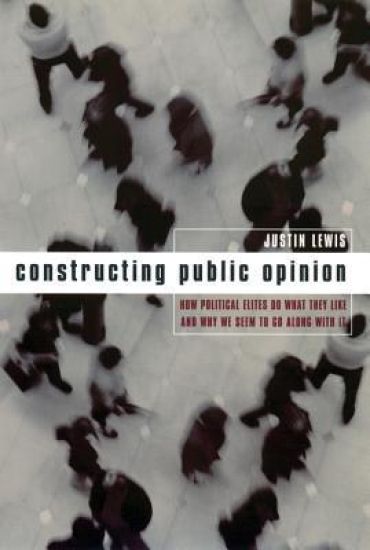
Is polling a process that brings "science" into the study of society? Or are polls crude instruments that tell us little about the way people actually think? The role of public opinion polls in government and mass media has gained increasing importance with each new election or poll taken. Here Lewis presents a new look at an old tradition, the first study of opinion polls using an interdisciplinary approach combining cultural studies, sociology, political science, and mass communication. Rather than dismissing polls, he considers them to be a significant form of representation in contemporary culture; he explores how the media report on polls and, in turn, how publicized results influence the way people respond to polls. Lewis argues that the media tend to exclude the more progressive side of popular opinion from public debate. While the media's influence is limited, it works strategically to maintain the power of pro-corporate political elites.
Constructing Public Opinion

Constructing Public Opinion

Justin Lewis

Columbia University Press
2001
pokkari
Is polling a process that brings "science" into the study of society? Or are polls crude instruments that tell us little about the way people actually think? The role of public opinion polls in government and mass media has gained increasing importance with each new election or poll taken. Here Lewis presents a new look at an old tradition, the first study of opinion polls using an interdisciplinary approach combining cultural studies, sociology, political science, and mass communication. Rather than dismissing polls, he considers them to be a significant form of representation in contemporary culture; he explores how the media report on polls and, in turn, how publicized results influence the way people respond to polls. Lewis argues that the media tend to exclude the more progressive side of popular opinion from public debate. While the media's influence is limited, it works strategically to maintain the power of pro-corporate political elites.