Kirjojen hintavertailu – 12 903 733 kirjaa ja 27 kauppaa

Kirjailija

Justin S. Vaughn

Kirjat ja teokset yhdessä paikassa: 4 kirjaa, julkaisuja vuosilta 2014–2017, suosituimpiin kuuluu The Rhetoric of Heroic Expectations. Vertaile teosten hintoja ja tarkista saatavuus suomalaisista kirjakaupoista.

4 kirjaa

Kirjojen julkaisuvuodet: 2014–2017.

Czars in the White House

Czars in the White House

Justin S. Vaughn; Jose D. Villalobos

The University of Michigan Press
2017
nidottu
When Barack Obama entered the White House, he followed a long-standing precedent for the development and implementation of major policies by appointing administrators—so-called policy czars—charged with directing the response to the nation’s most pressing crises. Demonstrating that the creation of policy czars is a strategy for combating partisan polarization and navigating the federal government’s complexity, Vaughn and Villalobos offer a sober, empirical analysis of what precisely constitutes a czar and what role they have played in the modern presidency.

Czars in the White House

Czars in the White House

Justin S. Vaughn; Jose D. Villalobos

The University of Michigan Press
2015
sidottu
When Barack Obama entered the White House, he followed a long-standing precedent for the development and implementation of major policies by appointing administrators—so-called policy czars—charged with directing the response to the nation’s most pressing crises. Demonstrating that the creation of policy czars is a strategy for combating partisan polarization and navigating the federal government’s complexity, Vaughn and Villalobos offer a sober, empirical analysis of what precisely constitutes a czar and what role they have played in the modern presidency.

The Rhetoric of Heroic Expectations

The Rhetoric of Heroic Expectations

Justin S. Vaughn; Jennifer R. Mercieca

Texas A M University Press
2014
sidottu
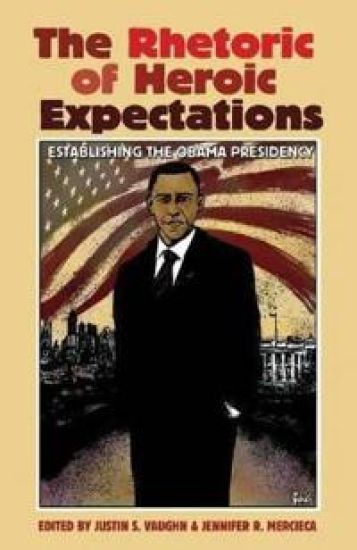
Campaign rhetoric helps candidates to get elected, but its effects last well beyond the counting of the ballots; this was perhaps never truer than in Barack Obama’s 2008 campaign. Did Obama create such high expectations that they actually hindered his ability to enact his agenda? Should we judge his performance by the scale of the expectations his rhetoric generated, or against some other standard? The Rhetoric of Heroic Expectations: Establishing the Obama Presidency grapples with these and other important questions. Barack Obama’s election seemed to many to fulfill Martin Luther King Jr.’s vision of the “long arc of the moral universe . . . bending toward justice.” And after the terrorism, war, and economic downturn of the previous decade, candidate Obama’s rhetoric cast broad visions of a change in the direction of American life. In these and other ways, the election of 2008 presented an especially strong example of creating expectations that would shape the public’s views of the incoming administration. The public’s high expectations, in turn, become a part of any president’s burden upon assuming office. The interdisciplinary scholars who have contributed to this volume focus their analysis upon three kinds of presidential burdens: institutional burdens (specific to the office of the presidency); contextual burdens (specific to the historical moment within which the president assumes office); and personal burdens (specific to the individual who becomes president).
The Rhetoric of Heroic Expectations

The Rhetoric of Heroic Expectations

Justin S. Vaughn; Jennifer R. Mercieca

Texas A M University Press
2014
nidottu
Campaign rhetoric helps candidates to get elected, but its effects last well beyond the counting of the ballots; this was perhaps never truer than in Barack Obama’s 2008 campaign. Did Obama create such high expectations that they actually hindered his ability to enact his agenda? Should we judge his performance by the scale of the expectations his rhetoric generated, or against some other standard? The Rhetoric of Heroic Expectations: Establishing the Obama Presidency grapples with these and other important questions. Barack Obama’s election seemed to many to fulfill Martin Luther King Jr.’s vision of the “long arc of the moral universe . . . bending toward justice.” And after the terrorism, war, and economic downturn of the previous decade, candidate Obama’s rhetoric cast broad visions of a change in the direction of American life. In these and other ways, the election of 2008 presented an especially strong example of creating expectations that would shape the public’s views of the incoming administration. The public’s high expectations, in turn, become a part of any president’s burden upon assuming office. The interdisciplinary scholars who have contributed to this volume focus their analysis upon three kinds of presidential burdens: institutional burdens (specific to the office of the presidency); contextual burdens (specific to the historical moment within which the president assumes office); and personal burdens (specific to the individual who becomes president).