
Kirjojen hintavertailu – 12 903 732 kirjaa ja 27 kauppaa

Kirjailija

K. Elizabeth Coggins

Kirjat ja teokset yhdessä paikassa: 2 kirjaa, julkaisuja vuodelta 2021, suosituimpiin kuuluu The Dynamics of Public Opinion. Vertaile teosten hintoja ja tarkista saatavuus suomalaisista kirjakaupoista.

2 kirjaa

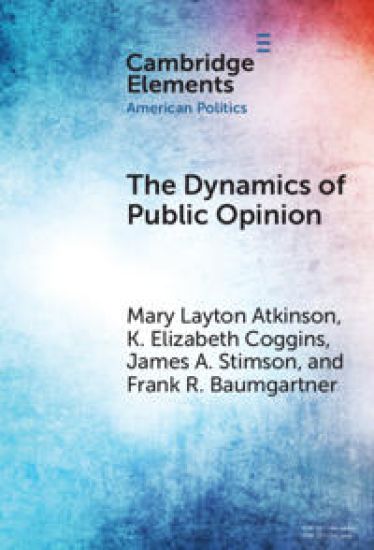
The Dynamics of Public Opinion

The Dynamics of Public Opinion

Mary Layton Atkinson; K. Elizabeth Coggins; James A. Stimson; Frank R. Baumgartner

Cambridge University Press
2021
sidottu
A central question in political representation is whether government responds to the people. To understand that, we need to know what the government is doing, and what the people think of it. We seek to understand a key question necessary to answer those bigger questions: How does American public opinion move over time? We posit three patterns of change over time in public opinion, depending on the type of issue. Issues on which the two parties regularly disagree provide clear partisan cues to the public. For these party-cue issues we present a slight variation on the thermostatic theory from (Soroka and Wlezien (2010); Wlezien (1995)); our “implied thermostatic model.” A smaller number of issues divide the public along lines unrelated to partisanship, and so partisan control of government provides no relevant clue. Finally, we note a small but important class of issues which capture response to cultural shifts.
The Dynamics of Public Opinion

The Dynamics of Public Opinion

Mary Layton Atkinson; K. Elizabeth Coggins; James A. Stimson; Frank R. Baumgartner

Cambridge University Press
2021
pokkari
A central question in political representation is whether government responds to the people. To understand that, we need to know what the government is doing, and what the people think of it. We seek to understand a key question necessary to answer those bigger questions: How does American public opinion move over time? We posit three patterns of change over time in public opinion, depending on the type of issue. Issues on which the two parties regularly disagree provide clear partisan cues to the public. For these party-cue issues we present a slight variation on the thermostatic theory from (Soroka and Wlezien (2010); Wlezien (1995)); our “implied thermostatic model.” A smaller number of issues divide the public along lines unrelated to partisanship, and so partisan control of government provides no relevant clue. Finally, we note a small but important class of issues which capture response to cultural shifts.