Kirjojen hintavertailu – 12 859 818 kirjaa ja 27 kauppaa
Kirjailija
K Langloh Parker
Kirjat ja teokset yhdessä paikassa: 25 kirjaa, julkaisuja vuosilta 2000–2025, suosituimpiin kuuluu Australian Legendary Tales (1896). By: K. Langloh Parker: Illuatrated By: Tommy McRae (c. 1835 - 1901): With introduction By: Andrew Lang. Vertaile teosten hintoja ja tarkista saatavuus suomalaisista kirjakaupoista.
Nimi esiintyy myös muodoissa: K. Langloh Parker, K.Langloh Parker
Tommy McRae (c.1835-1901) was an Aboriginal artist who lived in the Upper Murray district of Australia. McRae was a Wahgunyah man of the Kwatkwat people, whose country stretched from south of the Murray River to near the junction of the Goulburn and Murray rivers in Victoria........ Andrew Lang, FBA (31 March 1844 - 20 July 1912) was a Scottish poet, novelist, literary critic, and contributor to the field of anthropology. He is best known as a collector of folk and fairy tales. The Andrew Lang lectures at the University of St Andrews are named after him........... Catherine Eliza Somerville Stow (1 May 1856 - 27 March 1940), who wrote as K. Langloh Parker, was a South Australian born writer who lived in northern New South Wales in the late nineteenth century. She is best known for recording the stories of the Ualarai around her. Her testimony is one of the best accounts of the beliefs and stories of an Aboriginal people in north-west New South Wales at that time. However, her accounts reflect European attitudes of the time. Early life: Parker was born Catherine Eliza Somerville Field at Encounter Bay, in South Australia, daughter of Henry Field, pastoralist, and his wife Sophia, daughter of Rev. Ridgway Newland. Henry Field established Marra station near Wilcannia on the Darling River in New South Wales, and 'Katie' was raised there. The relocation brought the family both prosperity and sorrows. In an incident that took place in January 1862, her sisters Jane and Henrietta drowned while Katie was rescued by her Ualarai nurse, Miola. In recognition, Miola was taken in to be schooled together with the Field's other children. The family moved back to Adelaide in 1872. Marriage: In 1875, on reaching her maturity at 18, she married her first husband, Langloh Parker, 16 years her senior. In 1879 they and moved to his property, Bangate Station, near Angledool, on Ualarai lands by the Narran River. Langloh Parker's holdings consisted of 215,000 acres running some 100,000 sheep and cattle. He found time also to work as magistrate at Walgett. Over the following two decades she collected many of the Ualarai stories and legends which were to fill her books and make her famous. After drought struck the region, the station eventually failed and the Parkers moved to Sydney in 1901, where Langloh was diagnosed with cancer, dying two years later. Hatie travelled to England and married a lawyer, Percival Randolph Stow (son of Randolph Isham Stow), in 1905. The couple eventually returned to Australia, taking up residence in the suburb of Glenelg in Adelaide until her death in 1940............
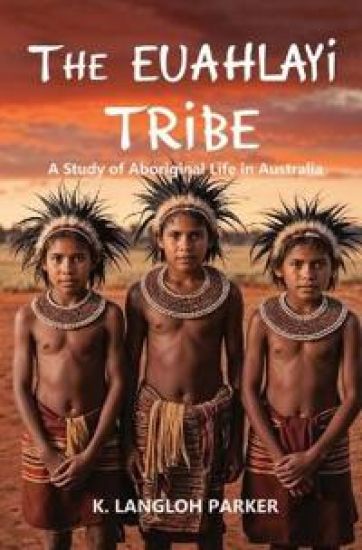
In The Euahlayi Tribe, A Study of Aboriginal Life in Australia, K. Langloh Parker presents a detailed ethnography of the Euahlayi people, capturing the intricacies of their society with remarkable accuracy and sensitivity. Drawing from years of close interaction, Parker offers unique insights into the daily lives, customs, and traditions of the Euahlayi, particularly highlighting the experiences and perspectives of the women-a viewpoint seldom documented during her time. Through her vivid and respectful portrayal, Parker sheds light on the deeper themes of community, identity, and cultural continuity. This book is an invaluable resource for anyone interested in understanding the profound and diverse nature of Aboriginal societies.
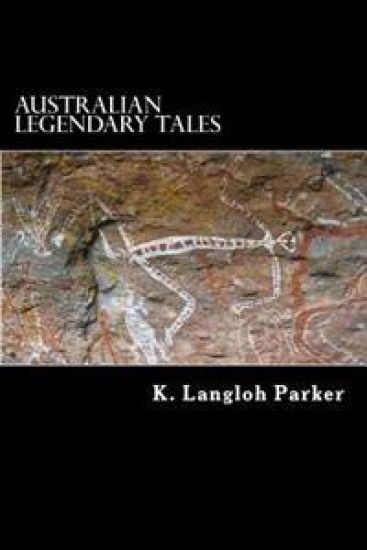
"Australian Legendary Tales," compiled by David Unaipon, is a collection of captivating Indigenous Australian narratives that traverse the rich cultural landscape of Aboriginal mythology. These tales, passed down through generations, vividly depict the Dreamtime, a sacred era when ancestral beings shaped the land, its creatures, and the essence of life itself. Each story unfolds with a seamless blend of magic and reality, portraying the origins of natural phenomena, the creation of unique animal characteristics, and the moral lessons embedded in cultural traditions. Unaipon's collection offers a glimpse into the spiritual beliefs and values of Australia's First Nations people, providing readers with an immersive experience of the Dreaming. As a pioneering work preserving Indigenous oral traditions, "Australian Legendary Tales" serves as a bridge between ancient wisdom and contemporary understanding, fostering appreciation for the cultural richness embedded in the Australian landscape.
The book "" Australian Legendary Tales: folk-lore of the Noongahburrahs as told to the Piccaninnies "" has been considered important throughout the human history, and so that this work is never forgotten we have made efforts in its preservation by republishing this book in a modern format for present and future generations. This whole book has been reformatted, retyped and designed. These books are not made of scanned copies and hence the text is clear and readable.
... The manners and rites of the natives were far the most archaic of all with which we are acquainted. Temples they had none: no images of gods, no altars of sacrifice; scarce any memorials of the dead. Their worship at best was offered in hymns to some vague, half-forgotten deity or First Maker of things, a god decrepit from age or all but careless of his children. Spirits were known and feared, but scarcely defined or described. Sympathetic magic, and perhaps a little hypnotism, were all their science. Kings and nations they knew not; they were wanderers, houseless and homeless. Custom was king; yet custom was tenacious, irresistible, and as complex in minute details as the etiquette of Spanish kings, or the ritual of the Flamens of Rome. The archaic intricacies and taboos of the customs and regulations of marriage might puzzle a mathematician, and may, when unravelled, explain the less complicated prohibitions of a totemism less antique. The people themselves in their struggle for existence had developed great ingenuities. They had the boomerang and the weet-weet, but not the bow; the throwing stick, but not, of course, the sword; the message stick, but no hieroglyphs; and their art was almost purely decorative, in geometrical patterns, not representative. They deemed themselves akin to all nature, and called cousins with rain and smoke, with clouds and sky, as well as with beasts and trees...
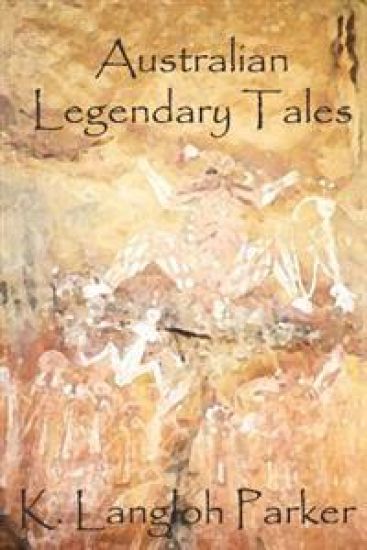
A Collection of Australian Aboriginal Legendary Folk-Lore Tales, legends of the Narran tribe, known among themselves as Noongahburrahs. First Page: AUSTRALIAN LEGENDARY TALES FOLK LORE OF THE NOONGAHBURRAHS AS TOLD TO THE PICCANINNIES COLLECTED BY MRS. K. LANGLOH PARKER WITH INTRODUCTION BY ANDREW LANG, M. A. DEDICATED TO PETER HIPPI KING OF THE NOONGAHBURRAHS CONTENTS PREFACE INTRODUCTION, BY ANDREW LANG, M. A. 1 DINEWAN THE EMU, AND GOOMBLEGUBBON THE BUSTARD 2 THE GALAH, AND OOLAH THE LIZARD 3 BAHLOO THE MOON, AND THE DAENS 4 THE ORIGIN OF THE NARRAN LAKE 5 GOOLOO THE MAGPIE, AND THE WAHROOGAH 6 THE WEEOOMBEENS AND THE PIGGIEBILLAH 7 BOOTOOLGAH THE CRANE AND GOONUR THE KANGAROO RAT, THE FIRE MAKERS 8 WEEDAH THE MOCKING BIRD 9 THE GWINERBOOS THE REDBREASTS 10 MEAMEI THE SEVEN SISTERS 11 THE COOKOOBURRAHS AND THE GOOLAHGOOL 12 THE MAYAMAH 13 THE BUNBUNDOOLOOEYS 14 OONGNAIRWAH AND GUINAREY 15 NARAHDARN THE BAT 16 MULLYANGAH THE MORNING STAR 17 GOOMBLEGUBBON, BEEARGAII, AND OUYAN 18 MOOREGOO THE MOPOKE, AND BAHLOO THE MOON 19 OUYAN THE CURLEW 20 DINEWAN THE EMU,
Excerpt from The Euahlayi Tribe: A Study of Aboriginal Life in Australia In each phratry are smaller sets of persons, each set distinguished by the name of some animal or other natural object, their totem.' The same totem is never found in both phratries. Thus a person marrying out of his or her phratry, as all must do, necessarily marries out of his or her totem. The same arrangements exist among tribes which derive phratry and totem names through the father. About the Publisher Forgotten Books publishes hundreds of thousands of rare and classic books. Find more at www.forgottenbooks.com This book is a reproduction of an important historical work. Forgotten Books uses state-of-the-art technology to digitally reconstruct the work, preserving the original format whilst repairing imperfections present in the aged copy. In rare cases, an imperfection in the original, such as a blemish or missing page, may be replicated in our edition. We do, however, repair the vast majority of imperfections successfully; any imperfections that remain are intentionally left to preserve the state of such historical works.
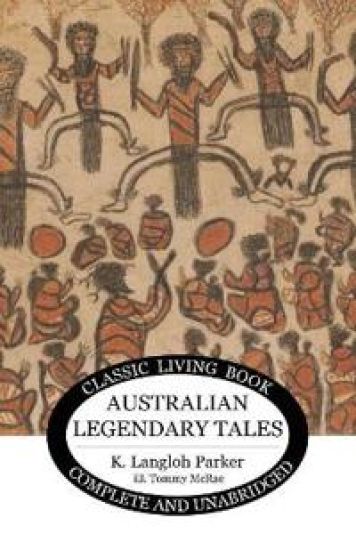
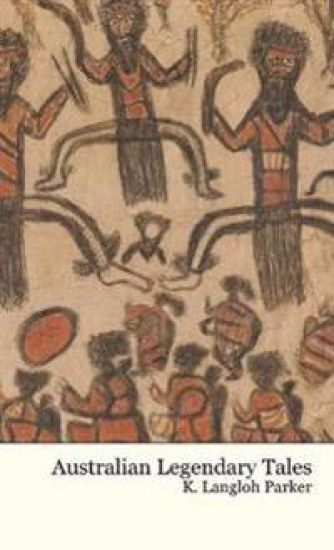
Collected in Australian Legendary Tales are 30 stories shared by the Noongahburrah people and recorded by the author. A fascinating collection featuring stories that explain local landmarks, animal habits, and even the creation of animals themselves, this book represents one of the first collections of First Australian culture recorded after colonisation. This edition features the complete original text along with an introduction by Andrew Lang as well as the original illustrations by Aboriginal artist Tommy McRae.
Excerpt from The Euahlayi Tribe: A Study of Aboriginal Life in Australia In each phratry are smaller sets of persons, each set distinguished by the name of some animal or other natural object, their totem.' The same totem is never found in both phratries. Thus a person marrying out of his or her phratry, as all must do, necessarily marries out of his or her totem. The same arrangements exist among tribes which derive phratry and totem names through the father. About the Publisher Forgotten Books publishes hundreds of thousands of rare and classic books. Find more at www.forgottenbooks.com This book is a reproduction of an important historical work. Forgotten Books uses state-of-the-art technology to digitally reconstruct the work, preserving the original format whilst repairing imperfections present in the aged copy. In rare cases, an imperfection in the original, such as a blemish or missing page, may be replicated in our edition. We do, however, repair the vast majority of imperfections successfully; any imperfections that remain are intentionally left to preserve the state of such historical works.