Kirjojen hintavertailu – 12 859 819 kirjaa ja 27 kauppaa

Kirjailija

K. Sabeel Rahman

Kirjat ja teokset yhdessä paikassa: 6 kirjaa, julkaisuja vuosilta 2016–2027, suosituimpiin kuuluu In Praise of Bureaucracy. Vertaile teosten hintoja ja tarkista saatavuus suomalaisista kirjakaupoista.

Nimi esiintyy myös muodoissa: K.Sabeel Rahman

6 kirjaa

Kirjojen julkaisuvuodet: 2016–2027.

In Praise of Bureaucracy

In Praise of Bureaucracy

K. Sabeel Rahman

Columbia Global Reports
2027
pokkari
A much-needed explanation of the function and purpose of the “administrative state” and how those government institutions could be better organized and operated to ensure they serve Americans. The current administration is transforming the federal government in its image, dismantling the agencies most essential for addressing economic and social inequalities, while weaponizing and personalizing others to impose pressure on opponents and open more avenues for corruption. After Trump’s administration, future policymakers will have to reimagine and rebuild a very different federal government that restores trust, prevents autocratic overreach, and is capable of addressing the urgent needs of the public. With In Praise of Bureaucracy, Cornell Law professor K. Sabeel Rahman provides an argument for what a future administrative state should look like. He argues that a next administrative state should be centrally focused on addressing problems of domination: protecting Americans from social exclusion and economic extraction, and making government itself more accountable and responsive to “we the people.”
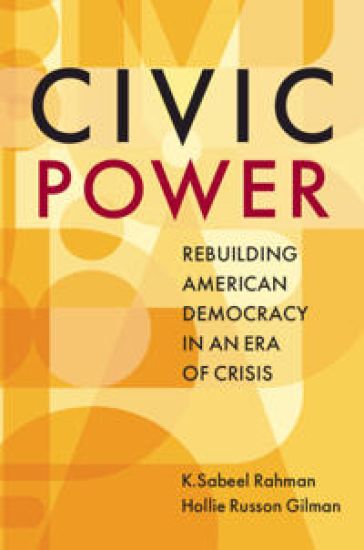
Civic Power

Civic Power

K.Sabeel Rahman; Hollie Russon Gilman

Cambridge University Press
2019
sidottu
What will it take to restore American democracy and rescue it from this moment of crisis? Civic Power argues that the current threat to US democracy is rooted not just in the outcome of the 2016 election, but in deeper, systemic forms of inequality that concentrate economic and political power in the hands of the few at the expense of the many. Drawing on historical and social science research and case studies of contemporary democratic innovations across the country, Civic Power calls for a broader approach to democracy reform focused on meaningfully redistributing power to citizens. It advocates for both reviving grassroots civil society and novel approaches to governance, policymaking, civic technology, and institutional design - aimed at dismantling structural disparities to build a more inclusive, empowered, bottom-up democracy, where communities and people have greater voice, power, and agency.
Civic Power

Civic Power

K.Sabeel Rahman; Hollie Russon Gilman

Cambridge University Press
2019
pokkari
What will it take to restore American democracy and rescue it from this moment of crisis? Civic Power argues that the current threat to US democracy is rooted not just in the outcome of the 2016 election, but in deeper, systemic forms of inequality that concentrate economic and political power in the hands of the few at the expense of the many. Drawing on historical and social science research and case studies of contemporary democratic innovations across the country, Civic Power calls for a broader approach to democracy reform focused on meaningfully redistributing power to citizens. It advocates for both reviving grassroots civil society and novel approaches to governance, policymaking, civic technology, and institutional design - aimed at dismantling structural disparities to build a more inclusive, empowered, bottom-up democracy, where communities and people have greater voice, power, and agency.
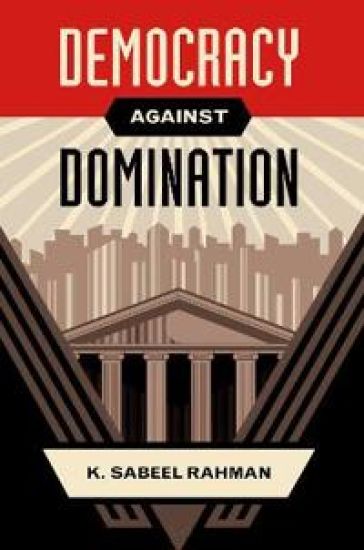
Democracy Against Domination

Democracy Against Domination

K. Sabeel Rahman

Oxford University Press Inc
2018
nidottu
The 2008 collapse of the US financial system plunged the economy into the worst economic downturn since the Great Depression, raising deep moral and institutional questions about the problems of economic inequality and economic power on the one hand, and the tensions between democracy and bureaucratic policymaking on the other. In Democracy Against Domination , K. Sabeel Rahman draws on a rich tradition of political economy rooted in the thought and reform politics of early twentieth-century progressives like John Dewey and Louis Brandeis to argue that, first, we should reconceive economic governance as focused not just on growth or efficiency but rather on counteracting the threat of domination whether in the form of corporate power or inequitable markets; and second, that we must do so by expanding the capacity of citizens themselves to exercise real political power in economic policymaking. Synthesizing a range of insights from law, history, political theory, and public policy, Rahman combines a fresh normative approach to democratic theory and economic power with a concrete analysis of the institutions needed to realize urgent hopes for a more equitable and democratic economy.
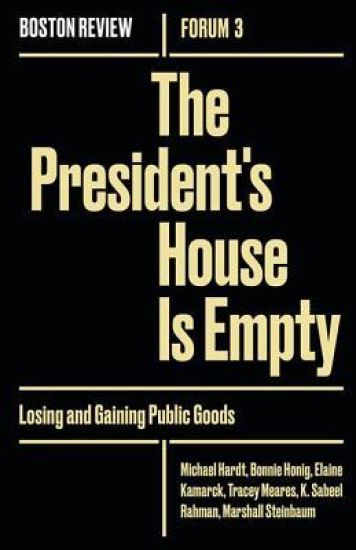
The President's House Is Empty

The President's House Is Empty

Michael Hardt; Bonnie Honig; Elaine Kamarck; Tracey Meares; K. Sabeel Rahman; Marshall Steinbaum

Boston Review/Boston Critic Inc.
2017
pokkari
The President's House is Empty: Losing and Gaining Public Goods explores the question of what we--the public--owe each other as free and equal members of a democratic society. With essays by writers and thinkers like Bonnie Honig, this collection attempts to make sense of the current administration's disdain for public things like the White House, public education, and clean water.
Democracy against Domination

Democracy against Domination

K. Sabeel Rahman

Oxford University Press Inc
2016
sidottu
In 2008, the collapse of the US financial system plunged the economy into the worst economic downturn since the Great Depression. In its aftermath, the financial crisis pushed to the forefront fundamental moral and institutional questions about how we govern the modern economy. What are the values that economic policy ought to prioritize? What institutions do we trust to govern complex economic dynamics? Much of popular and academic debate revolves around two competing approaches to these fundamental questions: laissez-faire defenses of self-correcting and welfare-enhancing markets on the one hand, and managerialist turns to the role of insulated, expert regulation in mitigating risks and promoting growth on the other. In Democracy Against Domination, K. Sabeel Rahman offers an alternative vision for how we should govern the modern economy in a democratic society. Drawing on a rich tradition of economic reform rooted in the thought and reform politics of early twentieth century progressives like John Dewey and Louis Brandeis, Rahman argues that the fundamental moral challenge of economic governance today is two-fold: first, to counteract the threats of economic domination whether in the form of corporate power or inequitable markets; and second, to do so by expanding the capacity of citizens themselves to exercise real political power in economic policymaking. This normative framework in turn suggests a very different way of understanding and addressing major economic governance issues of the post-crisis era, from the challenge of too-big-to-fail financial firms, to the dangers of regulatory capture and regulatory reform. Synthesizing a range of insights from history to political theory to public policy, Democracy Against Domination offers an exciting reinterpretation of progressive economic thought; a fresh normative approach to democratic theory; and an urgent hope for realizing a more equitable and democratically accountable economy through practical reforms in our policies and regulatory institutions.