Kirjojen hintavertailu – 12 859 829 kirjaa ja 27 kauppaa

Kirjailija

K. Sivaramakrishnan

Kirjat ja teokset yhdessä paikassa: 59 kirjaa, julkaisuja vuosilta 1999–2025, suosituimpiin kuuluu The Camphor Tree and the Elephant. Vertaile teosten hintoja ja tarkista saatavuus suomalaisista kirjakaupoista.

59 kirjaa

Kirjojen julkaisuvuodet: 1999–2025.

Upland Geopolitics

Upland Geopolitics

Michael B. Dwyer; K. Sivaramakrishnan

UNIVERSITY OF WASHINGTON PRESS
2022
pokkari
Winner of the 2024 EuroSEAS Social Science Book PrizeCold War legacies in Southeast Asia enable new geographies of enclosureIn the twenty-first century, land deals in the Global South have become increasingly prevalent and controversial. Transnational access to arable land in impoverished "land-rich" countries in Latin America, Sub-Saharan Africa, and Southeast Asia highlights the link between the shifting geopolitics of economic development and problems of food security, climate change, and regional and international trade. Drawing on ethnographic and archival research, Upland Geopolitics uses the case of Chinese agribusiness investment in northern Laos to study the unbalanced geography of the new global land rush. Connecting the current rubber plantation boom to a longer trajectory of foreign intervention in the region, Upland Geopolitics reveals how legacies of Cold War conflict continue to pave the way for transnational enclosure in a socially uneven landscape. Upland Geopolitics is freely available in an open access edition thanks to TOME (Toward an Open Monograph Ecosystem) and the generous support of Indiana University. DOI: 10.6069/9780295750507
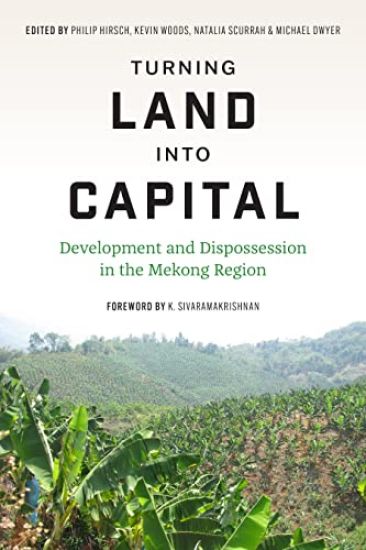
Turning Land Into Capital

Turning Land Into Capital

K. Sivaramakrishnan

UNIVERSITY OF WASHINGTON PRESS
2022
pokkari

Halvin toimitettuna 53,30 €

In Southeast Asia reversals of earlier agrarian reforms have rolled back "land-to-the-tiller" policies created in the wake of Cold War–era revolutions. This trend, marked by increased land concentration and the promotion of export-oriented agribusiness at the expense of smallholder farmers, exposes the convergence of capitalist relations and state agendas that expand territorial control within and across national borders. Turning Land into Capital examines the contradictions produced by superimposing twenty-first-century neoliberal projects onto diverse landscapes etched by decades of war and state socialism. Chapters in the book explore geopolitics, legacies of colonialism, ideologies of development, and strategies to achieve land justice in Cambodia, Laos, Myanmar, Thailand, and Vietnam. The resulting picture reveals the place-specific interactions of state and market ideologies, regional geopolitics, and local elites in concentrating control over land.
Turning Land Into Capital

Turning Land Into Capital

K. Sivaramakrishnan

UNIVERSITY OF WASHINGTON PRESS
2022
sidottu
In Southeast Asia reversals of earlier agrarian reforms have rolled back "land-to-the-tiller" policies created in the wake of Cold War–era revolutions. This trend, marked by increased land concentration and the promotion of export-oriented agribusiness at the expense of smallholder farmers, exposes the convergence of capitalist relations and state agendas that expand territorial control within and across national borders. Turning Land into Capital examines the contradictions produced by superimposing twenty-first-century neoliberal projects onto diverse landscapes etched by decades of war and state socialism. Chapters in the book explore geopolitics, legacies of colonialism, ideologies of development, and strategies to achieve land justice in Cambodia, Laos, Myanmar, Thailand, and Vietnam. The resulting picture reveals the place-specific interactions of state and market ideologies, regional geopolitics, and local elites in concentrating control over land.
Misreading the Bengal Delta

Misreading the Bengal Delta

Camelia Dewan; K. Sivaramakrishnan

University of Washington Press
2022
sidottu
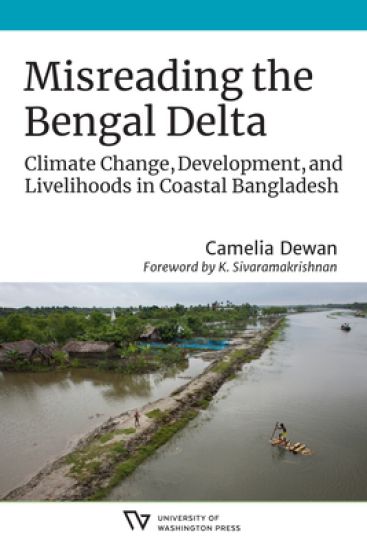
An unexpected story of climate change initiatives that threaten a complex waterscapePerilously close to sea level and vulnerable to floods, erosion, and cyclones, Bangladesh is one of the top recipients of development aid earmarked for climate change adaptation. Yet to what extent do adaptation projects address local needs and concerns? Combining environmental history and ethnographic fieldwork with development professionals, rural farmers, and landless women, Misreading the Bengal Delta critiques development narratives of Bangladesh as a "climate change victim." It examines how development actors repackage colonial-era modernizing projects, which have caused severe environmental effects, as climate-adaptation solutions. Seawalls meant to mitigate against cyclones and rising sea levels instead silt up waterways and induce drainage-related flooding. Other adaptation projects, from saline aquaculture to high-yield agriculture, threaten soil fertility, biodiversity, and livelihoods. Bangladesh's environmental crisis goes beyond climate change, extending to coastal vulnerabilities that are entwined with underemployment, debt, and the lack of universal healthcare. This timely book analyzes how development actors create flawed causal narratives linking their interventions in the environment and society of the Global South to climate change. Ultimately, such misreadings risk exacerbating climatic threats and structural inequalities. Misreading the Bengal Delta is available in an open access edition through the Sustainable History Monograph Pilot, thanks to the generous support of the Andrew W. Mellon Foundation. Open access edition: DOI 10.6069/9780295749624
Misreading the Bengal Delta

Misreading the Bengal Delta

Camelia Dewan; K. Sivaramakrishnan

University of Washington Press
2022
pokkari
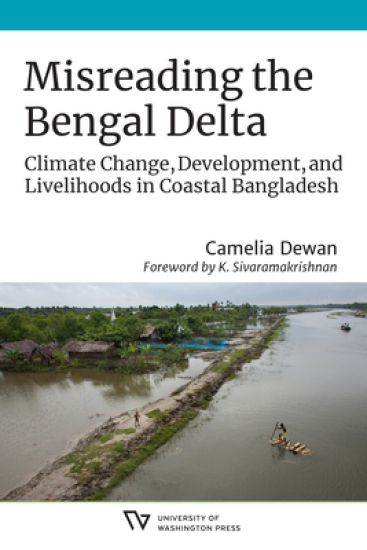
An unexpected story of climate change initiatives that threaten a complex waterscapePerilously close to sea level and vulnerable to floods, erosion, and cyclones, Bangladesh is one of the top recipients of development aid earmarked for climate change adaptation. Yet to what extent do adaptation projects address local needs and concerns? Combining environmental history and ethnographic fieldwork with development professionals, rural farmers, and landless women, Misreading the Bengal Delta critiques development narratives of Bangladesh as a "climate change victim." It examines how development actors repackage colonial-era modernizing projects, which have caused severe environmental effects, as climate-adaptation solutions. Seawalls meant to mitigate against cyclones and rising sea levels instead silt up waterways and induce drainage-related flooding. Other adaptation projects, from saline aquaculture to high-yield agriculture, threaten soil fertility, biodiversity, and livelihoods. Bangladesh's environmental crisis goes beyond climate change, extending to coastal vulnerabilities that are entwined with underemployment, debt, and the lack of universal healthcare. This timely book analyzes how development actors create flawed causal narratives linking their interventions in the environment and society of the Global South to climate change. Ultimately, such misreadings risk exacerbating climatic threats and structural inequalities. Misreading the Bengal Delta is available in an open access edition through the Sustainable History Monograph Pilot, thanks to the generous support of the Andrew W. Mellon Foundation. Open access edition: DOI 10.6069/9780295749624
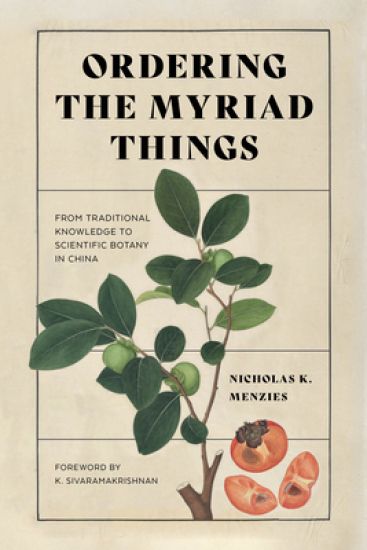
Ordering the Myriad Things

Ordering the Myriad Things

Nicholas K. Menzies; K. Sivaramakrishnan

University of Washington Press
2021
pokkari
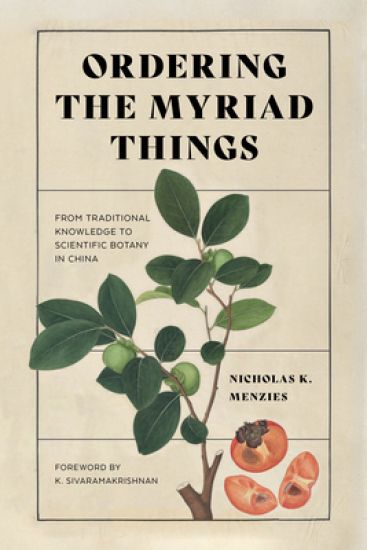
Winner of the 2024 SHNH Natural History Book Prize (The John Thackray Medal)An exploration of plant wisdom, from the Southern Mountain Tea Flower to the Dawn RedwoodChina's vast and ancient body of documented knowledge about plants includes horticultural manuals and monographs, comprehensive encyclopedias, geographies, and specialized anthologies of verse and prose written by keen observers of nature. Until the late nineteenth century, however, standard practice did not include deploying a set of diagnostic tools using a common terminology and methodology to identify and describe new and unknown species or properties. Ordering the Myriad Things relates how traditional knowledge of plants in China gave way to scientific botany between the mid-nineteenth and mid-twentieth centuries, when plants came to be understood in a hierarchy of taxonomic relationships to other plants and within a broader ecological context. This shift not only expanded the universe of plants beyond the familiar to encompass unknown species and geographies but fueled a new knowledge of China itself. Nicholas K. Menzies highlights the importance of botanical illustration as a tool for recording nature—contrasting how images of plants were used in the past to the conventions of scientific drawing and investigating the transition of "traditional" systems of organization, classification, observation, and description to "modern" ones.
Ordering the Myriad Things

Ordering the Myriad Things

Nicholas K. Menzies; K. Sivaramakrishnan

University of Washington Press
2021
sidottu
Winner of the 2024 SHNH Natural History Book Prize (The John Thackray Medal)An exploration of plant wisdom, from the Southern Mountain Tea Flower to the Dawn RedwoodChina's vast and ancient body of documented knowledge about plants includes horticultural manuals and monographs, comprehensive encyclopedias, geographies, and specialized anthologies of verse and prose written by keen observers of nature. Until the late nineteenth century, however, standard practice did not include deploying a set of diagnostic tools using a common terminology and methodology to identify and describe new and unknown species or properties. Ordering the Myriad Things relates how traditional knowledge of plants in China gave way to scientific botany between the mid-nineteenth and mid-twentieth centuries, when plants came to be understood in a hierarchy of taxonomic relationships to other plants and within a broader ecological context. This shift not only expanded the universe of plants beyond the familiar to encompass unknown species and geographies but fueled a new knowledge of China itself. Nicholas K. Menzies highlights the importance of botanical illustration as a tool for recording nature—contrasting how images of plants were used in the past to the conventions of scientific drawing and investigating the transition of "traditional" systems of organization, classification, observation, and description to "modern" ones.
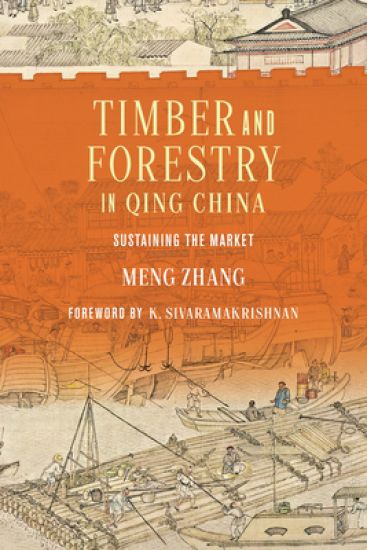
Timber and Forestry in Qing China

Timber and Forestry in Qing China

Meng Zhang; K. Sivaramakrishnan

University of Washington Press
2021
pokkari
Winner of the 2022 Charles A. Weyerhaeuser Book Award for best book on forest and conservation history, sponsored by the Forest History SocietyHonorable Mention for the 2022 ISCLH First Biennial Book Prize, sponsored by the International Society for Chinese Law and HistoryTraces the sourcing of logs that fueled early modern urbanizationIn the Qing period (1644–1912), China's population tripled, and the flurry of new development generated unprecedented demand for timber. Standard environmental histories have often depicted this as an era of reckless deforestation, akin to the resource misuse that devastated European forests at the same time. This comprehensive new study shows that the reality was more complex: as old-growth forests were cut down, new economic arrangements emerged to develop renewable timber resources. Historian Meng Zhang traces the trade routes that connected population centers of the Lower Yangzi Delta to timber supplies on China's southwestern frontier. She documents innovative property rights systems and economic incentives that convinced landowners to invest years in growing trees. Delving into rare archives to reconstruct business histories, she considers both the formal legal mechanisms and the informal interactions that helped balance economic profit with environmental management. Of driving concern were questions of sustainability: How to maintain a reliable source of timber across decades and centuries? And how to sustain a business network across a thousand miles? This carefully constructed study makes a major contribution to Chinese economic and environmental history and to world-historical discourses on resource management, early modern commercialization, and sustainable development.
Timber and Forestry in Qing China

Timber and Forestry in Qing China

Meng Zhang; K. Sivaramakrishnan

University of Washington Press
2021
sidottu
Winner of the 2022 Charles A. Weyerhaeuser Book Award for best book on forest and conservation history, sponsored by the Forest History SocietyHonorable Mention for the 2022 ISCLH First Biennial Book Prize, sponsored by the International Society for Chinese Law and HistoryTraces the sourcing of logs that fueled early modern urbanizationIn the Qing period (1644–1912), China's population tripled, and the flurry of new development generated unprecedented demand for timber. Standard environmental histories have often depicted this as an era of reckless deforestation, akin to the resource misuse that devastated European forests at the same time. This comprehensive new study shows that the reality was more complex: as old-growth forests were cut down, new economic arrangements emerged to develop renewable timber resources. Historian Meng Zhang traces the trade routes that connected population centers of the Lower Yangzi Delta to timber supplies on China's southwestern frontier. She documents innovative property rights systems and economic incentives that convinced landowners to invest years in growing trees. Delving into rare archives to reconstruct business histories, she considers both the formal legal mechanisms and the informal interactions that helped balance economic profit with environmental management. Of driving concern were questions of sustainability: How to maintain a reliable source of timber across decades and centuries? And how to sustain a business network across a thousand miles? This carefully constructed study makes a major contribution to Chinese economic and environmental history and to world-historical discourses on resource management, early modern commercialization, and sustainable development.
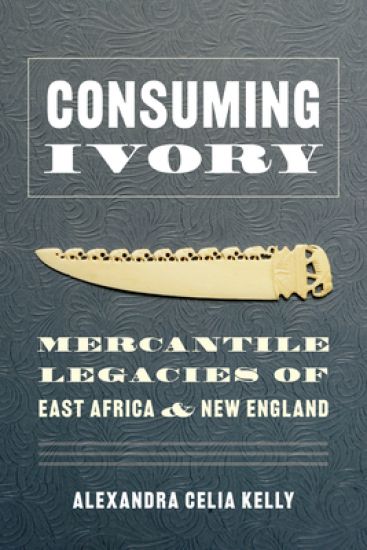
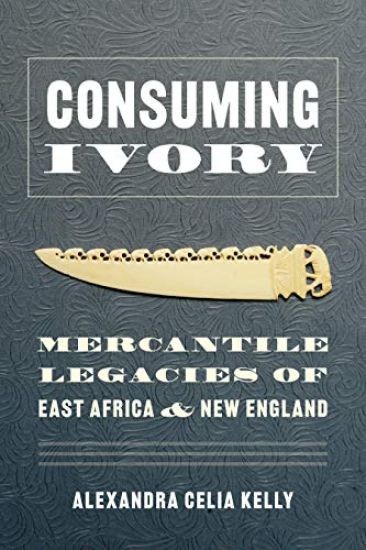
Consuming Ivory

Consuming Ivory

Alexandra Celia Kelly; K. Sivaramakrishnan

University of Washington Press
2021
sidottu
Examines the complex global impact of the ivory tradeThe economic prosperity of two nineteenth- and early-twentieth-century New England towns rested on factories that manufactured piano keys, billiard balls, combs, and other items made of ivory imported from East Africa. Yet while towns like Ivoryton and Deep River, Connecticut, thrived, the African ivory trade left in its wake massive human exploitation and ecological devastation. At the same time, dynamic East African engagement with capitalism and imperialism took place within these trade histories. Drawing from extensive archival and field research in New England, Great Britain, and Tanzania, Alexandra Kelly investigates the complex global legacies of the historical ivory trade. She not only explains the complexities of this trade but also analyzes Anglo-American narratives about Africa, questioning why elephants and ivory feature so centrally in those representations. From elephant conservation efforts to the cultural heritage industries in New England and East Africa, her study reveals the ongoing global repercussions of the ivory craze and will be of interest to anthropologists, archaeologists, historians, and conservationists.
Consuming Ivory

Consuming Ivory

Alexandra Celia Kelly; K. Sivaramakrishnan

University of Washington Press
2021
pokkari
Examines the complex global impact of the ivory tradeThe economic prosperity of two nineteenth- and early-twentieth-century New England towns rested on factories that manufactured piano keys, billiard balls, combs, and other items made of ivory imported from East Africa. Yet while towns like Ivoryton and Deep River, Connecticut, thrived, the African ivory trade left in its wake massive human exploitation and ecological devastation. At the same time, dynamic East African engagement with capitalism and imperialism took place within these trade histories. Drawing from extensive archival and field research in New England, Great Britain, and Tanzania, Alexandra Kelly investigates the complex global legacies of the historical ivory trade. She not only explains the complexities of this trade but also analyzes Anglo-American narratives about Africa, questioning why elephants and ivory feature so centrally in those representations. From elephant conservation efforts to the cultural heritage industries in New England and East Africa, her study reveals the ongoing global repercussions of the ivory craze and will be of interest to anthropologists, archaeologists, historians, and conservationists.
Mapping Water in Dominica

Mapping Water in Dominica

Mark W. Hauser; K. Sivaramakrishnan

University of Washington Press
2021
pokkari
How sugarcane monoculture decimated an island's water supply and peopleOpen access edition: DOI 10.6069/9780295748733Dominica, a place once described as "Nature's Island," was rich in biodiversity and seemingly abundant water, but in the eighteenth century a brief, failed attempt by colonial administrators to replace cultivation of varied plant species with sugarcane caused widespread ecological and social disruption. Illustrating how deeply intertwined plantation slavery was with the environmental devastation it caused, Mapping Water in Dominica situates the social lives of eighteenth-century enslaved laborers in the natural history of two Dominican enclaves. Mark Hauser draws on archaeological and archival history from Dominica to reconstruct the changing ways that enslaved people interacted with water and exposes crucial pieces of Dominica's colonial history that have been omitted from official documents. The archaeological record—which preserves traces of slave households, waterways, boiling houses, mills, and vessels for storing water—reveals changes in political authority and in how social relations were mediated through the environment. Plantation monoculture, which depended on both slavery and an abundant supply of water, worked through the environment to create predicaments around scarcity, mobility, and belonging whose resolution was a matter of life and death. In following the vestiges of these struggles, this investigation documents a valuable example of an environmental challenge centered around insufficient water. Mapping Water in Dominica is available in an open access edition through the Sustainable History Monograph Pilot, thanks to the generous support of the Andrew W. Mellon Foundation and Northwestern University Libraries.
Mapping Water in Dominica

Mapping Water in Dominica

Mark W. Hauser; K. Sivaramakrishnan

University of Washington Press
2021
sidottu
How sugarcane monoculture decimated an island's water supply and peopleOpen access edition: DOI 10.6069/9780295748733Dominica, a place once described as "Nature's Island," was rich in biodiversity and seemingly abundant water, but in the eighteenth century a brief, failed attempt by colonial administrators to replace cultivation of varied plant species with sugarcane caused widespread ecological and social disruption. Illustrating how deeply intertwined plantation slavery was with the environmental devastation it caused, Mapping Water in Dominica situates the social lives of eighteenth-century enslaved laborers in the natural history of two Dominican enclaves. Mark Hauser draws on archaeological and archival history from Dominica to reconstruct the changing ways that enslaved people interacted with water and exposes crucial pieces of Dominica's colonial history that have been omitted from official documents. The archaeological record—which preserves traces of slave households, waterways, boiling houses, mills, and vessels for storing water—reveals changes in political authority and in how social relations were mediated through the environment. Plantation monoculture, which depended on both slavery and an abundant supply of water, worked through the environment to create predicaments around scarcity, mobility, and belonging whose resolution was a matter of life and death. In following the vestiges of these struggles, this investigation documents a valuable example of an environmental challenge centered around insufficient water. Mapping Water in Dominica is available in an open access edition through the Sustainable History Monograph Pilot, thanks to the generous support of the Andrew W. Mellon Foundation and Northwestern University Libraries.
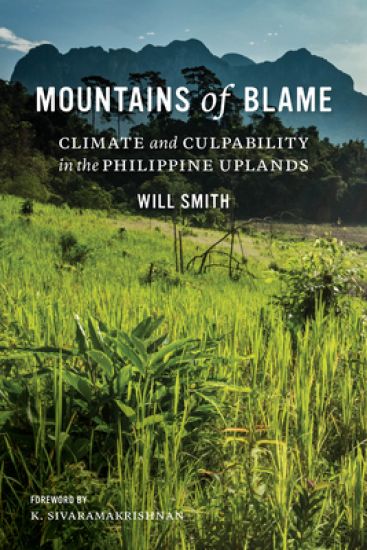
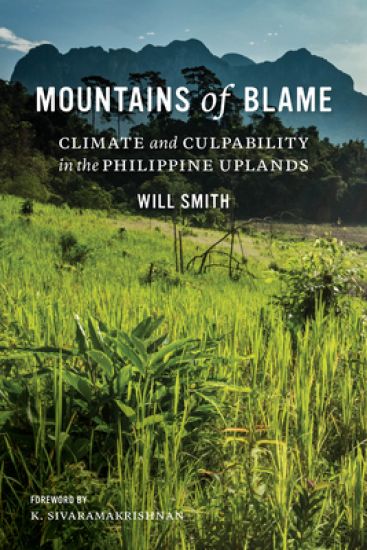
Mountains of Blame

Mountains of Blame

Will Smith; K. Sivaramakrishnan

University of Washington Press
2020
pokkari
Explores the unsettling phenomenon of indigenous self-blame for climate changeSwidden agriculture has long been considered the primary cause of deforestation throughout Southeast Asia, and the Philippine government has used this belief to exclude the indigenous people of Palawan Island from their ancestral lands and to force them to abandon traditional modes of land use. After adopting ostensibly modern and ecologically sustainable livelihoods, the Pala'wan people have experienced drought and uncertain weather patterns, which they have blamed on their own failure to observe traditional social norms that are believed to regulate climate—norms that, like swidden agriculture, have been outlawed by the state. In this ethnographic case study, Will Smith asks how those who have contributed least to greenhouse gas emissions and environmental degradation have come to position themselves as culpable for the devastating impacts of climate change, examining their statements about changing weather, processes of dispossession, and experiences of climate-driven hunger. By engaging both forest policy and local realities, he suggests that reckoning with these complexities requires reevaluating and questioning key wisdoms in global climate-change policy: What is indigenous knowledge, and who should it serve? Who is to blame for the vulnerability of the rural poor? What, and who, belongs in tropical forests?
Mountains of Blame

Mountains of Blame

Will Smith; K. Sivaramakrishnan

University of Washington Press
2020
sidottu
Explores the unsettling phenomenon of indigenous self-blame for climate changeSwidden agriculture has long been considered the primary cause of deforestation throughout Southeast Asia, and the Philippine government has used this belief to exclude the indigenous people of Palawan Island from their ancestral lands and to force them to abandon traditional modes of land use. After adopting ostensibly modern and ecologically sustainable livelihoods, the Pala'wan people have experienced drought and uncertain weather patterns, which they have blamed on their own failure to observe traditional social norms that are believed to regulate climate—norms that, like swidden agriculture, have been outlawed by the state. In this ethnographic case study, Will Smith asks how those who have contributed least to greenhouse gas emissions and environmental degradation have come to position themselves as culpable for the devastating impacts of climate change, examining their statements about changing weather, processes of dispossession, and experiences of climate-driven hunger. By engaging both forest policy and local realities, he suggests that reckoning with these complexities requires reevaluating and questioning key wisdoms in global climate-change policy: What is indigenous knowledge, and who should it serve? Who is to blame for the vulnerability of the rural poor? What, and who, belongs in tropical forests?
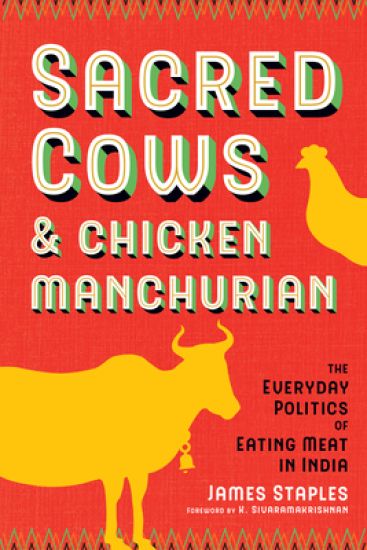
Sacred Cows and Chicken Manchurian

Sacred Cows and Chicken Manchurian

James Staples; K. Sivaramakrishnan

University of Washington Press
2020
pokkari
Challenges popular generalizations about cow protection and beef consumptionBovine politics exposes fault lines within contemporary Indian society, where eating beef is simultaneously a violation of sacred taboos, an expression of marginalized identities, and a route to cosmopolitan sophistication. The recent rise of Hindu nationalism has further polarized traditional views: Dalits, Muslims, and Christians protest threats to their beef-eating heritage while Hindu fundamentalists rally against those who eat the sacred cow. Yet close observation of what people do and do not eat, the styles and contexts within which they do so, and the disparities between rhetoric and everyday action overturns this simplistic binary opposition. Understanding how a food can be implicated in riots, vigilante attacks, and even murders demands that we look beyond immediate politics to wider contexts. Drawing on decades of ethnographic research in South India, James Staples charts how cattle owners, brokers, butchers, cooks, and occasional beef eaters navigate the contemporary political and cultural climate. Sacred Cows and Chicken Manchurian offers a fine-grained exploration of the current situation, locating it within the wider anthropology of food and eating in the region and revealing critical aspects of what it is to be Indian in the early twenty-first century.
Sacred Cows and Chicken Manchurian

Sacred Cows and Chicken Manchurian

James Staples; K. Sivaramakrishnan

University of Washington Press
2020
sidottu
Challenges popular generalizations about cow protection and beef consumptionBovine politics exposes fault lines within contemporary Indian society, where eating beef is simultaneously a violation of sacred taboos, an expression of marginalized identities, and a route to cosmopolitan sophistication. The recent rise of Hindu nationalism has further polarized traditional views: Dalits, Muslims, and Christians protest threats to their beef-eating heritage while Hindu fundamentalists rally against those who eat the sacred cow. Yet close observation of what people do and do not eat, the styles and contexts within which they do so, and the disparities between rhetoric and everyday action overturns this simplistic binary opposition. Understanding how a food can be implicated in riots, vigilante attacks, and even murders demands that we look beyond immediate politics to wider contexts. Drawing on decades of ethnographic research in South India, James Staples charts how cattle owners, brokers, butchers, cooks, and occasional beef eaters navigate the contemporary political and cultural climate. Sacred Cows and Chicken Manchurian offers a fine-grained exploration of the current situation, locating it within the wider anthropology of food and eating in the region and revealing critical aspects of what it is to be Indian in the early twenty-first century.
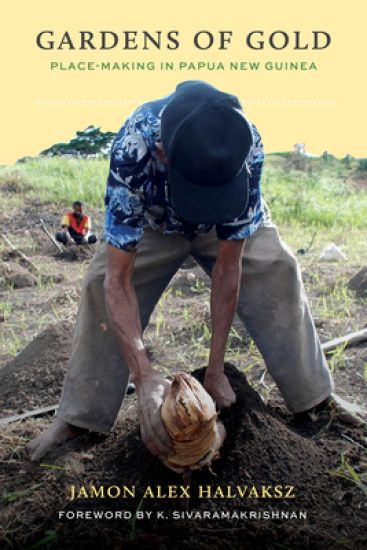
Gardens of Gold

Gardens of Gold

Jamon Alex Halvaksz; K. Sivaramakrishnan

University of Washington Press
2020
sidottu
"This is a soya bean," the Biangai villager explained, "a money bean." Since the start of colonial gold mining in the early 1920s, the Biangai villagers of Elauru and Winima in Papua New Guinea have moved away from planting yams and other subsistence foods to instead cultivating coffee and other cash crops and dishing for tradable flakes of gold. Decades of industrial gold mining, land development, conservation efforts, and biological research have wrought transformations in the landscape and entwined traditional Biangai gardening practices with Western capital, disrupting the relationship between place and person and the social reproduction of a community. Drawing from extensive ethnographic research, Jamon Halvaksz examines the role of place in informing indigenous relationships with conservation and development. How do Biangai make meaning with the physical world? Collapsing Western distinctions between self and an earthly other, Halvaksz shows us it is a sense of place—grounded in productive relationships between nature and culture—that connects Biangai to one another as "placepersons" and enables them to navigate global forces amid changing local and regional economies. Centering local responses along the frontiers of resource extraction, Gardens of Gold contributes to our understanding of how neoliberal economic practices intervene in place-based economies and identities.
Gardens of Gold

Gardens of Gold

Jamon Alex Halvaksz; K. Sivaramakrishnan

University of Washington Press
2020
pokkari
"This is a soya bean," the Biangai villager explained, "a money bean." Since the start of colonial gold mining in the early 1920s, the Biangai villagers of Elauru and Winima in Papua New Guinea have moved away from planting yams and other subsistence foods to instead cultivating coffee and other cash crops and dishing for tradable flakes of gold. Decades of industrial gold mining, land development, conservation efforts, and biological research have wrought transformations in the landscape and entwined traditional Biangai gardening practices with Western capital, disrupting the relationship between place and person and the social reproduction of a community. Drawing from extensive ethnographic research, Jamon Halvaksz examines the role of place in informing indigenous relationships with conservation and development. How do Biangai make meaning with the physical world? Collapsing Western distinctions between self and an earthly other, Halvaksz shows us it is a sense of place—grounded in productive relationships between nature and culture—that connects Biangai to one another as "placepersons" and enables them to navigate global forces amid changing local and regional economies. Centering local responses along the frontiers of resource extraction, Gardens of Gold contributes to our understanding of how neoliberal economic practices intervene in place-based economies and identities.
Shifting Livelihoods

Shifting Livelihoods

Daniel Tubb; K. Sivaramakrishnan

University of Washington Press
2020
pokkari
Honorable Mention for the Society for the Anthropology of Work (SAW) Book PrizeThe many dimensions of gold in a shadow economyPeople employ various methods to extract gold in the rainforests of the Chocó, in northwest Colombia: Rural Afro-Colombian artisanal miners work hillsides with hand tools or dredge mud from river bottoms. Migrant miners level the landscape with excavators, then trap gold with mercury. Canadian mining companies prospect for open-pit mega-mines. Drug traffickers launder cocaine profits by smuggling gold into Colombia and claiming it came from fictitious small-scale mines. Through an ethnography of gold that examines the movement of people, commodities, and capital, Shifting Livelihoods investigates how resource extraction reshapes a place. In the Chocó, gold enables forms of "shift" (rebusque)—a metaphor for the fluid livelihood strategy adopted by forest dwellers and migrant gold miners alike as they seek informal work amid a drug war. Mining's effects on rural people, corporations, and politics are on view in this fine-grained account of daily life in a regional economy dominated by gold and cocaine.