

Kirjojen hintavertailu – 12 903 724 kirjaa ja 27 kauppaa

Kirjailija

Kaelber Lutz

Kirjat ja teokset yhdessä paikassa: 3 kirjaa, julkaisuja vuosilta 1998–2018, suosituimpiin kuuluu Lessons and Legacies XIII. Vertaile teosten hintoja ja tarkista saatavuus suomalaisista kirjakaupoista.

3 kirjaa

Kirjojen julkaisuvuodet: 1998–2018.

Lessons and Legacies XIII

Lessons and Legacies XIII

Alexandra Garbarini; Paul Jaskot; Brad Prager; Dana Smith; Marion Kaplan; Kaelber Lutz; Kubátová Hana; Martin Dean; Jan Grabowski; Simone Gigliotti; Pedro Correa Martín-Arroyo; Jonathan Druker; Gershon Greenberg; Lissa Skitolsky; Dorota Glowacka

Northwestern University Press
2018
sidottu
The social history of the genocide, its representation in postwar culture, and new theoretical approaches stand at the forefront of current research in a range of disciplines. Analyses at the most intimate scale—of the individual or of a particular locale— are juxtaposed with those that turn to broader studies of the war or postwar order. Complementing these different scales are theoretical investigations that address individual agency, moral judgment, and the construction of meaning and memory in the study of the victims of the Holocaust and in our understanding of society as a whole. Together they mark the contemporary scholarly landscape of Holocaust studies, which includes history as well as film and literary studies, philosophy, and religious studies (among other disciplines). Each of the volume's three sections contributes to understanding the Holocaust and postwar ramifications of the genocide by focusing on: 1) the history of specific communities of both victims and perpetrators; 2) postwar cultural representations; and 3) new theoretical understandings of each. The essays in this volume thus represent new interests in the field that contribute to building integrated histories of the Holocaust.

Lessons and Legacies XIII

Lessons and Legacies XIII

Alexandra Garbarini; Paul Jaskot; Brad Prager; Dana Smith; Marion Kaplan; Kaelber Lutz; Kubátová Hana; Martin Dean; Jan Grabowski; Simone Gigliotti; Pedro Correa Martín-Arroyo; Jonathan Druker; Gershon Greenberg; Lissa Skitolsky; Dorota Glowacka

Northwestern University Press
2018
nidottu
The social history of the genocide, its representation in postwar culture, and new theoretical approaches stand at the forefront of current research in a range of disciplines. Analyses at the most intimate scale—of the individual or of a particular locale— are juxtaposed with those that turn to broader studies of the war or postwar order. Complementing these different scales are theoretical investigations that address individual agency, moral judgment, and the construction of meaning and memory in the study of the victims of the Holocaust and in our understanding of society as a whole. Together they mark the contemporary scholarly landscape of Holocaust studies, which includes history as well as film and literary studies, philosophy, and religious studies (among other disciplines). Each of the volume's three sections contributes to understanding the Holocaust and postwar ramifications of the genocide by focusing on: 1) the history of specific communities of both victims and perpetrators; 2) postwar cultural representations; and 3) new theoretical understandings of each. The essays in this volume thus represent new interests in the field that contribute to building integrated histories of the Holocaust.
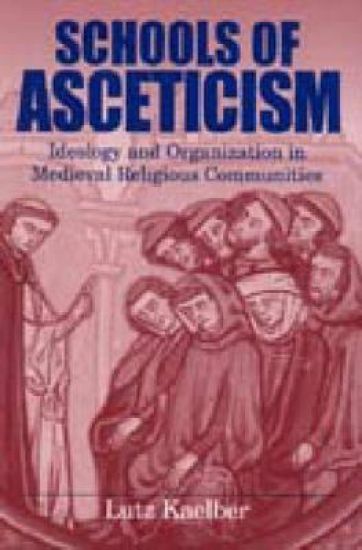
Schools of Asceticism

Schools of Asceticism

Kaelber Lutz

Pennsylvania State University Press
1998
sidottu
Max Weber argued that medieval religious movements were an important source for the distinctive rationality of Western civilization. He intended to study precisely this theme but died before he could do so. In Schools of Asceticism, Lutz Kaelber builds on Weber's ideas by presenting a fresh historical and theoretical analysis of orthodox and heretical religious groups in the Middle Ages. He explores how doctrine and social organization shaped ascetic conduct in these groups from the twelfth century on. Kaelber first examines monastic and mendicant groups, correcting common misperceptions about the nature of their ascetic practices and their significance for the emergence of a Protestant work ethic. Then he turns to two of the largest and most widespread heretical groups in the Middle Ages, the Waldensians and the Cathars. For the most part, Waldensians and Cathars practiced a form of "other-worldly asceticism" resembling that of monks and nuns. For the Austrian Waldensians, however, Kaelber documents a type of "inner-worldly asceticism" that resembled what Weber described for early modern Protestant groups. Both types of asceticism originated in distinctive heretical establishments: Waldensian schools and Cathar "houses of heretics." As these establishments disappeared, the boundaries separating Waldensianism and Catharism from Catholicism collapsed. Kaelber is therefore able to link organizational aspects of heretical communities to the tenacity of heresy in the Middle Ages. Based on exhaustive research into both primary and secondary sources, Schools of Asceticism is a bold and original book that bridges the disciplines of comparative historical and theoretical sociology, medieval history, and religious studies.