

Kirjojen hintavertailu – 12 859 826 kirjaa ja 27 kauppaa

Kirjailija

Kai He

Kirjat ja teokset yhdessä paikassa: 3 kirjaa, julkaisuja vuosilta 2008–2021, suosituimpiin kuuluu Contesting Revisionism. Vertaile teosten hintoja ja tarkista saatavuus suomalaisista kirjakaupoista.

3 kirjaa

Kirjojen julkaisuvuodet: 2008–2021.

Contesting Revisionism

Contesting Revisionism

Steve Chan; Huiyun Feng; Kai He; Weixing Hu

Oxford University Press Inc
2021
nidottu
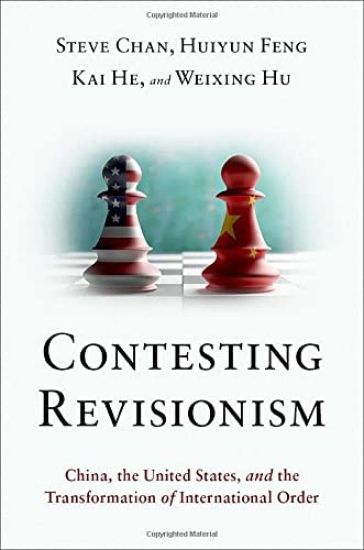
How can we know a country, such as the United States or China, is revisionist, that is, whether it intends to upset the international order? What motivates states to act the way they do? Contesting Revisionism focuses on a particular kind of motivation inclining a state to challenge the existing norms, rules, and institutions of international order: revisionism. The authors offer a critique of the existing discourse on revisionism and investigate the origin and evolution of the foreign policy orientations of revisionist states in the past. Furthermore, they introduce an ensemble of indicators to discern and compare the extent of revisionist tendencies on the part of contemporary China and the United States. Questioning the facile assumption that past episodes will repeat in the future, they argue that "hard" revisionism relying on war and conquest is less viable and likely in today's world. Instead, "soft" revisionism seeking to promote institutional change is more relevant and likely. Focusing on contemporary Sino-American relations, they conclude that much of the current discourse based on power transition theory is problematic. A dominant power is not inevitably committed to the defense of international order, nor does a rising power always have a revisionist agenda to challenge this order. The transformation of international order does not necessarily require a power transition between China and the US., nor does a possible power transition necessarily augur war. After developing the concept of revisionism both theoretically and empirically, they conclude with a series of policy recommendations for enhancing international stability and diminishing tension in Sino-American relations.
Contesting Revisionism

Contesting Revisionism

Steve Chan; Huiyun Feng; Kai He; Weixing Hu

Oxford University Press Inc
2021
sidottu
How can we know a country, such as the United States or China, is revisionist, that is, whether it intends to upset the international order? What motivates states to act the way they do? Contesting Revisionism focuses on a particular kind of motivation inclining a state to challenge the existing norms, rules, and institutions of international order: revisionism. The authors offer a critique of the existing discourse on revisionism and investigate the origin and evolution of the foreign policy orientations of revisionist states in the past. Furthermore, they introduce an ensemble of indicators to discern and compare the extent of revisionist tendencies on the part of contemporary China and the United States. Questioning the facile assumption that past episodes will repeat in the future, they argue that "hard" revisionism relying on war and conquest is less viable and likely in today's world. Instead, "soft" revisionism seeking to promote institutional change is more relevant and likely. Focusing on contemporary Sino-American relations, they conclude that much of the current discourse based on power transition theory is problematic. A dominant power is not inevitably committed to the defense of international order, nor does a rising power always have a revisionist agenda to challenge this order. The transformation of international order does not necessarily require a power transition between China and the US., nor does a possible power transition necessarily augur war. After developing the concept of revisionism both theoretically and empirically, they conclude with a series of policy recommendations for enhancing international stability and diminishing tension in Sino-American relations.
Institutional Balancing in the Asia Pacific
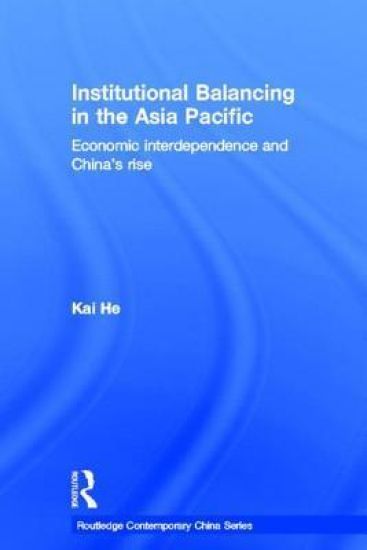
This book examines the strategic interactions among China, the United States, Japan, and Southeast Asian States in the context of China’s rise and globalization after the cold war. Engaging the mainstream theoretical debates in international relations, the author introduces a new theoretical framework—institutional realism—to explain the institutionalization of world politics in the Asia-Pacific after the cold war. Institutional realism suggests that deepening economic interdependence creates a condition under which states are more likely to conduct a new balancing strategy—institutional balancing, i.e., countering pressures or threats through initiating, utilizing, and dominating multilateral institutions—to pursue security under anarchy. To test the validity of institutional realism, Kai He examines the foreign policies of the U. S., Japan, the ASEAN states, and China toward four major multilateral institutions, Asia-Pacific Economic Cooperation (APEC), the Association of Southeast Asian Nations (ASEAN) Regional Forum (ARF), ASEAN Plus Three (APT), and East Asian Summit (EAS). Challenging the popular pessimistic view regarding China’s rise, the book concludes that economic interdependence and structural constraints may well soften the "dragon’s teeth." China’s rise does not mean a dark future for the region. Institutional Balancing in the Asia Pacific will be of great interest to policy makers and scholars of Asian security, international relations, Chinese foreign policy, and U. S. foreign policy.