Kirjojen hintavertailu – 12 903 724 kirjaa ja 27 kauppaa

Kirjailija

Kamaludeen Mohamed Nasir

Kirjat ja teokset yhdessä paikassa: 10 kirjaa, julkaisuja vuosilta 2009–2023, suosituimpiin kuuluu Digital Culture and Religion in Asia. Vertaile teosten hintoja ja tarkista saatavuus suomalaisista kirjakaupoista.

10 kirjaa

Kirjojen julkaisuvuodet: 2009–2023.

The Primordial Modernity of Malay Nationality

The Primordial Modernity of Malay Nationality

Humairah Zainal; Kamaludeen Mohamed Nasir

TAYLOR FRANCIS LTD
2023
nidottu
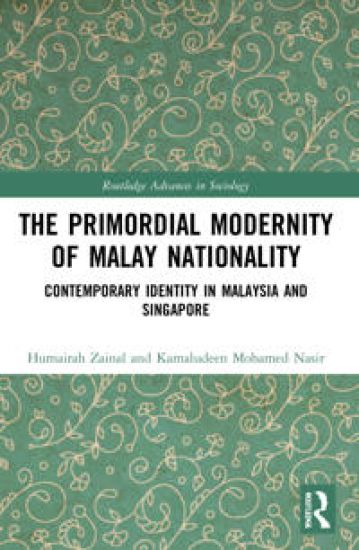
Humairah and Kamaludeen examine contemporary Malay national identity in Singapore and Malaysia through the lens of ‘primordial modernity’, taking on a comparative transnational perspective. How do Malays in Singapore and Malaysia conceptualise and negotiate their ethnic identity vis-à-vis the state’s construction of Malay national identity? Humairah and Kamaludeen employ discourse analyses of both elite and mass texts that include newspaper editorials, school textbooks, political speeches, novels, movies, and letters in local newspapers. Extending current notions of Malay identity, the authors offer a comprehensive overview of Malay identity that takes into consideration both primordial dimensions and the more modern aspects such as their cosmopolitan sensibilities and their approach to social mobility. A valuable resource for scholars of Southeast Asian culture and society, as well as Sociologists looking at wider issues of ethnic and national identity.

The Primordial Modernity of Malay Nationality

The Primordial Modernity of Malay Nationality

Humairah Zainal; Kamaludeen Mohamed Nasir

TAYLOR FRANCIS LTD
2021
sidottu
Humairah and Kamaludeen examine contemporary Malay national identity in Singapore and Malaysia through the lens of ‘primordial modernity’, taking on a comparative transnational perspective. How do Malays in Singapore and Malaysia conceptualise and negotiate their ethnic identity vis-à-vis the state’s construction of Malay national identity? Humairah and Kamaludeen employ discourse analyses of both elite and mass texts that include newspaper editorials, school textbooks, political speeches, novels, movies, and letters in local newspapers. Extending current notions of Malay identity, the authors offer a comprehensive overview of Malay identity that takes into consideration both primordial dimensions and the more modern aspects such as their cosmopolitan sensibilities and their approach to social mobility. A valuable resource for scholars of Southeast Asian culture and society, as well as Sociologists looking at wider issues of ethnic and national identity.
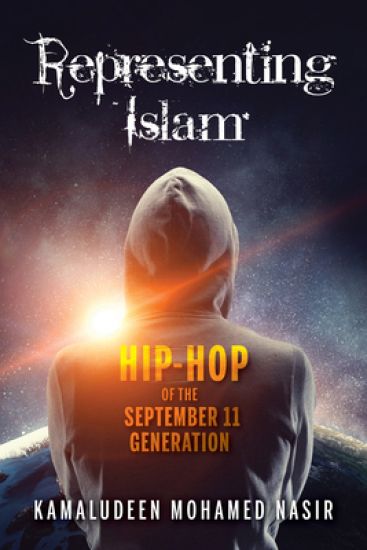
Representing Islam

Representing Islam

Kamaludeen Mohamed Nasir

Indiana University Press
2020
pokkari
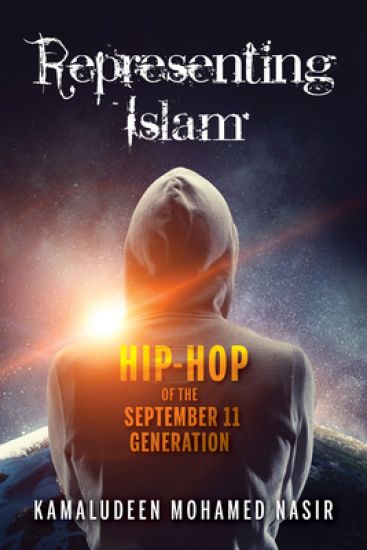
How do Muslims who grew up after September 11 balance their love for hip-hop with their devotion to Islam? How do they live the piety and modesty called for by their faith while celebrating an art form defined, in part, by overt sexuality, violence, and profanity? In Representing Islam, Kamaludeen Mohamed Nasir explores the tension between Islam and the global popularity of hip-hop, including attempts by the hip-hop ummah, or community, to draw from the struggles of African Americans in order to articulate the human rights abuses Muslims face. Nasir explores state management of hip-hop culture and how Muslim hip-hoppers are attempting to "Islamize" the genre's performance and jargon to bring the music more in line with religious requirements, which are perhaps even more fraught for female artists who struggle with who has the right to speak for Muslim women. Nasir also investigates the vibrant underground hip-hop culture that exists online. For fans living in conservative countries, social media offers an opportunity to explore and discuss hip-hop when more traditional avenues have been closed. Representing Islam considers the complex and multifaceted rise of hip-hop on a global stage and, in doing so, asks broader questions about how Islam is represented in this global community.
Representing Islam

Representing Islam

Kamaludeen Mohamed Nasir

Indiana University Press
2020
sidottu
How do Muslims who grew up after September 11 balance their love for hip-hop with their devotion to Islam? How do they live the piety and modesty called for by their faith while celebrating an art form defined, in part, by overt sexuality, violence, and profanity? In Representing Islam, Kamaludeen Mohamed Nasir explores the tension between Islam and the global popularity of hip-hop, including attempts by the hip-hop ummah, or community, to draw from the struggles of African Americans in order to articulate the human rights abuses Muslims face. Nasir explores state management of hip-hop culture and how Muslim hip-hoppers are attempting to "Islamize" the genre's performance and jargon to bring the music more in line with religious requirements, which are perhaps even more fraught for female artists who struggle with who has the right to speak for Muslim women. Nasir also investigates the vibrant underground hip-hop culture that exists online. For fans living in conservative countries, social media offers an opportunity to explore and discuss hip-hop when more traditional avenues have been closed. Representing Islam considers the complex and multifaceted rise of hip-hop on a global stage and, in doing so, asks broader questions about how Islam is represented in this global community.
Digital Culture and Religion in Asia

Digital Culture and Religion in Asia

Sam Han; Kamaludeen Mohamed Nasir

Routledge
2018
nidottu
This book critically analyses the functions and interconnectedness between religion and digital media in a range of East Asian countries. It discusses both how religious organizations make use of new technologies, and also explores how new technologies are reshaping religion in novel and interesting ways. Based on extensive research, the book focuses in particular on Christianity in South Korea, Neo-Shintoism in Japan, Falun Gong in China and Islam in Southeast Asia. Offering a comparative perspective on a broad range of media practices including video gaming, virtual worship, social networking and online testimonials, the book also investigates the idea that use of technology in itself mirrors religious practices. With an analysis of the impact of religion and new technology on national consciousness in a range of geographical locations, the authors offer a broadening of the scope of the study of religion, culture and media.
Digital Culture and Religion in Asia

Digital Culture and Religion in Asia

Sam Han; Kamaludeen Mohamed Nasir

Routledge
2015
sidottu
This book critically analyses the functions and interconnectedness between religion and digital media in a range of East Asian countries. It discusses both how religious organizations make use of new technologies, and also explores how new technologies are reshaping religion in novel and interesting ways. Based on extensive research, the book focuses in particular on Christianity in South Korea, Neo-Shintoism in Japan, Falun Gong in China and Islam in Southeast Asia. Offering a comparative perspective on a broad range of media practices including video gaming, virtual worship, social networking and online testimonials, the book also investigates the idea that use of technology in itself mirrors religious practices. With an analysis of the impact of religion and new technology on national consciousness in a range of geographical locations, the authors offer a broadening of the scope of the study of religion, culture and media.
The Future of Singapore

The Future of Singapore

Kamaludeen Mohamed Nasir

Routledge
2015
nidottu
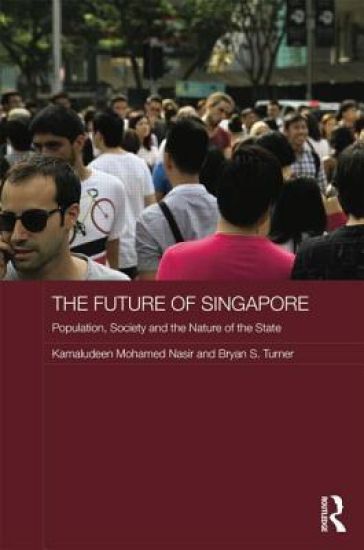
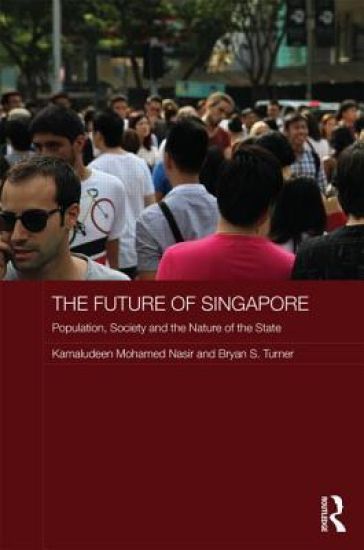
Singapore, like many other advanced economies, has a relatively low, and declining, birth-rate. One consequence of this, and a consequence also of the successful economy, is that migrants are being drawn in, and are becoming an increasing proportion of the overall population. This book examines this crucial development, and assesses its likely impact on Singapore society, politics and the state. It shows that, although Singapore is a multi-ethnic society, migration and the changing ethnic mix are causing increasing strains, putting new demands on housing, education and social welfare, and changing the make-up of the workforce, where the government is responding with policies designed to attract the right sort of talent. The book discusses the growing opposition to migration, and explores how the factors which have underpinned Singapore's success over recent decades, including a cohesive elite, with a clearly focused ideology, a tightly controlled political system and strong continuity of government, are at risk of being undermined by the population changes and their effects. The book also compares the position in Singapore with other East Asian countries, including Japan, South Korea and the Philippines, which are also experiencing population changes with potentially far-reaching consequences.
The Future of Singapore

The Future of Singapore

Kamaludeen Mohamed Nasir; Bryan S. Turner

Routledge
2014
sidottu
Singapore, like many other advanced economies, has a relatively low, and declining, birth-rate. One consequence of this, and a consequence also of the successful economy, is that migrants are being drawn in, and are becoming an increasing proportion of the overall population. This book examines this crucial development, and assesses its likely impact on Singapore society, politics and the state. It shows that, although Singapore is a multi-ethnic society, migration and the changing ethnic mix are causing increasing strains, putting new demands on housing, education and social welfare, and changing the make-up of the workforce, where the government is responding with policies designed to attract the right sort of talent. The book discusses the growing opposition to migration, and explores how the factors which have underpinned Singapore’s success over recent decades, including a cohesive elite, with a clearly focused ideology, a tightly controlled political system and strong continuity of government, are at risk of being undermined by the population changes and their effects. The book also compares the position in Singapore with other East Asian countries, including Japan, South Korea and the Philippines, which are also experiencing population changes with potentially far-reaching consequences.
Muslims in Singapore

Muslims in Singapore

Kamaludeen Mohamed Nasir; Alexius Pereira; Bryan S. Turner

Routledge
2011
nidottu
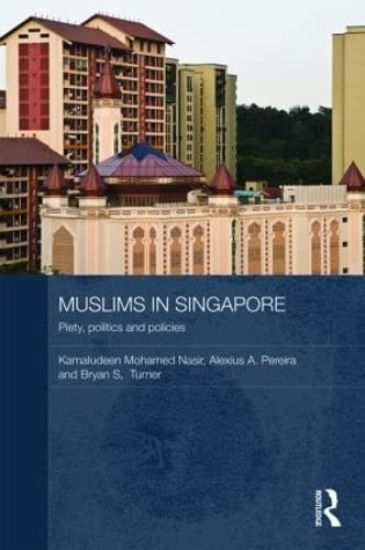
This book examines Muslims in Singapore, analysing their habits, practices and dispositions towards everyday life, and also their role within the broader framework of the secularist Singapore state and the cultural dominance of its Chinese elite, who are predominantly Buddhist and Christian. Singapore has a highly unusual approach to issues of religious diversity and multiculturalism, adopting a policy of deliberately ‘managing religions’ - including Islam - in an attempt to achieve orderly and harmonious relations between different racial and religious groups. This has encompassed implicit and explicit policies of containment and ‘enclavement’ of Muslims, and also the more positive policy of ‘upgrading’ Muslims through paternalist strategies of education, training and improvement, including the modernisation of madrassah education in both content and orientation. This book examines how this system has operated in practice, and evaluates its successes and failures. In particular, it explores the attitudes and reactions of Muslims themselves across all spheres of everyday life, including dining and maintaining halal-vigilance; education and dress code; and practices of courtship, sex and marriage. It also considers the impact of wider international developments, including 9/11, fear of terrorism and the associated stigmatization of Muslims; and developments within Southeast Asia such as the Jemaah Islamiah terrorist attacks and the Islamization of Malaysia and Indonesia. This study has more general implications for political strategies and public policies in multicultural societies that are deeply divided along ethno-religious lines.
Muslims in Singapore

Muslims in Singapore

Kamaludeen Mohamed Nasir; Alexius Pereira; Bryan S. Turner

Routledge
2009
sidottu
This book examines Muslims in Singapore, analysing their habits, practices and dispositions towards everyday life, and also their role within the broader framework of the secularist Singapore state and the cultural dominance of its Chinese elite, who are predominantly Buddhist and Christian. Singapore has a highly unusual approach to issues of religious diversity and multiculturalism, adopting a policy of deliberately ‘managing religions’ - including Islam - in an attempt to achieve orderly and harmonious relations between different racial and religious groups. This has encompassed implicit and explicit policies of containment and ‘enclavement’ of Muslims, and also the more positive policy of ‘upgrading’ Muslims through paternalist strategies of education, training and improvement, including the modernisation of madrassah education in both content and orientation. This book examines how this system has operated in practice, and evaluates its successes and failures. In particular, it explores the attitudes and reactions of Muslims themselves across all spheres of everyday life, including dining and maintaining halal-vigilance; education and dress code; and practices of courtship, sex and marriage. It also considers the impact of wider international developments, including 9/11, fear of terrorism and the associated stigmatization of Muslims; and developments within Southeast Asia such as the Jemaah Islamiah terrorist attacks and the Islamization of Malaysia and Indonesia. This study has more general implications for political strategies and public policies in multicultural societies that are deeply divided along ethno-religious lines.