Kirjojen hintavertailu – 12 874 714 kirjaa ja 26 kauppaa
Kirjailija
Kapka Kassabova
Kirjat ja teokset yhdessä paikassa: 17 kirjaa, julkaisuja vuosilta 2003–2026, suosituimpiin kuuluu Borrowed Land. Vertaile teosten hintoja ja tarkista saatavuus suomalaisista kirjakaupoista.
This is the intimate story of a Scottish glen and its inhabitants, of whom I am one. From the powerful rivers that bring life and prosperity; to the Pictish cairns, undisturbed for centuries; to the meadows of bluebells, where deer emerge, God-like, in a flash, Kapka Kassabova reveals a world that has been abused, but remains achingly beautiful and alive. In the Highlands, centuries-old connections between the land, nature and people have been, and continue to be, shaken by the forces of colonialism, industry, depopulation, and private property speculation. Borrowed Land tells the stories of those who are working against this disconnect: the last true Highlanders fighting to preserve their home. An extraordinary portrait of the Scottish Highlands, this is an epic and urgent story of destruction and renewal, told through encounters with some of the last true Highlanders.
‘A classic for our times’ MONIQUE ROFFEY‘Haunting, beautiful… Anima will live with me for a long time’ CAL FLYN'A book that mesmerises with its sense of adventure and epic sweep, this is creative non-fiction at its best' GUARDIANOver the course of one summer, Kapka Kassabova lives with perhaps the last true pastoralists in Europe. She joins the epic seasonal movement of vast herds of sheep, along with shepherds and dogs, to find pasture in the mountains. As she becomes attuned to the sacrifices inherent in this isolated existence, Kassabova finds herself drawn deeper into the tangled relationships at the heart of this small community. Anima is a spellbinding portrayal of the human–animal interdependence in pastoral life, and a plea for a different way of living – one where we might all begin to heal our broken relationship with the natural world.‘An extraordinary work of exploration, both inner and outer. It should be required reading for everyone thinking about our human environment: which is to say, all of us’ THE TABLET
‘A classic in the making for our times’ MONIQUE ROFFEY‘Haunting, beautiful…Anima will live with me for a long time’ CAL FLYN‘A beautiful book of passion and adventure… She is simply sublime’ HORATIO CLAREThe spellbinding new book by the prizewinning writer Kapka Kassabova tells the story of her time with the last moving pastoralists in Europe: a gripping portrayal of human-animal interdependence, and a plea for a different way of living. Living with one of these communities over the course of one summer, Kassabova experiences the intensity, brutality, beauty and isolation of their existence. She witnesses the epic, orchestrated activity of transhumance – the seasonal movement of vast herds of sheep, along with shepherds and dogs. As she becomes attuned to the sacrifices inherent in this work and the rich histories that shaped this Balkan region, Kassabova finds herself drawn deeper into the tangled relationships at the heart of the small community. Anima is an extraordinary portrayal of pastoral life, where humans and animals exist in profound interdependence. Kassabova conjures the spirit of this remarkable place with intimacy and empathy, and helps us imagine how we might all begin to heal our broken relationship with the natural world.**A BOOK OF THE YEAR FOR SPECTATOR, TIMES LITERARY SUPPLEMENT AND NEW STATESMAN**
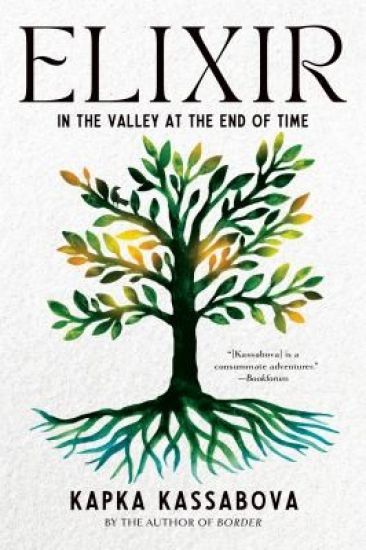
Set in the valley of the Mesta, one of the oldest inhabited river valleys in Europe and a nexus for wild plant gatherers, Elixir is an unforgettable exploration of the deep connections between people, plants and place. Pre-order Kapka Kassabova’s new book, Anima: A Wild Pastoral, now‘Kassabova had me under her spell from page one’GUARDIANOver several seasons, Kapka Kassabova spends time with the men and women of this magical region. She witnesses their rare knowledge, not only of mountain plants and the ancient practice of herbalism, but also of how to transform collective suffering into healing. Elixir is, at its heart, an urgent, hopeful call to rethink how we live – in relation to one another, and to the world around us.* Shortlisted for the Highland Book Prize 2023 *‘Dark and mysterious and beautiful’FINANCIAL TIMES‘Uplifting and beautifully written’MARK COCKER, SPECTATOR‘Extraordinary’COUNTRY LIFE
A search for a cure to what ails us in the Anthropocene by the award-winning author of Border In Elixir, in a wild river valley and amid the three mountains that define it, Kapka Kassabova seeks out the deep connection between people, plants, and place. The Mesta is one of the oldest rivers in Europe and the surrounding forests and mountains of the southern Balkans are an extraordinarily rich nexus for plant gatherers. Over several seasons, Kassabova spends time with the people of this magical region. She meets women and men who work in a long lineage of foragers, healers, and mystics. She learns about wild plants and the ancient practice of herbalism that makes use of them, and she experiences a symbiotic system where nature and culture have blended for thousands of years. Through her captivating encounters we come to feel the devastating weight of the ecological and cultural disinheritance that the people of this valley have suffered. And Kassabova reflects on what being disconnected from place can do to our souls and our bodies. Yet, in her search for elixir, she also finds reasons for hope. The people of the valley are keepers of a rare knowledge, not only of mountain plants and their properties, but also of how to transform collective suffering into healing. Immersive and enthralling, Elixir is an urgent and unforgettable call to rethink how we live--in relation to one another, to Earth, and to the cosmos.
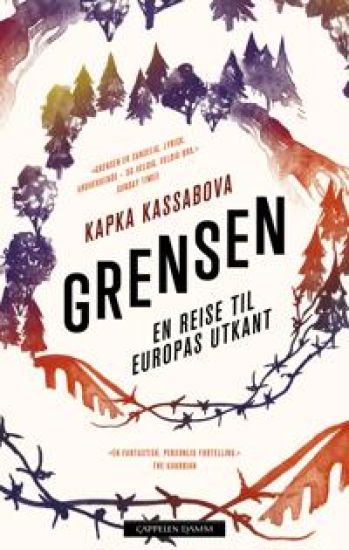
I denne ekstraordinære reportasjeboken, vender Kapka Kassabova tilbake til Bulgaria, landet hun emigrerte fra tjuefem år tidligere. Hun er der for å utforske grensen landet deler med Tyrkia og Hellas. Da hun var barn var det enklere å komme seg inn i Vesten her enn over Berlinmuren der det myldret av soldater og spioner. Kassabova kommer tilbake til en grense som har blitt formet av historiekreftene. Boken hennes består av utsøkte portretter av smuglere, skattejegere, botanikere og grensevakter. Det er også de fillete menn og kvinner som har vandret over Tyrkia fra Syria og Irak. Men det ser ut til å være ikke -menneskelige krefter i arbeid også her: Dette tett skogkledde landskapet er rikt på helbredende kilder og tragiske gravlunder, og den antikke verdens fortid er aldri langt unna. Grensen er en glimrende, oppslukende reisefortelling som også viser frem skyggesiden av den kalde krigen og et skråblikk på migrasjonskrisen som plager Europa.
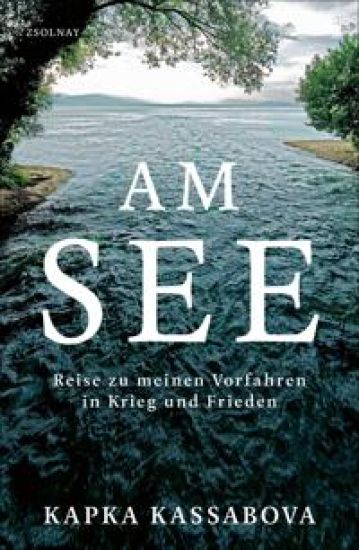
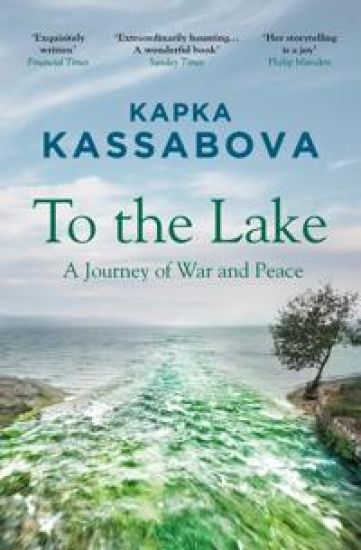
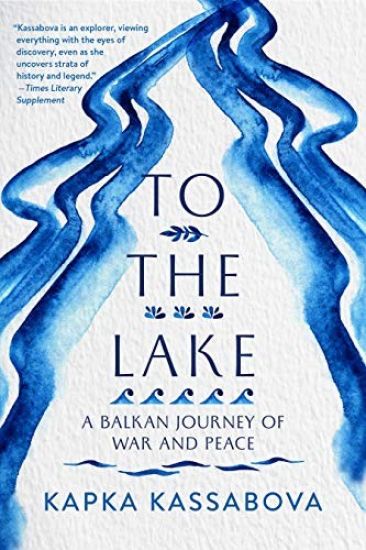
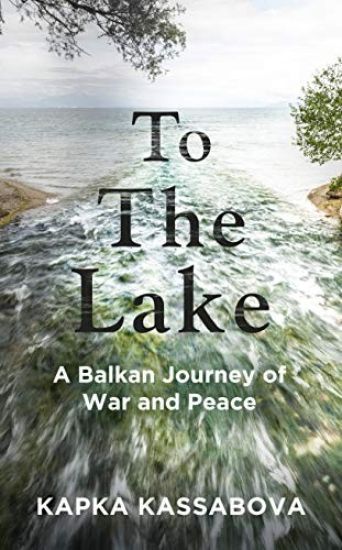
A BBC Radio 4 Book of the Week Lake Ohrid and Lake Prespa. Two vast lakes joined by underground rivers. Two lakes that have played a central role in Kapka Kassabova's maternal family. As she journeys to her grandmother's place of origin, Kassabova encounters a civilizational crossroads. The Lakes are set within the mountainous borderlands of North Macedonia, Albania and Greece, and crowned by the old Roman road, the via Egnatia. Once a trading and spiritual nexus of the southern Balkans, it remains one of Eurasia's oldest surviving religious melting pots. With their remote rock churches, changeable currents, and large population of migratory birds, the Lakes live in their own time. By exploring the stories of dwellers past and present, Kassabova uncovers the human history shaped by the Lakes. Soon, her journey unfolds to a deeper enquiry into how geography and politics imprint themselves upon families and nations, and confronts her with questions about human suffering and the capacity for change.
The celebrated author of Border explores a mysterious, ancient, and little-understood corner of Europe Lake Ohrid and Lake Prespa. Two ancient lakes joined by underground rivers. Two lakes that seem to hold both the turbulent memories of the region's past and the secret of its enduring allure. Two lakes that have played a central role in Kapka Kassabova's maternal family. As she journeys to her grandmother's place of origin, Kassabova encounters a historic crossroads. The lakes are set within the mountainous borderlands of North Macedonia, Albania, and Greece, and crowned by the old Via Egnatia, which once connected Rome to Constantinople. A former trading and spiritual nexus of the southern Balkans, this lake region remains one of Eurasia's most diverse corners. Meanwhile, with their remote rock churches, changeable currents, and large population of migratory birds, the lakes live in their own time. By exploring on water and land the stories of poets, fishermen, and caretakers, misfits, rulers, and inheritors of war and exile, Kassabova uncovers the human destinies shaped by the lakes. Setting out to resolve her own ancestral legacy, Kassabova locates a deeper inquiry into how geography and politics imprint themselves upon families and nations, one that confronts her with universal questions about human suffering and the capacity for change.
A BBC Radio 4 Book of the Week Lake Ohrid and Lake Prespa. Two vast lakes joined by underground rivers. Two lakes that seem to hold both the turbulent memories of the region's past, and the secret of its enduring allure. Two lakes that have played a central role in Kapka Kassabova's maternal family. As she journeys to her grandmother's place of origin, Kassabova encounters a civilisational crossroads. The Lakes are set within the mountainous borderlands of North Macedonia, Albania and Greece, and crowned by the old Roman road, the via Egnatia. Once a trading and spiritual nexus of the southern Balkans, this lake region remains one of Eurasia's most culturally diverse areas. Meanwhile, with their remote rock churches, changeable currents, and large population of migratory birds, the Lakes live in their own time. By exploring on water and land the stories of poets, fishermen, and caretakers, misfits, rulers, and inheritors of war and exile, Kassabova uncovers the human history shaped by the Lakes. Setting out to resolve her own ancestral legacy of the Lakes, Kassabova's journey unfolds to a deeper enquiry into how geography and politics imprint themselves upon families and nations, and confronts her with questions about human suffering and the capacity for change.
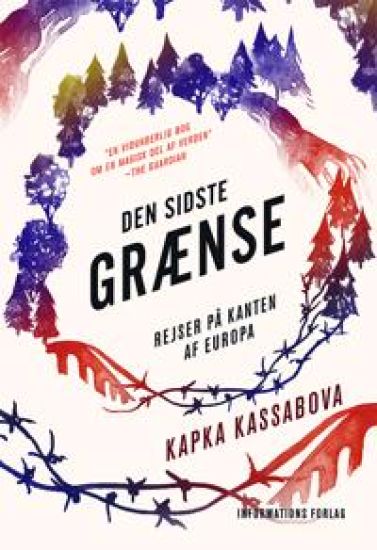
Den skrøbelige grænsezone mellem Bulgarien, Tyrkiet og Grækenland gemmer på utallige historier om soldater, spioner og flygtninge, der ønskede at krydse grænsen mellem øst og vest. I 1970’erne og 80’erne, mens Kapka Kassabova var barn, vrimlede grænseområdet med mennesker på jagt efter et bedre liv på den anden side. I dag står den bjergrige, skovklædte og historietunge del af Europa tilbage med dybe ar efter fortidens brutale politiske magtspil. Kapka Kassabova opsøger skattejægere, grænsevagter, flygtninge, smuglere og kloge koner i jagten på historierne fra grænselandet. Den sidste grænse tager os med til en glemt del af Europa. Et Europa, som emmer af overraskende, mystiske og uhyggelige historier om at stå på den forkerte side af skiftende menneskeskabte grænser. Kapka Kassabova (f. 1973) er forfatter og digter, født i Sofia i Bulgarien, men bosat i det skotske højland. Hun har skrevet en lang række digtsamlinger, romaner og rejsebøger. Anmeldelser:"Fremragende rejseskildring (...) Bulgarske Kapka Kassabova skriver poetisk om at opsøge barndommens grænseland, hvor fortiden spørger og nutidens lykkejægere går på gløder." - Weekendavisen Fængslende smukt skrevet – Times Literary SupplementSensationelt god – Sunday TimesSkiftevis bevægende og humoristisk … Vi har brug for bøger som denne – Financial TimesOphøjer rejselitteratur til kunst – Herald En exceptionel bog – New Statesman
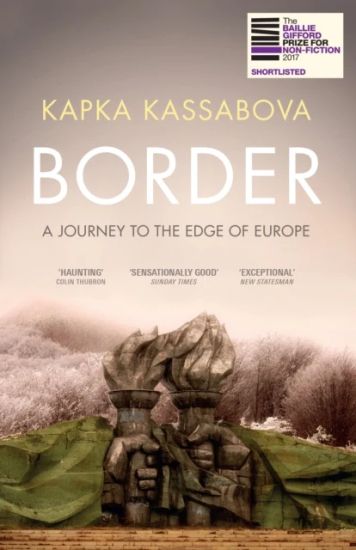
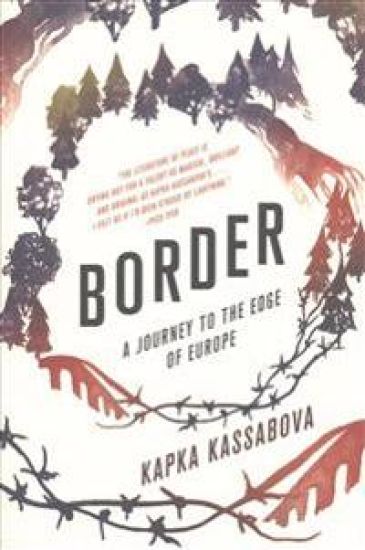
Winner of the the British Academy Nayef Al-Rodhan Prize for Global Cultural Understanding 2018 Winner of the Stanford Dolman Travel Book of the Year 2017 Winner of the 2017 Highland Book Prize Winner of the Saltire Society Book of the Year 2017 Shortlisted for the RSL Ondaatje Prize 2018 Shortlisted for the Baillie Gifford Prize 2017 Shortlisted for the Duff Cooper Prize 2017 Shortlisted for the Bread and Roses Award 2018 Shortlisted for the Gordon Burn Prize 2017 Shortlisted for the National Circle of Critics Award 2017 When Kapka Kassabova was a child, the borderzone between Bulgaria, Turkey and Greece was rumoured to be an easier crossing point into the West than the Berlin Wall so it swarmed with soldiers, spies and fugitives. On holidays close to the border on the Black Sea coast, she remembers playing on the beach, only miles from where an electrified fence bristled, its barbs pointing inwards toward the enemy: the holiday-makers, the potential escapees. Today, this densely forested landscape is no longer heavily militarised, but it is scarred by its past. In Border, Kapka Kassabova sets out on a journey to meet the people of this triple border - Bulgarians, Turks, Greeks, and the latest wave of refugees fleeing conflict further afield. She discovers a region that has been shaped by the successive forces of history: by its own past migration crises, by communism, by two World wars, by the Ottoman Empire, and - older still - by the ancient legacy of myths and legends. As Kapka Kassabova explores this enigmatic region in the company of border guards and treasure hunters, entrepreneurs and botanists, psychic healers and ritual fire-walkers, refugees and smugglers, she traces the physical and psychological borders that criss-cross its villages and mountains, and goes in search of the stories that will unlock its secrets. Border is a sharply observed portrait of a little-known corner of Europe, and a fascinating meditation on the borderlines that exist between countries, between cultures, between people, and within each of us.
"Remarkable: a book about borders that makes the reader feel sumptuously free." --Peter Pomerantsev In this extraordinary work of narrative reportage, Kapka Kassabova returns to Bulgaria, from where she emigrated as a girl twenty-five years previously, to explore the border it shares with Turkey and Greece. When she was a child, the border zone was rumored to be an easier crossing point into the West than the Berlin Wall, and it swarmed with soldiers and spies. On holidays in the "Red Riviera" on the Black Sea, she remembers playing on the beach only miles from a bristling electrified fence whose barbs pointed inward toward the enemy: the citizens of the totalitarian regime. Kassabova discovers a place that has been shaped by successive forces of history: the Soviet and Ottoman empires, and, older still, myth and legend. Her exquisite portraits of fire walkers, smugglers, treasure hunters, botanists, and border guards populate the book. There are also the ragged men and women who have walked across Turkey from Syria and Iraq. But there seem to be nonhuman forces at work here too: This densely forested landscape is rich with curative springs and Thracian tombs, and the tug of the ancient world, of circular time and animism, is never far off. Border is a scintillating, immersive travel narrative that is also a shadow history of the Cold War, a sideways look at the migration crisis troubling Europe, and a deep, witchy descent into interior and exterior geographies.
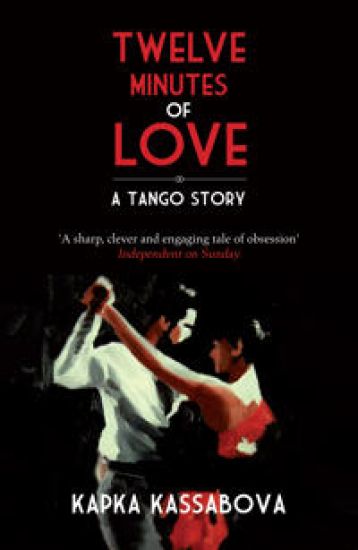
Kapka Kassabova first set foot in a tango studio ten years ago and, from that moment, she was hooked. With the beat of tango driving her on and the music filling her head, she's danced across the world, from Auckland to Edinburgh, from Berlin to Buenos Aires, putting in hours of practice for fleeting moments of dance-floor ecstasy, suffering blisters and heart-break along the way. Here, in sparkling, spring-heeled prose, Kapka takes us inside the esoteric world of tango to tell the story of the dance, from its Afro roots to its sequined stars and back. Twelve Minutes of Love is a timeless tale of exile and longing, death and desire, love and belonging.
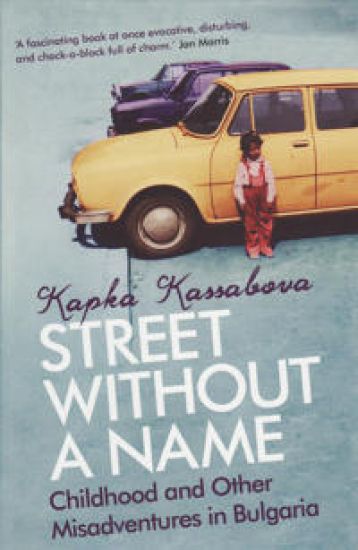
Born in Sofia, Kapka Kassabova grew up under the last years of Cold War Communism in the 1980s, emigrated after the fall of the Berlin Wall, and has loved and hated her homeland in equal measure ever since. Thirty years later, as Bulgaria was joining the EU club, Kapka revisited the country of her childhood and her own relationship to it to discover just how much it - and she - had changed. With the irreverence of an expat, the curiosity of a visitor, and the soul of a poet, Kassabova brings to life the past and present of Bulgaria, as well as probing the complicated connection between place and mind, between geography and fate.
Kapka Kassabova is a young Bulgarian émigré poet who writes in English but with a European imagination. Her well-travelled poems speak from different parts of the world and different moments of history, but they always speak of the many ways to be lost and disoriented: in a place, in the past, in fear, in love, in the very quickness of life. The voices speaking here – from a Roman housewife to a Chinese bar-owner in Berlin or an Argentine DJ – are the voices of the heart-sick, the culturally jet-lagged, people from photographs, the “tenants” of lives, cities and destinies. This is what we all are, have been, or will be.
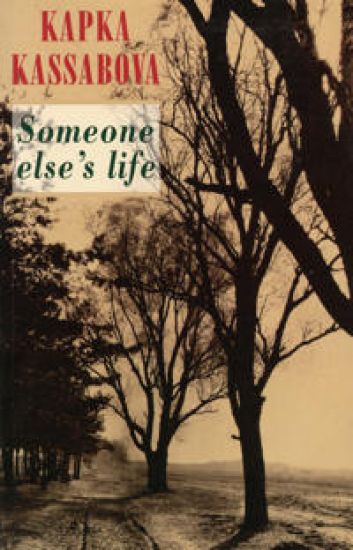
Kapka Kassabova is a young Bulgarian émigré poet who writes in English but with a European imagination. In Someone else’s life, her first poetry collection to be published in the UK, she explores the emotional and spiritual territory of the traveller and the dispossessed, the spaces between memory and being, exploration and doubt, desire and loss.