Kirjojen hintavertailu – 12 859 829 kirjaa ja 27 kauppaa

Kirjailija

Karel Williams

Kirjat ja teokset yhdessä paikassa: 16 kirjaa, julkaisuja vuosilta 1994–2025, suosituimpiin kuuluu After the Great Complacence. Vertaile teosten hintoja ja tarkista saatavuus suomalaisista kirjakaupoista.

16 kirjaa

Kirjojen julkaisuvuodet: 1994–2025.

The End of the Experiment?

The End of the Experiment?

Andrew Bowman; Julie Froud; Sukhdev Johal; John Law; Adam Leaver; Mick Moran; Karel Williams

Manchester University Press
2014
nidottu
For thirty years, the British economy has repeated the same old experiment of subjecting everything to competition and market because that is what works in the imagination of central government. This book demonstrates the repeated failure of that experiment by detailed examination of three sectors: broadband, food supply and retail banking. The book argues for a new experiment in social licensing whereby the right to trade in foundational activities would be dependent on the discharge of social obligations in the form of sourcing, training and living wages. Written by a team of researchers and policy advocates based at the Centre for Research on Socio Cultural Change, this book combines rigour and readability, and will be relevant to practitioners, policy makers, academics and engaged citizens.

After the Great Complacence

After the Great Complacence

Ewald Engelen; Ismail Ertürk; Julie Froud; Sukhdev Johal; Adam Leaver; Mick Moran; Adriana Nilsson; Karel Williams

Oxford University Press
2011
sidottu
What is the relationship between the financial system and politics? In a democratic system, what kind of control should elected governments have over the financial markets? What policies should be implemented to regulate them? What is the role played by different elites - financial, technocratic, and political - in the operation and regulation of the financial system? And what role should citizens, investors, and savers play? These are some of the questions addressed in this challenging analysis of the particular features of the contemporary capitalist economy in Britain, the USA, and Western Europe. The authors argue that the causes of the financial crisis lay in the bricolage and innovation in financial markets, resulting in long chains and circuits of transactions and instruments that enabled bankers to earn fees, but which did not sufficiently take into account system risk, uncertainty, and unintended consequences. In the wake of the crisis, the authors argue that social scientists, governments, and citizens need to re-engage with the political dimensions of financial markets. This book offers a controversial and accessible exploration of the disorders of our financial capitalism and its justifications. With an innovative emphasis on the economically 'undisclosed' and the political 'mystifying', it combines technical understanding of finance, cultural analysis, and al political account of interests and institutions.
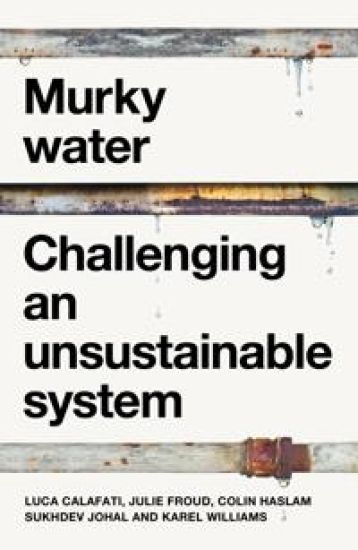
Murky Water

Murky Water

Luca Calafati; Julie Froud; Colin Haslam; Sukhdev Johal; Karel Williams

MANCHESTER UNIVERSITY PRESS
2025
sidottu
Essential reading for anyone concerned with the future of our most vital resource. Our water system is a mess. Rising bills and rivers full of sewage grab the headlines, but the greater threat is climate crisis, bringing increased drought and flooding. This book exposes the many problems with our unsustainable water system. Unfair charges limit spending on infrastructure, while financial extraction has turned the water companies into debt-burdened zombies in an increasingly fragmented system. Reforming regulation and tinkering with tariffs will not be enough, and public ownership is just the first step. Murky water shows that the system can only be made sustainable through a radical overhaul of how it is owned, managed, funded and planned. We need a new kind of water management, with national and catchment planning and coordinated action by landowners, local authorities and water companies. Westminster and Whitehall currently stand in the way. To overcome their resistance and secure a sustainable future, we must ignite a social movement capable of challenging power.
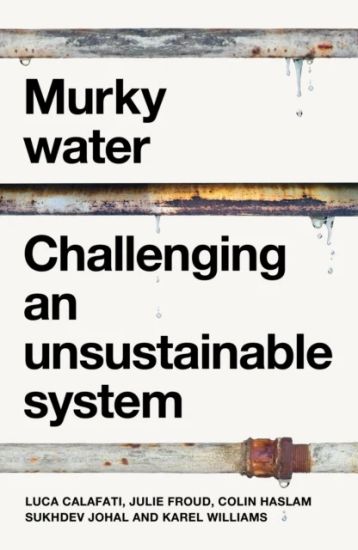
Murky Water

Murky Water

Luca Calafati; Julie Froud; Colin Haslam; Sukhdev Johal; Karel Williams

MANCHESTER UNIVERSITY PRESS
2025
nidottu

Halvin toimitettuna 27,70 €

Essential reading for anyone concerned with the future of our most vital resource. Our water system is a mess. Rising bills and rivers full of sewage grab the headlines, but the greater threat is climate crisis, bringing increased drought and flooding. This book exposes the many problems with our unsustainable water system. Unfair charges limit spending on infrastructure, while financial extraction has turned the water companies into debt-burdened zombies in an increasingly fragmented system. Reforming regulation and tinkering with tariffs will not be enough, and public ownership is just the first step. Murky water shows that the system can only be made sustainable through a radical overhaul of how it is owned, managed, funded and planned. We need a new kind of water management, with national and catchment planning and coordinated action by landowners, local authorities and water companies. Westminster and Whitehall currently stand in the way. To overcome their resistance and secure a sustainable future, we must ignite a social movement capable of challenging power.
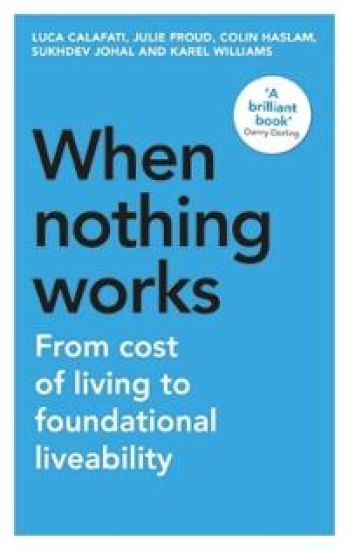
When Nothing Works

When Nothing Works

Luca Calafati; Julie Froud; Colin Haslam; Sukhdev Johal; Karel Williams

MANCHESTER UNIVERSITY PRESS
2023
nidottu
It’s hard to escape the feeling that in Britain today nothing works. In the face of mounting inflation and widespread industrial action, this book offers an incisive analysis of the UK’s problems and a new approach to tackling them. Economic growth and higher wages, the traditional responses of mainstream politicians, are simply not enough. This is because the so-called ‘cost of living crisis’ is only the face of a deeper crisis of foundational liveability. The UK is confronted not only with squeezed residual incomes but also failing public services and decaying social infrastructure. The only way out is to embrace a political practice of adaptive reuse that works around the constraints that frustrate mainstream policies. Presenting a new model for the three pillars of liveability – disposable and residual income, essential services and social infrastructure – When nothing works challenges the assumptions of left and right in the UK political classes and offers a fresh approach to the economically visible and politically actionable.
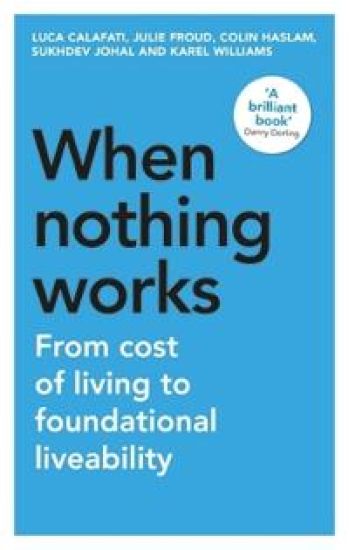
When Nothing Works

When Nothing Works

Luca Calafati; Julie Froud; Colin Haslam; Sukhdev Johal; Karel Williams

MANCHESTER UNIVERSITY PRESS
2023
sidottu
It’s hard to escape the feeling that in Britain today nothing works. In the face of mounting inflation and widespread industrial action, this book offers an incisive analysis of the UK’s problems and a new approach to tackling them. Economic growth and higher wages, the traditional responses of mainstream politicians, are simply not enough. This is because the so-called ‘cost of living crisis’ is only the face of a deeper crisis of foundational liveability. The UK is confronted not only with squeezed residual incomes but also failing public services and decaying social infrastructure. The only way out is to embrace a political practice of adaptive reuse that works around the constraints that frustrate mainstream policies. Presenting a new model for the three pillars of liveability – disposable and residual income, essential services and social infrastructure – When nothing works challenges the assumptions of left and right in the UK political classes and offers a fresh approach to the economically visible and politically actionable.
Why are the British Bad at Manufacturing?

Why are the British Bad at Manufacturing?

Karel Williams; John Williams; Dennis Thomas

CRC Press Inc
2019
nidottu
This book, first published in 1983, offers a new explanation for the poor performance of British manufacturing since 1950. Rather than invoke orthodox economic theory or general social factors, the book analyses four national conditions – enterprise control over the labour process; market structure and the composition of demand; the relation of manufacturing enterprise to financial institutions like banks and stock exchanges; and the relation of manufacturing enterprise to government.
From Pauperism to Poverty

From Pauperism to Poverty

Karel Williams

Routledge
2018
nidottu
First published in 1981, From Pauperism to Poverty consists of seven essays, three of which focus on the English poor law between 1800 and 1914 and four of which examine texts of social investigation by Mayhew, Engels, Booth and Rowntree. Rather than making a specialist contribution to the history of social thought and policy, the essays raise general questions about current ways of writing history and alternative analyses of specific texts or institutions are developed. In doing so, the previous histories of the relief of pauperism and the discovery of poverty are revised at many points. Most notably, it is demonstrated for the first time that relief to unemployed men was virtually abolished after 1850. This book will be of interest to those studying the history of social welfare and poverty.
Why are the British Bad at Manufacturing?

Why are the British Bad at Manufacturing?

Karel Williams; John Williams; Dennis Thomas

CRC Press Inc
2018
sidottu
This book, first published in 1983, offers a new explanation for the poor performance of British manufacturing since 1950. Rather than invoke orthodox economic theory or general social factors, the book analyses four national conditions – enterprise control over the labour process; market structure and the composition of demand; the relation of manufacturing enterprise to financial institutions like banks and stock exchanges; and the relation of manufacturing enterprise to government.
From Pauperism to Poverty

From Pauperism to Poverty

Karel Williams

Routledge
2016
sidottu
First published in 1981, From Pauperism to Poverty consists of seven essays, three of which focus on the English poor law between 1800 and 1914 and four of which examine texts of social investigation by Mayhew, Engels, Booth and Rowntree. Rather than making a specialist contribution to the history of social thought and policy, the essays raise general questions about current ways of writing history and alternative analyses of specific texts or institutions are developed. In doing so, the previous histories of the relief of pauperism and the discovery of poverty are revised at many points. Most notably, it is demonstrated for the first time that relief to unemployed men was virtually abolished after 1850. This book will be of interest to those studying the history of social welfare and poverty.
Keynes, Beveridge and Beyond

Keynes, Beveridge and Beyond

Tony Cutler; John Williams; Karel Williams

Routledge
2010
nidottu
Presenting a coherent interpretation of the development of economic and social policy in Britain since 1945, this book analyses the political assumptions underlying post-war economic policy. It traces these assumptions through the classic texts of Keynes and Beveridge, the architects of limited, non-socialist state intervention to secure the welfare state and full employment. Topics covered include: * 'Private saving' versus company pensions * The level and composition of employment in Britain
Financialization and Strategy

Financialization and Strategy

Julie Froud; Sukhdev Johal; Adam Leaver; Karel Williams

Routledge
2006
nidottu
Considering the recent impact of the capital market on corporate strategy, this text analyzes, through argument and supportive case studies, how pressures from the capital bull market of the 1990s and bear market of the early 2000s, have reshaped management action and calculation in large, publicly quoted US and UK corporations. Beginning with the dissatisfaction with classical strategy and its limited engagement with the processes of financialization, the book moves on to cover three detailed company case studies (General Electric, Ford and GlaxoSmithKline) which use long run financial data and analysis of company and industry narratives to illustrate and explore key themes. The book emphasizes the importance of company and industry narrative, while also analyzing long term financial results, and helps to explain the limits of management action and the burden of expectations placed on corporate governance. Presenting financial and market information on trajectory in an accessible way, this book provides a distinctive, critical social science account of management in large UK and US corporations, and it is a valuable resource for students, scholars and researchers of business, management, political economy and non-mainstream economics.short listed for the 2007 IPEG Book Prize
Financialization and Strategy

Financialization and Strategy

Julie Froud; Sukhdev Johal; Adam Leaver; Karel Williams

Routledge
2006
sidottu
Considering the recent impact of the capital market on corporate strategy, this text analyzes, through argument and supportive case studies, how pressures from the capital bull market of the 1990s and bear market of the early 2000s, have reshaped management action and calculation in large, publicly quoted US and UK corporations. Beginning with the dissatisfaction with classical strategy and its limited engagement with the processes of financialization, the book moves on to cover three detailed company case studies (General Electric, Ford and GlaxoSmithKline) which use long run financial data and analysis of company and industry narratives to illustrate and explore key themes. The book emphasizes the importance of company and industry narrative, while also analyzing long term financial results, and helps to explain the limits of management action and the burden of expectations placed on corporate governance. Presenting financial and market information on trajectory in an accessible way, this book provides a distinctive, critical social science account of management in large UK and US corporations, and it is a valuable resource for students, scholars and researchers of business, management, political economy and non-mainstream economics.short listed for the 2007 IPEG Book Prize
Keynes, Beveridge and Beyond

Keynes, Beveridge and Beyond

Tony Cutler; John Williams; Karel Williams

Routledge
2003
sidottu
Presenting a coherent interpretation of the development of economic and social policy in Britain since 1945, this book analyses the political assumptions underlying post-war economic policy. It traces these assumptions through the classic texts of Keynes and Beveridge, the architects of limited, non-socialist state intervention to secure the welfare state and full employment. Topics covered include: * 'Private saving' versus company pensions * The level and composition of employment in Britain
Cars

Cars

Karel Williams; John Williams; Colin Haslam

Berghahn Books, Incorporated
1994
pokkari
Through developing an original analytical framework that, for the first time, systematically relates productive, market and financial variables, the authors are able to rewrite the history of the car business since Henry Ford.
Cars

Cars

Karel Williams; John Williams; Colin Haslam

Berghahn Books, Incorporated
1994
sidottu
Through developing an original analytical framework that, for the first time, systematically relates productive, market and financial variables, the authors are able to rewrite the history of the car business since Henry Ford.