Kirjojen hintavertailu – 12 875 412 kirjaa ja 26 kauppaa

Kirjailija

Karen Barkey

Kirjat ja teokset yhdessä paikassa: 5 kirjaa, julkaisuja vuosilta 1996–2019, suosituimpiin kuuluu Bandits and Bureaucrats. Vertaile teosten hintoja ja tarkista saatavuus suomalaisista kirjakaupoista.

5 kirjaa

Kirjojen julkaisuvuodet: 1996–2019.

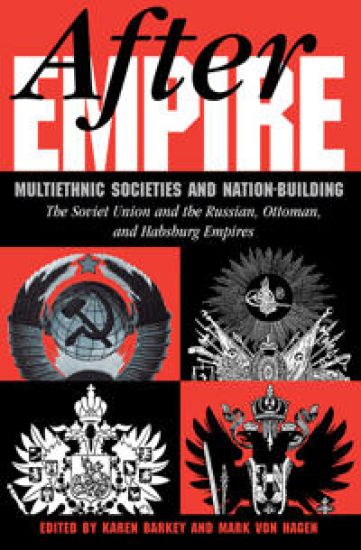
After Empire

After Empire

Karen Barkey; Mark Von Hagen

Routledge
2019
sidottu
This volume brings together a group of some of the most outstanding scholars in political science, history, and historical sociology to examine the causes of imperial decline and collapse of the Russian, Ottoman, and Habsburg empires.
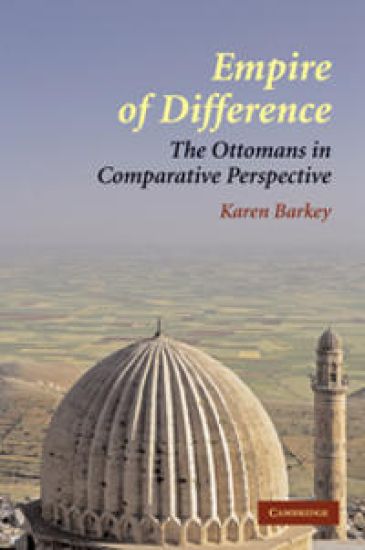
Empire of Difference

Empire of Difference

Karen Barkey

Cambridge University Press
2008
sidottu
This book is a comparative study of imperial organization and longevity that assesses Ottoman successes as well as failures against those of other empires with similar characteristics. Barkey examines the Ottoman Empire's social organization and mechanisms of rule at key moments of its history, emergence, imperial institutionalization, remodeling, and transition to nation-state, revealing how the empire managed these moments, adapted, and averted crises and what changes made it transform dramatically. The flexible techniques by which the Ottomans maintained their legitimacy, the cooperation of their diverse elites both at the center and in the provinces, as well as their control over economic and human resources were responsible for the longevity of this particular 'negotiated empire'. Her analysis illuminates topics that include imperial governance, imperial institutions, imperial diversity and multiculturalism, the manner in which dissent is handled and/or internalized, and the nature of state society negotiations.
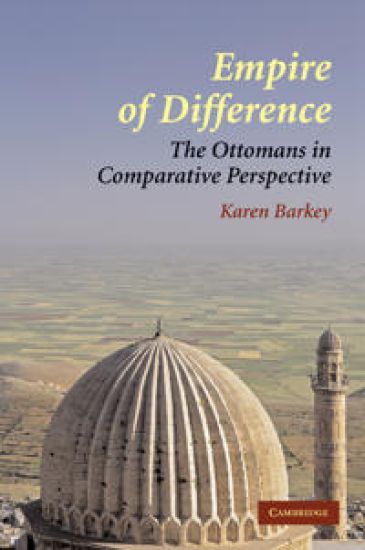
Empire of Difference

Empire of Difference

Karen Barkey

Cambridge University Press
2008
pokkari
This book is a comparative study of imperial organization and longevity that assesses Ottoman successes as well as failures against those of other empires with similar characteristics. Barkey examines the Ottoman Empire's social organization and mechanisms of rule at key moments of its history, emergence, imperial institutionalization, remodeling, and transition to nation-state, revealing how the empire managed these moments, adapted, and averted crises and what changes made it transform dramatically. The flexible techniques by which the Ottomans maintained their legitimacy, the cooperation of their diverse elites both at the center and in the provinces, as well as their control over economic and human resources were responsible for the longevity of this particular 'negotiated empire'. Her analysis illuminates topics that include imperial governance, imperial institutions, imperial diversity and multiculturalism, the manner in which dissent is handled and/or internalized, and the nature of state society negotiations.
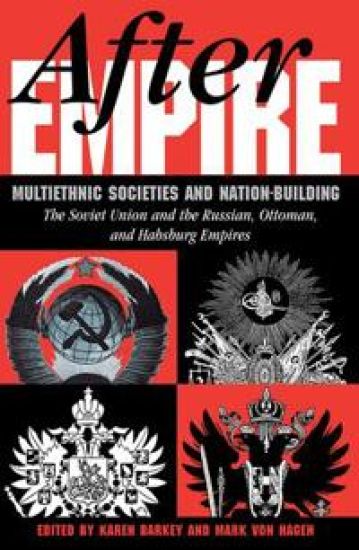
After Empire

After Empire

Karen Barkey; Mark Von Hagen

Westview Press Inc
1997
nidottu
This volume brings together a group of some of the most outstanding scholars in political science, history, and historical sociology to examine the causes of imperial decline and collapse of the Russian, Ottoman, and Habsburg empires.
Bandits and Bureaucrats

Bandits and Bureaucrats

Karen Barkey

Cornell University Press
1996
pokkari
Why did the main challenge to the Ottoman state come not in peasant or elite rebellions, but in endemic banditry? Karen Barkey shows how Turkish strategies of incorporating peasants and rotating elites kept both groups dependent on the state, unable and unwilling to rebel. Bandits, formerly mercenary soldiers, were not interested in rebellion but concentrated on trying to gain state resources, more as rogue clients than as primitive rebels. The state's ability to control and manipulate bandits—through deals, bargains and patronage—suggests imperial strength rather than weakness, she maintains. Bandits and Bureaucrats details, in a rich, archivally based analysis, state-society relations in the Ottoman empire during the sixteenth and seventeenth centuries. Exploring current eurocentric theories of state building, the author illuminates a period often mischaracterized as one in which the state declined in power. Outlining the processes of imperial rule, Barkey relates the state political and military institutions to their socal foundations. She compares the Ottoman route with state centralization in the Chinese and Russian empires, and contrasts experiences of rebellion in France during the same period. Bandits and Bureaucrats thus develops a theoretical interpretation of imperial state centralization through incorporation and bargaining with social groups, and at the same time enriches our understanding of the dynamics of Ottoman history.