Kirjojen hintavertailu – 12 903 724 kirjaa ja 27 kauppaa

Kirjailija

Karen Dawisha

Kirjat ja teokset yhdessä paikassa: 20 kirjaa, julkaisuja vuosilta 1994–2015, suosituimpiin kuuluu The International Politics of Eurasia: v. 8: Economic Transition in Russia and the New States of Eurasia. Vertaile teosten hintoja ja tarkista saatavuus suomalaisista kirjakaupoista.

20 kirjaa

Kirjojen julkaisuvuodet: 1994–2015.

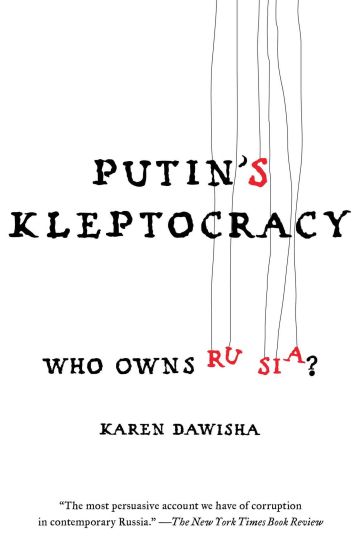
Putin's Kleptocracy: Who Owns Russia?

Putin's Kleptocracy: Who Owns Russia?

Karen Dawisha

SIMON SCHUSTER
2015
nidottu

Halvin toimitettuna 21,50 €

The raging question in the world today is who is the real Vladimir Putin and what are his intentions. Karen Dawisha's brilliant Putin's Kleptocracy provides an answer, describing how Putin got to power, the cabal he brought with him, the billions they have looted, and his plan to restore the Greater Russia. Russian scholar Dawisha describes and exposes the origins of Putin's kleptocratic regime. She presents extensive new evidence about the Putin circle's use of public positions for personal gain even before Putin became president in 2000. She documents the establishment of Bank Rossiya, now sanctioned by the US; the rise of the Ozero cooperative, founded by Putin and others who are now subject to visa bans and asset freezes; the links between Putin, Petromed, and "Putin's Palace" near Sochi; and the role of security officials from Putin's KGB days in Leningrad and Dresden, many of whom have maintained their contacts with Russian organized crime. Putin's Kleptocracy is the result of years of research into the KGB and the various Russian crime syndicates. Dawisha's sources include Stasi archives; Russian insiders; investigative journalists in the US, Britain, Germany, Finland, France, and Italy; and Western officials who served in Moscow. Russian journalists wrote part of this story when the Russian media was still free. "Many of them died for this story, and their work has largely been scrubbed from the Internet, and even from Russian libraries," Dawisha says. "But some of that work remains."
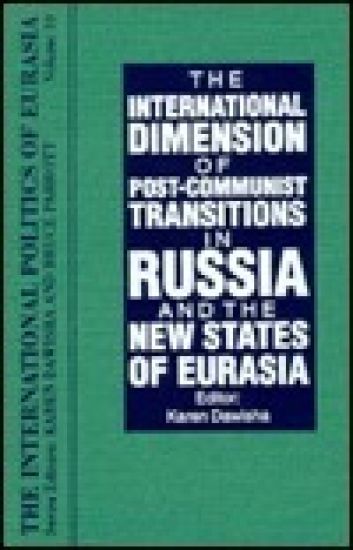
The International Politics of Eurasia: v. 10: The International Dimension of Post-communist Transitions in Russia and the New States of Eurasia
First Published in 2015. This book is the last in a series of ten volumes produced by the Russian Littoral Project. This volume shapes the view that despite the dramatic growth of high-quality Western scholarship on post-Soviet developments, the interaction between external influences and trends in Russia and the other post-Soviet countries has not received systematic analysis. The influence of outside actors on post-Soviet affairs is poorly understood.
The International Politics of Eurasia: v. 10: The International Dimension of Post-communist Transitions in Russia and the New States of Eurasia
This ambitious ten-volume series develops a comprehensive analysis of the evolving world role of the post-Soviet successor states. Each volume considers a different factor influencing the relationship between internal politics and international relations in Russia and in the western and southern tiers of newly independent states. The collapse of the Soviet Union and the discrediting of Marxism-Leninism as a source of political legitimacy have prompted a search for fresh principles of political organization that will shape the nature of political culture in all the post-Soviet countries. This volume focuses on the International dimension of Post-communist transitions.
The International Politics of Eurasia: v. 9: The End of Empire? Comparative Perspectives on the Soviet Collapse
First Published in 1997. This book is the ninth in a series often volumes produced by the Russian Littoral Project, The project shares the conviction that the transformation of the former Soviet republics into independent states demands systematic analysis of the determinants of the domestic and foreign policies of the new countries. The series of volumes is intended to provide a basis for comprehensive scholarly study of these issues. This volume was shaped by the author’s view that future scholarship about the post Soviet world requires both specialized research and broad-gauge studies that carefully juxtapose the breakup of the Soviet empire with the transformation of other multinational empires.
The International Politics of Eurasia: v. 9: The End of Empire? Comparative Perspectives on the Soviet Collapse
First Published in 1997. This book is the ninth in a series often volumes produced by the Russian Littoral Project, The project shares the conviction that the transformation of the former Soviet republics into independent states demands systematic analysis of the determinants of the domestic and foreign policies of the new countries. The series of volumes is intended to provide a basis for comprehensive scholarly study of these issues. This volume was shaped by the author’s view that future scholarship about the post Soviet world requires both specialized research and broad-gauge studies that carefully juxtapose the breakup of the Soviet empire with the transformation of other multinational empires.
The International Politics of Eurasia: v. 8: Economic Transition in Russia and the New States of Eurasia
First Published in 1996. This ambitious ten-volume series develops a comprehensive analysis of the evolving world role of the post-Soviet successor states. Each volume considers a different factor influencing the relationship between internal politics and international relations in Russia and in the western and southern tiers of newly independent states. The contributors were chosen not only for their recognized expertise but also to ensure a stimulating diversity of perspectives and a dynamic mix of approaches. This is Volume 8 Economic Transition in Russia and the New States of Eurasia.
The International Politics of Eurasia: v. 8: Economic Transition in Russia and the New States of Eurasia
First Published in 1996. This ambitious ten-volume series develops a comprehensive analysis of the evolving world role of the post-Soviet successor states. Each volume considers a different factor influencing the relationship between internal politics and international relations in Russia and in the western and southern tiers of newly independent states. The contributors were chosen not only for their recognized expertise but also to ensure a stimulating diversity of perspectives and a dynamic mix of approaches. This is Volume 8 Economic Transition in Russia and the New States of Eurasia.
The International Politics of Eurasia: v. 5: State Building and Military Power in Russia and the New States of Eurasia
First Published in 2015. The chapters in this text examine the foreign policies of Russia and other selected states of the former Soviet Union. Each chapter analyses the conduct of foreign policy with the context of each state's unique situation. While the authors look at different countries and subregions and analyse various policy factors and imperatives, they all tend to agree that at present no other power has more direct and substantial impact on the foreign policies and international relations of the region than Russia.
The International Politics of Eurasia: v. 5: State Building and Military Power in Russia and the New States of Eurasia
This ambitious ten-volume series develops a comprehensive analysis of the evolving world role of the post-Soviet successor states. Each volume considers a different factor influencing the relationship between internal politics and international relations in Russia and in the western and southern tiers of newly independent states. The collapse of the Soviet Union and the discrediting of Marxism-Leninism as a source of political legitimacy have prompted a search for fresh principles of political organization that will shape the nature of political culture in all the post-Soviet countries. This volume looks at military power and state building.
The International Politics of Eurasia

The International Politics of Eurasia

Karen Dawisha; Bruce Parrott

M.E. Sharpe
1995
sidottu
This ambitious ten-volume series develops a comprehensive analysis of the evolving world role of the post-Soviet successor states. Each volume considers a different factor influencing the relationship between internal politics and international relations in Russia and in the western and southern tiers of newly independent states. The collapse of the Soviet Union and the discrediting of Marxism-Leninism as a source of political legitimacy have prompted a search for fresh principles of political organization that will shape the nature of political culture in all the post-Soviet countries. This volume analyzes the nature of the emerging political cultures and their impact on the processes of democratization in these new states.
The International Politics of Eurasia: v. 3: The Politics of Religion in Russia and the New States of Eurasia
First Published in 2015. This ambitious ten-volume series develops a comprehensive analysis of the evolving world role of the post-Soviet successor states. Each volume considers a different factor influencing the relationship between internal politics and international relations in Russia and in the western and southern tiers of newly independent states. The contributors were chosen not only for their recognized expertise but also to ensure a stimulating diversity of perspectives and a dynamic mix of approaches. This is Volume3 The Politics of Religion in Russia and the New States of Eurasia.
The International Politics of Eurasia: v. 3: The Politics of Religion in Russia and the New States of Eurasia
First Published in 2015. This ambitious ten-volume series develops a comprehensive analysis of the evolving world role of the post-Soviet successor states. Each volume considers a different factor influencing the relationship between internal politics and international relations in Russia and in the western and southern tiers of newly independent states. The contributors were chosen not only for their recognized expertise but also to ensure a stimulating diversity of perspectives and a dynamic mix of approaches. This is Volume3 The Politics of Religion in Russia and the New States of Eurasia.
The International Politics of Eurasia: v. 4: The Making of Foreign Policy in Russia and the New States of Eurasia
First Published in 2015. The chapters in this text examine the foreign policies of Russia and other selected states of the former Soviet Union. Each chapter analyses the conduct of foreign policy with the context of each state's unique situation. While the authors look at different countries and subregions and analyse various policy factors and imperatives, they all tend to agree that at present no other power has more direct and substantial impact on the foreign policies and international relations of the region than Russia.
The International Politics of Eurasia: v. 4: The Making of Foreign Policy in Russia and the New States of Eurasia
This ambitious ten-volume series develops a comprehensive analysis of the evolving world role of the post-Soviet successor states. Each volume considers a different factor influencing the relationship between internal politics and international relations in Russia and in the western and southern tiers of newly independent states. The collapse of the Soviet Union and the discrediting of Marxism-Leninism as a source of political legitimacy have prompted a search for fresh principles of political organization that will shape the nature of political culture in all the post-Soviet countries. This volume looks at the making of foreign policy in Russia and the new states of Eurasia.
The International Politics of Eurasia: v. 1: The Influence of History
First Published in 1995. This ambitious ten-volume series develops a comprehensive analysis of the evolving world role of the post-Soviet successor states. Each volume considers a different factor influencing the relationship between internal politics and international relations in Russia and in the western and southern tiers of newly independent states. The contributors were chosen not only for their recognized expertise but also to ensure a stimulating diversity of perspectives and a dynamic mix of approaches. This is Volume I and covers The Legacy of History in Russia and the New States of Eurasia.
The International Politics of Eurasia: v. 2: The Influence of National Identity
First Published in 1995. This ambitious ten-volume series develops a comprehensive analysis of the evolving world role of the post-Soviet successor states. Each volume considers a different factor influencing the relationship between internal politics and international relations in Russia and in the western and southern tiers of newly independent states. The contributors were chosen not only for their recognized expertise but also to ensure a stimulating diversity of perspectives and a dynamic mix of approaches. This is Volume 2 on National Identity and Ethnicity In Russia and the New States of Eurasia edited by Roman Szporluk.
The International Politics of Eurasia: v. 2: The Influence of National Identity
First Published in 1995. This ambitious ten-volume series develops a comprehensive analysis of the evolving world role of the post-Soviet successor states. Each volume considers a different factor influencing the relationship between internal politics and international relations in Russia and in the western and southern tiers of newly independent states. The contributors were chosen not only for their recognized expertise but also to ensure a stimulating diversity of perspectives and a dynamic mix of approaches. This is Volume 2 on National Identity and Ethnicity In Russia and the New States of Eurasia edited by Roman Szporluk.
The International Politics of Eurasia: v. 1: The Influence of History
First Published in 1995. This ambitious ten-volume series develops a comprehensive analysis of the evolving world role of the post-Soviet successor states. Each volume considers a different factor influencing the relationship between internal politics and international relations in Russia and in the western and southern tiers of newly independent states. The contributors were chosen not only for their recognized expertise but also to ensure a stimulating diversity of perspectives and a dynamic mix of approaches. This is Volume I and covers The Legacy of History in Russia and the New States of Eurasia.
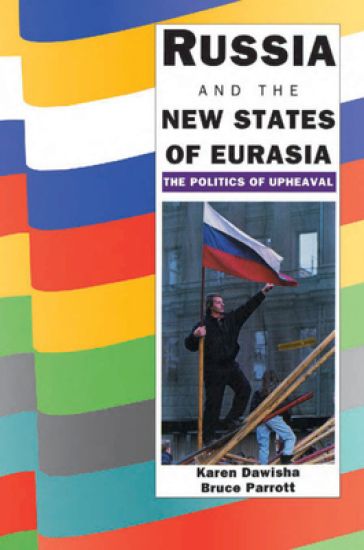
Russia and the New States of Eurasia

Russia and the New States of Eurasia

Karen Dawisha; Bruce Parrott

Cambridge University Press
1994
pokkari
The old order of stable political alignments within and between the Soviet republics and their nationalities disintegrated with the collapse of the Soviet Union. Russia and the fourteen new states on its borders must now deal with a new and unpredictable international environment even as they struggle with political and economic chaos at home. Russia and the New States of Eurasia focuses on the central role of Russia in this new world and surveys the possibilities for future alignments both among the new states, and between the new states and their neighbours. It identifies the key issues and relationships which will determine the long-term economic growth and political stability of this vast and vital region, and will prove essential reading for students, scholars and policy-makers concerned with the future of the former Soviet Union.