Kirjojen hintavertailu – 12 903 725 kirjaa ja 27 kauppaa

Kirjailija

Karen J. Alter

Kirjat ja teokset yhdessä paikassa: 3 kirjaa, julkaisuja vuosilta 2014–2019, suosituimpiin kuuluu Transplanting International Courts. Vertaile teosten hintoja ja tarkista saatavuus suomalaisista kirjakaupoista.

3 kirjaa

Kirjojen julkaisuvuodet: 2014–2019.

Transplanting International Courts

Transplanting International Courts

Karen J. Alter; Laurence R. Helfer

Oxford University Press
2019
nidottu
Transplanting International Courts provides a deep, systematic investigation of the most active and successful transplant of the European Court of Justice. The Andean Tribunal is effective by any plausible definition of the term, but only in the domain of intellectual property law. Alter and Helfer explain how the Andean Tribunal established its legal authority within and beyond this intellectual property island, and how Andean judges have navigated moments of both transnational political consensus and political contestation over the goals and objectives of regional economic integration. By letting member states set the pace and scope of Andean integration, by condemning unequivocal violations of Andean rules, and by allowing for the coexistence of national legislation and supranational authority, the Tribunal has retained its fidelity to Andean law while building relationships with nationally-based administrative agencies, lawyers, and judges. Yet the Tribunal's circumspect and formalist approach means that, unlike in Europe, Community law is not an engine of integration. The Tribunal's strategy has also limited its influence within the Andean legal system. Transplanting International Courts also revists the authors' path-breaking scholarship on the effectiveness of international adjudication. Alter and Helfer argue that the European Court of Justice benefitted in underappreciated ways from the support of jurist advocacy movements that are absent or poorly organized in the Andes and elsewhere in the world. The Andean Tribunal's longevity despite these and other challenges offers guidance for international courts in other developing country contexts. Moreover, given that the Andean Community has weathered member state withdrawals and threats of exit, major economic and political crises, and the retrenchment of core policies such as the common external tariff, the Andean experience offers timely and important lessons for Europe's international courts.
Transplanting International Courts

Transplanting International Courts

Karen J. Alter; Laurence R. Helfer

Oxford University Press
2017
sidottu
Transplanting International Courts: The Law and Politics of the Andean Tribunal of Justice provides a deep, systematic investigation of the most active and successful transplant of the European Court of Justice. The Andean Tribunal is effective by any plausible definition of the term, but only in the domain of intellectual property law. Alter and Helfer explain how the Andean Tribunal established its legal authority within and beyond this intellectual property island, and how Andean judges have navigated moments of both transnational political consensus and political contestation over the goals and objectives of regional economic integration. By letting member states set the pace and scope of Andean integration, by condemning unequivocal violations of Andean rules, and by allowing for the coexistence of national legislation and supranational authority, the Tribunal has retained its fidelity to Andean law while building relationships with nationally-based administrative agencies, lawyers, and judges. Yet the Tribunals circumspect and formalist approach means that, unlike in Europe, community law is not an engine of integration. The Tribunals strategy has also limited its influence within the Andean legal system. The authors also revisit their own path-breaking scholarship on the effectiveness of international adjudication. Alter and Helfer argue that the European Court of Justice benefitted in underappreciated ways from the support of transnational jurist advocacy movements that are absent or poorly organized in the Andes and elsewhere in the world. The Andean Tribunals longevity despite these and other challenges offers guidance for international courts in other developing country contexts. Moreover, given that the Andean Community has weathered member state withdrawals and threats of exit, major economic and political crises, and the retrenchment of core policies such as the common external tariff, the Andean experience offers timely and important lessons for European international courts.
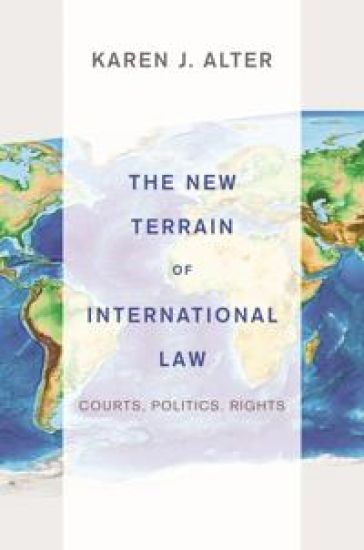
The New Terrain of International Law

The New Terrain of International Law

Karen J. Alter

Princeton University Press
2014
pokkari
In 1989, when the Cold War ended, there were six permanent international courts. Today there are more than two dozen that have collectively issued over thirty-seven thousand binding legal rulings. The New Terrain of International Law charts the developments and trends in the creation and role of international courts, and explains how the delegation of authority to international judicial institutions influences global and domestic politics. The New Terrain of International Law presents an in-depth look at the scope and powers of international courts operating around the world. Focusing on dispute resolution, enforcement, administrative review, and constitutional review, Karen Alter argues that international courts alter politics by providing legal, symbolic, and leverage resources that shift the political balance in favor of domestic and international actors who prefer policies more consistent with international law objectives. International courts name violations of the law and perhaps specify remedies. Alter explains how this limited power--the power to speak the law--translates into political influence, and she considers eighteen case studies, showing how international courts change state behavior. The case studies, spanning issue areas and regions of the world, collectively elucidate the political factors that often intervene to limit whether or not international courts are invoked and whether international judges dare to demand significant changes in state practices.