
Kirjojen hintavertailu – 12 903 724 kirjaa ja 27 kauppaa

Kirjailija

Karen J. Maschke

Kirjat ja teokset yhdessä paikassa: 2 kirjaa, julkaisuja vuosilta 1989–2018, suosituimpiin kuuluu Litigation, Courts, and Women Workers. Vertaile teosten hintoja ja tarkista saatavuus suomalaisista kirjakaupoista.

2 kirjaa

Kirjojen julkaisuvuodet: 1989–2018.

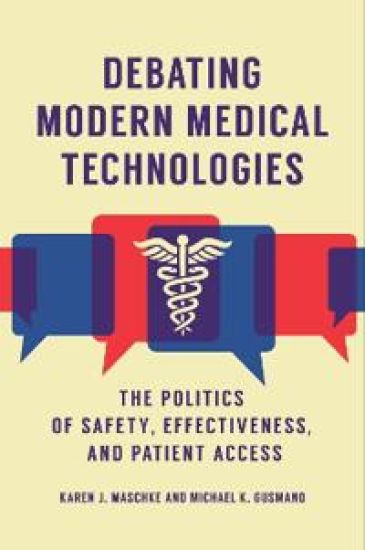
Debating Modern Medical Technologies

Debating Modern Medical Technologies

Karen J. Maschke; Michael K. Gusmano

Praeger Publishers Inc
2018
sidottu
This book analyzes policy fights about what counts as good evidence of safety and effectiveness when it comes to new health care technologies in the United States and what political decisions mean for patients and doctors. Medical technologies often promise to extend and improve quality of life but come with many questions: Are they safe and effective? Are they worth the cost? When should they be allowed on the market, and when should Medicare, Medicaid, and private insurance companies be required to pay for drugs, devices, and diagnostic tests? Using case studies of disputes about the value of mammography screening; genetic testing for disease risk; brain imaging technologies to detect biomarkers associated with Alzheimer's disease; cell-based therapies; and new, expensive drugs, Maschke and Gusmano illustrate how scientific disagreements about what counts as good evidence of safety and effectiveness are often swept up in partisan fights over health care reform and battles among insurance and health care companies, physicians, and patient advocates. Debating Modern Medical Technologies: The Politics of Safety, Effectiveness, and Patient Access reveals stakeholders' differing values and interests regarding patient choice, physician autonomy, risk assessment, government intervention in medicine and technology assessment, and scientific innovation as a driver of national and global economies. It will help readers to understand the nature and complexity of past and current policy disagreements and their effects on patients.
Litigation, Courts, and Women Workers

Litigation, Courts, and Women Workers

Karen J. Maschke

Praeger Publishers Inc
1989
sidottu
From the larger field of women and employment law, Maschke has carved out a study that focuses exclusively on the impact Title VII of the 1964 Civil Rights Act has had on women workers. . . . Maschke focus[es] on the history of women workers from the days of protective laws, through the difficult birth of the Equal Employment Opportunity Commission, to present-day struggles involving pregnant workers, sexual harassment, and comparable worth. Although legalistically oriented, the book is also attuned to the political in noting diverse strategies among women's organizations and the varying congressional and presidential commitments to the promotion of the equality of women's workers. . . . Concise and readable with a select bibliography and index. ChoiceA major contribution to the literature on the legal rights of women workers, this volume combines empirical investigation and case law analysis to provide a thorough study of sex discrimination litigation under Title VII of the Civil Rights Act of 1964. As the author notes at the outset, Title VII, although not a panacea for sex discrimination, is the most important federal statute guaranteeing equality in the workplace for women workers. Her study examines how women have fared in Title VII litigation and how the Equal Employment Opportunity Commission (EEOC), as the government's enforcement agency, played a role in Title VII litigation and in the development of legal policy in this area. Divided into three major sections, the volume begins by exploring the protective labor laws that restricted women's job opportunities at the turn of the century. Maschke goes on to trace the origins of Title VII and to examine the political controversy surrounding the use of litigation to enforce Title VII. The second section analyzes the development of law resulting from cases involving pregnancy discrimination, sexual harassment, wage discrimination, and protective policies. In addition to case law analysis, these chapters examine the EEOC's response to the issues and demonstrate that the agency has often been inconsistent in developing sex discrimination policies. In the final section, Maschke addresses group and EEOC litigation activities in sex discrimination cases, focusing on aspects of decision making in the federal courts. The concluding chapter considers how courts and the litigation process played a role in expanding the rights of women workers.