Kirjojen hintavertailu – 12 903 735 kirjaa ja 27 kauppaa

Kirjailija

Karen Littleton

Kirjat ja teokset yhdessä paikassa: 10 kirjaa, julkaisuja vuosilta 2000–2016, suosituimpiin kuuluu Contemporary Identities of Creativity and Creative Work. Vertaile teosten hintoja ja tarkista saatavuus suomalaisista kirjakaupoista.

10 kirjaa

Kirjojen julkaisuvuodet: 2000–2016.

Contemporary Identities of Creativity and Creative Work

Contemporary Identities of Creativity and Creative Work

Stephanie Taylor; Karen Littleton

Routledge
2016
nidottu
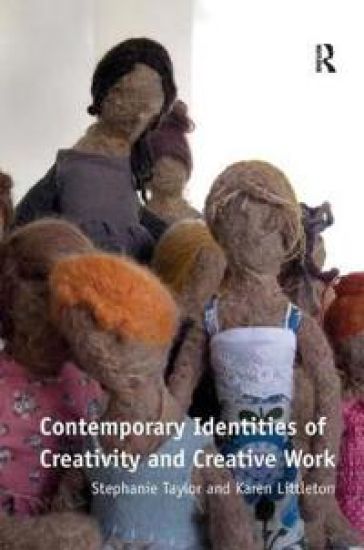
Creative workers have been celebrated internationally for their flexibility in new labour markets centred on culture, creativity and, most recently, innovation. This book draws on research with novice and established workers in a range of specializations in order to explore the meanings, aspirations and practical difficulties associated with a creative identification. It investigates the difficulties and attractions of creative work as a personalized, affect-laden project of self-making, perpetually open and oriented to possibility, uncertain in its trajectory or rewards. Employing a cross-disciplinary methodology and analytic approach, the book investigates the new cultural meanings in play around a creative career. It shows how classic ideals of design and the creative arts, re-interpreted and promoted within contemporary art schools, validate the lived experience of precarious working in the global sectors of the creative and cultural industries, yet also contribute to its conflicts. 'Contemporary Identities of Creativity and Creative Work' presents a distinctive study and original findings which make it essential reading for social scientists, including social psychologists, with an interest in cultural and media studies, creativity, identity, work and contemporary careers.

Interthinking: Putting talk to work

Interthinking: Putting talk to work

Karen Littleton; Neil Mercer

Routledge
2013
sidottu
Through using spoken language, people are able to think creatively and productively together. This ability to ‘interthink’ is an important product of our evolutionary history that is just as important for our survival today. Many kinds of work activity depend on the success of groups or teams finding joint solutions to problems. Creative achievement is rarely the product of solitary endeavour, but of people working within a collective enterprise. Written in an accessible and jargon-free style, Interthinking: putting talk to work explores the growing body of work on how people think creatively and productively together. Challenging purely individualistic accounts of human evolution and cognition, its internationally acclaimed authors provide analyses of real-life examples of collective thinking in everyday settings including workplaces, schools, rehearsal spaces and online environments. The authors use socio-cultural psychology to explain the processes involved in interthinking, to explore its creative power, but also to understand why collective thinking isn’t always productive or successful. With this knowledge we can maximise the constructive benefits of our ability to interthink, and understand the best ways in which we can help young people to develop, nurture and value that capability. This book will be of great interest to academic researchers, postgraduates and undergraduates on Education and Psychology courses and to practicing teachers. It will also appeal to anyone with an interest in language, creativity and the role of psychology in everyday life.
Interthinking: Putting talk to work

Interthinking: Putting talk to work

Karen Littleton; Neil Mercer

Routledge
2013
nidottu
Through using spoken language, people are able to think creatively and productively together. This ability to ‘interthink’ is an important product of our evolutionary history that is just as important for our survival today. Many kinds of work activity depend on the success of groups or teams finding joint solutions to problems. Creative achievement is rarely the product of solitary endeavour, but of people working within a collective enterprise. Written in an accessible and jargon-free style, Interthinking: putting talk to work explores the growing body of work on how people think creatively and productively together. Challenging purely individualistic accounts of human evolution and cognition, its internationally acclaimed authors provide analyses of real-life examples of collective thinking in everyday settings including workplaces, schools, rehearsal spaces and online environments. The authors use socio-cultural psychology to explain the processes involved in interthinking, to explore its creative power, but also to understand why collective thinking isn’t always productive or successful. With this knowledge we can maximise the constructive benefits of our ability to interthink, and understand the best ways in which we can help young people to develop, nurture and value that capability. This book will be of great interest to academic researchers, postgraduates and undergraduates on Education and Psychology courses and to practicing teachers. It will also appeal to anyone with an interest in language, creativity and the role of psychology in everyday life.
Contemporary Identities of Creativity and Creative Work

Contemporary Identities of Creativity and Creative Work

Stephanie Taylor; Karen Littleton

Ashgate Publishing Limited
2012
sidottu
Creative workers have been celebrated internationally for their flexibility in new labour markets centred on culture, creativity and, most recently, innovation. This book draws on research with novice and established workers in a range of specializations in order to explore the meanings, aspirations and practical difficulties associated with a creative identification. It investigates the difficulties and attractions of creative work as a personalized, affect-laden project of self-making, perpetually open and oriented to possibility, uncertain in its trajectory or rewards. Employing a cross-disciplinary methodology and analytic approach, the book investigates the new cultural meanings in play around a creative career. It shows how classic ideals of design and the creative arts, re-interpreted and promoted within contemporary art schools, validate the lived experience of precarious working in the global sectors of the creative and cultural industries, yet also contribute to its conflicts. 'Contemporary Identities of Creativity and Creative Work' presents a distinctive study and original findings which make it essential reading for social scientists, including social psychologists, with an interest in cultural and media studies, creativity, identity, work and contemporary careers.

The Psychology of Education

The Psychology of Education

Martyn Long; Clare Wood; Karen Littleton; Terri Passenger; Kieron Sheehy

Routledge
2010
nidottu
Written in an accessible and engaging style, this second edition of The Psychology of Education addresses key concepts from psychology which relate to education. Throughout the text the author team emphasise an evidence-based approach, providing practical suggestions to improve learning outcomes, while fictional case studies are used in this new edition to provide students with a sense of what psychological issues can look like in the classroom. Activities around these case studies give students the chance to think about how to apply their theoretical knowledge to these real-world contexts.‘Key implications’ are drawn out at appropriate points, and throughout the book students are provided with strategies for interrogating evidence. Key terms are glossed throughout the book and chapters are summarised and followed by suggestions for further reading. A chapter on Learning interactions and social worlds is new to this edition. The following chapters have all been extensively updated:LearningAssessmentIndividual differences and achievementStudent engagement and motivationThe educational contextSociety and cultureLanguageLiteracyInclusive education and special educational needsBehaviour problemsDealing with behaviour problems. This book is essential reading for undergraduate students of Education Studies and Psychology as well as trainee teachers on BA, BEd and PGCE courses. It will also be of use to postgraduates training to be educational psychologists.
The Psychology of Education

The Psychology of Education

Martyn Long; Clare Wood; Karen Littleton; Terri Passenger; Kieron Sheehy

Routledge
2010
sidottu
Written in an accessible and engaging style, this second edition of The Psychology of Education addresses key concepts from psychology which relate to education. Throughout the text the author team emphasise an evidence-based approach, providing practical suggestions to improve learning outcomes, while fictional case studies are used in this new edition to provide students with a sense of what psychological issues can look like in the classroom. Activities around these case studies give students the chance to think about how to apply their theoretical knowledge to these real-world contexts.‘Key implications’ are drawn out at appropriate points, and throughout the book students are provided with strategies for interrogating evidence. Key terms are glossed throughout the book and chapters are summarised and followed by suggestions for further reading. A chapter on Learning interactions and social worlds is new to this edition. The following chapters have all been extensively updated:LearningAssessmentIndividual differences and achievementStudent engagement and motivationThe educational contextSociety and cultureLanguageLiteracyInclusive education and special educational needsBehaviour problemsDealing with behaviour problems. This book is essential reading for undergraduate students of Education Studies and Psychology as well as trainee teachers on BA, BEd and PGCE courses. It will also be of use to postgraduates training to be educational psychologists.
Dialogue and the Development of Children's Thinking

Dialogue and the Development of Children's Thinking

Neil Mercer; Karen Littleton

Routledge
2007
nidottu
This book draws on extensive research to provide a ground-breaking new account of the relationship between dialogue and children’s learning development. It closely relates the research findings to real-life classrooms, so that it is of practical value to teachers and students concerned that their children are offered the best possible learning opportunities. The authors provide a clear, accessible and well-illustrated case for the importance of dialogue in children's intellectual development and support this with a new and more educationally relevant version of socio-cultural theory, which explains the fascinating relationship between dialogues and learning. In educational terms, a sociocultural theory that relates social, cultural and historical processes, interpersonal communication and applied linguistics, is an ideal way of explaining how school experience helps children learn and develop. By using evidence of how the collective construction of knowledge is achieved and how engagement in dialogues shapes children's educational progress and intellectual development, the authors provide a text which is essential for educational researchers, postgraduate students of education and teachers, and is also of interest to many psychologists and applied linguists.
Dialogue and the Development of Children's Thinking

Dialogue and the Development of Children's Thinking

Neil Mercer; Karen Littleton

Routledge
2007
sidottu
This book draws on extensive research to provide a ground-breaking new account of the relationship between dialogue and children’s learning development. It closely relates the research findings to real-life classrooms, so that it is of practical value to teachers and students concerned that their children are offered the best possible learning opportunities. The authors provide a clear, accessible and well-illustrated case for the importance of dialogue in children's intellectual development and support this with a new and more educationally relevant version of socio-cultural theory, which explains the fascinating relationship between dialogues and learning. In educational terms, a sociocultural theory that relates social, cultural and historical processes, interpersonal communication and applied linguistics, is an ideal way of explaining how school experience helps children learn and develop. By using evidence of how the collective construction of knowledge is achieved and how engagement in dialogues shapes children's educational progress and intellectual development, the authors provide a text which is essential for educational researchers, postgraduate students of education and teachers, and is also of interest to many psychologists and applied linguists.
Social Processes in Children's Learning

Social Processes in Children's Learning

Paul Light; Karen Littleton

Cambridge University Press
2000
sidottu
This book, first published in 2000, is about children's learning and problem-solving behaviour. It reflects the increasingly close integration seen in recent years between social and cognitive approaches to researching the learning process. In particular, Paul Light and Karen Littleton examine the ways in which interactions between children influence learning outcomes. They begin by placing this topic in a broad theoretical and empirical context and go on to present a substantial series of their own experimental studies, which focus on children of late primary and early secondary school age. These investigations address peer facilitation of problem solving, social comparison effects on learning and social context effects upon the interpretation of tasks. Many of the studies involve computer-based learning but the findings have implications both for classroom practice and the understanding of the learning process. This book will be a valuable tool for researchers, teachers and practitioners interested in the social processes of children's learning.
Social Processes in Children's Learning

Social Processes in Children's Learning

Paul Light; Karen Littleton

Cambridge University Press
2000
pokkari
This book is about children’s learning and problem-solving behaviour. It reflects the increasingly close integration seen in recent years between social and cognitive approaches to researching the learning process. In particular, Paul Light and Karen Littleton examine the ways in which interactions between children influence learning outcomes. They begin by placing this topic in a broad theoretical and empirical context and go on to present a substantial series of their own experimental studies, which focus on children of late primary and early secondary school age. These investigations address peer facilitation of problem solving, social comparison effects on learning and social context effects upon the interpretation of tasks. Many of the studies involve computer-based learning but the findings have implications both for classroom practice and the understanding of the learning process. This book will be a valuable tool for researchers, teachers and practitioners interested in the social processes of children’s learning.