Kirjojen hintavertailu – 12 859 828 kirjaa ja 27 kauppaa

Kirjailija

Karen M. Johnson-Weiner

Kirjat ja teokset yhdessä paikassa: 4 kirjaa, julkaisuja vuosilta 2007–2020, suosituimpiin kuuluu The Amish. Vertaile teosten hintoja ja tarkista saatavuus suomalaisista kirjakaupoista.

4 kirjaa

Kirjojen julkaisuvuodet: 2007–2020.

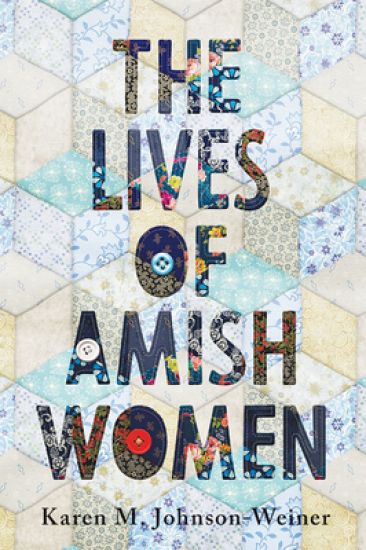
The Lives of Amish Women

The Lives of Amish Women

Karen M. Johnson-Weiner

Johns Hopkins University Press
2020
sidottu
Presenting a challenge to popular stereotypes, this book is an intimate exploration of the religiously defined roles of Amish women and how these roles have changed over time. Continuity and change, tradition and dynamism shape the lives of Amish women and make their experiences both distinctive and diverse. On the one hand, a principled commitment to living Old Order lives, purposely out of step with the cultural mainstream, has provided Amish women with a good deal of constancy. Even in relatively more progressive Amish communities, women still engage in activities common to their counterparts in earlier times: gardening, homemaking, and childrearing. On the other hand, these persistent themes of domestic labor and the responsibilities of motherhood have been affected by profound social, economic, and technological changes up through the twenty-first century, shaping Amish women's lives in different ways and resulting in increasingly varied experiences. In The Lives of Amish Women, Karen M. Johnson-Weiner draws on her thirty-five years of fieldwork in Amish communities and her correspondence with Amish women to consider how the religiously defined roles of Amish women have changed as Amish churches have evolved. Looking in particular at women's lives and activities at different ages and in different communities, Johnson-Weiner explores the relationship between changing patterns of social and economic interaction with mainstream society and women's family, community, and church roles. What does it mean, Johnson-Weiner asks, for an Amish woman to be humble when she is the owner of a business that serves people internationally? Is a childless Amish woman or a single Amish woman still a "Keeper at Home" in the same way as a woman raising a family? What does Gelassenheit—giving oneself up to God's will—mean in a subsistence-level agrarian Amish community, and is it at all comparable to what it means in a wealthy settlement where some members may be millionaires? Illuminating the key role Amish women play in maintaining the spiritual and economic health of their church communities, this wide-ranging book touches on a number of topics, including early Anabaptist women and Amish pioneers to North America; stages of life; marriage and family; events that bring women together; women as breadwinners; women who do not meet the Amish norm (single women, childless women, widows); and even what books Amish women are reading. Aimed at anyone who is interested in the Amish experience, The Lives of Amish Women will help readers understand better the costs and benefits of being an Amish woman in a modern world and will challenge the stereotypes, myths, and imaginative fictions about Amish women that have shaped how they are viewed by mainstream society.
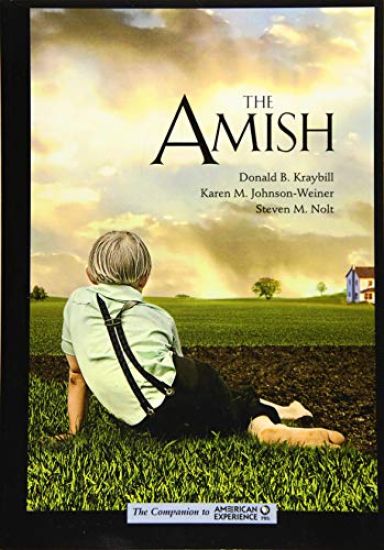
The Amish

The Amish

Donald B. Kraybill; Karen M. Johnson-Weiner; Steven M. Nolt

Johns Hopkins University Press
2018
pokkari
Companion to the acclaimed PBS American Experience documentary. Winner of the CHOICE Outstanding Academic Title of the Choice ACRLThe Amish have always struggled with the modern world. Known for their simple clothing, plain lifestyle, and horse-and-buggy mode of transportation, Amish communities continually face outside pressures to modify their cultural patterns, social organization, and religious world view. An intimate portrait of Amish life, The Amish explores not only the emerging diversity and evolving identities within this distinctive American ethnic community, but also its transformation and geographic expansion. Donald B. Kraybill, Karen M. Johnson-Weiner, and Steven M. Nolt spent twenty-five years researching Amish history, religion, and culture. Drawing on archival material, direct observations, and oral history, the authors provide an authoritative and sensitive understanding of Amish society. Amish people do not evangelize, yet their numbers in North America have grown from a small community of some 6,000 people in the early 1900s to a thriving population of more than 320,000 today. The largest populations are found in Ohio, Pennsylvania, and Indiana, with additional communities in twenty-eight other states and three Canadian provinces. The authors argue that the intensely private and insular Amish have devised creative ways to negotiate with modernity that have enabled them to thrive in America. The transformation of the Amish in the American imagination from “backward bumpkins” to media icons poses provocative questions. What does the Amish story reveal about the American character, popular culture, and mainstream values? Richly illustrated, The Amish is the definitive portrayal of the Amish in America in the twenty-first century.
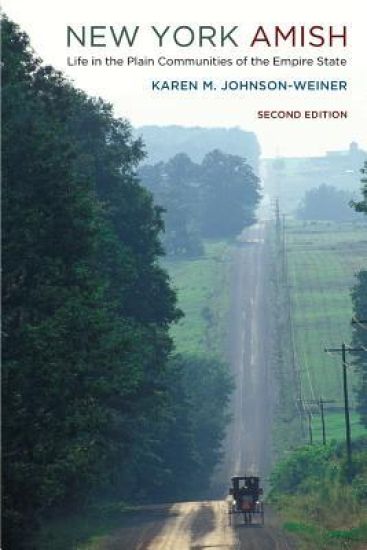
New York Amish

New York Amish

Karen M. Johnson-Weiner

Cornell University Press
2017
pokkari
In a book that highlights the existence and diversity of Amish communities in New York State, Karen M. Johnson-Weiner draws on twenty-five years of observation, participation, interviews, and archival research to emphasize the contribution of the Amish to the state's rich cultural heritage. While the Amish settlements in Pennsylvania and Ohio are internationally known, the Amish population in New York, the result of internal migration from those more established settlements, is more fragmentary and less visible to all but their nearest non-Amish neighbors. All of the Amish currently living in New York are post–World War II migrants from points to the south and west. Many came seeking cheap land, others as a result of schism in their home communities. The Old Order Amish of New York are relative newcomers who, while representing an old or plain way of life, are bringing change to the state. So that readers can better understand where the Amish come from and their relationship to other Christian groups, New York Amish traces the origins of the Amish in the religious confrontation and political upheaval of the Protestant Reformation and describes contemporary Amish lifestyles and religious practices. Johnson-Weiner welcomes readers into the lives of Amish families in different regions of New York State, including the oldest New York Amish community, the settlement in the Conewango Valley, and the diverse settlements of the Mohawk Valley and the St. Lawrence River Valley. The congregations in these regions range from the most conservative to the most progressive. Johnson-Weiner reveals how the Amish in particular regions of New York realize their core values in different ways; these variations shape not only their adjustment to new environments but also the ways in which townships and counties accommodate—and often benefit from—the presence of these thriving faith communities.
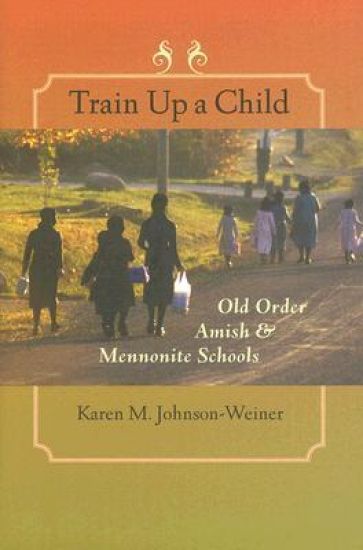
Train Up a Child

Train Up a Child

Karen M. Johnson-Weiner

Johns Hopkins University Press
2007
sidottu
Train Up a Child explores how private schools in Old Order Amish communities reflect and perpetuate church-community values and identity. Here, Karen M. Johnson-Weiner asserts that the reinforcement of those values among children is imperative to the survival of these communities in the modern world. Surveying settlements in Indiana, Michigan, Ohio, Pennsylvania, and New York, Johnson-Weiner finds that, although Old Order communities have certain similarities in their codes of conduct, there is no standard Old Order school. She examines the choices each community makes-about pedagogy, curriculum, textbooks, even school design-to strengthen religious ideology, preserve the social and linguistic markers of Old Order identity, and protect their own community's beliefs and values from the influence of the dominant society. In the most comprehensive study of Old Order schools to date, Johnson-Weiner provides valuable insight into how variables such as community size and relationship with other Old Order groups affect the role of these schools in maintaining behavioral norms and in shaping the Old Order's response to modernity.