Kirjojen hintavertailu – 12 903 724 kirjaa ja 27 kauppaa

Kirjailija

Karen Smith

Kirjat ja teokset yhdessä paikassa: 26 kirjaa, julkaisuja vuosilta 2002–2026, suosituimpiin kuuluu The Laureate's Choice 2019 Bound Collection 1. Vertaile teosten hintoja ja tarkista saatavuus suomalaisista kirjakaupoista.

26 kirjaa

Kirjojen julkaisuvuodet: 2002–2026.

Winning the Math Wars

Winning the Math Wars

Martin L. Abbott; Brian Ferriso; Karen Smith

University of Washington Press
2009
pokkari
Washington State is about to enter a new phase of the "math wars." Since the late 1980s, the debate over how best to teach mathematics to schoolchildren has raged worldwide among educators, politicians, and parents. The stakes are high. To operate effectively in a global, twenty-first-century economy and polity, the United states must provide an education in mathematics that is both excellent and equitable. In this volume, four scholars at the Washington School Research Center (WSRC) at Seattle Pacific University present original research drawn from statistical studies of state educational data and from thousands of classroom observations carried out by The BERC Group. They assess the current state of math education and review its history and development. The authors also provide a dispassionate review of the extensive international, national, and state literature. The in-depth observational research in Winning the Math Wars confirms that the real issue is neither the approach to teaching--traditional or reform--nor the type of curriculum. If America's goal of educational equity and excellence is to be achieved, then math teachers everywhere must be fully supported in developing the specific skills that are ideal for educating all students. The authors discussion focus on four principles for improving math teaching and learning: fidelity to reform efforts by all involved; an emphasis on instruction and instructional tools; the critical nature of mathematical knowledge; and the need for transformational change. Winning the Math Wars is an important book for policy makers, school leaders, practitioners of mathematics education, parents, and anyone who wants to make sense of the "math wars."
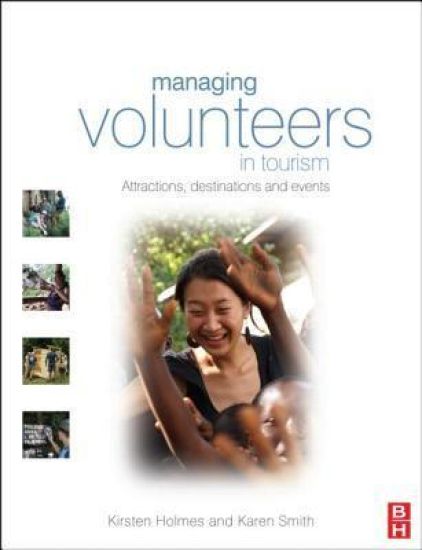
Managing Volunteers in Tourism

Managing Volunteers in Tourism

Kirsten Holmes; Karen Smith

Butterworth-Heinemann Ltd
2009
nidottu
Recent years have seen an explosion in research on tourism volunteering. Volunteers are an essential part of tourism, whether they are volunteering in their local museum, at a sporting mega-event, as an airport ambassador, or travelling the global as a volunteer tourist. Managing Volunteers in Tourism reviews the latest research to highlight the key management issues and relate them to the tourism volunteering context. It includes previously under-researched forms of tourism volunteering such as meet-and-greeters, surf life-savers, conservation, festival, and information centre volunteers and volunTourists. The book develops through three distinct sections, the first of which begins by introducing the concept of volunteering and considering the variety of volunteer forms and settings within tourism. The next part picks up the organizational approach and examines volunteer program design and planning, volunteer motivation, recruitment and selection, training and development, reward and retention, and diversity management. The final part consists of ten case studies from leading international researchers and practitioners identifying best practice and key management challenges. Real-life examples and case studies throughout this book provide an in-depth examination of the challenges facing those managing tourism volunteers, making this book indispensible for current and future managers in the tourism industry.
Ai Weiwei

Ai Weiwei

Hans Ulrich Obrist; Karen Smith; Bernard Fibicher

Phaidon Press Ltd
2009
nidottu
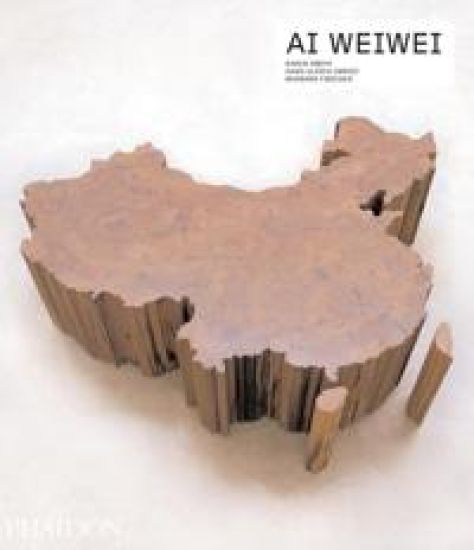
Ai Weiwei (b. 1957) is truly an artist for the twenty-first century. In his sculptures he refashions artefacts and antiques into surprising, sometimes monumental constructions such as Template (2007): hundreds of wooden doors and windows taken from demolished Ming and Qing dynasty temples and arranged into a massive outdoor sculpture. As much as these materials look to the past, they also speak of the present, because never before (and probably never again) have they been available in such abundance. Like his benches carved from centuries-old temple beams, Template is a sly commentary on the speed with which China's building boom is obliterating its past. (When Template collapsed in a rainstorm two weeks after its unveiling at Documenta 12, the artist embraced its demise as a clever artistic twist.) In China today, making art that's critical of current cultural and economic policies is not a particularly safe career move. But Ai's father, the poet Ai Qing, walked a similar path, absorbing European avant-garde styles while studying in 1930s Paris and later standing by them in the face of Communist opposition, a move that eventually led to his exile to the distant provincial town where his son Weiwei came to be born and raised. In the late 1970s Ai Weiwei moved to Beijing, banding together with other pro-democracy artists in a loose collective known as the Stars Group. In 1981, following government retaliation against one of their exhibitions, Ai moved to New York, where he attended art school and lived the life of the bohemian for twelve years, his East Village apartment serving as a base for countless visiting Chinese artists. When his father became ill in 1993 Ai returned to China, settling in Beijing and finally taking up his art career in earnest. Weiwei's artistic forebears belong primarily to the Western modernist avant-garde (Duchamp and Beuys are particularly relevant). But Ai has equally and increasingly been influenced by modernist architecture and contemporary urban planning, citing the need for an ideal for living in a country where runaway economic development has shown little regard for the everyday life of the individual. In stark contrast to the glass-and-steel high-rises going up around Beijing, the art galleries, ateliers and homes Ai designs are boxy and modest, made from brick and other vernacular materials. Their resolution of Eastern and Western styles is a fitting parallel to his antique readymade sculptures. At a time when the West is finally discovering Chinese contemporary art, Ai is one of the few to have transcended the label 'Chinese artist'. In part thanks to his gallery Urs Meile (Lucerne and Beijing), Ai has won the support of strong European collectors. His work is increasingly being shown at major venues around the world (Kunsthalle Bern, Kunsthaus Graz, Tate Liverpool) and included in major international exhibitions (the Moscow Biennial, the Guangzhou Triennale, Documenta). A complex, multi-faceted artist, Ai is poised to make a deep impact on contemporary art far beyond China's borders. In the interview Hans Ulrich Obrist discusses Ai Weiwei’s life and motivations, his childhood in a rural province close to the Russian border, his underground political work, his move to New York in the 80s and consequent return to China in the 90s, and his break within the art world. Karen Smith’s survey examines the evolution of Ai Weiwei’s work from the early paintings, drawings, and sculptures pieces through his most recent installations and architectural work, including the cotton-made sculpture World Map (Biennale of Sydney, 2006), the wooden doors and windows structure Template (Documenta 12, 2007) and his collaboration with the Swiss firm Herzog & de Meuron for the Beijing National Stadium for the 2008 Summer Olympics. Bernard Fibicher focuses on Working Progress (Fountain of Light) (2007), a site-specific sculpture for Tate Liverpool inspired by Tatlin’s Monument to the Third International (1919) and that takes the form of a spectacular chandelier.
United Nations Conference on Trade and Development (UNCTAD)
Ian Taylor and Karen Smith present a much-needed and full examination of the United Nations Conference on Trade and Development (UNCTAD), covering its history and current activities. All the key areas are covered by accessibly written chapters, including:an overview of UNCTAD: what it is, why it was formed and why it is importanthow the organization operates today: what it does and how it does it key criticisms made against the organization: is it relevant in today’s world? emerging issues within the organization and its future direction. In the current era of globalization and what appears to be the dominance of neo-liberal economic thought, UNCTAD has sought to make itself germane to ongoing international debates. The implications of this for the organization’s key remit, namely making the world a fairer place, are something that this book unpacks.
United Nations Conference on Trade and Development (UNCTAD)
Ian Taylor and Karen Smith present a much-needed and full examination of the United Nations Conference on Trade and Development (UNCTAD), covering its history and current activities. All the key areas are covered by accessibly written chapters, including:an overview of UNCTAD: what it is, why it was formed and why it is importanthow the organization operates today: what it does and how it does it key criticisms made against the organization: is it relevant in today’s world? emerging issues within the organization and its future direction. In the current era of globalization and what appears to be the dominance of neo-liberal economic thought, UNCTAD has sought to make itself germane to ongoing international debates. The implications of this for the organization’s key remit, namely making the world a fairer place, are something that this book unpacks.