
Kirjailija
Karin Liebhart
Kirjat ja teokset yhdessä paikassa: 4 kirjaa, julkaisuja vuosilta 2009–2019, suosituimpiin kuuluu Estlands Au?en- und Sicherheitspolitik III. Eine ged?chtnispolitische Analyse der estnischen Entwicklungspolitik 2006-2010. Vertaile teosten hintoja ja tarkista saatavuus suomalaisista kirjakaupoista.
4 kirjaa
Kirjojen julkaisuvuodet: 2009–2019.
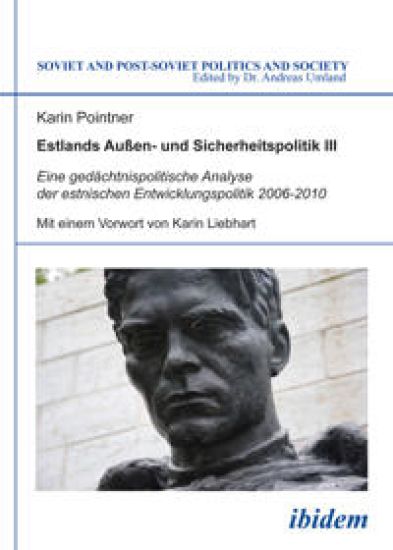
Estlands Au?en- und Sicherheitspolitik III. Eine ged?chtnispolitische Analyse der estnischen Entwicklungspolitik 2006-2010
Karin Pointner; Karin Liebhart
Ibidem Press
2013
pokkari
Die vorliegende Arbeit f hrt die wichtigsten Gr nde f r die Auswahl der Schwerpunktl nder der bilateralen Entwicklungspolitik Estlands von 2006 bis 2010 - Georgien, Ukraine, Moldawien und Afghanistan - an. Neben einem berblick ber die Strukturen der estnischen Entwicklungspolitik, deren AkteurInnen und Themenbereiche wird auf die Anfangsschwierigkeiten des New Donor seit 1998, das Selbstbild als Tiny Baltic Tiger und die Hauptgr nde f r die Orientierung der bilateralen Entwicklungspolitik "to the East" eingegangen. Die Autorin diskutiert, wie die Abgrenzung von der sowjetischen Vergangenheit und die kollektive Erinnerung an die negativen Ereignisse dieser Zeit durch aktuelle Eigen- und Fremdbilder manifestiert werden. Es wird gezeigt, wie durch die unterschiedlichen Geschichtsinterpretationen Estlands und Russlands dualistische Zuschreibungen dazu f hren, dass das Angstgef hl vor Russland und die Gegen berstellung von "Ost" und "West" auch in der Entwicklungspolitik perpetuiert werden. Durch gezielte Unterst tzung der Partnerstaaten bei Transformationsreformen soll deren staatliche Unabh ngigkeit unterst tzt, eine Sicherheitszone in der direkten EU-Nachbarschaft aufgebaut, der von Estland vorgelebte "Estonian Way" vom maroden Empf ngerland internationaler Hilfsgelder zum liberalen modernen EU- und NATO-Mitglied als nachahmenswertes Beispiel fungieren und das estnische Selbstbild als vertrauensw rdiger Partnerstaat in die internationale Donor community getragen werden. Vertrauen, emotionale Bindungen, ein berzogenes staatliches Sicherheitsgef hl, moralische Verpflichtungen und "Kommunikation ohne Worte" sind nur einige der Aspekte, die im vorliegenden Werk ber die estnische Entwicklungspolitik ihren Platz finden.
The Discursive Construction of National Identity
Ruth Wodak; Rudolf De Cillia; Martin Reisigl; Karin Liebhart
Edinburgh University Press
2009
sidottu
How do we construct national identities in discourse? Which topics, which discursive strategies and which linguistic devices are employed to construct national sameness and uniqueness on the one hand, and differences to other national collectives on the other hand? The Discursive Construction of National Identity analyses discourses of national identity in Europe with particular attention to Austria. In the tradition of critical discourse analysis, the authors analyse current and on-going transformations in the self-and other definition of national identities using an innovative interdisciplinary approach which combines discourse-historical theory and methodology and political science perspectives. Thus, the rhetorical promotion of national identification and the discursive construction and reproduction of national difference on public, semi-public and semi-private levels within a nation state are analysed in much detail and illustrated with a huge amount of examples taken from many genres (speeches, focus-groups, interviews, media, and so forth). In addition to the critical discourse analysis of multiple genres accompanying various commemorative and celebratory events in 1995, this extended and revised edition is able to draw comparisons with similar events in 2005. The impact of socio-political changes in Austria and in the European Union is also made transparent in the attempts of constructing hegemonic national identities. Key Features: *Discourse-historical approach. *Interdisciplinarity (cultural studies, discourse analysis, history, political science). *Multi-method, multi-genre. *Qualitative case studies.
The Discursive Construction of National Identity
Ruth Wodak; Rudolf De Cillia; Martin Reisigl; Karin Liebhart
Edinburgh University Press
2009
nidottu
How do we construct national identities in discourse? Which topics, which discursive strategies and which linguistic devices are employed to construct national sameness and uniqueness on the one hand, and differences to other national collectives on the other hand? The Discursive Construction of National Identity analyses discourses of national identity in Europe with particular attention to Austria. In the tradition of critical discourse analysis, the authors analyse current and on-going transformations in the self-and other definition of national identities using an innovative interdisciplinary approach which combines discourse-historical theory and methodology and political science perspectives. Thus, the rhetorical promotion of national identification and the discursive construction and reproduction of national difference on public, semi-public and semi-private levels within a nation state are analysed in much detail and illustrated with a huge amount of examples taken from many genres (speeches, focus-groups, interviews, media, and so forth). In addition to the critical discourse analysis of multiple genres accompanying various commemorative and celebratory events in 1995, this extended and revised edition is able to draw comparisons with similar events in 2005. The impact of socio-political changes in Austria and in the European Union is also made transparent in the attempts of constructing hegemonic national identities. Key Features: *Discourse-historical approach. *Interdisciplinarity (cultural studies, discourse analysis, history, political science). *Multi-method, multi-genre. *Qualitative case studies.