Kirjojen hintavertailu – 12 903 725 kirjaa ja 27 kauppaa

Kirjailija

Karin Ling-fung Chau

Kirjat ja teokset yhdessä paikassa: 4 kirjaa, julkaisuja vuosilta 2019–2026, suosituimpiin kuuluu Popular Culture and the Formation of Hong Kong Identity. Vertaile teosten hintoja ja tarkista saatavuus suomalaisista kirjakaupoista.

4 kirjaa

Kirjojen julkaisuvuodet: 2019–2026.

Popular Culture and the Formation of Hong Kong Identity

Popular Culture and the Formation of Hong Kong Identity

Karin Ling-fung Chau; Heung Wah Wong; Hoi-yan Yau

Routledge
2026
sidottu
This book charts the development of Hong Kong identity from the Second World War to the present. It argues that understanding popular culture is key to understanding how Hong Kong identity has evolved, and it discusses how, in the post-war period, popular culture has gone through various phases where particular aspects of popular culture dominated, for example tourism, television dramas and popular music in the 1970s, shopping culture in the 1980s, and sex culture in the 1990s. The book examines how the consumption of popular culture has been related to the changing geopolitical situation, to the politics of economic transformation, and to community building. It shows how behind all these aspects of popular culture lies the essential "in-between-ness" of Hong Kong, neither Eastern/traditional/conservative nor Western/modern/liberal.

Cultural Policies and Identity Formation in Taiwan and Hong Kong

Cultural Policies and Identity Formation in Taiwan and Hong Kong

Heeung Wah Wong; Hoi Yan Yau; Karin Ling-fung Chau

Routledge
2026
sidottu
Although Taiwan and Hong Kong are both Chinese societies previously subjected to colonial rule, the identity formation of the two peoples differs significantly, with Taiwan’s modern consciousness underpinned by nationalism and Chinese-ness whereas Hong Kong’s identity is characterised by the “in-between-ness” between Eastern/traditional/conservative and Western/modern/liberal outlooks and lifestyles. This book examines how these different identities came about. It considers the impact of Japanese and British colonial rule, explores the cultural policies implemented both in colonial times and after, and discusses fully the nature of present day identity and consciousness in the two places, including an assessment of how far governments’ cultural policies are embraced and embedded.
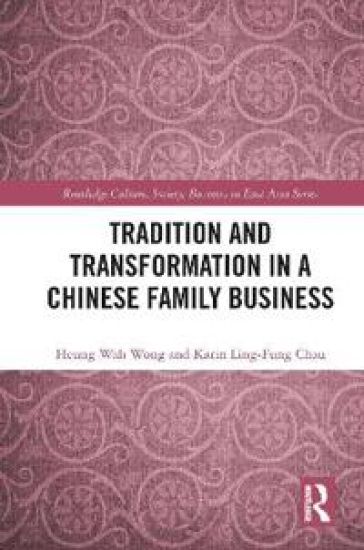
Tradition and Transformation in a Chinese Family Business

Tradition and Transformation in a Chinese Family Business

Heung-Wah Wong; Karin Ling-fung Chau

Taylor Francis Ltd
2021
nidottu
Family businesses have been an important part of the economy in Hong Kong, Taiwan, Singapore, and in the Chinese diaspora, and, since the reforms, in mainland China itself. Some people have argued that the success of Chinese family businesses occurs because of the special characteristics and approach of such businesses. This book examines the nature of Chinese family business and the key issues involved by exploring in detail the case of a leading Hong Kong jewellery company which was established in the early 1960s and which has grown to become one of the biggest jewellery manufacturers, exporters, and retailers in post-war Hong Kong. The book considers the motivations of Chinese people to set up their own businesses, outlining the strategies adopted, including the strategies for raising capital, and the qualities of successful Chinese entrepreneurs. It discusses the management of the company, including relations between family members, profit sharing and succession planning, and assesses how conflict and crises are coped with and overcome. It charts the evolution of the company, looking at how it has been transformed into a listed corporation. The book concludes by arguing for the importance of studying Chinese family businesses culturally.
Tradition and Transformation in a Chinese Family Business

Tradition and Transformation in a Chinese Family Business

Heung-Wah Wong; Karin Ling-fung Chau

Routledge
2019
sidottu
Family businesses have been an important part of the economy in Hong Kong, Taiwan, Singapore, and in the Chinese diaspora, and, since the reforms, in mainland China itself. Some people have argued that the success of Chinese family businesses occurs because of the special characteristics and approach of such businesses. This book examines the nature of Chinese family business and the key issues involved by exploring in detail the case of a leading Hong Kong jewellery company which was established in the early 1960s and which has grown to become one of the biggest jewellery manufacturers, exporters, and retailers in post-war Hong Kong. The book considers the motivations of Chinese people to set up their own businesses, outlining the strategies adopted, including the strategies for raising capital, and the qualities of successful Chinese entrepreneurs. It discusses the management of the company, including relations between family members, profit sharing and succession planning, and assesses how conflict and crises are coped with and overcome. It charts the evolution of the company, looking at how it has been transformed into a listed corporation. The book concludes by arguing for the importance of studying Chinese family businesses culturally.