Kirjojen hintavertailu – 12 859 824 kirjaa ja 27 kauppaa

Kirjailija

Kärin Nickelsen

Kirjat ja teokset yhdessä paikassa: 8 kirjaa, julkaisuja vuosilta 2004–2021, suosituimpiin kuuluu Draughtsmen, Botanists and Nature:. Vertaile teosten hintoja ja tarkista saatavuus suomalaisista kirjakaupoista.

8 kirjaa

Kirjojen julkaisuvuodet: 2004–2021.

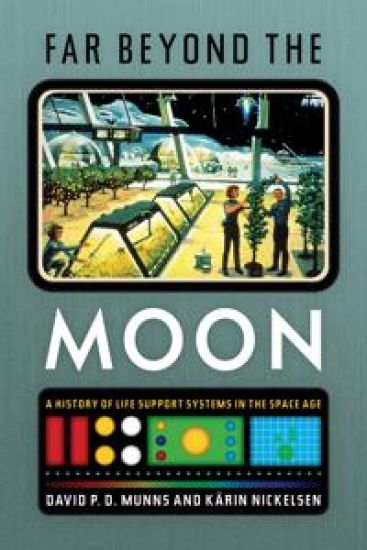
Far Beyond the Moon

Far Beyond the Moon

Kärin Nickelsen; David P. D. Munns

University of Pittsburgh Press
2021
sidottu
From the beginning of the space age, scientists and engineers have worked on systems to help humans survive for the astounding 28,500 days (78 years) needed to reach another planet. They've imagined and tried to create a little piece of Earth in a bubble travelling through space, inside of which people could live for decades, centuries, or even millennia. Far Beyond the Moon tells the dramatic story of engineering efforts by astronauts and scientists to create artificial habitats for humans in orbiting space stations, as well as on journeys to Mars and beyond. Along the way, David P. D. Munns and Kärin Nickelsen explore the often unglamorous but very real problem posed by long-term life support: How can we recycle biological wastes to create air, water, and even food in meticulously controlled artificial environments? Together, they draw attention to the unsung participants of the space program - the sanitary engineers, nutritionists, plant physiologists, bacteriologists, and algologists who created and tested artificial environments for space based on chemical technologies of life support - as well as the bioregenerative algae systems developed to reuse waste, water, and nutrients, so that we might cope with a space journey of not just a few days, but months, or more likely, years.
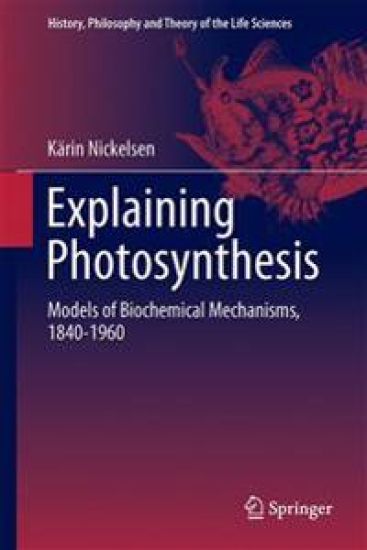
Explaining Photosynthesis

Explaining Photosynthesis

Kärin Nickelsen

Springer
2016
nidottu
Recounting the compelling story of a scientific discovery that took more than a century to complete, this trail-blazing monograph focuses on methodological issues and is the first to delve into this subject. This book charts how the biochemical and biophysical mechanisms of photosynthesis were teased out by succeeding generations of scientists, and the author highlights the reconstruction of the heuristics of modelling the mechanism—analyzed at both individual and collective levels. Photosynthesis makes for an instructive example. The first tentative ideas were developed by organic chemists around 1840, while by 1960 an elaborate proposal at a molecular level, for both light and dark reactions, was established. The latter is still assumed to be basically correct today. The author makes a persuasive case for a historically informed philosophy of science, especially regarding methodology, and advocates a history of science whose narrative deploys philosophical approaches and categories. She shows how scientists’ attempts to formulate, justify, modify, confirm or criticize their models are best interpreted as series of coordinated research actions, dependent on a network of super- and subordinated epistemic goals, and guided by recurrent heuristic strategies. With dedicated chapters on key figures such as Otto Warburg, who borrowed epistemic fundamentals from other disciplines to facilitate his own work on photosynthesis, and on more general topics relating to the development of the field after Warburg, this new work is both a philosophical reflection on the nature of scientific enquiry and a detailed history of the processes behind one of science’s most important discoveries.
Explaining Photosynthesis

Explaining Photosynthesis

Kärin Nickelsen

Springer
2015
sidottu
Recounting the compelling story of a scientific discovery that took more than a century to complete, this trail-blazing monograph focuses on methodological issues and is the first to delve into this subject. This book charts how the biochemical and biophysical mechanisms of photosynthesis were teased out by succeeding generations of scientists, and the author highlights the reconstruction of the heuristics of modelling the mechanism—analyzed at both individual and collective levels. Photosynthesis makes for an instructive example. The first tentative ideas were developed by organic chemists around 1840, while by 1960 an elaborate proposal at a molecular level, for both light and dark reactions, was established. The latter is still assumed to be basically correct today. The author makes a persuasive case for a historically informed philosophy of science, especially regarding methodology, and advocates a history of science whose narrative deploys philosophical approaches and categories. She shows how scientists’ attempts to formulate, justify, modify, confirm or criticize their models are best interpreted as series of coordinated research actions, dependent on a network of super- and subordinated epistemic goals, and guided by recurrent heuristic strategies. With dedicated chapters on key figures such as Otto Warburg, who borrowed epistemic fundamentals from other disciplines to facilitate his own work on photosynthesis, and on more general topics relating to the development of the field after Warburg, this new work is both a philosophical reflection on the nature of scientific enquiry and a detailed history of the processes behind one of science’s most important discoveries.
Theodore von Kármán

Theodore von Kármán

Kärin Nickelsen; Alessandra Hool; Gerd Grasshoff

Springer Basel
2012
nidottu
Theodore von Kármán, geboren 1881 in Budapest und gestorben 1963 in Aachen, gilt als der Wegbereiter der modernen Aerodynamik. Er hatte einen erheblichen Einfluss auf die westliche Rüstungspolitik der 40er und 50er Jahre. Das Buch ist eine erste Biografie über Theodore von Kármán. Sie stützt sich auf bislang unveröffentlichte Originalquellen des rund 150000 Seiten umfassenden Nachlasses. Im Mittelpunkt des Buches steht eine vermeintlich nebensächliche und private Episode aus dem Leben Kármáns: seine Bemühungen um die Ausreise seines Bruders und seiner Schwägerin aus dem kommunistischen Ungarn zu Beginn der 50er Jahre. Im Verlauf dieser sich über Jahre hinziehenden Bemühungen werden Leben und Wirken Kármáns, seine Aktivitäten in den USA und in Europa, seine Beziehung zur Schweiz und seine Stiftung in Bern geschildert.
Draughtsmen, Botanists and Nature:

Draughtsmen, Botanists and Nature:

Kärin Nickelsen

Springer
2010
nidottu
This book is based on a doctoral thesis submitted to the University of Bern in thesummerof2002. Researchonthethesiswasmadepossiblethroughagrant provided by the Swiss National Science Foundation (SNF) from 2000 to 2002 foraprojectonthehistoryandepistemologyofscienti?cillustrations(Project No. 1152-059499). Gerd Graßho? headed this programme at the University of Bern and made my reworking of the thesis into a book in English possible. He also provided the funding for the services of a professional copy editor (Margareta Simons, Bern). The?ndingspresentedinthisbookarecloselyrelatedtothegeneralresults of the SNF project, which are published elsewhere: the source material can be 1 consultedinanearliermonographandinanelectroniceditionontheinternet; thetheoreticalapproachwillbemorethoroughlyinvestigatedinatextbookon the analysis of scienti?c illustrations. In addition, this study has made use of theoretical concepts developed by Gerd Graßho?, which, in their latest form, have yet to be published; these concern primarily the model concept discussed in Chapter 3. The criteria put forward for optimizing scienti?c illustrations, which are dealt with in Chapter 7, were also originally proposed by Gerd Graßho?; they were re?ned and elaborated in the SNF project. Some of the material on the copying links presented in this book was ?rst published in 2 an article in Studies in History and Philosophy of Science; Part C; while some of the material in Chapter 5 on the hand-colouring of illustration was 3 published prior to this book in the Annals of Science. Iwasabletoaccesssourcematerialforthisstudyfromseveralarchivesand 4 institutions. Most of the images that I examined originated from copies held in the University Library Göttingen, while the remainingillustrations came 1 See Nickelsen (2000), Nickelsen & Graßho? (2001) and Graßho? et al. (2001).
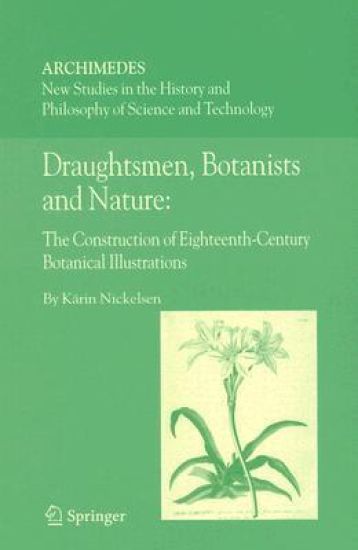
Draughtsmen, Botanists and Nature:

Draughtsmen, Botanists and Nature:

Kärin Nickelsen

Springer-Verlag New York Inc.
2006
sidottu
This book is based on a doctoral thesis submitted to the University of Bern in thesummerof2002. Researchonthethesiswasmadepossiblethroughagrant provided by the Swiss National Science Foundation (SNF) from 2000 to 2002 foraprojectonthehistoryandepistemologyofscienti?cillustrations(Project No. 1152-059499). Gerd Graßho? headed this programme at the University of Bern and made my reworking of the thesis into a book in English possible. He also provided the funding for the services of a professional copy editor (Margareta Simons, Bern). The?ndingspresentedinthisbookarecloselyrelatedtothegeneralresults of the SNF project, which are published elsewhere: the source material can be 1 consultedinanearliermonographandinanelectroniceditionontheinternet; thetheoreticalapproachwillbemorethoroughlyinvestigatedinatextbookon the analysis of scienti?c illustrations. In addition, this study has made use of theoretical concepts developed by Gerd Graßho?, which, in their latest form, have yet to be published; these concern primarily the model concept discussed in Chapter 3. The criteria put forward for optimizing scienti?c illustrations, which are dealt with in Chapter 7, were also originally proposed by Gerd Graßho?; they were re?ned and elaborated in the SNF project. Some of the material on the copying links presented in this book was ?rst published in 2 an article in Studies in History and Philosophy of Science; Part C; while some of the material in Chapter 5 on the hand-colouring of illustration was 3 published prior to this book in the Annals of Science. Iwasabletoaccesssourcematerialforthisstudyfromseveralarchivesand 4 institutions. Most of the images that I examined originated from copies held in the University Library Göttingen, while the remainingillustrations came 1 See Nickelsen (2000), Nickelsen & Graßho? (2001) and Graßho? et al. (2001).
Theodore von Kármán

Theodore von Kármán

Kärin Nickelsen; Alessandra Hool; Gerd Grasshoff

Birkhauser Verlag AG
2004
sidottu
Theodore von Kármán, geboren 1881 in Budapest und gestorben 1963 in Aachen, gilt als der Wegbereiter der modernen Aerodynamik. Er hatte einen erheblichen Einfluss auf die westliche Rüstungspolitik der 40er und 50er Jahre. Das Buch ist eine erste Biografie über Theodore von Kármán. Sie stützt sich auf bislang unveröffentlichte Originalquellen des rund 150000 Seiten umfassenden Nachlasses. Im Mittelpunkt des Buches steht eine vermeintlich nebensächliche und private Episode aus dem Leben Kármáns: seine Bemühungen um die Ausreise seines Bruders und seiner Schwägerin aus dem kommunistischen Ungarn zu Beginn der 50er Jahre. Im Verlauf dieser sich über Jahre hinziehenden Bemühungen werden Leben und Wirken Kármáns, seine Aktivitäten in den USA und in Europa, seine Beziehung zur Schweiz und seine Stiftung in Bern geschildert.