Kirjojen hintavertailu – 12 859 829 kirjaa ja 27 kauppaa

Kirjailija

Karl Hack

Kirjat ja teokset yhdessä paikassa: 8 kirjaa, julkaisuja vuosilta 2000–2021, suosituimpiin kuuluu War Memory and the Making of Modern Malaysia and Singapore. Vertaile teosten hintoja ja tarkista saatavuus suomalaisista kirjakaupoista.

8 kirjaa

Kirjojen julkaisuvuodet: 2000–2021.

The Malayan Emergency

The Malayan Emergency

Karl Hack

Cambridge University Press
2021
pokkari
The Malayan Emergency of 1948–1960 has been scrutinised for 'lessons' about how to win counterinsurgencies from the Vietnam War to twenty-first century Afghanistan. This book brings our understanding of the conflict up to date by interweaving government and insurgent accounts and looking at how they played out at local level. Drawing on oral history, recent memoirs and declassified archival material from the UK and Asia, Karl Hack offers a comprehensive, multi-perspective account of the Malayan Emergency and its impact on Malaysia. He sheds new light on questions about terror and violence against civilians, how insurgency and decolonisation interacted and how revolution was defeated. He considers how government policies such as pressurising villagers, resettlement and winning 'hearts and minds' can be judged from the perspective of insurgents and civilians. This timely book is the first truly multi-perspective and in-depth study of anti-colonial resistance and counterinsurgency in the Malayan Emergency.
The Malayan Emergency

The Malayan Emergency

Karl Hack

Cambridge University Press
2021
sidottu
The Malayan Emergency of 1948–1960 has been scrutinised for 'lessons' about how to win counterinsurgencies from the Vietnam War to twenty-first century Afghanistan. This book brings our understanding of the conflict up to date by interweaving government and insurgent accounts and looking at how they played out at local level. Drawing on oral history, recent memoirs and declassified archival material from the UK and Asia, Karl Hack offers a comprehensive, multi-perspective account of the Malayan Emergency and its impact on Malaysia. He sheds new light on questions about terror and violence against civilians, how insurgency and decolonisation interacted and how revolution was defeated. He considers how government policies such as pressurising villagers, resettlement and winning 'hearts and minds' can be judged from the perspective of insurgents and civilians. This timely book is the first truly multi-perspective and in-depth study of anti-colonial resistance and counterinsurgency in the Malayan Emergency.
Defence and Decolonisation in South-East Asia
This book explains why British defence policy and practice emerged as it did in the period 1941-67, by looking at the overlapping of colonial, military, economic and Cold War factors in the area. Its main focus is on the 1950s and the decolonisation era, but it argues that the plans and conditions of this period can only be understood by tracing them back to their origins in the fall of Singapore. Also, it shows how decolonisation was shaped not just by British aims, but by the way communism, communalism and nationalism facilitated and frustrated these.
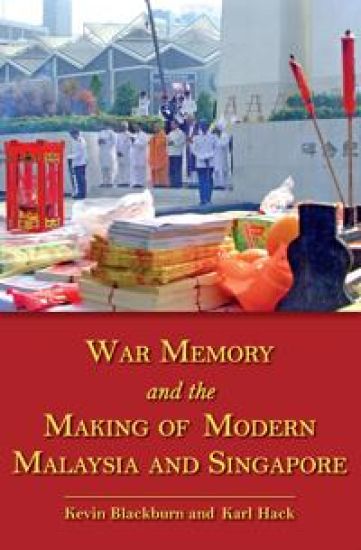
War Memory and the Making of Modern Malaysia and Singapore
Singapore fell to Japanese forces on 15 February 1942. Within a matter of days, the occupying army took prisoner more than 100,000 British, Australian and Indian soldiers, and massacred thousands of Chinese civilians. A resistance movement formed in Malaya's jungle-covered mountains, but the vast majority of people resigned themselves to life under Japanese rule. The Occupation of Malaya would last three and a half long years, until the British returned in September 1945. How is this period remembered? And how have individuals, communities, and states shaped and reshaped collections in the post war era as the events of the time slipped out of living memory? This volume uses observations gathered from members of various communities involved in or affected by the conflict - Chinese, Malays, Indians, Eurasians, British and Australians to respond to these questions. Its first hand accounts range from the thoughts of families left bereft by Japanese massacres to the ideals of young women who flocked to the Japanese-sponsored Indian National Army, hoping to march on Delhi. The authors also draw on other forms of memory, including the soaring pillars of Singapore's Civilian War Memorial and traditional Chinese cemeteries in Malaysia. In preparing this volume, the authors have reinserted previously marginalised or self-censored voices back into the story in a way that allows them to reflect on the nature of conflict and memory. Moreover, these voices speak of the searing transit from war and massacre through resistance and decolonisation to the moulding of postcolonial states and identities.
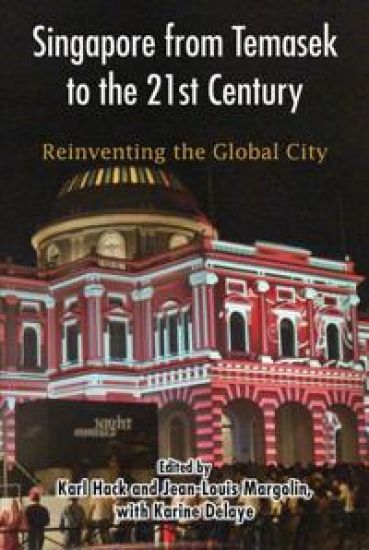
Singapore from Temasek to the 21st Century

Singapore from Temasek to the 21st Century

Karl Hack; Jean-Louis Margolin; Karine Delaye

NUS Press
2010
nidottu
In this volume, a group of international scholars examines the history of Singapore as a series of discontinuous and varied attempts by a shifting array of local and foreign elites to optimize advantages arising from the island's strategic location and overcome its lack of natural resources. Part I sets the scene by considering different ways of looking at the island's long-term history and evaluating Singapore as a global city. Part II provides a series of snapshots of Singapore between 14th and 21st centuries, positioning the island as a major node in regional and world history, and evaluating the local political and social structures that have underpinned the city's ability to function as a major urban centre and ensured its long-term survival.
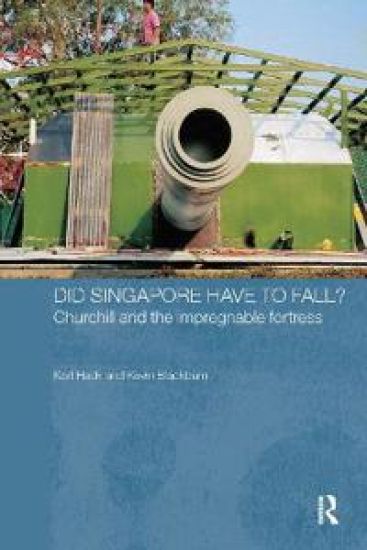
Did Singapore Have to Fall?

Did Singapore Have to Fall?

Kevin Blackburn; Karl Hack

Routledge
2005
nidottu
This book provides a sophisticated summary of up-to-date knowledge on the Fall of Singapore, including the critical tensions between Churchill and local commanders. A focus on the role of Churchill, and on his understanding of the guns and Singapore's fortifications, makes the Fortress central to understanding why and how Singapore fell as it did. The book includes a range of quotations that give the flavour of the time and the essence of the debates. No other book allows the reader to get a clear overview of the base, the plans, the campaign, the guns and the remaining heritage, all in one place.
Did Singapore Have to Fall?

Did Singapore Have to Fall?

Kevin Blackburn; Karl Hack

Routledge
2003
sidottu
This book provides a sophisticated summary of up-to-date knowledge on the Fall of Singapore, including the critical tensions between Churchill and local commanders. A focus on the role of Churchill, and on his understanding of the guns and Singapore's fortifications, makes the Fortress central to understanding why and how Singapore fell as it did. The book includes a range of quotations that give the flavour of the time and the essence of the debates. No other book allows the reader to get a clear overview of the base, the plans, the campaign, the guns and the remaining heritage, all in one place.
Defence and Decolonisation in South-East Asia
This book explains why British defence policy and practice emerged as it did in the period 1941-67, by looking at the overlapping of colonial, military, economic and Cold War factors in the area. Its main focus is on the 1950s and the decolonisation era, but it argues that the plans and conditions of this period can only be understood by tracing them back to their origins in the fall of Singapore. Also, it shows how decolonisation was shaped not just by British aims, but by the way communism, communalism and nationalism facilitated and frustrated these.