
Kirjojen hintavertailu – 12 903 725 kirjaa ja 27 kauppaa

Kirjailija

Karl Karlander

Kirjat ja teokset yhdessä paikassa: 2 kirjaa, julkaisuja vuosilta 2015–2020, suosituimpiin kuuluu Världen som vilja och föreställning. Vertaile teosten hintoja ja tarkista saatavuus suomalaisista kirjakaupoista.

2 kirjaa

Kirjojen julkaisuvuodet: 2015–2020.

Världen som vilja och föreställning

Världen som vilja och föreställning

Arthur Schopenhauer; Karl Karlander

h:ström - Text Kultur AB
2020
nidottu
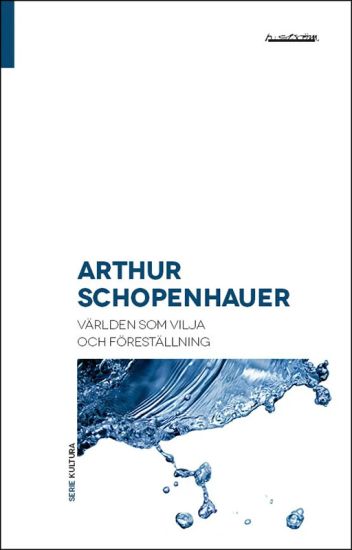
Världen som vilja och föreställning är Arthur Schopenhauers stora, filosofiska livsverk. Hans filosofi erbjuder en världsåskådning, ett sätt att betrakta tillvaron i dess helhet, utifrån en metafysisk grund. Hos honom kombineras västerländsk filosofi med österländsk mysticism. Världen är, för Schopenhauer, vilja och strid, förnuftet bara ett parasitärt bihang till en irrationell och instinktmässigt framvällande vilja. Lidandet är ofrånkomligt, men självförnekelse, estetisk kontemplation och medlidande kan erbjuda lindring. En lång rad filosofer och tänkare däribland Nietzsche, Freud, Wittgenstein och Cioran har tagit starkt intryck av Schopenhauers tänkande. Samtidigt har hans verk i hög grad beundrats av och influerat konstnärer och diktare som Richard Wagner och Thomas Mann, liksom efterföljare som Michel Houellebecq. Även om Schopenhauer mer än någon annan kommit att representera den filosofiska pessimismen, är mycket av hans filosofi ägnad åt levnadskonst, åt hur lidande kan övervinnas. Den föreliggande utgåvan återger Efraim Skölds översättning från 1916, moderniserad och redaktionellt granskad och bearbetad. Karl Karlander, universitetslektor i filosofi vid Stockholms universitet, har försett boken med ett nyskrivet förord.
The normativity of thought and meaning

The normativity of thought and meaning

Karl Karlander

Stockholm University
2015
nidottu

Halvin toimitettuna 16,20 €

In recent years the normativity of thought and meaning has been the subject of an extensive debate. What is at issue is whether intentionality has normative features, and if so, whether that constitutes a problem for naturalistic attempts to account for intentional phenomena. The origin of the debate is Saul Kripke's interpretation of Ludwig Wittgenstein's later philosophy, published in Wittgenstein on Rules and Private Language. Kripke claimed, on behalf of Wittgenstein, that dispositional accounts of linguistic meaning - accounts, i.e., which attempt to reduce semantic phenomena to facts about how speakers are disposed to employ words - fail to ground the factuality of semantic statements. From this, and other arguments, the far reaching conclusion was drawn by Kripke's Wittgenstein that there are no semantic facts, that every application of a word is "a leap in the dark". This position has become known as meaning scepticism. In the present essay, it will be argued that meaning scepticism is incoherent, but that the normativity argument is interesting in its own right. The development of the debate will be traced, primarily through detailed consideration of the writings of Paul Boghossian, who has shifted the focus from the normativity of linguistic meaning to that of belief. It will be contended that even though Boghossian's attempt to locate a normativity of belief fails, there is a related form of normativity that has to do with the intrinsic badness of false beliefs. Also, suggestions made by Kripke regarding the normativity of intentions will be investigated, and related to contemporary arguments in the philosophy of rationality. The tentative conclusion is that there are some interesting kinds of normativity associated with the intentional, but of a somewhat different variety than those usually discussed.